The Las Vegas Sphere, a technological marvel that has redefined the standards of live entertainment, recently became the stage for a cultural milestone. On Friday, September 11, 2026, Sonoran regional Mexican star Carín León took to the stage for the second weekend of his landmark residency. The performance served as a powerful testament to the global reach of Mexican music, turning the world’s most advanced venue into an immersive, heartfelt tribute to the heritage of Northern Mexico.
The Context: Resilience Amidst Technical Hurdles
The September 11 concert arrived with significant weight. Just 24 hours prior, the music world was abuzz following the sudden cancellation of the artist’s scheduled performance on Thursday, September 10. Representing a rare setback in an otherwise meticulously planned residency, the cancellation was officially attributed to "airplane issues" that prevented the logistics necessary for a high-production show to materialize.
While such cancellations often invite skepticism in the high-stakes world of Las Vegas residencies, the fan response to León’s return on Friday proved that his bond with his audience remains unshakable. Despite a wave of digital discourse and public criticism following the Thursday announcement, the atmosphere inside the Sphere was electric. As the house lights dimmed and the 20,000-capacity venue reached a fever pitch, the "airplane issues" were quickly forgotten, replaced by the collective anticipation of a crowd that had traveled from across the globe to witness a piece of musical history.
A Chronology of the Night: From Hermosillo to the World
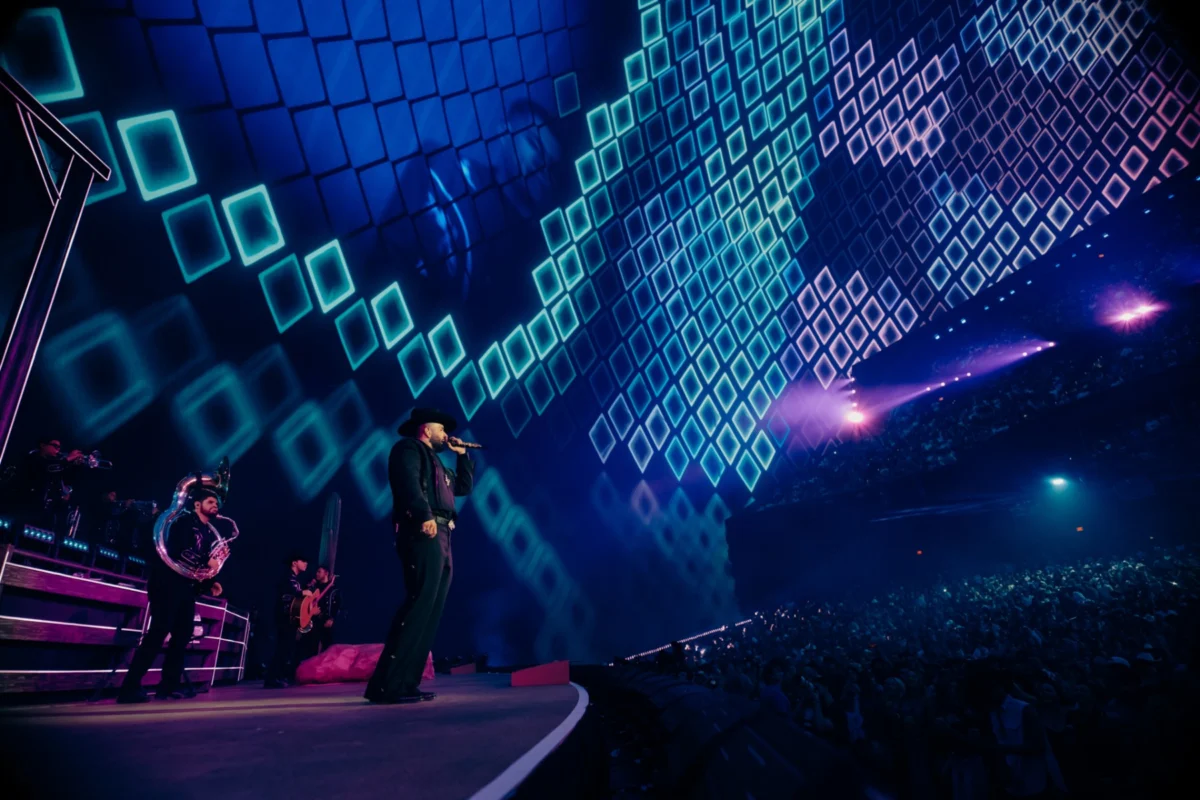
At precisely 8:30 p.m., the 37-year-old musician emerged from the darkness. Dressed in a sharp, minimalist black suit paired with signature boots and a cowboy hat—a nod to his ranchero roots—León offered a humble, silent salute to the audience, removing his hat to acknowledge the sea of fans before him.
"¡Que viva México y que viva Hermosillo!" he shouted, his voice echoing with the clarity only the Sphere’s advanced audio system can provide. This opening statement set the tone for the evening: a bridge between the hyper-modernity of the Las Vegas Strip and the traditional, rugged identity of his hometown, Hermosillo, Sonora.
The performance was structured as a narrative journey. As the show progressed, the Sphere’s interior—a 16K resolution wrap-around LED screen—transformed into a panoramic digital canvas of the Sonoran desert. Attendees were treated to high-definition visuals of the Hermosillo Cathedral, the iconic Cerro de la Campana, and the stark, beautiful flora of the region. The sound design complemented the visuals, incorporating the ambient calls of coyotes and the rhythmic heartbeat of regional percussion, effectively transporting a modern audience into the soul of Northern Mexico.

Supporting Data: The Magnitude of the Residency
Carín León’s residency at the Sphere is not merely a concert series; it is a significant data point in the evolution of the Latin music industry.
- Historic Milestone: León is officially the first Latino artist to headline a solo residency at the Sphere, a venue previously dominated by global acts like U2, Phish, and The Eagles.
- Production Scale: The show utilizes cutting-edge haptic technology and beamforming audio, ensuring that the emotional nuances of his vocals reach every corner of the arena.
- Commercial Reach: The residency is produced by AEG, the entertainment giant, which has already signaled confidence in the partnership by announcing a return for 2027.
- Future Scheduling: Looking ahead, the next chapter of this collaboration is already set for September 16–18, 2027, purposefully coinciding with Mexico’s Independence Day weekend, further solidifying the cultural significance of the residency.
The "Caverna Sagrada": Moments of Intimacy
Perhaps the most poignant segment of the concert was the transition into "La Caverna Sagrada" (The Sacred Cavern). During this portion, the atmosphere shifted from an arena spectacle to a deeply personal memorial. In a setting designed to resemble a traditional altar de muertos, candles flickered on the massive screens as photographs of deceased loved ones were projected.
As León performed his hit "Cuando la vida sea trago," the scale of the venue seemed to shrink, creating an intimate communion between the performer and his audience. This segment highlighted the artist’s ability to balance the grandiosity of his career with the vulnerability required to connect with his fans on a human level.
Special Guests: A Multi-Generational Dialogue
The night’s energy shifted from introspective to celebratory with the introduction of two heavyweights of the Mexican music industry.
The first guest, the legendary Pepe Aguilar, joined León for a performance that felt like a passing of the torch. León introduced Aguilar as "one of my greatest inspirations," and together they delivered a powerful rendition of their collaboration, "Lamentablemente," followed by a soaring version of Aguilar’s "Por mujeres como tú." The emotional weight of the moment culminated in a heartfelt embrace, with León audibly expressing his admiration for his peer.
The second surprise of the evening provided a nostalgic climax. José Guadalupe Esparza, the frontman of the iconic group Bronco, took the stage to a thunderous reception. León’s introduction was unfiltered: "My beautiful people, because at the same time I was learning to say ‘dad,’ I was also saying ‘Bronco.’ Long live Maestro Lupe Esparza!"

The collaboration on classics such as "Si te vuelves a enamorar" and "Oro" created a generational bridge, uniting younger fans of León’s modern sound with the traditionalists who grew up on the music of Bronco.
Implications for the Industry
The success of these performances, notwithstanding the initial logistics hurdles, carries significant implications for the future of live music in Las Vegas.
- Normalization of Latin Headliners: The Sphere’s move to include regional Mexican music in its residency rotation signals a shift in the demographic focus of high-end concert venues. It validates the commercial and cultural power of Latin music, which has historically been relegated to traditional arenas rather than boutique, high-tech venues.
- The "Destination Concert" Model: León’s ability to draw thousands to Las Vegas specifically for this residency demonstrates the efficacy of the "destination concert" model. By tying his shows to the cultural calendar—specifically Mexican Independence Day—he has secured a recurring, high-demand revenue stream for the venue.
- The Evolution of Performance Art: The use of the Sphere’s technology for a regional genre like norteño and mariachi fusion proves that high-concept tech is not exclusive to pop or rock. By digitizing his hometown landmarks, León has essentially created a new standard for how artists can transport their audiences.
Conclusion
As the lights faded on the September 11 performance, the narrative surrounding the weekend had shifted from the frustration of a canceled date to the awe of a historic achievement. Carín León’s residency at the Sphere is more than a series of shows; it is a manifestation of the global prominence of Mexican music.
By refusing to dilute his cultural identity—even when performing in the heart of American excess—León has successfully carved out a permanent space for his roots on the world’s most advanced stage. With a return engagement already scheduled for 2027, the "Sonoran star" has proven that his residency is not just a passing moment in the desert, but a cornerstone of his legacy as one of the most influential musicians of his generation.