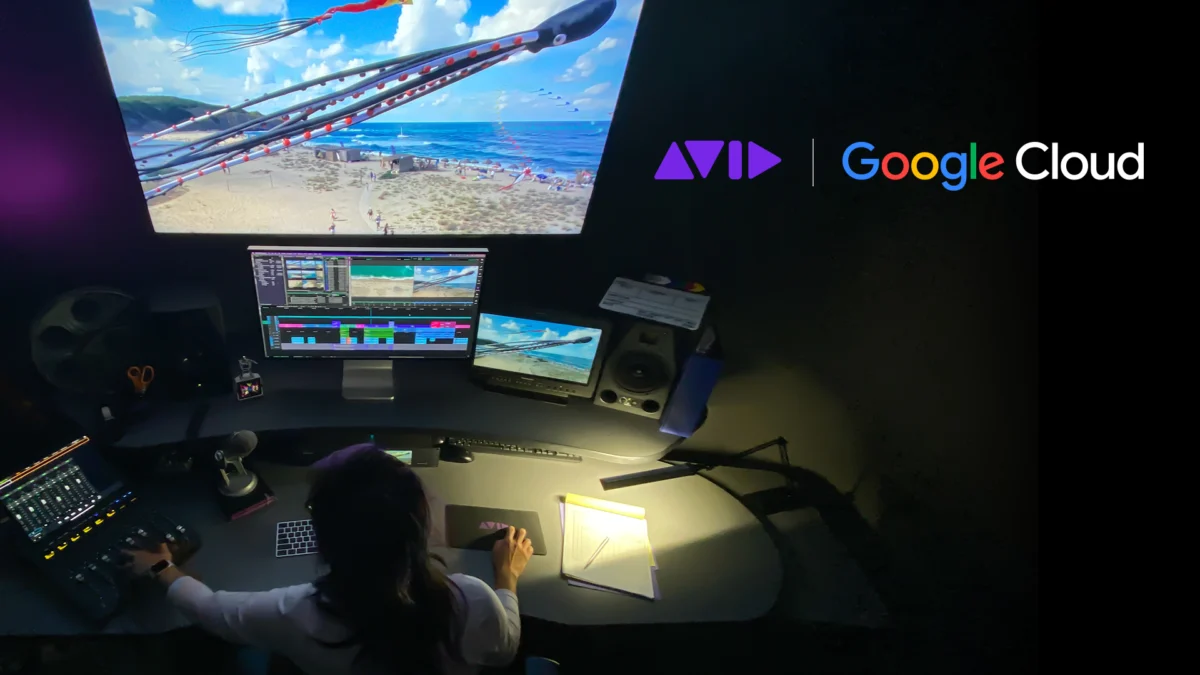
AMSTERDAM — In a move set to redefine the boundaries of remote video editing and cloud-based post-production, Avid and Google Cloud have announced a major expansion of their strategic partnership. Unveiled at the IBC 2026 Show at the RAI Amsterdam exhibition center, the collaboration introduces a groundbreaking browser-based version of Avid Media Composer, significant upgrades to the Avid Content Core data platform, and deep integrations of Google Cloud’s advanced AI ecosystem—including Gemini Enterprise and BigQuery.
The alliance is designed to alleviate the mounting logistical and administrative pressures facing modern film, television, and digital media production teams. By marrying Avid’s industry-standard creative tooling with Google Cloud’s hyper-scalable infrastructure and generative AI capabilities, the two tech giants aim to eliminate hardware bottlenecks, streamline archive searches, and allow creative professionals to remain focused squarely on storytelling.
Main Facts: What the Partnership Delivers
The expanded collaboration introduces a suite of interconnected tools aimed at transforming how media is ingested, processed, edited, and distributed across enterprise environments:
- Browser-Based Avid Media Composer: For the first time, editors can access the industry-standard nonlinear editing (NLE) system directly through a web browser—specifically optimized for Google Chrome. This deployment drastically reduces local workstation hardware requirements and enables seamless, high-performance remote collaboration.
- Upgraded Avid Content Core: Avid’s central content data platform has been enhanced with native cloud infrastructure and AI capabilities. It now supports natural language search, automated transcription, and descriptive media tagging, connecting the dots between planning, editing, and broadcast workflows.
- Google Cloud AI Integration (Gemini Enterprise & BigQuery): Google’s Gemini Enterprise is being woven directly into both Media Composer and Content Core. This integration powers media-specific AI agents capable of handling tedious logistics like dialogue transcription, project organization, timeline syncing, and metadata generation. Meanwhile, BigQuery integration allows enterprises to perform complex data analytics on massive media repositories.
- Flexible Infrastructure Deployment: Customers can connect Content Core directly to their own private Google Cloud environments, ensuring that valuable media assets and high-performance computing resources remain secure and localized within existing enterprise cloud frameworks.
- Live Industry Showcase: The companies are demonstrating these new cloud-native workflows live at the IBC 2026 Show, inviting broadcasters, post-production supervisors, and editors to test the capabilities firsthand at their respective exhibition spaces.
Chronology: The Road to Cloud-Native Media Production
The path toward a fully browser-based, AI-driven post-production ecosystem has been years in the making, marked by a gradual migration from heavy hardware-dependent editing bays to agile, cloud-centric environments.
The Shift to Remote Collaboration (2020–2023)
The global disruptions of the early 2020s forced the media and entertainment industry to rapidly adopt remote workflows. Broadcasters and post-production houses scrambled to move high-res media files to cloud storage, utilizing virtual private networks (VPNs) and remote desktop solutions to keep productions alive. However, these early adaptations often suffered from latency, bandwidth bottlenecks, and security vulnerabilities, proving that specialized media tools needed a native cloud redesign rather than a simple workaround.
Laying the Cloud Foundations (2024–2025)
Recognizing the industry’s trajectory, Avid began deeply investing in cloud-ready architectures, modernizing its data platforms like Avid Content Core to operate efficiently across distributed environments. Simultaneously, Google Cloud emerged as a preferred partner for media organizations seeking enterprise-grade security, massive storage scalability, and advanced machine learning capabilities. During this period, early integrations focused on secure cloud storage and remote asset management, laying the groundwork for deeper application-level collaboration.

The AI Boom and IBC 2026 Breakthrough
By 2026, generative AI transitioned from a novelty to an operational necessity in media production. With editors spending countless hours on non-creative chores like tagging footage and transcribing dialogue, the demand for embedded intelligence reached a boiling point. Capitalizing on this market shift, Avid and Google Cloud finalized their expanded partnership, culminating in the public unveiling of browser-based Media Composer and Gemini Enterprise integration at the IBC 2026 Show in Amsterdam.
Supporting Data: The State of AI and Cloud Adoption in Editing
The partnership between Avid and Google Cloud arrives against a backdrop of sweeping transformation within the post-production sector. Industry research highlights an urgent operational need for smarter, better-integrated workflows.
According to proprietary Avid research cited during the partnership announcement:
- 79% of professional editors now actively utilize artificial intelligence in their daily workflows. Among the most popular applications are speech-to-text conversion and automated dialogue transcription.
- 87% of editors agree that AI delivers its highest value when it directly aids them in achieving creative goals more efficiently—specifically by removing routine administrative friction.
- 63% of surveyed editors expressed a strong desire for AI tools to be more holistically integrated into their existing NLE environments, rather than functioning as disjointed third-party plugins.
These statistics underscore a paradox in modern editing: while digital tools have made capturing and storing media easier than ever, the sheer volume of content has created a severe data management crisis. Editors are spending more time searching archives, organizing timelines, and tagging assets than cutting picture and sound. By introducing agentic AI workflows directly into Media Composer and Content Core, Avid and Google Cloud are attempting to directly address this pain point.
Official Responses and Industry Perspectives
Leadership from both companies emphasized the strategic alignment and customer-centric philosophy driving the expanded collaboration.
Wellford Dillard, Chief Executive Officer of Avid:

"Customers are asking for intelligent tools that plug seamlessly into existing workflows and scale with their creativity. Our expanded partnership with Google Cloud strengthens our ability to deliver secure, AI-driven innovation while keeping Avid open, interoperable, and adaptable. By bringing Media Composer to the browser and integrating Gemini Enterprise into Content Core, we are helping creative teams bypass administrative friction and focus on storytelling."
Dillard’s remarks highlight Avid’s ongoing corporate strategy to modernize its legacy product suite, transforming from a traditional hardware-and-software vendor into a flexible, cloud-first platform provider.
Anil Jain, Global Managing Director of Strategic Industries at Google Cloud:
"Avid has always been a media technology pioneer, and this partnership solidifies its leadership in adopting advanced AI for film and television. By integrating Gemini Enterprise with Avid’s flagship tools, we are giving editors powerful agentic workflows and intelligent search to handle tedious production logistics. This collaboration ensures creators can stay in their creative flow and work securely from anywhere."
Jain’s comments point to the broader enterprise strategy of Google Cloud, which has increasingly targeted specialized vertical industries—such as media and entertainment—by embedding its foundational AI models (Gemini) and data analytics engines (BigQuery) directly into industry-standard software suites.
Implications: What This Means for the Future of Post-Production
The introduction of a browser-based Avid Media Composer backed by Google Cloud infrastructure carries profound implications for the media and entertainment industry, touching everything from studio economics to creative freedom.

1. Democratization and Hardware Freedom
Historically, outfitting a professional editing suite required heavy capital expenditure on high-end, specialized workstations equipped with powerful GPUs, massive local RAID storage, and certified I/O hardware. By shifting the heavy lifting to Google Cloud and running Media Composer natively within a standard web browser (Google Chrome), studios can drastically lower workstation costs. Freelancers and boutique agencies can now spin up an enterprise-grade Avid editing environment on modest laptops without sacrificing performance or security.
2. Transformation of the Editor’s Role
With Gemini Enterprise embedded directly into Content Core and Media Composer, the day-to-day routine of the assistant editor and lead cutter is poised for a dramatic shift. Natural language search capabilities mean an editor can type phrases like "find the wide shot of the car turning left at sunset" and instantly retrieve the exact clip from petabytes of archived footage. Automated transcription, syncing, and metadata tagging remove hours of tedious manual labor, shifting the editor’s job description closer to pure curation and narrative design.
3. Enterprise Security and Data Sovereignty
As productions become increasingly distributed—with directors in Los Angeles, colorists in London, and editors in New York—data security remains a paramount concern for Hollywood studios and major broadcasters. The ability to link Content Core directly to a studio’s proprietary Google Cloud environment ensures that intellectual property never leaves a secure, governed perimeter. Studios retain absolute control over their compute resources and media assets while still enjoying the agility of cloud collaboration.
4. A New Standard for Industry Interoperability
As Avid and Google Cloud demonstrate these workflows at the IBC 2026 Show, competitors in the creative software space will be forced to take notice. The move signals that the future of media production is neither purely local nor strictly proprietary; it is open, cloud-native, and AI-augmented. For Avid, this partnership solidifies its enduring legacy in film and television, proving that heritage media brands can successfully reinvent themselves for the cloud era without alienating their core professional user base.