If you have ever embarked on the quest for a premium Dolby Atmos soundbar to elevate your living room’s home cinema audio, Sonos has almost certainly occupied a prime spot at the top of your shortlist. For years, the audio giant has commanded the category. Both the Sonos Beam (Gen 2) and the larger, more robust Arc Ultra—alongside the legendary Arc before it—have remained mainstays near the top of industry-standard recommendations.
Now, a new contender has entered the arena, looking to carve out its own slice of the market: the Sonos Beam Ultra. According to the US-based brand, this latest addition to the Beam family delivers "true Dolby Atmos sound and crystal-clear dialogue from a compact soundbar that seamlessly fits your room."
Whether the Beam Ultra can genuinely live up to these lofty marketing claims will only become entirely clear once it enters dedicated testing facilities for exhaustive, comparative evaluations. However, following a brief yet revealing listening session at a launch event in Berlin, the early signs are exceptionally positive.

Main Facts: Pricing, Positioning, and Hardware Upgrades
Where Does It Sit in the Lineup?
The Sonos Beam Ultra arrives with a price tag of £699 / $699 / AU$1,099.
This strategic pricing places it directly in the middle of Sonos’s soundbar ecosystem, bridging the gap between the compact Sonos Beam Gen 2 (£449 / $449 / AU$649) and the flagship Arc Ultra (£999 / $999 / AU$1,799)—both of which hold prestigious five-star reviews.
In a move that may surprise some industry watchers, the Sonos Beam Ultra is not a direct replacement for the Beam Gen 2. Instead, the older model will remain actively on sale. This decision offers a more accessible entry point for buyers seeking a compact Dolby Atmos experience without the cost of dedicated physical up-firing drivers.
Design and Physical Build
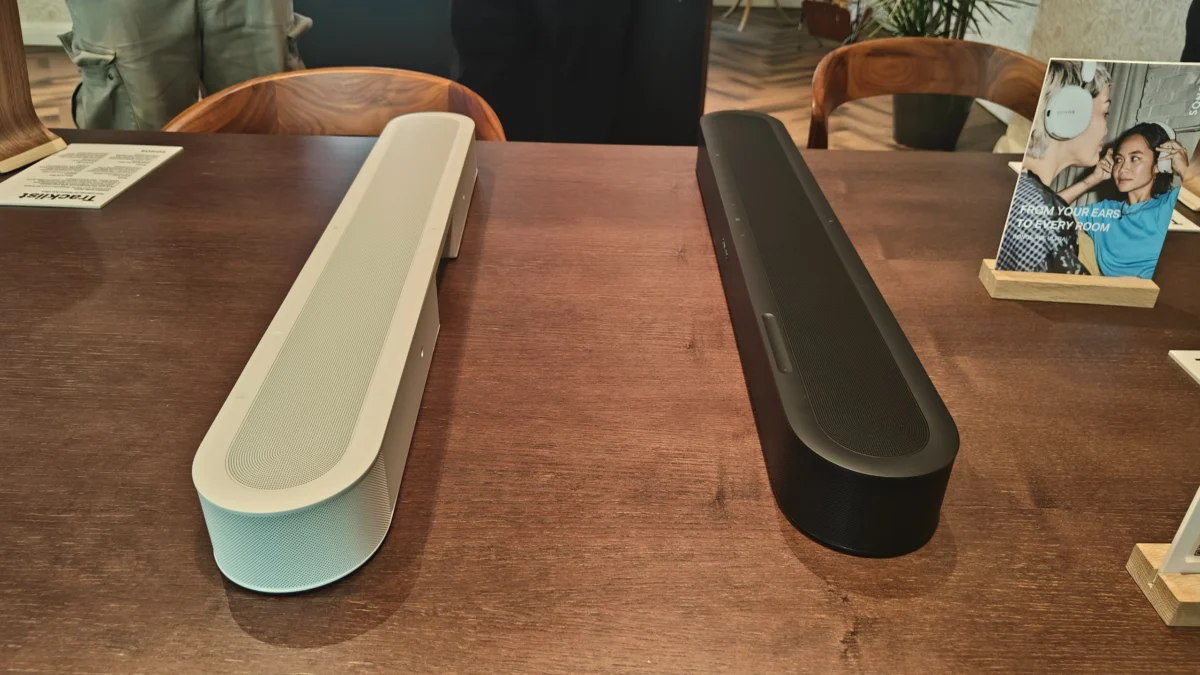
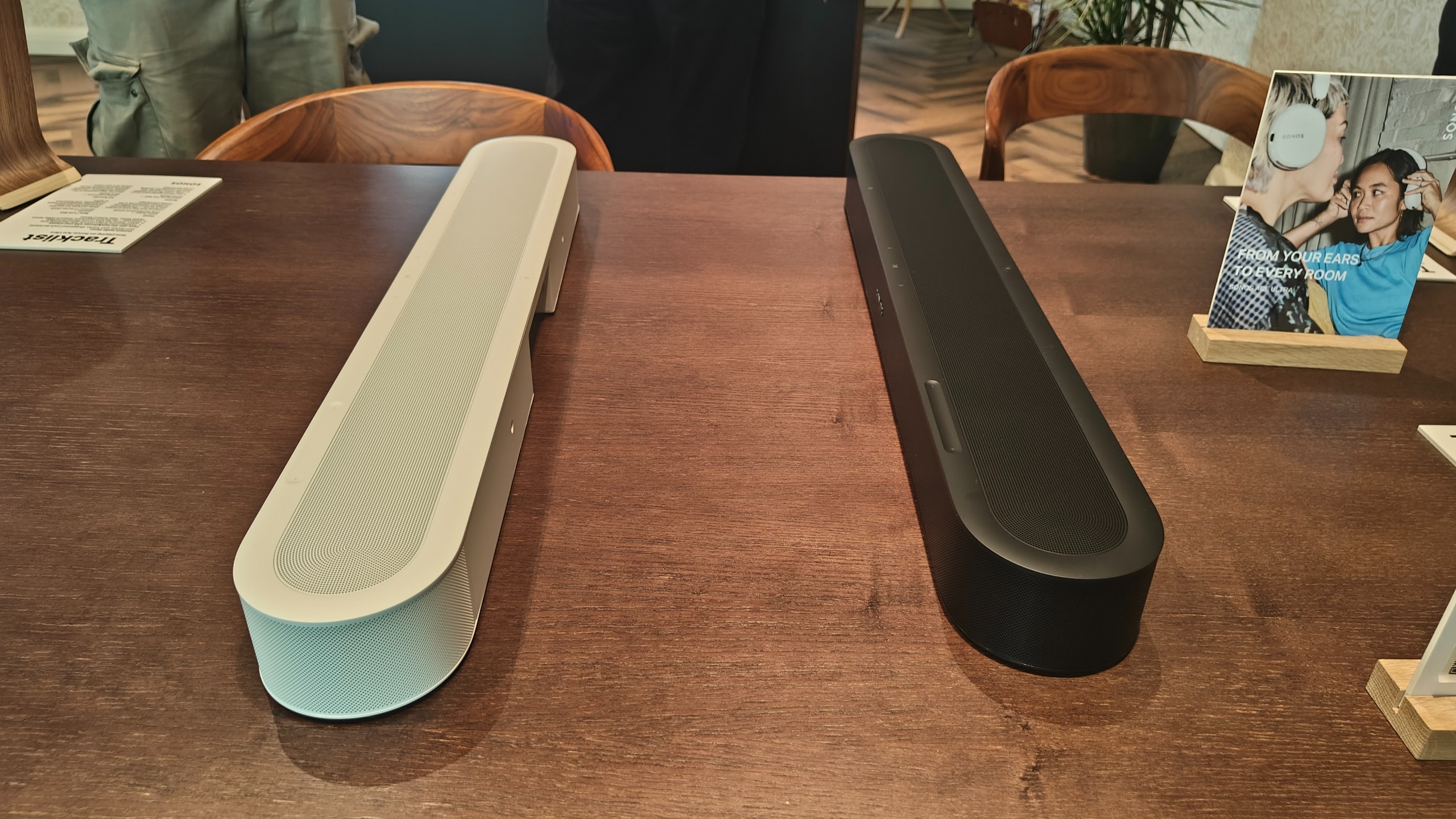
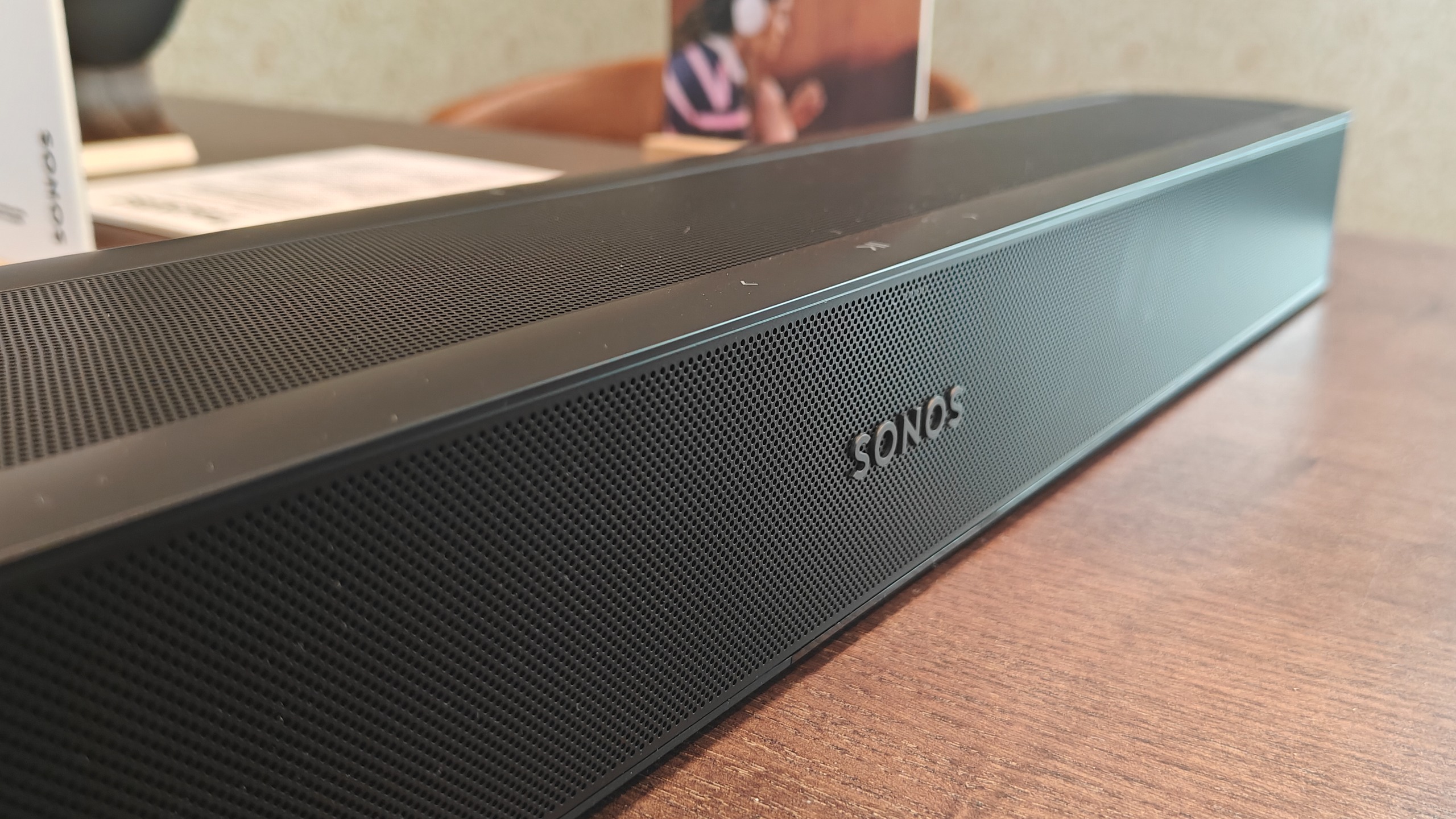
Having handled the Beam Ultra briefly during its debut demonstration, it immediately strikes a balance between a lightweight profile and sturdy, premium construction.
- Weight: 2.9kg (a marginal increase over the Beam Gen 2’s 2.8kg).
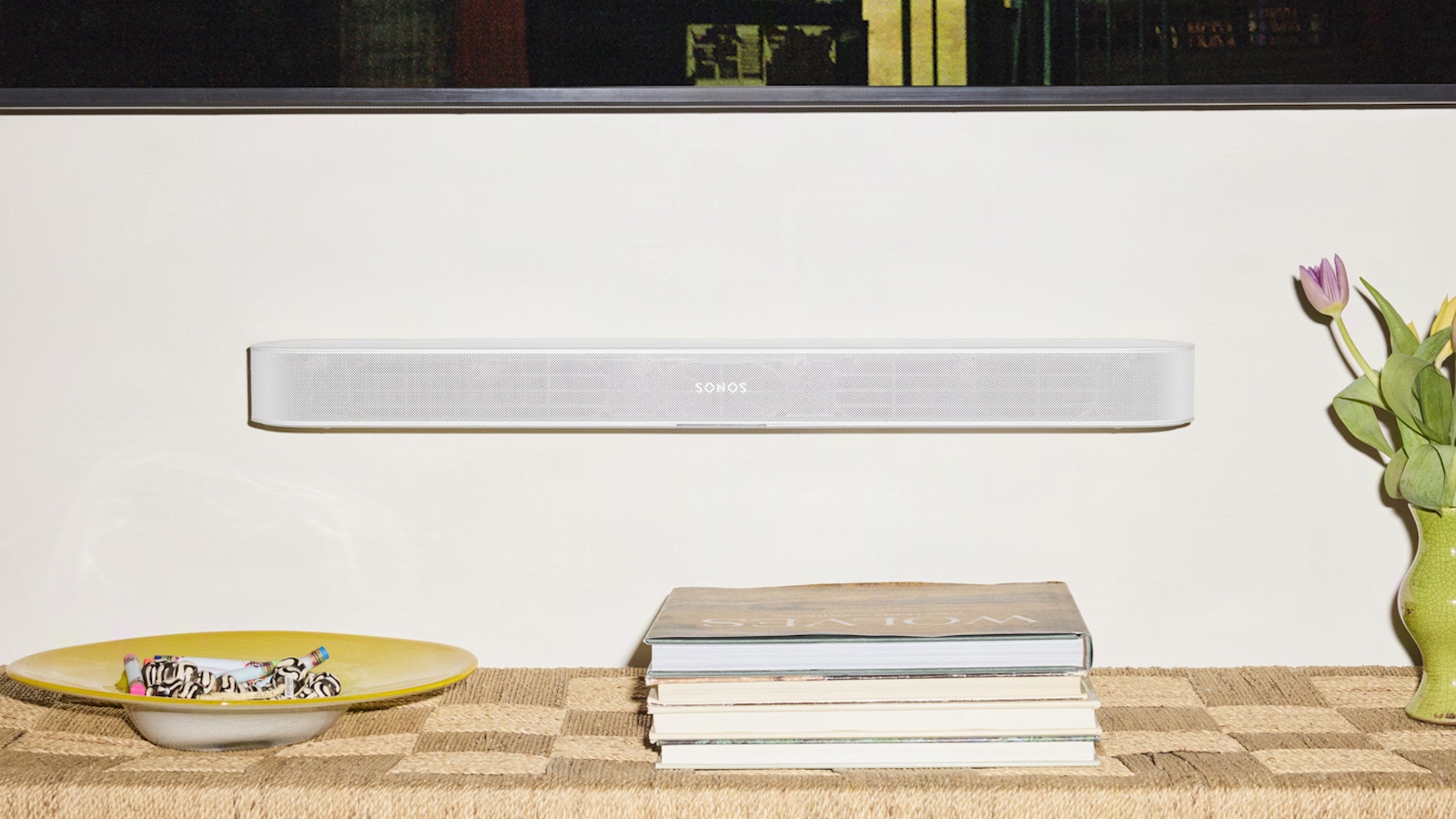
- Dimensions: Slightly thinner and longer than its predecessor, allowing it to slip effortlessly beneath modern TV bezels without blocking the screen or infrared receiver. Mounting options for wall installations remain fully supported.
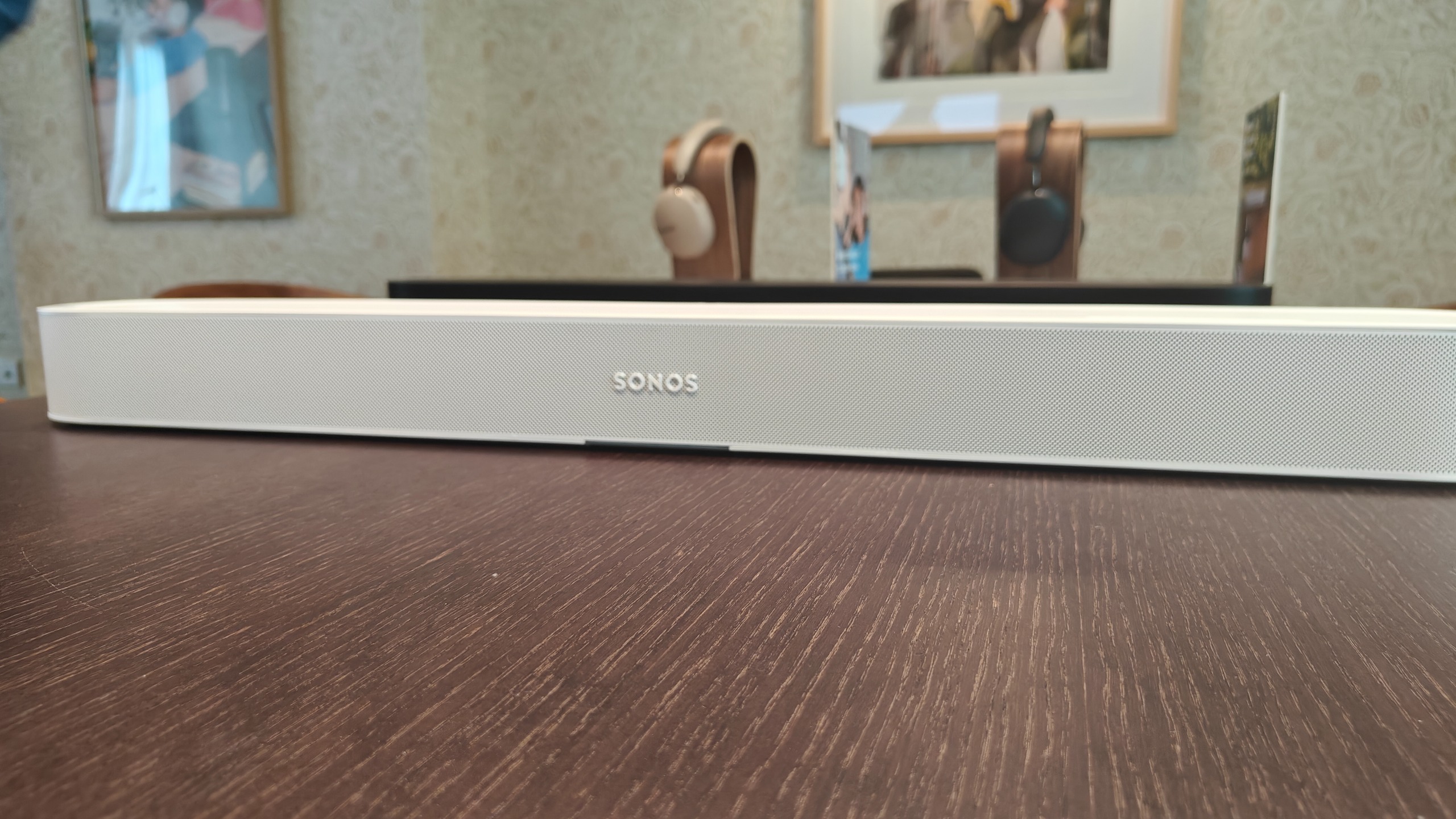
- Finishes: Available in classic matte Black and White colorways, matching the aesthetic language of the broader Sonos ecosystem.
- Controls & Connectivity: Perforated grilles adorn the top panel to accommodate upward-firing drivers. A dedicated Bluetooth pairing button sits alongside capacitive touch controls for volume adjustment and play/pause on the upper lip.
Acoustic Architecture
The most significant departure from the Beam Gen 2 lies within the acoustic engineering. While the Gen 2 relied heavily on psychoacoustic virtualization to simulate height channels, the Beam Ultra incorporates two physical up-firing drivers positioned at either end of the enclosure.
In total, the Beam Ultra houses nine drivers arranged in a sophisticated 7.1.2-channel configuration. Notably, the center channel has undergone a complete redesign, featuring a coaxial transducer that ingeniously embeds a tweeter directly inside a woofer. Sonos asserts this specific layout drastically widens the soundstage while drastically improving vocal clarity.
Chronology: From the Beam Gen 2 to the Ultra
To understand the trajectory of the Beam Ultra, it is helpful to look back at how Sonos has evolved its mid-sized home theater offerings:
- October 2021: Sonos launches the Beam (Gen 2), introducing Dolby Atmos virtualization to a compact footprint and winning widespread critical acclaim for its performance-to-size ratio.
- Late 2023–2024: Market competition heats up as rival brands introduce entry-level soundbars featuring physical upward-firing height drivers, putting pressure on Sonos to evolve beyond pure virtualization in smaller form factors.
- Early 2025: Rumors swirl regarding a mid-tier hardware refresh as Sonos works to overhaul its operating system and app ecosystem following high-profile software updates.
- Berlin Launch Event (Current): Sonos officially unveils the Beam Ultra, showing off its 7.1.2 channel layout, coaxial center driver, and expanded physical connectivity options to press and critics.
Supporting Data: Specifications and Connectivity
While a full technical breakdown must wait for lab testing, the official specification sheet highlights several notable hardware adjustments:
| Feature | Sonos Beam (Gen 2) | Sonos Beam Ultra |
|---|---|---|
| Price | £449 / $449 / AU$649 | £699 / $699 / AU$1,099 |
| Channel Layout | Virtual Atmos (5.0 equivalent) | True 7.1.2 Atmos with physical height drivers |
| Driver Count | 5 drivers | 9 drivers (including coaxial center) |
| HDMI Connectivity | HDMI eARC | HDMI eARC + USB-C data/adapter port |
| Wireless | Wi-Fi, Apple AirPlay 2 | Wi-Fi, Apple AirPlay 2, Bluetooth 5.3 |
| Weight | 2.8kg | 2.9kg |
Connectivity and Smart Features
Physical connectivity remains streamlined. At the rear, you will find a single HDMI eARC port. The traditional absence of dedicated HDMI passthrough inputs remains—a deliberate design choice by Sonos, though potentially frustrating for users with limited HDMI sockets on older television sets.
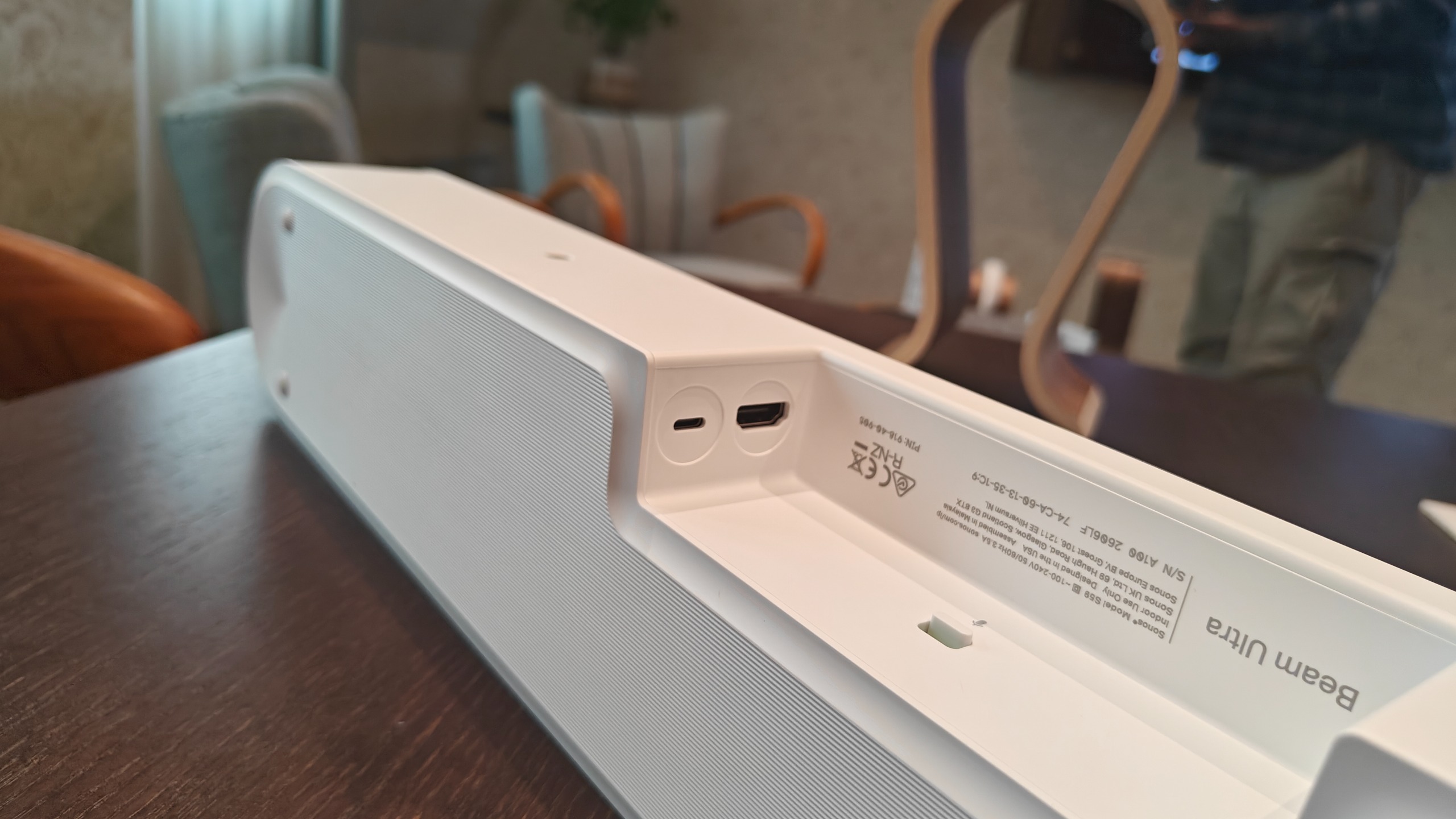
Crucially, however, the Beam Ultra introduces a USB-C port, marking a notable upgrade over the Beam Gen 2. Sonos offers optional accessories, including a Line-In Adapter (allowing traditional analog sources like a turntable or CD player with a 3.5mm aux jack to connect) and a Combo Adapter for hardwiring the soundbar directly to a home network router.
Wireless streaming capabilities are robust, backed by Bluetooth 5.3 and direct casting support from applications like Spotify and Tidal.
Official Responses and Ecosystem Integration
During the launch event, Sonos representatives emphasized the company’s commitment to delivering uncompromised spatial audio and dialogue intelligibility without requiring a massive, living-room-dominating soundbar.
Software and Customization
Management highlighted the newly optimized Sonos app, which grants users access to advanced EQ configurations, volume balancing, and specialized listening modes:
- Night Sound: Compresses dynamic ranges to prevent loud movie explosions from disturbing neighbors or sleeping household members.
- AI Speech Enhancement: Features four distinct processing levels designed to dynamically pull dialogue forward out of complex mixes. Early demos showed marked improvements in vocal presence, though long-term testing will determine whether this impacts natural tonal balance.
- Trueplay Calibration: Continues to anchor the software suite, allowing users with iOS and compatible devices to automatically calibrate the soundbar’s acoustic output to the unique dimensions of their room.
Multi-Room and Ecosystem Expansion
The Beam Ultra is designed to function as an integral node within the broader Sonos ecosystem. Users can effortlessly link the soundbar for whole-home audio experiences or pair it with the newly announced Sonos Ace Ultra over-ear headphones for private, late-night TV listening.
Furthermore, home theater enthusiasts can expand the setup by pairing wireless rear speakers—such as the five-star-rated Era 100—or utilizing portable speakers like the Move 2 to create a fully immersive discrete surround-sound layout.
Implications: Where Does the Beam Ultra Fit in the Market?
The arrival of the Sonos Beam Ultra carries significant implications for both consumers and competing manufacturers like Sony, Samsung, and Bose.
- Filling the Mid-Tier Void: For years, buyers faced a sharp financial jump between the £449 Beam Gen 2 and the £999 Arc series. At £699, the Beam Ultra fills this exact gap, offering genuine physical height channels and a coaxial center driver to users who find the Arc too large or expensive, but want more acoustic immersion than a purely virtualized bar can offer.
- The DTS:X Omission: Noticeably absent from the specification sheet is support for DTS:X audio codecs. While consistent with Sonos’s historical reluctance to adopt DTS formats for home cinema products, it remains a drawback for cinephiles who own expansive physical media libraries encoded in DTS.
- The Test of Real-World Performance: While initial demonstrations utilizing Harry Styles’ Ready Steady Go! in Atmos and atmospheric sequences from the upcoming TV series Widow’s Bay showcased impressive soundstage width, dynamic handling, and crisp vocal localization, lab testing will ultimately dictate its market standing.
Early Verdict
The Sonos Beam Ultra’s upgraded speaker arrangement, inclusion of physical height drivers, and stylish, low-profile design make it a deeply promising addition to the brand’s home cinema catalog. It avoids replacing the popular Beam Gen 2, instead offering an enticing step up for audio enthusiasts seeking genuine multi-channel immersion in a compact footprint.
Stay tuned for our comprehensive, in-depth review, where we will pit the Beam Ultra directly against its stablemates—the Beam Gen 2 and Arc Ultra—as well as top-tier rival soundbars to determine whether it establishes a new gold standard for mid-sized home theater audio.