Byline: Arts & Culture Desk
Date: June 24, 2026
In the annals of American music history, there exist shadows—works of profound ambition that were whispered about in rehearsal halls but never graced a concert stage. Nearly ninety years after the legendary bandleader Tommy Dorsey abandoned a daring symphonic work, deemed too complex for the sensibilities of the 1938 swing era, a long-lost masterpiece has finally been resurrected.
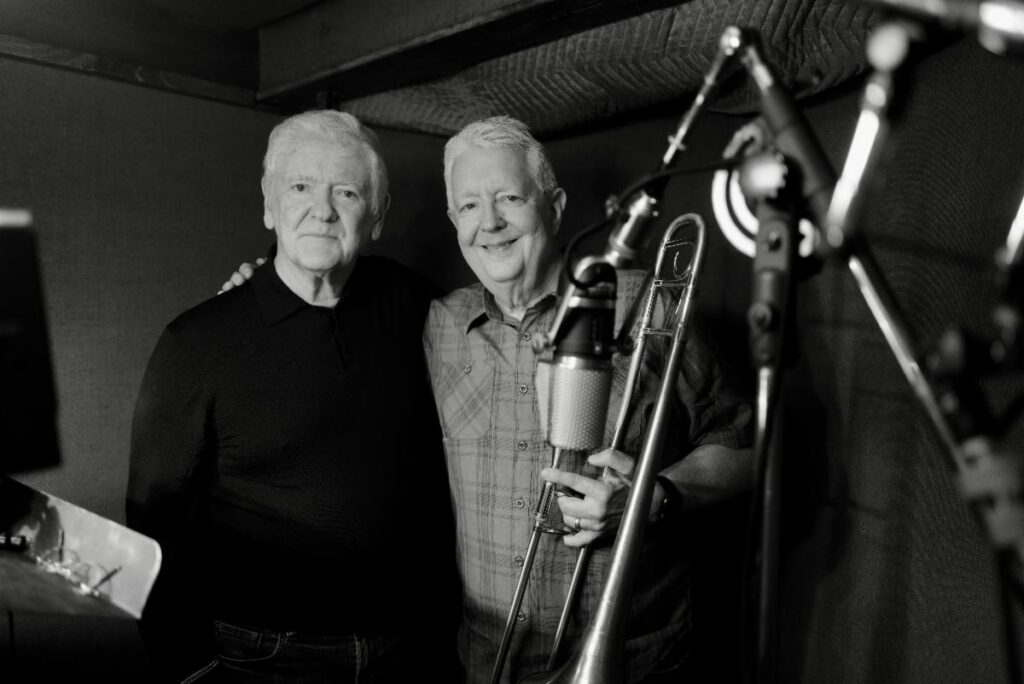
Trombone virtuoso Jim Pugh, a pillar of the global session scene, has unveiled New American Symphonies, an album that serves as both a historical recovery and a masterclass in modern audio engineering. Featuring the first-ever recording of Roy Harris’s forgotten trombone symphony, the project pairs this 20th-century relic with a contemporary commission by Scott Ninmer, Night Suite. Recorded in immersive Digital eXtreme Definition (DXD) at the storied Power Station at BerkleeNYC, the album represents a monumental collaboration between Pugh and his lifelong friend, Grammy-winning engineer Jim Anderson, alongside producer Ulrike Schwarz.
The Archival Excavation: A Musical Time Capsule
The journey to New American Symphonies began not in a studio, but in the quiet, climate-controlled stacks of the Library of Congress. For years, Jim Pugh had been fascinated by rumors of a symphonic work composed by Roy Harris—a titan of American classical music best known for his Symphony No. 3—specifically for the Tommy Dorsey orchestra.
Pugh’s meticulous research led him to unearth original manuscripts that had been gathering dust for nearly nine decades. As he pieced together the archives, the narrative of the work’s abandonment became clear: Dorsey’s orchestra, despite its immense talent, had managed to rehearse only a portion of the piece before shelving it indefinitely. It was a victim of its own sophistication, written for a time that was not yet ready for its harmonic complexity.
"It’s really a magnificent piece of music," Pugh remarked during the announcement of the album. "If you close your eyes and listen to the first movement, you can hear where jazz would eventually arrive some 35 or 40 years later, and if you pay attention to the back end, you can hear the roots of minimalism. It’s this remarkable little time capsule that slipped through the cracks of history."

Chronology of a Collaboration
The story of this project is as much about the endurance of friendship as it is about musical discovery. The bond between Jim Pugh and Jim Anderson spans over sixty years, originating in a Pennsylvania school band where the two first shared a music stand.
- 1960s: Pugh and Anderson meet as young musicians in Pennsylvania, beginning a lifelong dialogue about sound, performance, and the possibilities of the recording arts.
- 1970s–2000s: Pugh solidifies his status as a legendary session trombonist, recording over 4,000 sessions with icons ranging from Frank Sinatra and Barbra Streisand to Steely Dan and Pink Floyd. Simultaneously, Anderson ascends to the pinnacle of audio engineering, collecting Grammy nominations and shaping the sound of modern jazz and classical recordings.
- 2020–2025: Pugh begins his deep-dive research into the Library of Congress, discovering the lost Harris manuscripts and conceptualizing a project that honors both the past and the present.
- 2026: The recording sessions at Power Station at BerkleeNYC are completed. Working with producer Ulrike Schwarz, the team utilizes cutting-edge DXD technology to capture an all-star ensemble.
- August 14, 2026: The global release of New American Symphonies.
- September 15, 2026: A special release event scheduled at Technica House in New York City to celebrate the culmination of this multi-year endeavor.
The Engineering Philosophy: Transparency as an Art Form
Central to the project is the uncompromising sonic quality afforded by Digital eXtreme Definition (DXD). For Anderson and Schwarz, the goal was not to artificially enhance the music but to create a "transparent" acoustic space.
"If we can make the technology disappear, if our presence can be totally transparent, then we’ve done our job," Anderson explained. "Sure, we’re always trying to push the envelope, but ultimately our goal is to make timeless recordings with nothing standing between the listener and the musical experience."
The immersive production, which makes the listener feel as though they are seated in the heart of the ensemble, is a hallmark of the Anderson-Schwarz partnership. Ulrike Schwarz, who brings a distinct European perspective on classical production to the table, emphasizes the emotional intimacy of the project. "When you listen to this record, you’ll feel like you’re standing in the middle of the band, but also like they’re playing directly to you," she noted. "It’s a completely immersive experience."
Supporting Data: An All-Star Cast
The success of the recording rests on the caliber of the ensemble. Drawn from the elite tiers of jazz, classical, Broadway, and session circles, the musicians assembled for New American Symphonies represent a cross-section of the best talent in New York.
The inclusion of Scott Ninmer’s Night Suite provides a perfect counterpoint to the Harris work. Ninmer, a former student of Pugh and now the Chief Arranger for the United States Marine Band, has created a work that bridges the gap between the symphonic ambition of the 1930s and the diverse, poly-stylistic landscape of 2026. This juxtaposition of the "lost" past and the "composed" present offers listeners a panoramic view of the American musical experience.

The Significance of the Project
The importance of this release extends beyond the mere "discovery" of a lost manuscript. It serves as an audit of the American canon, asking what we choose to preserve and what we allow to fade into obscurity. By choosing to record this work in the highest possible fidelity, Pugh and his team are making a statement about the value of this history.
The project also underscores the shifting role of the "session musician." In an era where digital synthesis can simulate many instruments, the human element—the breath of the trombonist, the spatial awareness of the engineer, the collaborative energy of the ensemble—becomes more vital than ever. This is not just a digital file; it is a document of human effort, bridging nearly a century of technological and aesthetic evolution.
Official Responses and Industry Impact
The industry response to the announcement of New American Symphonies has been one of anticipation. Musicologists have praised the decision to pair the Harris piece with a contemporary commission, noting that it prevents the project from becoming a mere museum piece.
"This is an act of cultural stewardship," remarked one prominent music historian. "Jim Pugh is not just playing a trombone; he is correcting a historical imbalance. By bringing this work into the light, he is forcing us to re-evaluate the trajectory of 20th-century American music."
For the team at NativeDSD, the platform chosen for the exclusive early release, this project highlights the demand for high-resolution, high-fidelity content among audiophiles who crave more than the compressed audio common in streaming services. It is a testament to the fact that when music is treated with the reverence it deserves, the audience will respond.
Implications for the Future
What happens when a forgotten chapter of history is finally read? For Jim Pugh, the implications are personal. "I wanted to see if the music lived up to the legend," he said. "It surpassed it."
As we look toward the release date and the subsequent event at Technica House, it is clear that New American Symphonies will serve as a reference point for future collaborative projects. It provides a blueprint for how artists can utilize historical research, modern engineering, and cross-generational mentorship to create something that is truly timeless.
In a world that is constantly moving toward the next trend, Pugh, Anderson, and Schwarz have asked us to pause and listen to the echoes of 1938—and in doing so, they have ensured that the future of American music is firmly rooted in its own remarkable past.
For more information regarding the album or the upcoming event at Technica House, please contact Taylor Perry at [email protected].