Executive Summary: A Disappointing Reality
On Wednesday, IBM officially confirmed what investors had been dreading for over a week: the 115-year-old computing titan is facing a significant operational and financial setback. Despite maintaining a robust balance sheet—boasting $17.2 billion in quarterly revenue, $9.9 billion in gross profit, and a formidable 58% margin—the company’s actual performance fell drastically short of Wall Street’s expectations.
The shortfall was not merely a miss; it was a systemic shock that sent shockwaves through the financial markets. For a company that had enjoyed relative stability under CEO Arvind Krishna’s six-year tenure, the current situation represents a profound reality check. The primary catalyst for this decline was a precipitous 42% collapse in the company’s "cash-cow" mainframe hardware business. This contraction has not only hampered current earnings but has triggered a downward revision of the company’s full-year growth forecasts, casting a shadow over the immediate future of the tech giant.
The Chronology of a Market Shock
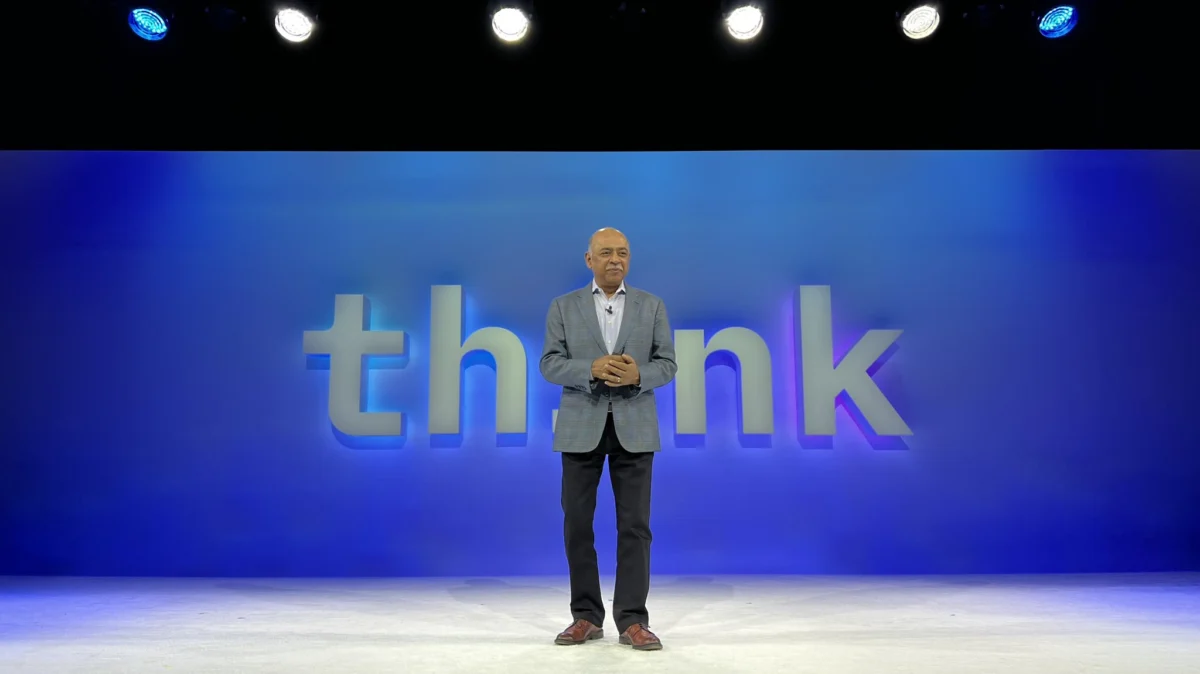
The road to this week’s earnings report was paved with unprecedented transparency—and panic. Sensing that the quarterly results would be catastrophic, CEO Arvind Krishna and the IBM board took the rare, proactive step of issuing a "letter to investors" last week to prepare the market for the impending bad news.
In the letter, Krishna acknowledged that the results were "worse than our expectations," specifically highlighting abysmal revenue in the infrastructure category and a tightening of profit margins. The reaction from the market was instantaneous and brutal: IBM stock plummeted 25% in a single day, marking the largest single-day decline in the company’s storied history.
Until this point, Krishna had been widely credited with stabilizing the company, leveraging the AI-driven data center boom to lift IBM’s market position. The sudden reversal has effectively wiped out significant market gains and forced a re-evaluation of the company’s strategic reliance on legacy infrastructure in an era defined by high-velocity technological shifts.
Supporting Data: The Ripple Effect of Hardware Volatility
To understand the gravity of IBM’s miss, one must look at the mathematical relationship between its hardware sales and its broader ecosystem. As CFO Jim Kavanaugh articulated during the quarterly investor call, IBM operates on a multiplier effect: for every $1 of mainframe hardware sold, the company historically generates approximately $3 in follow-on software revenue.
When mainframe sales drop by 42%, the damage is not confined to the hardware division; it creates a "cascading problem" that ripples through the company’s software and maintenance segments. The core of this issue lies in the procurement cycles of "tens" of enterprise-level clients. While the number of customers may seem small, these are not consumer-grade purchases. A single mainframe transaction involves hundreds of thousands, sometimes millions, of dollars in upfront costs, supplemented by long-term maintenance contracts and software licensing fees that represent the backbone of IBM’s recurring revenue.
The AI Paradox: Why the Boom Backfired
The irony of the current situation is that the very phenomenon driving growth in the tech sector—the AI infrastructure boom—is exactly what hindered IBM’s quarterly performance.
The enterprise hardware landscape is currently experiencing extreme volatility. As companies scramble to build out AI-ready data centers, the demand for memory, GPUs, and specialized cooling gear has skyrocketed. This demand has triggered a supply-chain crunch, leading to astronomical price increases ranging from 15% to 30% for essential data center components.
Facing limited capital budgets, many of IBM’s core enterprise clients were forced to make a strategic choice: invest in the latest AI-ready infrastructure or proceed with the scheduled refresh of their IBM mainframe fleets. Caught in the squeeze of rising costs for third-party gear, these clients prioritized the immediate, high-cost AI infrastructure, effectively "robbing Peter to pay Paul."
Official Responses: Managing the Narrative
Throughout the post-earnings call, the leadership team of Arvind Krishna and CFO Jim Kavanaugh worked diligently to frame the downturn as a "temporary blip" rather than a structural decay.
The CEO’s Defense
Krishna’s narrative centers on the inevitability of the mainframe’s relevance. He noted that the decision by clients to delay mainframe purchases was a rational, budget-constrained response to market-wide price hikes. "When they were faced with that issue, then they decided to move budget to those areas where they were having that extreme price," Krishna explained.
Crucially, he emphasized that there is no evidence of client churn. In his view, the demand for mainframe capacity remains high, and the delayed purchases are merely postponed, not canceled. "We see no evidence of clients moving off the mainframe," Krishna asserted, noting that some clients had already begun finalizing their deferred orders in the current quarter.
The CFO’s Perspective
CFO Jim Kavanaugh echoed this sentiment, attempting to decouple the one-time hardware slump from the long-term health of the company’s software business. By framing the issue as a "timing mismatch" caused by external supply-chain inflationary pressures—pressures that have similarly forced companies like Dell, HP, and Apple to raise their prices—the leadership team is asking investors to look past the current volatility toward a normalized future.
Implications: Is the Mainframe Obsolete?
The broader implications of this quarter’s results raise a fundamental question: Is the era of the mainframe finally ending, or is IBM merely experiencing a transient cyclical fluctuation?
The "Death" of the Mainframe
The tech industry has spent decades predicting the death of the mainframe. From the rise of client-server computing in the 1990s to the cloud-native revolution of the 2010s, the mainframe has been dismissed time and again as a relic. Yet, it has consistently proven its worth in high-security, high-transaction environments like banking, insurance, and government services.
However, the current AI boom presents a different challenge. As enterprises pivot toward decentralized AI models and edge computing, the centralized, heavy-duty processing power of the mainframe must prove its utility in a new, hyper-agile landscape. If IBM cannot demonstrate that its hardware is not only "relevant" but "essential" to the AI-driven future, the company faces a long-term erosion of its competitive moat.
Financial Outlook and Investor Confidence
The decision to lower full-year growth forecasts suggests that the company is bracing for a period of adjustment. Investors, who had grown accustomed to the "AI boom" narrative, are now forced to grapple with the reality that IBM remains tethered to legacy capital expenditure cycles.
The immediate task for Krishna and his team is to rebuild trust. To succeed, they must prove that the "tens of customers" who deferred their purchases are not just returning to the fold, but are doing so with a renewed commitment to the IBM software ecosystem. If these clients instead find that they can survive, or even thrive, without the latest mainframe generation, IBM’s "cascading" revenue model could face a permanent decline.
Conclusion: A Critical Crossroads
IBM is currently at a critical juncture. The company’s ability to navigate this period of hardware volatility will define the next phase of its 115-year history. While the current fiscal results are undeniably poor, the underlying reliance on the mainframe remains a formidable barrier to entry for competitors.
The coming quarters will be a litmus test for the company’s leadership. If the mainframe purchases materialize as predicted, the current quarter will be viewed as a blip in an otherwise sound strategy. However, if the hardware slump persists, IBM may find itself needing to accelerate its transition away from traditional infrastructure and deeper into the software and services models that define the modern tech economy. For now, the world watches—and waits—to see if the mainframe can survive its latest existential threat.