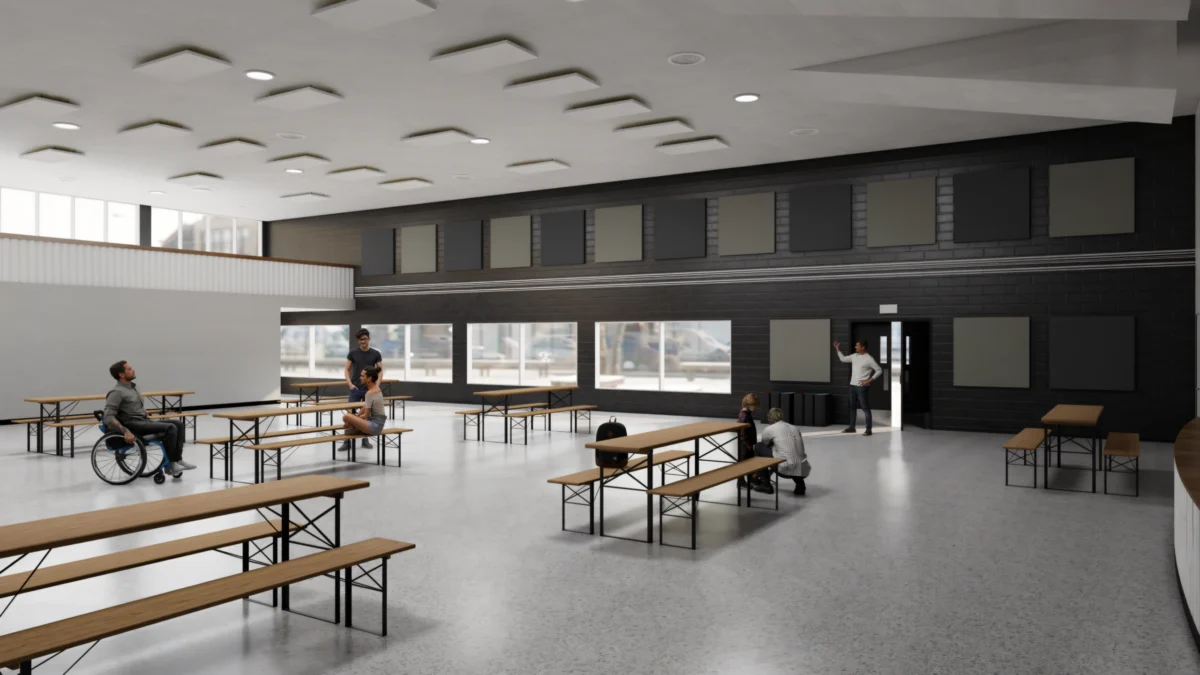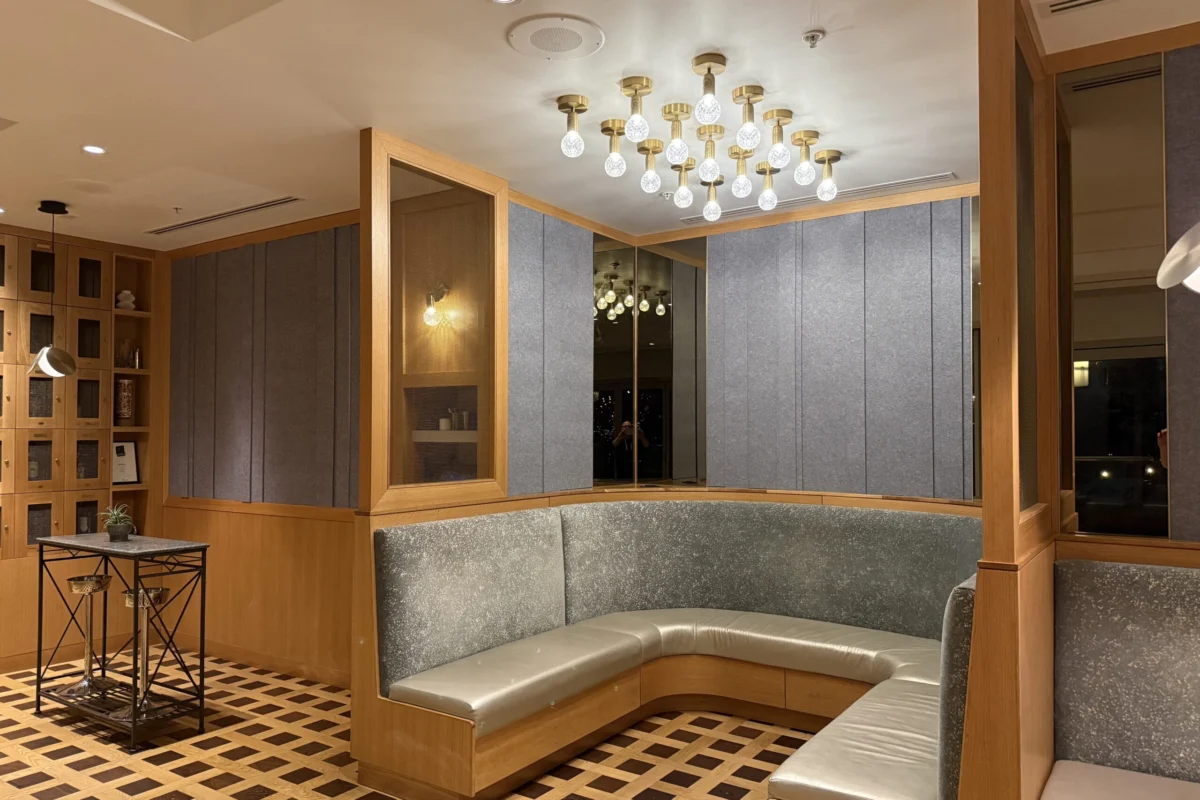
In the modern workplace, restaurant, or public assembly hall, we often focus on the visual: the lighting, the furniture, the branding, and the color palette. Yet, there is a pervasive, invisible factor that dictates the success of these spaces: acoustics. When a room suffers from poor speech intelligibility, it isn’t just a minor annoyance; it is a significant drain on productivity, a source of chronic fatigue, and a fundamental failure in environmental design.
As our shared spaces become increasingly multifunctional, the "hidden cost" of poor acoustics is coming under the microscope. Industry experts and design professionals are shifting their focus upward, identifying the ceiling as the primary battlefield in the fight against noise-induced stress and communication breakdown.
The Science of Sound: It’s Not About Volume
A common misconception in facility management is that if people are struggling to hear one another, the solution is to increase the volume—whether that means talking louder or cranking up the gain on a sound reinforcement system. This, however, is a fundamental misunderstanding of acoustic physics.

The Physics of Intelligibility
Speech intelligibility is not a function of raw volume; it is a function of clarity. When sound is generated, it travels directly from the source to the listener. However, in most contemporary rooms, sound also hits hard surfaces—walls, floors, and most significantly, ceilings—and reflects back to the listener.
These reflections arrive at the ear mere milliseconds after the original sound. To the human brain, these delayed signals act as "acoustic smearing." The brain must expend significant cognitive energy to filter out these echoes and overlapping sound waves to distinguish the intended message from the background noise. This creates a state of "listening fatigue," where individuals hear plenty of noise but understand very little of the content. By simply increasing the volume, you are merely increasing the amount of reflected energy, which exacerbates the reverberation and pushes the room further toward chaos rather than clarity.
The Ceiling: The Largest Uninterrupted Canvas
Why do acoustic experts emphasize the ceiling? The answer is geometric. In almost any enclosed space, the ceiling represents the largest, most unobstructed surface area. While walls are often broken up by windows, doors, art, whiteboards, or branding, the ceiling remains a vast, flat, and usually hard surface—the perfect environment for sound to bounce uncontrollably.

The Chronology of Sound Reflection
- The Initial Source: A person speaks or a sound system plays audio.
- The Primary Wave: The sound reaches the listener directly.
- The First Reflection: Within milliseconds, the sound strikes the ceiling.
- The Secondary Wave: The reflected sound reaches the listener, now slightly delayed.
- The Cognitive Load: The brain attempts to process both signals, leading to the perception of "muddled" audio.
- The Cascading Effect: As background noise rises, speakers naturally talk louder (the Lombard Effect), creating more reflections and further degrading the acoustic environment.
By treating the ceiling, you address the problem at its most significant point of origin. By intercepting sound energy before it can bounce back into the room, you drastically reduce the overall reverberation time, allowing for a quieter, more focused atmosphere.
Supporting Data: The Impact on Human Performance
The implications of poor room acoustics extend well beyond mere frustration. Research into office productivity has consistently shown that "speech privacy" and "speech intelligibility" are among the top-rated factors influencing employee satisfaction.
In environments where speech is hard to distinguish, workers report higher levels of stress and a decreased ability to perform complex tasks. In learning environments, such as classrooms, poor acoustics are directly linked to lower test scores and reduced information retention. In the hospitality sector, restaurants with high reverberation times often see lower repeat-customer rates, as the "noisy" atmosphere makes conversation difficult, leading to a frantic, rather than relaxing, experience.

The Architectural Solution: Blades vs. Baffles
Recognizing the ceiling’s potential, manufacturers like Primacoustic have developed specialized solutions that treat the room without compromising its aesthetic integrity. The choice between "Blades" and "Dimensional Baffles" often comes down to the specific architectural requirements of the space.
1. The Case for Blades
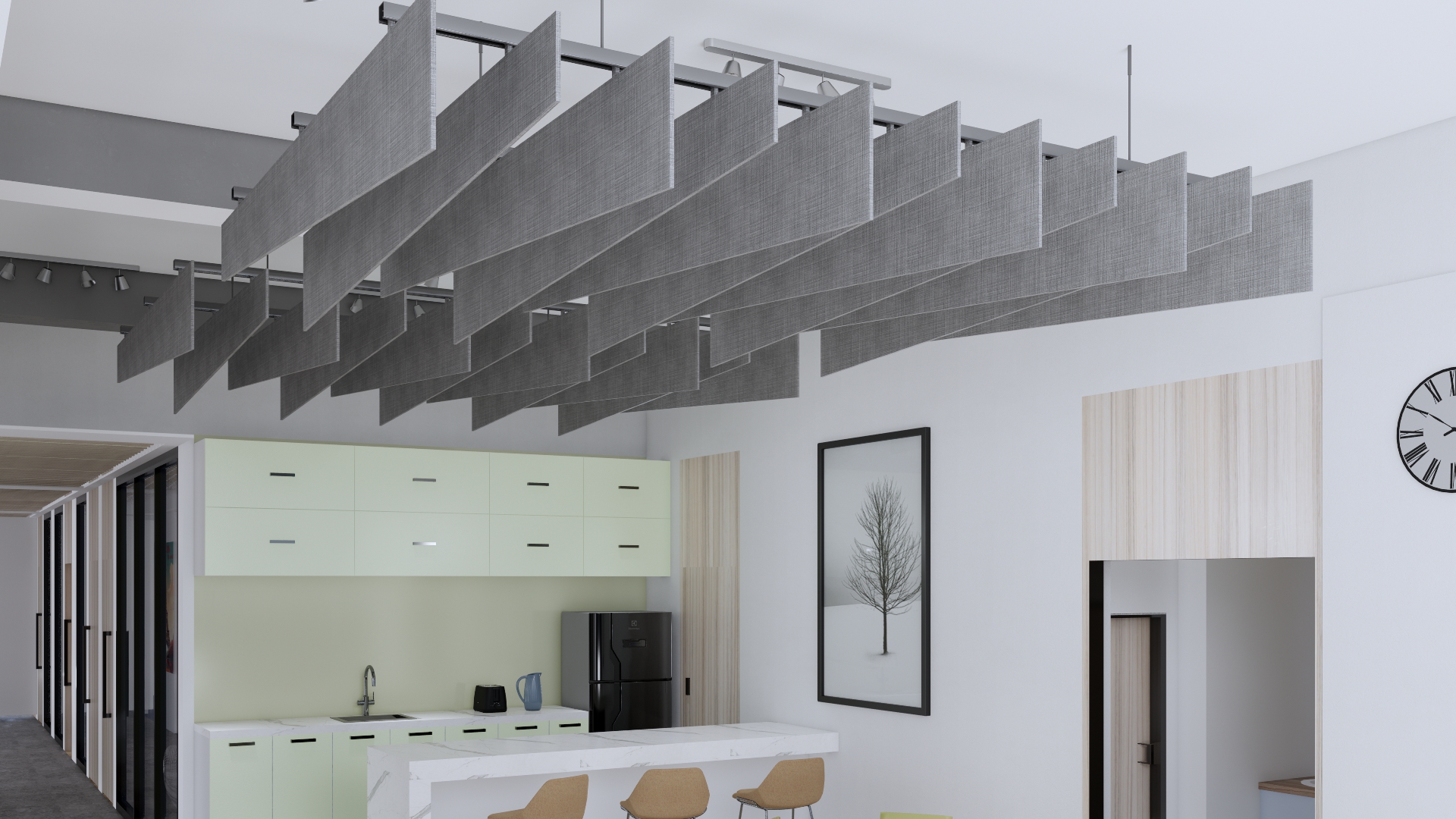
EcoScapes Blades are designed for spaces where a clean, rhythmic look is desired. Because they are typically mounted adjacent to the ceiling surface, they are excellent for rooms with lower ceilings where maintaining a sense of volume is critical. They can be arranged in wave-like patterns to guide the eye or used to define specific zones—such as a lounge area within an open-concept office—without the need for physical partitions.
2. The Power of Dimensional Baffles
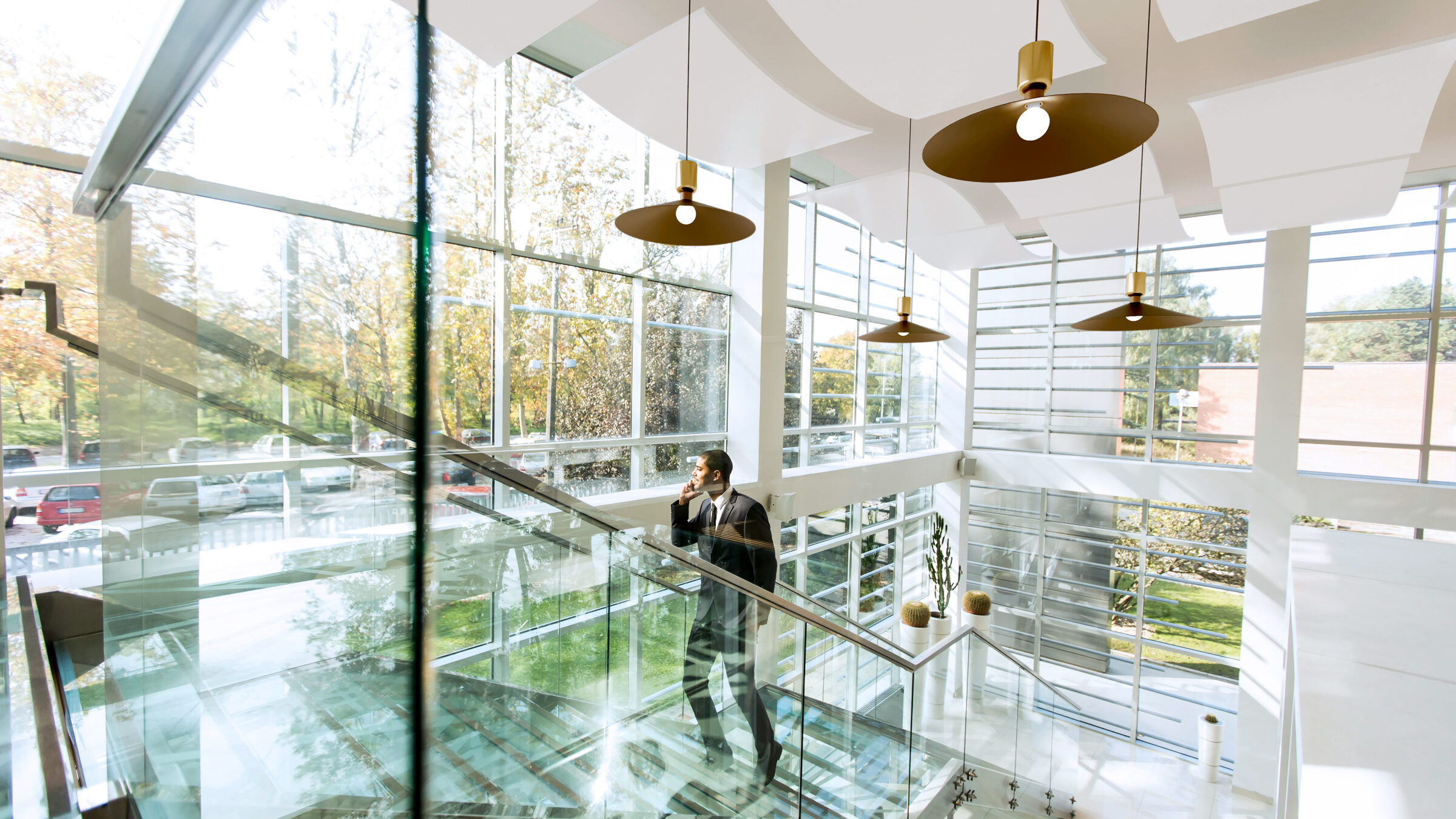
For larger, high-ceilinged spaces, such as atriums, lobbies, or modern open-plan industrial offices, Dimensional Baffles are often the superior choice. Suspended in space, these 3D elements offer a higher surface area for sound absorption. They are visually striking and can be integrated into existing structures, such as exposed beams or rafters, turning a functional acoustic need into a high-end design feature.
Official Perspectives: Sustainability and Health
Modern acoustic treatment has moved beyond the "egg-carton foam" era. Today’s high-performance solutions, such as those made from post-consumer PET (polyethylene terephthalate), represent a convergence of environmental responsibility and high-level engineering.
Industry leaders highlight several critical benefits of these modern materials:
- Safety: These materials are generally free of formaldehyde, VOCs (volatile organic compounds), and harsh glues, making them safe for occupants with sensitivities.
- Sustainability: By utilizing recycled materials, companies can contribute to LEED and WELL building certifications, which are becoming the gold standard for sustainable and health-conscious architecture.
- Durability: Unlike traditional acoustic tiles that can sag, discolor, or crumble over time, modern PET-based baffles and blades are highly durable and easy to maintain, ensuring a long-term return on investment.
Implications for Future Design
The trend toward open-plan offices and hard-surfaced, minimalist design shows no sign of slowing down. However, the "acoustic crisis" created by these designs is forcing a shift in how we approach interior fit-outs. We are moving toward a "ceiling-first" philosophy.

When designers prioritize acoustic treatment at the outset of a project, they avoid the costly and often ineffective "retrofitting" that occurs when a space is finished, occupied, and found to be unusable due to noise. Integrating acoustic blades or baffles at the planning stage allows for:
- Zonal Control: Differentiating between noisy collaborative zones and quiet focused zones using acoustic treatment as a visual boundary.
- Vocal Preservation: Reducing the strain on speakers who no longer feel the need to shout to be heard.
- Enhanced Branding: Using the ceiling as a canvas for color, custom prints, and unique structural shapes that reinforce a company’s identity.
Conclusion: Designing for the Human Experience
Ultimately, the goal of any built environment is to serve the people within it. A space that is uncomfortable to inhabit—whether due to heat, light, or sound—is a failed space. By acknowledging the hidden cost of poor acoustics and implementing smart, aesthetically integrated ceiling solutions, architects and facility managers can transform chaotic environments into hubs of productivity and calm.
When we design for the ear, we design for the user. As we look toward the future of office and public space design, the most successful projects will be those that strike the perfect balance between visual form and acoustic function.
Are you ready to address the soundscape of your facility? Whether you are navigating the complexities of a large-scale renovation or looking for a targeted solution for a high-traffic lobby, a ceiling-first approach offers the most efficient path to acoustic comfort. Contact experts at Primacoustic to explore how modern acoustic architecture can redefine your space.