In a landmark event for cybersecurity, Microsoft issued a massive wave of patches this past Tuesday, setting an all-time record for the number of security vulnerabilities addressed in a single update cycle. This unprecedented cleanup of the company’s software ecosystem is being attributed to a fundamental shift in how vulnerabilities are identified: the aggressive integration of Artificial Intelligence (AI) by both Microsoft’s internal teams and independent security researchers.
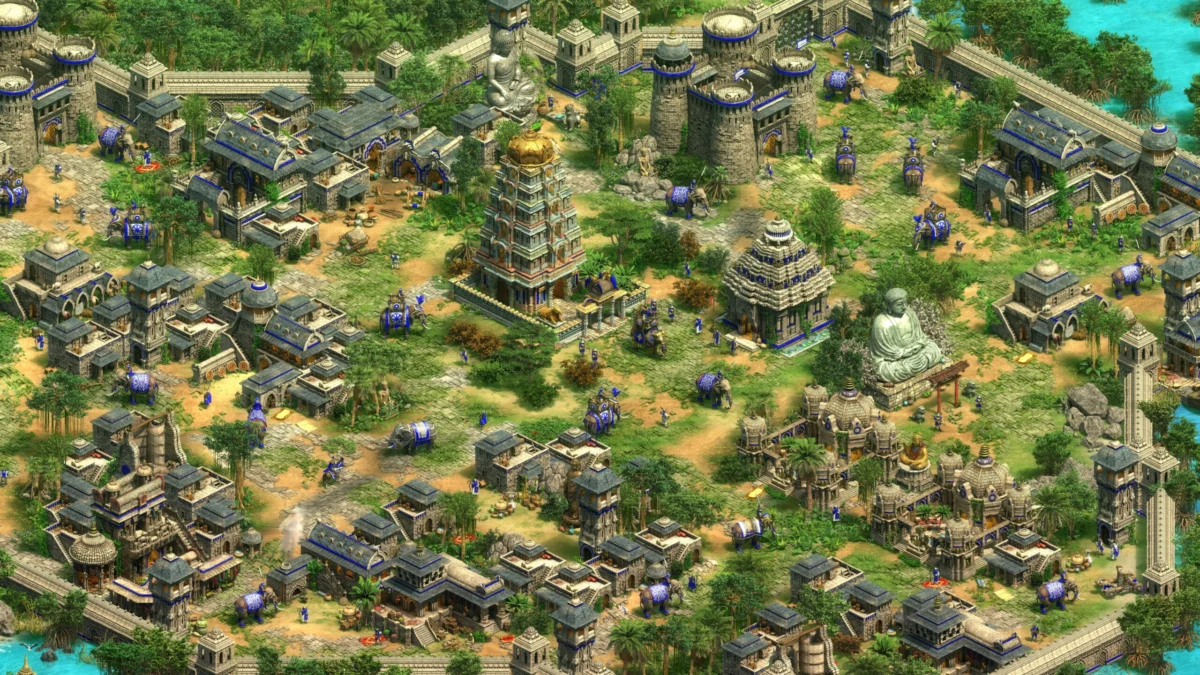
While the sheer volume of patches—covering a vast array of operating systems, enterprise software, and cloud infrastructure—made headlines, one specific entry in the CVE (Common Vulnerabilities and Exposures) database caught the attention of the gaming community and security analysts alike: a critical remote code execution (RCE) vulnerability in the remastered version of Age of Empires II.
The Main Facts: A Breach in the Lobby
The vulnerability, tracked as CVE-2026-50663, targeted the modern iteration of the classic 25-year-old real-time strategy game. According to technical documentation released by Microsoft and analysis from the cybersecurity firm Rapid7, the flaw resided in how the game handled custom game invites and User-Created Content (UCG).
In a scenario that sounds like a plot from a cyber-thriller, a malicious actor could have sent a specially crafted game invite to a victim. Upon the victim accepting this invite and joining the attacker’s lobby, the game would automatically process malicious files hidden within the UCG. This exploit effectively bypassed the standard security sandboxes of the game, granting the attacker the ability to execute arbitrary code on the victim’s machine.
For the end user, the result was total system compromise. Once the malicious code was executed, a hacker could theoretically install further malware, exfiltrate sensitive data, or seize full control of the victim’s PC.
Chronology: From AI Discovery to Public Disclosure
The path to this week’s massive patch rollout was paved by a new methodology in bug hunting.
- Pre-July 2026: Microsoft accelerates its adoption of AI-driven static and dynamic analysis tools. By training machine learning models on vast repositories of legacy and modern code, Microsoft’s automated systems began flagging structural anomalies that human reviewers might have missed in previous decades.
- Early July 2026: Independent security researchers, utilizing similar AI-assisted fuzzing tools, begin identifying potential exploits in gaming platforms and legacy titles remastered for modern OS compatibility.
- July 14, 2026: Microsoft finalizes the security update package, ensuring that the critical RCE in Age of Empires II is addressed before public awareness could lead to widespread exploitation.
- July 15, 2026 (Patch Tuesday): Microsoft releases the record-breaking set of updates. Shortly thereafter, security researcher Rick de Jager posts a proof-of-concept video on X (formerly Twitter), demonstrating how quickly the Age of Empires II exploit could be triggered by simply joining a multiplayer lobby.
- Post-Disclosure: The cybersecurity community shifts into high gear, verifying the patch’s efficacy and assessing whether similar vulnerabilities exist in other games ported to the current Microsoft ecosystem.
Supporting Data: The AI Security Paradox
The record number of patches released this month is not necessarily an indicator that Microsoft’s software is becoming less secure; rather, it is a testament to the "AI-driven transparency" movement.
According to reports from industry analysts, the integration of Large Language Models (LLMs) and automated security agents has increased the "discovery rate" of bugs by nearly 40% compared to the previous year. While this leads to a higher volume of patches, it also signifies that vulnerabilities are being caught by the manufacturer before they are weaponized by malicious state actors or cyber-criminal syndicates.
Rapid7, in its analysis of the July 2026 Patch Tuesday, noted that the Age of Empires II flaw was particularly concerning because of the low barrier to entry for attackers. Unlike complex network exploits that require sophisticated infrastructure, this vulnerability required only a basic understanding of game invite protocols. The firm’s telemetry suggests that while no active exploitation was observed in the "wild" prior to the patch, the potential for mass distribution—particularly via platforms like Steam—was significant.
Official Responses and Remediation
Microsoft has urged all users to update their clients immediately. The company’s MSRC (Microsoft Security Response Center) emphasized that while the Age of Empires II vulnerability was the "headline" for gamers, the record-breaking batch of patches included critical fixes for Windows kernel drivers and Azure cloud services that are arguably of higher importance for enterprise infrastructure.
In a brief statement, a Microsoft spokesperson noted: "The use of AI in our security development lifecycle has allowed us to identify complex, multi-stage vulnerabilities that were previously invisible to traditional automated tools. We are committed to continuing this trajectory, even if it means acknowledging a higher number of bugs in the short term, as it leads to a more robust, hardened ecosystem in the long term."
Implications: The Gaming Sector as a New Frontline
The targeting of Age of Empires II underscores a broader, more dangerous trend: the weaponization of the gaming industry. As video games move toward deep integration with operating systems and cloud services, they provide a lucrative attack surface for hackers.
1. The "High-Value Target" Shift
Gamers are often viewed as high-value targets because they frequently possess powerful hardware, high-bandwidth connections, and, increasingly, cryptocurrency wallets or credentials for various digital platforms stored on their machines. An attacker who gains remote code execution on a gamer’s PC doesn’t just gain access to a game; they gain a foothold into a home network.
2. The Persistence of Legacy Code
The Age of Empires II incident highlights the inherent risks of "remastering." When developers port 25-year-old code to modern 64-bit operating systems, they often introduce new vulnerabilities where the legacy logic interacts with modern APIs. The reliance on AI to find these "bridge" vulnerabilities will likely become a standard practice in the gaming industry to ensure that nostalgia does not come at the cost of security.
3. The Future of Patching
As AI continues to refine bug hunting, the industry should expect to see more "Patch Tuesday" cycles that break records. The paradigm is shifting from "security through obscurity" to "security through hyper-transparency." By identifying and fixing vulnerabilities at scale, companies like Microsoft are hoping to stay one step ahead of the very hackers who are also beginning to utilize AI to develop exploits.
Conclusion: A Call for Vigilance
The CVE-2026-50663 vulnerability is a reminder that in an interconnected world, no software—not even a classic strategy game—is immune to the realities of modern cyber warfare. While the record number of patches issued this week might look alarming on paper, it represents a proactive defense posture.
For the average user, the takeaway is simple: the speed of technology is matched only by the speed of threats. Updating software is no longer just about gaining new features or performance improvements; it is a critical defensive measure against an evolving landscape where an invitation to a game lobby can, quite literally, open the door to your digital life. As we move further into the age of AI-assisted development, both the creators of our software and those who would exploit it will be locked in an automated race—a race where the only constant is the need for immediate and consistent patching.