
In the high-fidelity audio community, few topics spark as much debate as the choice of output devices in Class-D amplifier design. While power MOSFETs have long been the industry standard for their rapid switching speeds and low conduction losses, a recent experiment shared by a DIY enthusiast known as "riritronic" has ignited a passionate technical discussion regarding the viability of Insulated Gate Bipolar Transistors (IGBTs) in high-power audio applications.
The project, documented on the DIYAudio community forums, challenges the conventional wisdom that IGBTs are exclusively suited for heavy-duty industrial hardware—such as arc welders and ultrasonic cleaners—rather than the nuanced requirements of high-fidelity sound reproduction. By successfully constructing a functional prototype, the experimenter has forced a re-examination of switching technology, efficiency, and the "purist" approach to amplifier design.
The Genesis of the IGBT Prototype
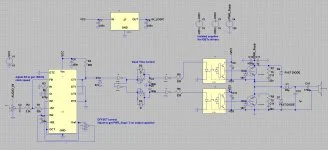
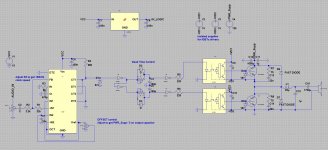
The project began when riritronic unveiled a custom-built Class-D amplifier utilizing high-speed IGBTs, specifically the GW30NC60 model. The design is built around a TL494 PWM (Pulse Width Modulation) generator, coupled with TLP358 high-current opto-drivers to manage the gate drive requirements of the IGBTs.
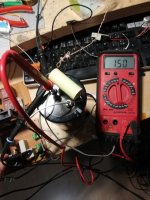
The initial results were striking: operating on a 110V DC supply, the amplifier achieved 550W of output power into a 1.5-ohm load, delivering a robust 29V effective (Veff). The creator noted that while many in the engineering community dismiss the use of IGBTs in audio due to their historical association with lower-frequency switching, this prototype produced sound quality that the builder argued was "quite good," comparing it favorably to various consumer-grade amplifiers available on the market.

A Technical Chronology of the Debate
The disclosure of the project immediately drew skepticism from experienced members of the audio engineering community, leading to a vibrant, multi-day technical exchange.
The Challenge of Switching Frequency
The primary critique, voiced early on by user "Osvaldo de Banfield," centered on the inherent switching limitations of IGBTs. In a traditional Class-D amplifier, the output devices must toggle at ultrasonic frequencies—well beyond the 20kHz human hearing threshold—to allow for effective reconstruction of the audio signal via an LC filter.

Osvaldo noted that most "high-speed" IGBTs are rated for operation in the 30kHz range, which is fundamentally incompatible with the requirements of high-fidelity audio. In response, riritronic clarified that their design operates at a 150kHz switching frequency with dead times maintained at approximately 40ns.
The Argument for Linear vs. Switching
As the discussion evolved, the debate shifted toward the fundamental differences between linear (Class-AB) and switching (Class-D) amplification. Osvaldo argued that while an IGBT might function in a linear amplifier, a Class-D design requires the ability to switch hundreds of volts in nanoseconds. The contention was that even if an IGBT could handle the voltage, its internal switching characteristics would likely degrade audio fidelity, potentially introducing a "metallic" timbre to high-frequency content.

Other participants, such as "nigelwright7557," countered by citing their own experiences with analog IGBT-based designs, noting that they had achieved acceptable results even if the devices were not the optimal choice for high-frequency switching.
Supporting Data and Performance Metrics
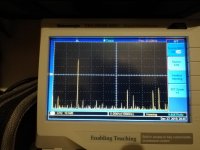
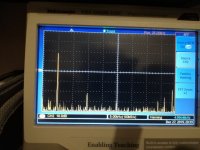
To validate the prototype, riritronic provided a comprehensive set of performance metrics. These included oscilloscope captures of the supply voltage, sine wave, triangle wave, and square wave outputs, as well as Fast Fourier Transform (FFT) analysis at 5kHz and 10kHz.

The data revealed a clear signal output, though it did show a slight abundance of the third harmonic. Despite this, the experimenter maintained that the subjective audio quality remained high. The project was framed not as an attempt to create a "SuperHyperMegaPro" audiophile-grade masterpiece, but as an empirical study to prove that high-performance output is possible using components traditionally relegated to industrial applications like washing machine controllers.
Comparative Efficiency Analysis
The debate reached a fever pitch when user "NMOS" introduced the concept of the "270kHz threshold," arguing that for full-range high-quality audio, a switching frequency of at least 270kHz is mandatory to avoid compressed or distorted sound.

Riritronic challenged this figure, citing the Nyquist-Shannon sampling theorem, which dictates a minimum switching frequency of at least twice the highest frequency of interest (40kHz for a 20kHz audio range). The back-and-forth highlighted a persistent disconnect between theoretical engineering standards and the practical, hobbyist-driven experimentation that defines the DIY audio scene.
Furthermore, a detailed breakdown of conduction losses illustrated the trade-offs involved. Riritronic compared the 20N50 MOSFET against the 30NC60 IGBT. Using Ohm’s Law, the calculations showed:
- MOSFET (20N50): 20A^2 * 0.27 ohms = 108W of potential conduction loss.
- IGBT (30NC60): 20A * 2.1V (saturation voltage) = 42W to 54W of loss.
These figures suggest that in specific high-current applications, the IGBT may actually offer superior efficiency compared to certain MOSFETs, despite the switching frequency limitations.
Implications for Future Amplifier Design
The success of this experiment carries significant implications for the future of DIY and commercial power electronics:
- Demystifying Components: The project serves as a reminder that component specifications are often contextual. An IGBT optimized for a motor controller may behave differently when implemented in a carefully tuned, high-voltage audio circuit.
- The "Purist" vs. "Experimentalist" Divide: The discussion underscores a growing divide in the audio community. While some engineers insist on adhering to established "best practices" (such as high-frequency switching and specific device architectures), others are eager to push boundaries through trial and error.
- Cost-Effectiveness and Accessibility: By proving that industrial-grade components can produce high-quality audio, this experiment opens the door for builders to source robust parts more cheaply than specialized, high-fidelity MOSFETs.
- Limits of Class-D: The debate around the "ideal" rail voltage (90V vs 160V) and the necessity of bridging circuits highlights that there is still no universal agreement on how to achieve maximum power without sacrificing fidelity.
Conclusion: Beyond the Specifications
The "IGBT Class-D" thread stands as a testament to the spirit of the DIY audio community. While professional engineers may point to the limitations of the IGBT’s switching speed or the potential for harmonic distortion, the project successfully achieved its core objective: to explore the limits of hardware and challenge existing assumptions.
As riritronic aptly stated, the goal of this hobby is not always to produce the "perfect" amplifier, but to engage in the process of discovery. By utilizing parts designed for the laundry room and applying them to the living room, the builder has contributed a valuable data point to the field. Whether or not IGBTs will ever replace MOSFETs in high-end consumer audio remains to be seen, but the experiment has certainly proven that they are not the "audio non-starters" many once believed them to be.
For the time being, the project remains an open-source inspiration, inviting others to replicate, measure, and improve upon a design that ignores the "impossible" and focuses on what is achievable through engineering grit and a passion for sound.


