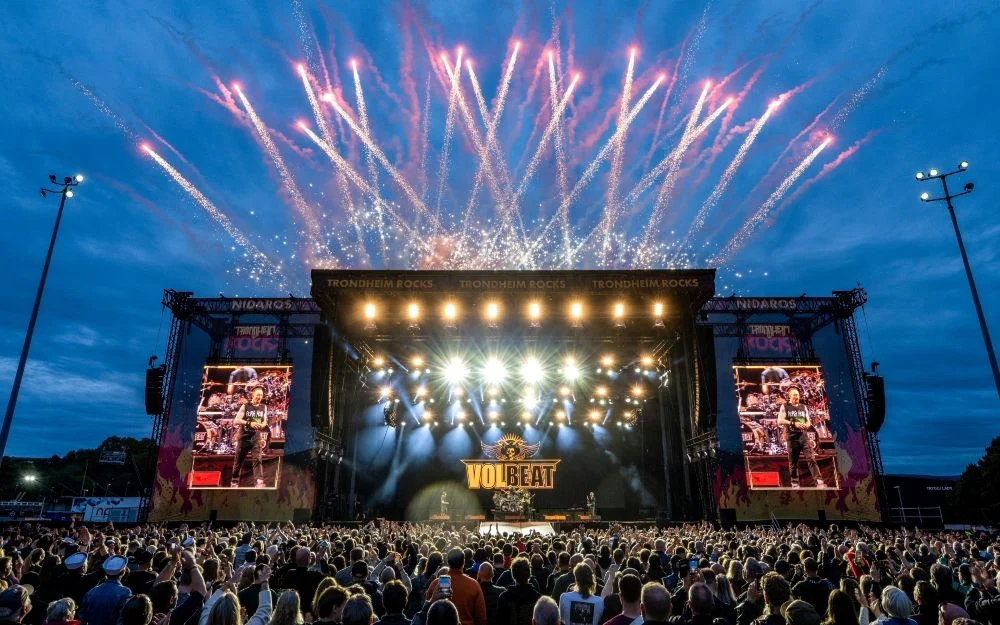
The landscape of live event production is constantly evolving, with engineers and system designers facing the dual pressure of delivering high-fidelity concert experiences while adhering to increasingly stringent urban environmental regulations. This delicate balance was on full display at the 2026 edition of Trondheim Rocks, a premier Norwegian music festival that underwent a significant venue transition this year. By relocating from the historic E.C. Dahls brewery site to the expansive Ladesletta area, the festival organizers faced a new set of acoustic and logistical hurdles.
To meet these challenges, production provider NPro deployed an extensive sound reinforcement system centered on Alcons Audio’s pro-ribbon loudspeaker technology. The result was a masterclass in controlled, transparent sound delivery for a diverse roster of 12 acts, including headliners Volbeat and DumDum Boys.
Main Facts: A Technical Overview of the Deployment
The deployment at Ladesletta was not merely a matter of scale; it was a feat of strategic acoustic engineering. Led by system designer Erwan Thomas, the objective was to maintain a powerful, punchy sound profile within the concert area while minimizing sound spill into the surrounding urban environment.
The core of the system featured 32 Alcons LR28/80 large-format double 14-inch line array modules, split into two main arrays of 16 enclosures per side. These were complemented by a massive low-end foundation consisting of 30 BC543 triple 18-inch cardioid subwoofers. The cardioid configuration was essential, as it allowed the system to steer low-frequency energy toward the audience while reducing the rear-ward emission that often plagues open-air festival sites in populated areas.
Supporting the primary hang were:
- Out-fills: LR24/90 and LR18/90 line array systems to ensure wide coverage.
- In-fills: LR18/90 modules for center-stage presence.
- Down-fills: RR12 point-source array modules.
- Front-fills: VR12/90 cabinets to cover the immediate front-row audience.
- FOH Near-fill: A dedicated system comprising two BF181 subwoofers and two VR12/90 loudspeakers.
The entire rig was powered by Alcons Sentinel10 amplified loudspeaker controllers, managed through the company’s proprietary ALControl software, which allowed for real-time monitoring and fine-tuned system calibration.

Chronology: From Site Selection to Sonic Success
The journey to Trondheim Rocks 2026 began months before the first guitar chord was struck. The transition from the brewery site to Ladesletta necessitated a complete rethink of the festival’s acoustic map.
Pre-Production and Simulation
In the lead-up to the event, the NPro team conducted extensive site analysis. The Ladesletta location is known for being a prominent wind corridor, a factor that can wreak havoc on high-frequency projection and phase coherence in large-scale line arrays. Recognizing this, the design team moved beyond traditional modeling. They utilized EASE 5 prediction software, augmented by the newly integrated IMMI workflow. This allowed the team to simulate how sound would interact with the specific topography and weather patterns of the site.
Set-Up and Integration
As load-in commenced, the focus shifted to the physical implementation of the simulated design. The crew faced the inherent difficulties of an open field, including the need for precision rigging to ensure that every array was angled correctly to hit the audience targets while avoiding atmospheric interference. The integration of the ALControl software ensured that each of the 32 LR28 units was communicating perfectly with the Sentinel10 controllers, allowing the team to troubleshoot individual modules before the first soundcheck.
The Performance Phase
Over the course of the festival, 12 bands cycled through the stage. The system’s versatility was tested by the varying genres and mixing styles of the acts. From the heavy, driving rhythms of Volbeat to the nuanced, classic rock sound of the DumDum Boys, the system remained stable, providing a consistent "canvas" for visiting engineers.
Supporting Data: The Science of Pro-Ribbon Technology
The success of the Trondheim Rocks deployment highlights a growing trend in the professional audio industry: the shift toward high-efficiency ribbon-based drivers for large-scale applications. Alcons Audio has long been a proponent of pro-ribbon technology, which provides a significantly lower distortion profile compared to traditional compression drivers.
In the case of the LR28, the high-frequency response is handled by a pro-ribbon transducer that offers linear reproduction across the entire dynamic range. For an engineer, this means that the sound does not change its character when pushed to high SPL (Sound Pressure Level) volumes. This "transparency" was a key requirement for the Ladesletta site, where the ability to achieve high-impact sound without excessive volume—which leads to environmental complaints—was paramount.

The BC543 subwoofers also played a critical role. By utilizing a cardioid design, the subwoofers effectively canceled out energy behind the stage, ensuring that the local community was not overwhelmed by the low-end frequency "bleed" that often characterizes large festivals. The data gathered from the IMMI simulation proved accurate, as the sound pressure levels remained within the strict legal limits set by the Trondheim municipality throughout the duration of the event.
Official Responses: Perspectives from the Front of House
The true test of any PA system is the opinion of the engineers who spend their shifts behind the desk. Johnny Skalleberg, the long-time sound engineer for the DumDum Boys, offered a professional endorsement of the system’s performance.
"Having mixed on Alcons systems regularly over the last few years, I’ve come to appreciate their transparency," Skalleberg noted. "They translate what you’re trying to achieve without getting in the way, which is ultimately what I look for in a PA. The result is that you spend less time thinking about the technology and more time focusing on the music."
This sentiment captures the ideal relationship between an engineer and their tools: the technology should be a transparent extension of the artistic intent. By minimizing the "coloration" of the system, Skalleberg and his peers were able to ensure that the audience heard the band’s intended mix, rather than the "signature sound" of a heavily colored loudspeaker system.
Implications: The Future of Urban Festival Sound
The 2026 edition of Trondheim Rocks sets a new benchmark for how festivals can navigate the complexities of urban sound management. Several key implications emerge from the success of this deployment:
1. The Necessity of Advanced Simulation
The reliance on EASE 5 and the IMMI workflow indicates that future festival sound design will be defined by data-driven planning. As cities become denser, the margin for error regarding noise pollution decreases. The ability to predict how sound behaves in specific weather conditions will become a prerequisite for securing event permits.

2. The Rise of "Responsible Loudness"
The industry is moving away from the "louder is better" mentality. Through the use of advanced cardioid subwoofer arrays and high-fidelity line arrays, engineers can now achieve the "feel" of a rock concert—the visceral impact of the bass and the clarity of the vocals—without subjecting the entire city to the noise.
3. Sustainability in Production
Alcons’ use of efficient, high-headroom amplifiers and transducers allows for a lower carbon footprint during the load-out and setup phase. By requiring fewer boxes to achieve the same coverage, the logistical footprint of the festival is reduced, aligning with the broader industry push toward greener touring and event management.
4. Venue Flexibility
Trondheim Rocks demonstrated that a well-designed, scalable system can adapt to radically different venues. By proving that the Ladesletta site could host a world-class production, the organizers have effectively secured the future of the festival, regardless of where they are forced to set up next.
Conclusion
Trondheim Rocks 2026 was more than just a musical success; it was a triumph of engineering. By combining the precision of Alcons Audio’s pro-ribbon loudspeakers with the logistical expertise of NPro and the predictive power of modern software, the festival provided a blueprint for how large-scale live events can exist in harmony with urban environments. As technology continues to bridge the gap between pure power and controlled transparency, the future of live sound looks not only louder and clearer, but smarter and more responsible than ever before.