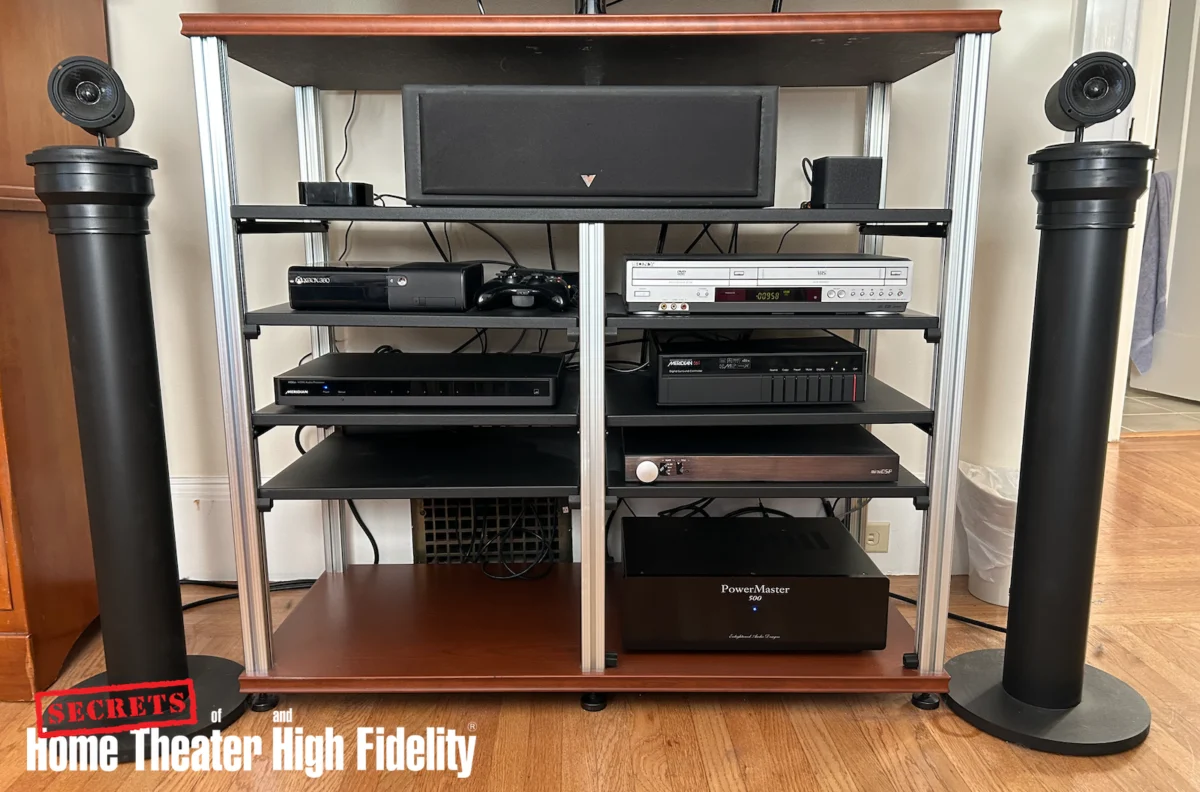
The assembly of the Linkwitz LXmini loudspeaker kit—a process documented in our previous installment—marks only the halfway point in the journey toward sonic excellence. Because the LXmini is a sophisticated, active, two-way loudspeaker, it necessitates a departure from traditional "plug-and-play" passive systems. To unlock the true potential of this design, the user must navigate the critical trifecta of high-fidelity amplification, precise digital crossover implementation, and room-specific acoustic tuning.
This article explores the technical requirements and subjective experiences of configuring the LXmini, providing a roadmap for those looking to transition from a kit build to a fully optimized high-end audio system.
Main Facts: The LXmini Architecture
At its core, the Linkwitz LXmini is an active dipole loudspeaker designed by the late Siegfried Linkwitz, a pioneer in acoustic research. Unlike conventional box speakers that rely on passive components to split frequencies, the LXmini requires an external active crossover (typically implemented via Digital Signal Processing, or DSP) and a dedicated amplifier channel for every driver.
Because the system is active, the amplifier is connected directly to the loudspeaker drivers without a passive crossover network in between. This eliminates the phase shifts, insertion losses, and impedance fluctuations inherent in passive components. The result is a cleaner, more direct signal path, provided the user selects the right hardware to support the system’s high-resolution demands.

Chronology of the Setup Process
The configuration of the LXmini is a systematic process that requires patience and adherence to the manufacturer’s design philosophy.
Phase 1: Selecting the Powerhouse
The LXmini is compact, but it is not "easy" to drive in the traditional sense; it is demanding of quality rather than quantity. My choice for this project was the Enlightened Audio Designs (EAD) Powermaster 500. A legendary 5-channel amplifier from the early 2000s, it utilizes the Texas Instruments LM3886 "chipamp" architecture. By paralleling two LM3886s per channel, the unit delivers 100 watts per channel of pure, Class AB power.
During the setup phase, I utilized four of the five available channels. The shared power supply design is a significant advantage, allowing unused channels to bolster the output of the active ones. Measurements confirmed textbook performance up to 200kHz—well beyond the limits of human hearing and ensuring that the amplifier never acts as a bottleneck for the LXmini’s transients.
Phase 2: Crossover Implementation
With the hardware in place, the next step involved deploying the DSP crossover. I opted for the miniDSP 4x10HD. While now superseded by the miniDSP Flex HTx, the 4x10HD remains a powerhouse for this specific application. The LXmini kit comes with a proprietary set of "biquad" filters—Infinite Impulse Response (IIR) settings—that are essential for managing the transition between the woofer and the tweeter.

Phase 3: The Tuning Calibration
The final step involved inputting the Linkwitz-provided parametric EQ settings. Because the LXmini utilizes an open-baffle design, the drivers interact with the room in ways that conventional box speakers do not. The DSP settings are aggressive, designed to correct for the unique radiation pattern of the dipole drivers. Once the configurations were uploaded, the system was subjected to a break-in period, allowing the mechanical suspensions of the drivers to loosen and reach their intended design parameters.
Supporting Data: Why DSP is Non-Negotiable
The reliance on DSP is the defining characteristic of the LXmini. When dealing with open-baffle drivers, one encounters significant "cancellation" issues where the sound waves from the front and back of the driver meet, causing a drop in low-frequency output.
- The Power Requirement: While the LXmini doesn’t require a thousand watts, it does require a clean, low-noise floor. The EAD PM500’s performance in the 100wpc range provides ample headroom for the dynamic peaks found in modern high-resolution audio.
- The DSP Advantage: By using the miniDSP platform, the user gains the ability to "shape" the sound. In my testing, I found that while the factory settings were near-perfect for a neutral response, a 5dB boost at 40Hz helped compensate for the physical limitations of the LXmini’s small footprint.
- The Hardware Comparison: Comparing the older miniDSP 4x10HD against the newer Flex HTx revealed that, in the absence of Dirac Live room correction, the sonic performance of the two units is nearly indistinguishable. This validates the design philosophy that if the core DSP filters are correct, the hardware platform itself—provided it meets basic signal-to-noise requirements—serves the loudspeaker exceptionally well.
Official Perspectives on System Flexibility
One of the most appealing aspects of the Linkwitz LXmini kit is the "open-source" nature of the design. While Linkwitz provided precise, expert-level configurations for the crossover and EQ, the company encourages owners to experiment.
The rationale behind this is simple: no two rooms are the same. A speaker that sounds balanced in a carpeted, heavily dampened room may sound thin in a minimalist, reflective space. By providing the user with the tools to adjust parametric EQ, Linkwitz effectively hands the "voicing" of the speaker over to the owner. This is a stark contrast to commercial speakers, which are "locked" by their passive crossovers.

The official recommendation for those seeking more bass is to integrate the optional LXsub2 dipole woofers. This turns the 2-way system into a true 3-way system, moving the crossover frequency and allowing the main LXmini drivers to focus entirely on midrange and high-frequency duties.
Implications: The Future of High-End Audio
The experience of building and tuning the LXmini has significant implications for the future of the high-end audio market.
1. The Death of the Passive Crossover?
The LXmini project demonstrates that active systems, when properly implemented, consistently outperform passive systems of similar price points. The ability to control phase, frequency response, and driver interaction via software is a technological leap that passive components simply cannot match.
2. Democratization of Performance
By using accessible components like the miniDSP 2×4 HD or the miniDSP Flex, the barrier to entry for "world-class" sound has been lowered. You no longer need to spend tens of thousands of dollars on complex passive crossover networks to achieve a phase-coherent, high-resolution soundstage. The LXmini proves that with a modest budget and a willingness to learn, a DIY enthusiast can reach a level of performance that rivals commercial speakers costing three to four times as much.

3. The Room as a Component
The tuning phase highlights that the room is not just a container for sound, but a component of the system itself. Because the LXmini is a dipole design, its interaction with side walls and rear walls is complex. The implication here is that the future of high-end audio lies in DSP-driven room correction. As interfaces become more intuitive—such as those found on the miniDSP Flex HTx—the "black magic" of acoustic tuning will become accessible to the average listener, not just those with professional measurement gear.
Conclusion
The Linkwitz LXmini is more than just a loudspeaker; it is an educational journey into the physics of sound. By handling the amplification and crossover configuration yourself, you develop an intimate understanding of how your system functions.
While the out-of-the-box performance is stellar, the true value lies in the flexibility the system offers. Whether you are adding a subtle 5dB boost to the lower registers or integrating subwoofers for a full-range experience, the LXmini rewards the engaged listener. As we move into the next phase of this project, we will begin the formal process of acoustic measurement and subjective testing, further refining the LXmini to its absolute peak potential. The journey from a collection of parts to a fully tuned instrument is complete, but the refinement—as any audiophile will tell you—is a lifelong pursuit.