In the high-stakes environment of professional audio engineering, the battle against drum bleed is often described as the "final frontier" of mix clarity. Whether tracking a multi-mic kit in a resonant room or attempting to salvage a high-spill live recording, the traditional noise gate has long been a blunt instrument—effective at cutting volume, but often at the cost of natural sustain and transient integrity.
On July 10, 2026, audio software developer fedDSP shifted the landscape of drum processing with the release of HUSH, a source-aware drum gate and de-bleed processor. Designed to surgically isolate drum hits while preserving the harmonic complexity of the performance, HUSH represents a significant leap forward in algorithmic signal processing. By combining intelligent detection modes with dual-workflow efficiency, fedDSP is positioning HUSH as an essential utility for both studio mixing and high-demand live sound environments.
The Core Technology: Intelligent Detection and Source Awareness
At the heart of HUSH lies a sophisticated detection engine that moves beyond simple amplitude-based gating. Unlike traditional plugins that trigger based solely on a user-defined threshold, HUSH utilizes a "source-aware" system. This intelligence allows the plugin to understand the unique spectral and temporal characteristics of different drum elements.
The Four Pillars of Detection
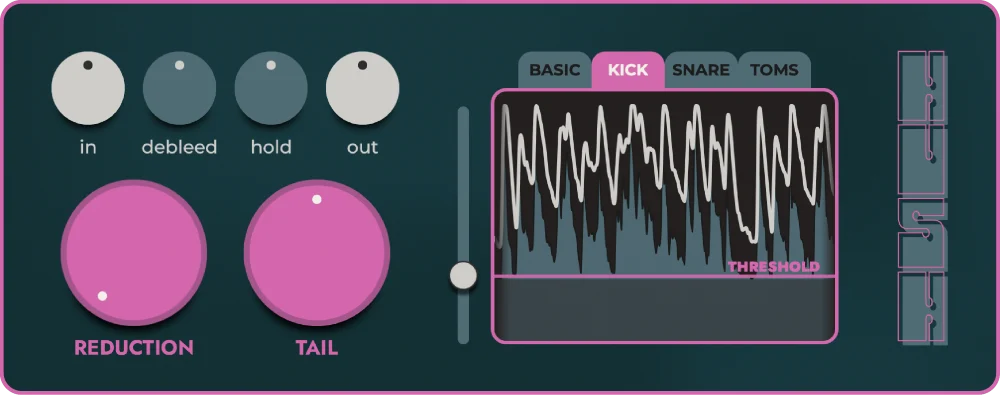
HUSH categorizes incoming signals into four distinct modes, each calibrated for specific frequency ranges and attack envelopes:
- BASIC: A general-purpose gate for non-specific signals or unconventional percussion.
- KICK: Optimized to isolate the sub-bass energy and fundamental "thump" of a kick drum while ignoring sympathetic vibrations from toms or resonant snare wires.
- SNARE: Tuned to capture the crisp transient of the initial hit while intelligently differentiating between ghost notes and unwanted cymbal bleed.
- TOMS: Designed to tackle the notoriously difficult task of gating rack and floor toms, where cymbal wash is at its most invasive.
By selecting the appropriate mode, the user essentially "trains" the plugin to recognize the drum’s behavior, allowing for a more musical release and a cleaner signal path. This is supplemented by visual threshold control, which provides real-time feedback, and integrated sidechain high-pass and low-pass filters that allow engineers to focus the detection engine on the specific "sweet spot" of the drum.
Dual-Workflow Efficiency: Live vs. Mixing
One of the most innovative aspects of HUSH is its flexibility across different audio contexts. Recognizing that a tracking engineer’s needs differ significantly from those of a mix engineer, fedDSP has implemented two distinct operational workflows.

MIXING Mode: The Precision Specialist
When working within a DAW environment, time is a luxury that the engineer can afford. In MIXING mode, HUSH utilizes a look-ahead algorithm. By analyzing the audio signal slightly before it passes through the gate, the processor ensures that the initial transient of the drum hit is captured with 100% accuracy. This mode is ideal for corrective mixing where the primary goal is to strip away every millisecond of bleed without sacrificing the "snap" of the attack.
LIVE Mode: Zero-Latency Performance
Conversely, in live sound reinforcement or real-time tracking, latency is the enemy. HUSH’s LIVE mode provides an instantaneous response, ensuring that the performer hears their instrument naturally through the monitors without the disorienting delay associated with complex processing. This zero-latency performance makes it a viable candidate for front-of-house (FOH) engineers who need to manage massive drum kits in high-volume, resonant venues.
Beyond the Gate: Advanced De-Bleed and Transient Shaping
The true power of HUSH is revealed in its "de-bleed" stage. While a gate essentially acts as a binary switch—on or off—HUSH provides a more nuanced approach. Once the drum hit has triggered the gate, the de-bleed functionality intelligently attenuates the post-hit clutter, cymbal wash, and kit spill.
This creates a "ghost-free" sound, where the transient and the body of the drum remain vibrant, but the sound floor behind them recedes. Furthermore, the inclusion of dedicated transient shaping tools allows users to emphasize the attack of the drum or extend the sustain of the decay. This combination of gating and shaping essentially turns HUSH into a comprehensive drum-shaping workstation rather than a mere utility tool.
Chronology of Development and Release
The development of HUSH reflects a growing industry trend toward "intelligent" audio tools—plugins that utilize machine learning and source-identification to reduce the manual workload for audio engineers.
- Early 2026: fedDSP enters the beta phase of the HUSH engine, focusing on the efficiency of the detection algorithm. Engineers from diverse backgrounds, including metal and jazz, were invited to test the plugin on high-bleed recordings.
- June 2026: Final performance testing focuses on CPU optimization. fedDSP ensures the plugin maintains a "light footprint," allowing users to run multiple instances across every track of a complex drum kit without overloading system resources.
- July 10, 2026: Official release of HUSH. The plugin debuts with an introductory pricing model to incentivize early adoption, with a hard deadline for the promotional rate.
- July 16, 2026: The transition from the introductory price of £25 to the standard retail price of £50.
Implications for the Audio Industry
The release of HUSH speaks to a larger evolution in the digital audio workstation (DAW) ecosystem. As home recording setups become more sophisticated, the ability to achieve professional-grade results in untreated or sub-optimal acoustic environments is in high demand.

Workflow Acceleration
For the modern producer, HUSH addresses the tedious nature of drum editing. Traditionally, "cleaning" a drum track involved hours of manual clip-editing, cross-fading, and aggressive EQing to suppress cymbal bleed. By automating the detection process, HUSH allows engineers to reclaim hours of their time, shifting the focus from technical repair to creative mixing decisions.
CPU Efficiency and Accessibility
The decision to focus on low CPU usage suggests that fedDSP is aiming for a broad demographic. In an era where many professional plugins are becoming increasingly "heavy," requiring massive computing power, HUSH remains accessible to users with older hardware or those working on large-scale sessions with high track counts. The inclusion of an offline-first licensing system—which eliminates the need for constant internet connectivity or cumbersome dongles—further underscores the developer’s commitment to user-friendly, reliable software.
Official Perspective and Future Outlook
While fedDSP has remained relatively lean in its public relations outreach, the technical specifications released alongside the plugin indicate a developer focused on transparency and utility. The company has emphasized that HUSH is not designed to replace the drum sound, but to "clean the stage" so that the drum sound can exist without interference.
As the industry continues to move toward AI-assisted workflows, tools like HUSH serve as a bridge between the traditional, hardware-centric methods of the past and the automated future of production. For the professional engineer, the value of such a tool is measured in the clarity of the final mix. By removing the "mush" of bleed, HUSH allows the transient-rich nature of drums to cut through dense arrangements, providing the punch and definition required for modern pop, rock, and electronic music.
Availability
As of mid-July 2026, HUSH is available through the official fedDSP website. With the introductory pricing period concluding on July 16, prospective users are encouraged to utilize the provided free trial to test the plugin’s efficacy within their own specific recording environments.
Whether it is for the live sound engineer struggling with the acoustic limitations of a festival stage or the studio mixer striving for the ultimate "dry" drum sound, HUSH appears to be a robust, high-performance solution that respects the nuances of the instrument while providing the surgical precision necessary for the digital age. As the software matures and potential updates are introduced, HUSH is poised to become a staple in the plugin folders of engineers worldwide, setting a new benchmark for how we perceive and process the rhythm section.