In an era where the desktop audio market is saturated with iterative updates and digital-first signal processing, the arrival of the MUSE HiFi MUSE 300 feels like a jolt of genuine innovation. Recently reviewed by Marcelo for Headfonics, the MUSE 300 is being positioned as a "world’s first"—a compact, desktop-class ES9039 DAC and headphone amplifier that eschews standard Android-based architecture in favor of a proprietary, custom-built operating system. With a retail price of $439.99 (and an early-bird Kickstarter entry point of $349.99), the device is clearly gunning for the mid-to-high-end enthusiast market.
Main Facts: A New Architecture for Desktop Audio
The MUSE 300 is not merely a DAC; it is a dedicated hardware-and-software ecosystem. At its core, it utilizes the high-performance ESS Sabre ES9039 chipset. While the manufacturer has been tight-lipped regarding whether this is the Q2M or PRO variant, the performance metrics suggest a device punching well above its price bracket.
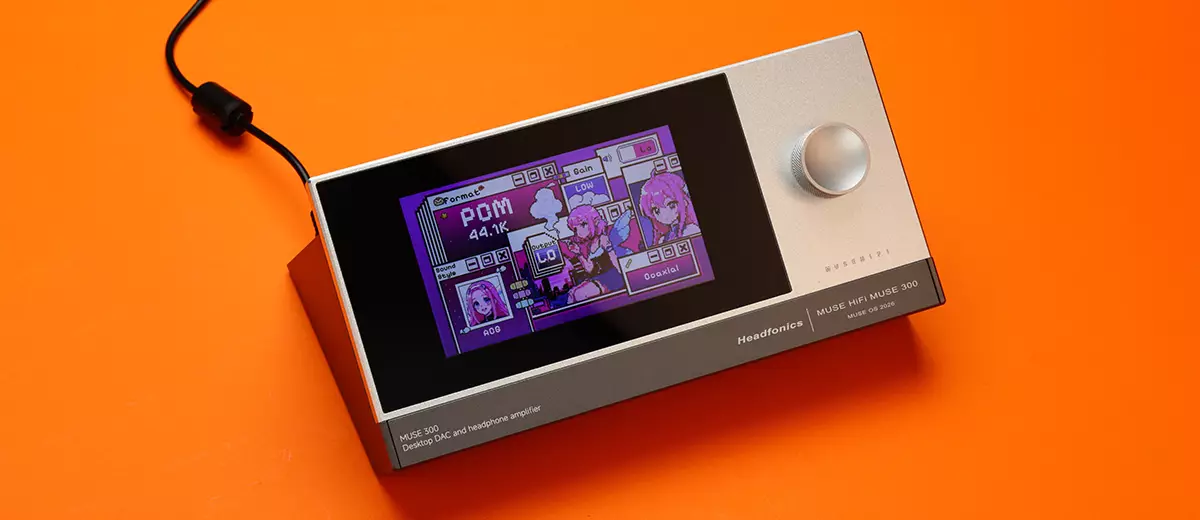
Perhaps most impressively, MUSE HiFi has moved away from the common practice of digital signal processing (DSP) to achieve different sound signatures. Instead, the MUSE 300 employs real analog components—resistors and capacitors—to manipulate the output signal. This physical approach to sound tuning results in three distinct modes:
- Balanced: A reference-grade, analytical profile designed for monitoring and critical listening.
- Tube Amplifier: A warm, lush profile that rounds off sharp transients, intended for relaxed listening sessions.
- ACG (Animation, Comics, and Games): A specialized mode characterized by leaner bass and forward upper-midrange, tailored specifically for the unique production styles of anime and gaming soundtracks.
The hardware is managed by a custom "MUSE OS" running on a 32-bit microcontroller. By avoiding the overhead of a full Android operating system, the developers claim to have achieved a level of optimization that ensures lower latency and higher fidelity in signal management.
Chronology of Development and Design
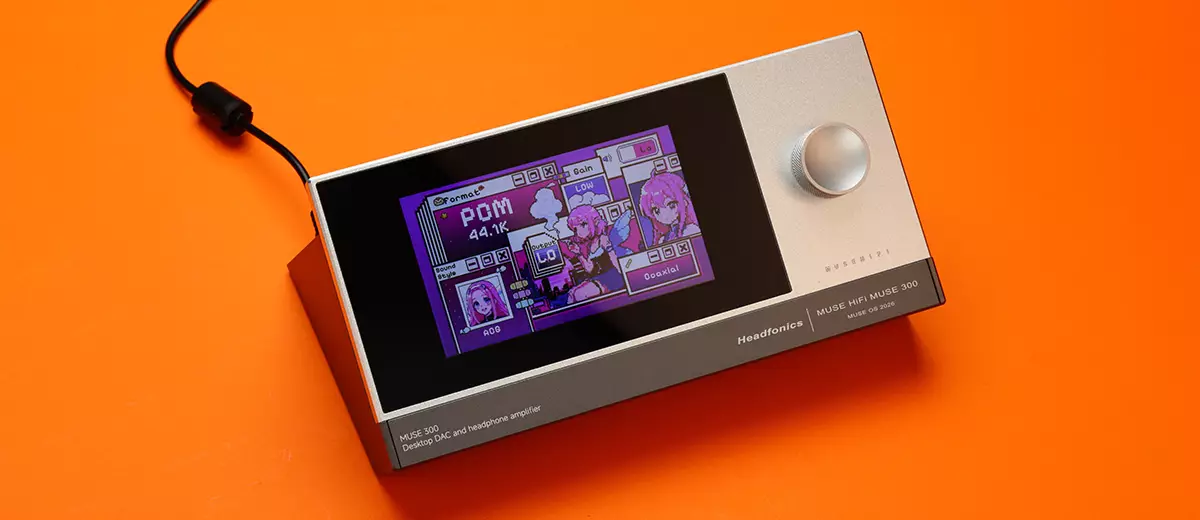
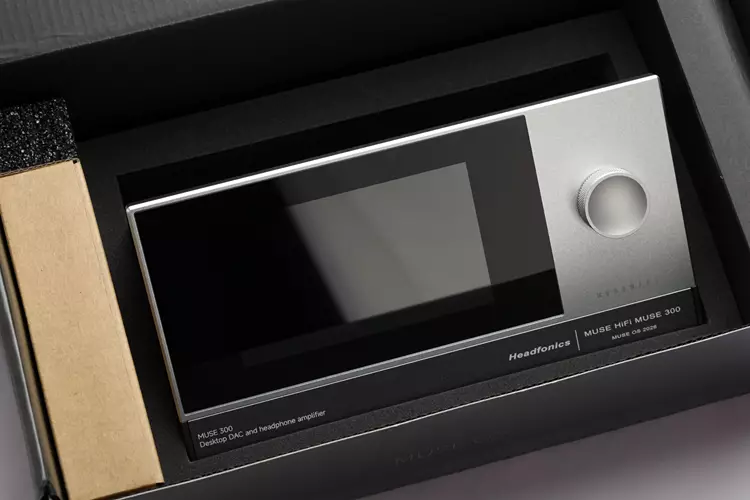
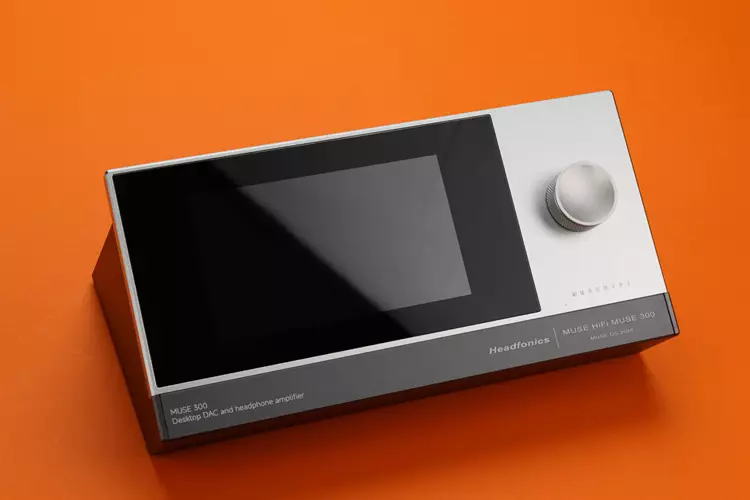
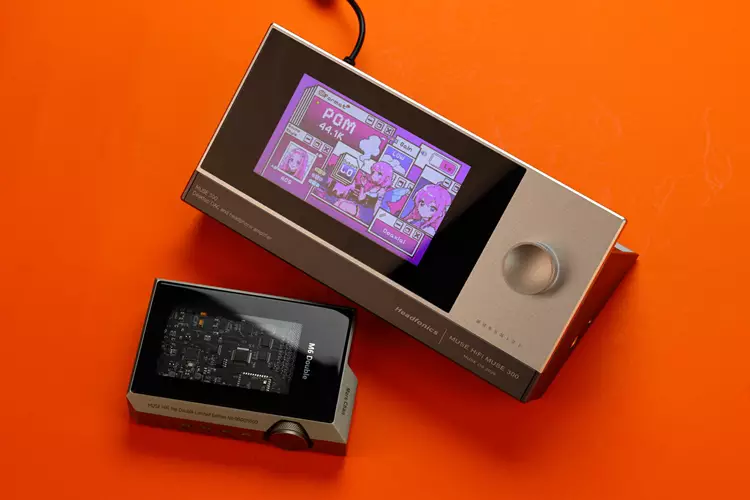
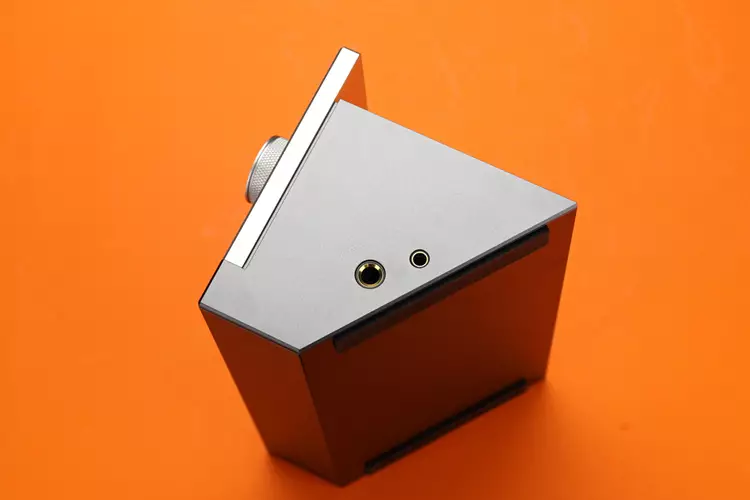
The development cycle of the MUSE 300 highlights a focus on ergonomics as much as electronics. The device’s physical design is unconventional, opting for an angled front faceplate that tilts toward the listener. This was a deliberate choice to improve usability in a desktop environment, ensuring that the 5-inch IPS display and control knob are always within the user’s line of sight without the need to lean over the unit.
The build quality reflects a premium approach: the 8-mm-thick, silver-anodized aluminum faceplate houses the display and the primary push-button rotary encoder. The remainder of the chassis is constructed from 3-mm-thick cast aluminum, giving the unit a substantial, vibration-resistant footprint of 228 mm x 140 mm x 100 mm.
Upon its launch, the device entered the market via a crowdfunding campaign, emphasizing its status as a "first of its kind." Early adopters are currently receiving units running firmware version 1.0, which, while robust, has already drawn minor community feedback regarding the lack of a "screen off" feature—a testament to the high expectations set by the device’s sophisticated display capabilities.
Supporting Data and Technical Specifications
The MUSE 300’s internal topology is built for true balanced output. It utilizes two OPA1612 operational amplifiers, two ES9603 chips, and two TPA6120A buffers. This configuration serves the dual roles of I/V conversion and dedicated headphone amplification.
Technical Performance Metrics:
- Max Power Output: 2,200 mW (providing ample headroom for demanding planar magnetic headphones).
- Signal-to-Noise Ratio (SNR): 129 dB.
- Total Harmonic Distortion (THD+N): < 0.0006%.
- Display: 5-inch IPS, 480 x 854 resolution, featuring three UI themes: "Cyberpunk," "Minimalist," and "ACG Style."
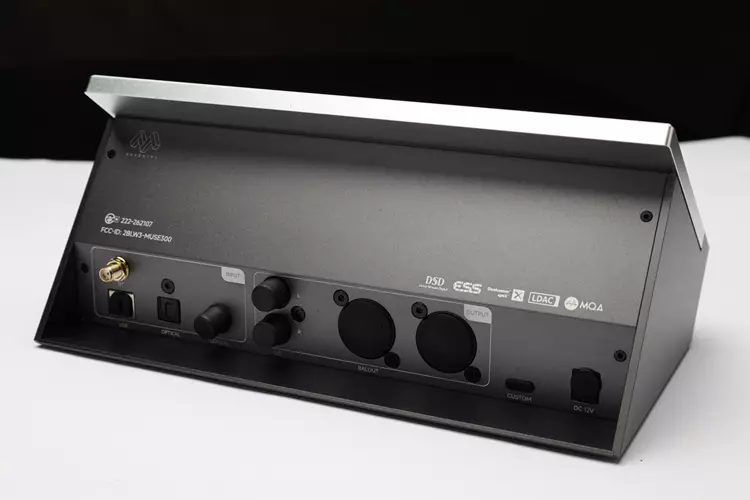
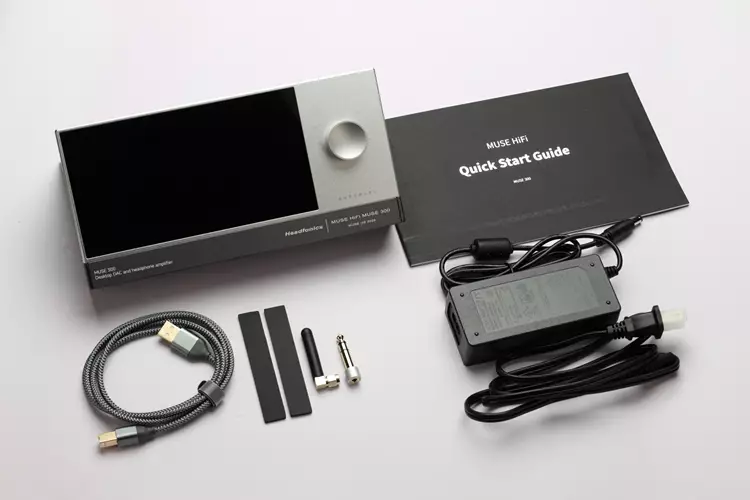
The I/O section is remarkably comprehensive. The rear panel hosts a Bluetooth antenna jack, USB-B, optical, and coaxial inputs, along with RCA and XLR stereo outputs. A dedicated USB-C port is reserved strictly for firmware updates and data transfers, while a 12V barrel-type power input ensures clean, stable energy delivery. The inclusion of protective rubber caps for all ports is a sophisticated touch that underscores the manufacturer’s attention to detail.
Official Responses and Firmware Considerations
In direct response to initial feedback, MUSE HiFi has acknowledged the limitations of firmware 1.0. While the device currently offers a high level of aesthetic customization—including the ability to upload custom JPEGs as screensavers—users have noted that the lack of a screen-off timer or a "blackout" mode can be distracting in dark environments.
The manufacturer has indicated that the proprietary nature of MUSE OS makes it highly adaptable. Unlike third-party Android-based DAPs, which often suffer from software bloat, the MUSE 300’s OS is lightweight, suggesting that future firmware updates could easily implement a screen-timeout feature or a "triple-press" shortcut to toggle the display, effectively addressing the primary complaint regarding the current user interface.
Implications for the Audiophile Market
The introduction of the MUSE 300 signals a potential shift in how desktop audio manufacturers approach the "mid-fi" to "hi-fi" transition. By integrating a 5-inch display and a proprietary OS, MUSE HiFi is acknowledging that the modern listener desires the visual feedback and interactive UI of a digital audio player (DAP) but requires the raw power and I/O versatility of a desktop stack.
Sound Signature and Listener Experience
In practice, the MUSE 300 provides a highly transparent, resolving sound. The Balanced mode is particularly noteworthy, offering an analytical presentation that reveals micro-details without becoming fatiguing. The "Tube" mode succeeds in its mimicry of analog warmth, providing a tangible softening of the bass and a bloom in the midrange that many enthusiasts seek when pairing with clinical-sounding IEMs.
The ACG mode, while niche, demonstrates a deep understanding of modern music consumption patterns. By tailoring the frequency response to the specific needs of game and anime audio—genres often characterized by high-energy, high-frequency-forward production—MUSE HiFi is catering to a younger, tech-savvy demographic that is often ignored by "purist" audio brands.
Impact on Competition
Compared to competitors like the xDuoo XD05 Basic 2, the MUSE 300 offers a more modern, integrated experience. While the xDuoo is a portable-focused device that can be used on a desk, the MUSE 300 is purpose-built for the desktop. Its ability to act as a wireless streamer, combined with the tactile pleasure of its knob and the clarity of its 5-inch display, positions it as a centerpiece for a modern workstation.
Conclusion: A New Standard?
The MUSE 300 is a bold entry into the market. It succeeds because it manages to balance the complexity of a 32-bit microcontroller-based OS with the simplicity of an intuitive, single-knob control scheme. While minor software refinements are needed to perfect the user experience, the foundational audio quality—driven by high-grade components rather than digital tricks—is exceptional.
For the listener who values transparency, stage width, and the flexibility of physical sound-tuning modes, the MUSE 300 represents a remarkable value. As firmware updates continue to refine the interface, it is highly likely that this device will be remembered as the product that proved "desktop audio" could be both highly functional and deeply engaging. MUSE HiFi has not just created a DAC/Amp; they have created a new category of interactive audio equipment that demands attention from the broader community.