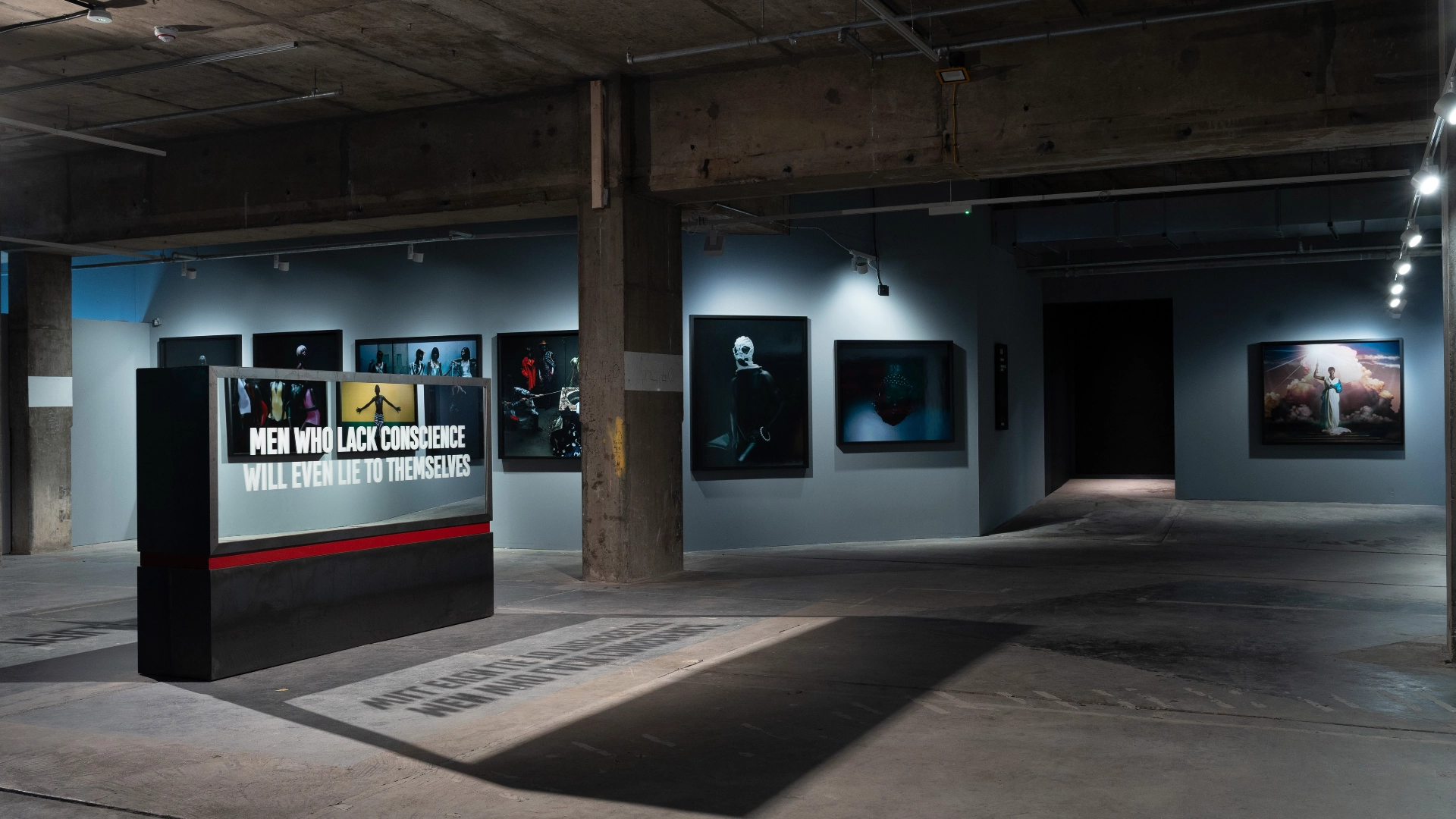
In the heart of London’s creative epicenter, 180 Studios has once again transformed into a portal for the extraordinary. Gabriel Moses, the London-born polymath whose lens has redefined the aesthetics of contemporary fashion, sport, and music, has returned to the space for his most ambitious endeavor to date: Selah.
The exhibition, which opened its doors this spring, serves as a comprehensive retrospective of a career marked by meteoric rise and meticulous craft. Spanning two sprawling floors, Selah is more than a display of photographs; it is a sensory journey that interrogates the intersection of stillness and movement, faith and fame, and the intimate versus the monumental.
The Main Facts: A Multifaceted Retrospective
Selah is a sprawling installation featuring over 70 large-scale photographs and 10 films that track Moses’s rapid ascent through the cultural zeitgeist. Since his breakout, Moses has become a visual shorthand for a new generation of British creativity, known for his signature use of light, shadow, and deeply evocative portraiture.
The exhibition is structured to mirror the layered nature of his work. Visitors are guided through a curation that highlights his collaborative history with global icons—from the high-octane world of professional sport to the intricate, storied pages of high-fashion magazines. Central to the exhibition is the premiere of his latest short film, The Last Hour, a project that pushes the boundaries of his narrative filmmaking. Beyond the frames, Selah incorporates site-specific sculptures and interactive installations, designed to break the "fourth wall" between the audience and the image.
A Chronology of Evolution: From ‘Regina’ to ‘Selah’
To understand the weight of Selah, one must look back to 2023, when Moses hosted his debut solo exhibition, Regina, at the very same venue. Regina was a foundational moment, establishing Moses as an artist capable of commanding the vast, industrial halls of 180 Studios. It was an exploration of heritage, identity, and the domestic quietude that often underscores his work.
In the two years since, Moses has been anything but stagnant. He has directed campaigns for luxury houses, captured the essence of global musicians, and refined his voice as a filmmaker.
"I’ve grown a lot in those two years," Moses says, reflecting on the temporal gap between his two major shows. "I’ve developed more as an artist. For me, it was important to create a show that felt so much more immersive and interactive. I didn’t want people to just walk past the walls. I wanted them to inhabit the spaces I was creating."
This progression is evident in the transition from the relatively contained, gallery-focused approach of Regina to the expansive, architectural intervention of Selah. The latter feels less like an exhibition and more like a curated world—a testament to a photographer who has evolved into a master of environmental storytelling.
Supporting Data: The Scale of Ambition
The sheer volume of content within Selah underscores its significance in the London art calendar. With over 70 prints—many presented in formats that dwarf the viewer—the exhibition forces a reckoning with the technical precision Moses brings to his craft.
- Spatial Scope: Utilizing two full floors of 180 Studios, the exhibition design employs light-dampened corridors and sudden, open-plan galleries to control the pacing of the viewer’s experience.
- Media Diversity: The inclusion of 10 films demonstrates Moses’s pivot toward long-form and experimental storytelling. The Last Hour serves as the centerpiece, acting as a narrative anchor for the surrounding photographic works.
- Duration: The show is scheduled to run until 31 August 2025, a significant window that speaks to the high volume of foot traffic and cultural importance 180 Studios assigns to the residency.
Official Responses and Creative Philosophy
In exclusive conversations regarding the exhibition, Moses has been vocal about the importance of the title, Selah. A term often found in the Psalms, it is interpreted by many as a musical or liturgical instruction to "pause and reflect." For Moses, the title is a directive for the audience.
"In a world where images are consumed in fractions of a second on a screen, I wanted to provide a place where time slows down," Moses explains. "The exhibition asks the viewer to stop. It asks them to look at the textures, the light, and the human emotion captured in the film. It is a moment of reflection in the middle of a very fast-paced industry."
The curatorial team at 180 Studios has noted that working with Moses represents a unique challenge. Unlike artists who provide a static set of assets, Moses works to ensure the exhibition environment is tailored to the specific mood of each photograph. The sculptures featured in the show, for instance, were commissioned specifically to bridge the gap between the physical and the digital, grounding his ethereal photography in tangible, weathered materials.
Implications: Defining the Modern Image-Maker
The implications of Selah extend beyond the walls of 180 Studios. Gabriel Moses occupies a rare space in the industry: he is a commercial juggernaut who retains the soul of an independent artist.
The Democratization of High Art
By housing his work in 180 Studios, a space that bridges the gap between high-end fashion and grassroots culture, Moses is actively democratizing the "gallery experience." His work resonates with youth culture, fashion enthusiasts, and traditional art critics alike. Selah reinforces the idea that photography, when treated with the gravity of fine art, can be as profound as painting or sculpture.
The Future of Narrative Filmmaking
With the introduction of The Last Hour, Moses signals his intention to move further into cinema. The film’s presence in the show suggests that his future may lie in long-form storytelling. His ability to translate the evocative "still" into the moving image is a skill that is increasingly in demand as the lines between advertising, documentary, and narrative cinema continue to blur.
A Blueprint for the "Solo Exhibition"
For younger photographers and filmmakers, Selah serves as a blueprint for how to transition from editorial contributor to solo exhibitor. It highlights the importance of curation, the necessity of a cohesive visual language, and the power of collaboration. Moses has shown that a successful exhibition is not just about the work on the wall; it is about the emotional experience of the person standing in front of it.
Conclusion: A Must-See Cultural Moment
Selah is a milestone in the career of Gabriel Moses, marking a transition from a photographer of talent to an artist of vision. By challenging himself to create an experience that is both more immersive and more interactive, he has raised the bar for what is expected of the contemporary "creative show."
As the exhibition continues its run through the summer of 2025, it stands as a testament to the power of the image in the digital age. It encourages us to look, to pause, and to listen to the silence between the frames. For those who seek to understand the trajectory of modern British culture, a visit to 180 Studios is not merely recommended—it is essential.
The exhibition is currently open to the public, with tickets available through the 180 Studios website. Whether you are a fan of his high-fashion campaigns or a student of his filmic techniques, Selah offers a rare opportunity to step inside the mind of one of the most significant image-makers of our time.
Gabriel Moses’s ‘Selah’ is on display at 180 Studios until 31 August 2025. Tickets and information can be found at the official 180 Studios website.