In the high-stakes world of broadcast television, where a split-second audio failure can derail a multi-million dollar production, there is no room for compromise. For veteran production sound mixer Greg Murphy, whose resume includes work for industry giants like ESPN, HBO, Fox News, and the MLB Network, the margin for error is non-existent. Murphy has built a reputation not just for technical precision, but for an unwavering commitment to reliability, centered on an Electronic News Gathering (ENG) workflow anchored by Lectrosonics wireless technology.
The Foundation of Excellence: Core Hardware
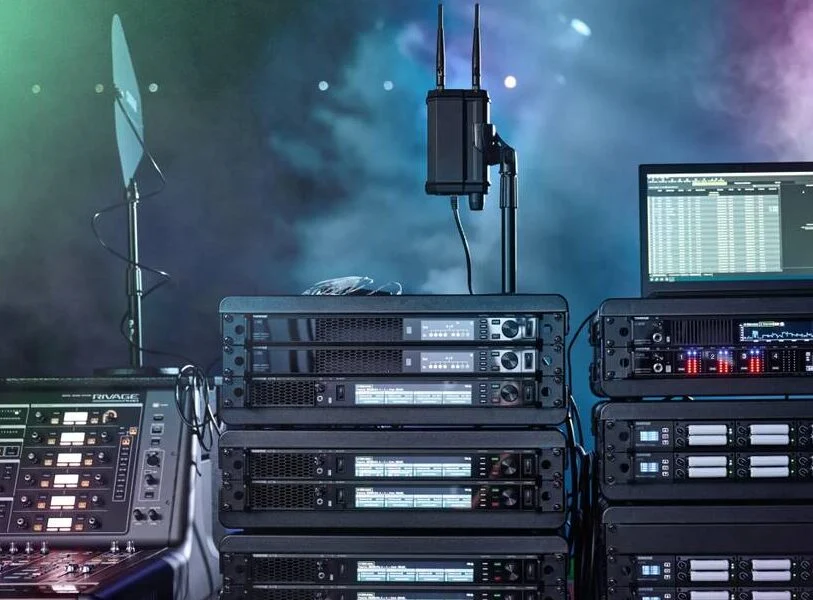
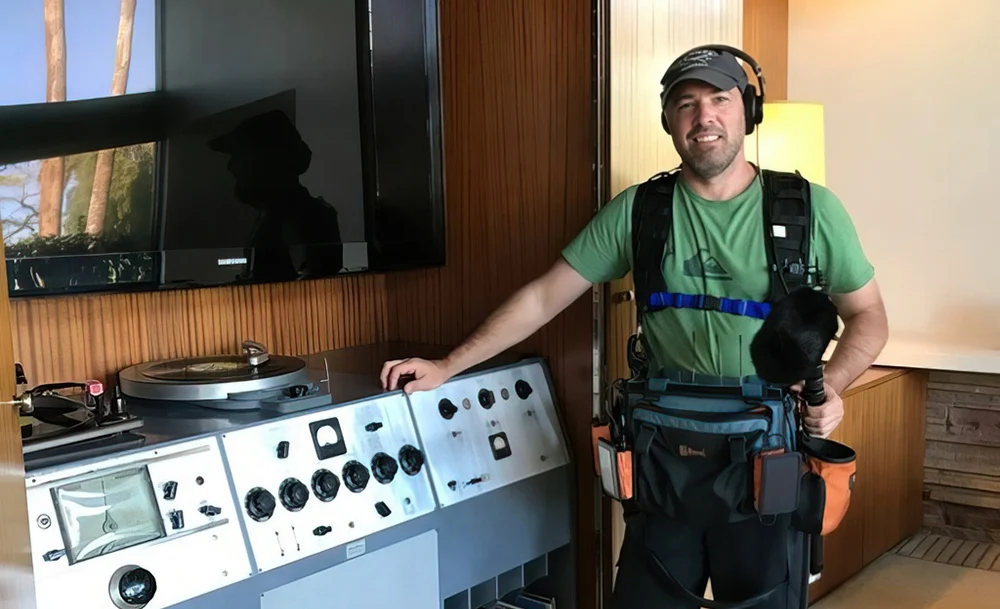
At the heart of Murphy’s current field kit is a sophisticated signal chain designed to handle the unpredictable nature of live broadcast. His primary bag setup features a Sound Devices 633 mixer, paired with two Lectrosonics DCR822 dual-channel digital receivers. This combination provides him with four channels of pristine, high-fidelity wireless audio.
"I love the 822 receivers," Murphy explains. "The technology gives me the necessary flexibility to scan and navigate the dense RF ‘schmutz’ encountered during major sporting events like MLB Spring Training."
Beyond the receivers, Murphy’s arsenal includes the SMDWB dual-battery miniature wideband transmitters, which have become a cornerstone of his workflow. These units are complemented by a robust collection of legacy and specialized hardware, including UCR411a Digital Hybrid wireless compact receivers, SMQV Digital Hybrid transmitters, and HMa Digital Hybrid wireless UHF plug-on transmitters. This tiered approach allows Murphy to adapt his kit dynamically, ensuring that whether he is on a quiet soundstage or in the middle of a chaotic, RF-heavy environment, the signal remains clean and consistent.
A Career Forged in the Trenches: Chronological Evolution
Murphy’s journey into the professional sound world began in 1996, a period of rapid transition for the television industry. His path was not a traditional one; he started his career as a DJ before transitioning into television production as a production assistant and grip.
During those formative years, he often found himself assisting camera operators with basic audio tasks during two-person field shoots. It was here that his innate understanding of signal flow and acoustics became apparent. "Since I had a knowledge of audio, I grew into it quickly," Murphy recalls.

His ascent was rapid. Over the following three decades, he transitioned from a general production hand to a specialized sound mixer, tasked with capturing audio from some of the most influential figures on the planet. His portfolio of subjects is staggering, including high-level CEOs, international dignitaries, and every sitting U.S. President from Bill Clinton to the present day.
One anecdote stands out as a testament to his professionalism and human touch. While wiring President George W. Bush at Camp David, Murphy realized in the heat of the moment that he had failed to introduce himself. After completing the task, he sheepishly approached the President. "I said, ‘Mr. President, I totally messed up and forgot to tell you my name. It’s Greg Murphy.’ He sized me up and said, ‘You look like a Murphy, I’m going to call you Murph!’"
In 2016, seeking a change of pace and lifestyle, Murphy relocated his family from the frenetic energy of New York City to Florida. Despite the change in geography, the demands of the job remained as high as ever, leading him to refine his equipment selection to prioritize durability and rapid deployment.
Technical Implications: Why Reliability Matters
In the field of ENG, Murphy’s philosophy is defined by his belief that "chance favors the prepared mind." This is not just a mantra for him; it is a rigorous operational standard. To illustrate the extreme measures he takes to ensure perfection, Murphy recounts how he would mic his own children when they were infants, using the unpredictable environment of a crawling baby to practice capturing clean, usable audio in challenging acoustic spaces.
This obsession with preparation extends to his hardware choices. The modern ENG environment is fraught with potential points of failure, from extreme weather to signal interference in high-density areas.
The "Failsafe" Workflow
Murphy highlights the importance of the SMDWB transmitter’s internal recording capability. "If I’m doing a feature at Disney and the talent is on a roller coaster, obviously I can’t ride along with my audio bag," he notes. The ability of the transmitter to record audio directly to an onboard card acts as a critical insurance policy. If the wireless signal drops due to distance, physical obstacles, or intense interference, the audio remains preserved, ready for retrieval in post-production.

Durability in Harsh Conditions
Perhaps the most compelling evidence for Murphy’s reliance on his equipment is his history with hardware longevity. He tells a striking story regarding a reality show production focused on hog hunting. During the shoot, a UM400 transmitter was fully submerged in floodwater.
"The transmitter went through thick wastewater. I thought it was dead, but after it dried out, it went right back to work," Murphy says. This durability is not just a luxury; it is an economic and professional necessity. "I’ve worked in over 100-degree heat and freezing weather. Lectrosonics always turns on, always works, and always gives me what I need."
Supporting Data: The Role of Manufacturers
The relationship between a sound professional and their equipment manufacturer is often symbiotic. In this case, the partnership between Murphy and Lectrosonics exemplifies how high-end manufacturing supports the needs of field technicians.
Lectrosonics has maintained its position in the market by focusing on the core requirements of ENG professionals:
- Wideband Tuning: Modern receivers must be able to scan massive swaths of the RF spectrum to find "clean air" in crowded urban or stadium environments.
- Digital Hybrid Technology: This allows for the high-quality audio of a digital system while maintaining the compatibility and latency characteristics of analog, which is often preferred in live monitoring.
- Mechanical Integrity: As evidenced by the "floodwater" incident, the physical housing and component quality are critical for field gear that faces more "abuse" than studio-bound equipment.
Industry Implications and Future Outlook
As television production continues to evolve toward more immersive, mobile, and reality-based content, the role of the sound mixer is becoming more complex. The "ENG workflow" is no longer confined to news; it is the standard for documentaries, live sports, and digital content creation.
Murphy’s success serves as a case study for the next generation of sound engineers. The industry is seeing a shift toward smaller, more capable gear—like the DCR822—that allows a single operator to perform the work that previously required an entire crew. However, the core lesson remains: equipment is only as good as the preparation behind it.
The Importance of the "Human Element"
Even with the best technology in the world, the human element—the ability to interact with subjects like U.S. Presidents or talent on a roller coaster—remains the true skill set of a world-class mixer. Murphy’s career proves that technical mastery and interpersonal communication are two sides of the same coin.
When asked about his long-term outlook, Murphy remains humble. He continues to refine his kit, always looking for ways to reduce latency, improve signal stability, and simplify the deployment of his gear. His commitment to "endless preparation" ensures that regardless of the location, the weather, or the complexity of the shoot, the audio is delivered with the professional clarity that the major networks demand.
As the industry pushes toward higher standards of broadcast audio, professionals like Greg Murphy continue to set the bar. By leaning on robust, field-tested equipment and a disciplined approach to every shoot, he ensures that the "Murph" name remains synonymous with reliability in an unpredictable industry.
For the production sound community, the takeaway is clear: in an era of rapid technological change, those who prioritize durability and fail-safe redundancy are the ones who thrive. Murphy’s story is not just one of a career in sound; it is a testament to the fact that when you leave nothing to chance, you rarely leave without the perfect take.