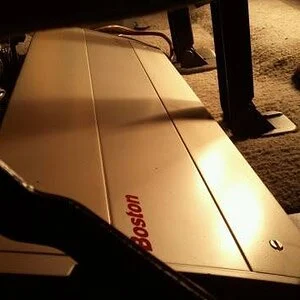
In the ever-evolving world of automotive sound engineering, the pursuit of the "perfect" audio experience is a journey defined by precision, electrical integrity, and acoustic science. Recently, a discussion within the car audio enthusiast community—spearheaded by a user inquiry regarding a complex multi-speaker integration—has highlighted the common challenges faced by hobbyists and professionals alike when installing high-performance equipment. The system in question, which utilizes a mix of Timpano super tweeters, component sets, factory rear speakers, and dual 10-inch subwoofers driven by a Rockville DB55 2,000-watt five-channel amplifier, serves as a textbook case study for modern mobile audio architecture.
Main Facts: The Anatomy of a High-Output System
The system described represents a hybrid approach to vehicle audio. By combining high-efficiency super tweeters with traditional component speakers, the user is attempting to achieve both high-decibel output and sonic accuracy. The core of this system, the Rockville DB55, is a five-channel amplifier designed to handle both the full-range speakers and the dedicated subwoofer channel.
The primary technical challenge in such a configuration is the "power distribution vs. impedance" equation. When integrating high-output components like Timpano super tweeters—which are notorious for their ability to project high frequencies at massive volumes—alongside standard component speakers, the installer must account for the vastly different sensitivity ratings and power handling capabilities of each driver. The system’s success depends entirely on how the signal is partitioned through crossovers and how the electrical load is managed at the amplifier terminals.
Chronology: The Evolution of Installation Best Practices
The methodology for installing such a system has matured significantly over the last decade. Historically, car audio enthusiasts relied on passive crossovers and brute-force wiring. Today, the process follows a more structured, engineering-led workflow:
- Phase One: Electrical Foundation (The Pre-Installation Phase): Before a single speaker is mounted, the electrical infrastructure must be established. This involves calculating total current draw. A 2,000-watt amplifier, even if operating at a typical Class D efficiency, requires a robust electrical backbone.
- Phase Two: Physical Integration: This involves the strategic mounting of drivers. The front doors act as the primary soundstage, where the components and tweeters are physically positioned to create the "image."
- Phase Three: Signal Routing: Wiring the system involves configuring the crossovers to ensure that the super tweeters are protected from low-frequency excursions—a critical step in preventing immediate hardware failure.
- Phase Four: Calibration and Tuning: This final phase is where the "noise" becomes "music." It involves setting gain structures, adjusting low-pass and high-pass filters, and performing a polarity check to ensure no sound cancellation occurs.
Supporting Data: Technical Considerations for Optimal Performance
To achieve the desired output without sacrificing longevity, specific technical thresholds must be respected.
Electrical Load and Wire Gauge
For an amplifier rated at 2,000 watts, voltage drop is the enemy of performance. Using 4-gauge oxygen-free copper (OFC) wire is the industry standard for this power class. The ground connection is arguably more critical than the power wire; it must be connected to a clean, sanded chassis point to ensure a complete circuit, minimizing resistance that leads to amplifier heat buildup.
Impedance Matching
The user’s mention of dual voice coil (DVC) subwoofers is a critical detail. If these are 4-ohm DVC subwoofers, they offer the installer the flexibility to wire them in parallel to reach a 2-ohm load. If the Rockville DB55 is 2-ohm stable on its subwoofer channel, this configuration effectively doubles the power delivery compared to a 4-ohm load. However, the installer must ensure the amplifier’s thermal protection circuitry is not triggered by excessive current draw.
The Crossover Science
Super tweeters are designed to handle extreme high frequencies. If a signal below 5kHz is sent to them, they will likely distort or burn out. Utilizing a high-pass filter (HPF) set at 5kHz or higher acts as a gatekeeper, ensuring only the intended frequencies reach the voice coil. Conversely, the subwoofer channel must be filtered via a low-pass filter (LPF) in the 80Hz–100Hz range to prevent the subs from attempting to play mid-range frequencies, which would result in "muddy" sound.
Official Responses and Expert Insights
Industry professionals often emphasize that the "weakest link" theory applies strictly to audio. Even with high-end Timpano tweeters, if the factory rear speakers are inefficient or wired with thin-gauge wire, they will drag down the overall sound quality.
"The most common mistake," notes a lead technician in the car audio space, "is ignoring the ‘soundstage.’ Most beginners focus on volume, but the real art lies in time alignment and gain matching. If your gains are set to ‘max’ simply because you want it louder, you are introducing clipping. Clipping is the silent killer of speakers; it sends a square wave to the voice coil, essentially turning it into a heater until it melts."
Furthermore, experts advise that when mixing aftermarket high-output drivers with factory speakers, one must be wary of "phase cancellation." If a speaker is wired out of phase (positive to negative), the sound waves will collide and cancel each other out, leading to a thin, hollow sound, particularly in the bass frequencies.
Implications: The Long-Term Impact of System Tuning
Installing a high-output system is not a "set it and forget it" process. The implications of a well-tuned system versus a poorly tuned one are significant:
- Longevity of Components: Proper gain staging prevents thermal damage. If the amplifier is properly tuned, the speakers can last for years of daily use. If the gain is set too high to compensate for poor installation, the voice coils will degrade rapidly.
- Acoustic Fidelity: A system that is balanced via equalization (EQ) will provide a "clean" sound, regardless of volume. This allows the listener to enjoy the music without the ear fatigue that characterizes distorted, high-volume audio.
- Safety and Electrical Integrity: An improperly wired 2,000-watt system poses a legitimate fire risk. The heat generated by a high-draw amplifier can melt wire insulation if fuses are not properly placed near the battery or if the wiring is undersized for the amperage.
Troubleshooting: The Final Checklist
Should the user encounter issues, they should follow a logical diagnostic path:
- Check for Ground Loops: A persistent "whine" that rises with engine RPM indicates a ground loop. This can usually be fixed by upgrading the "Big 3" wiring (alternator to battery, engine block to chassis, and battery to chassis).
- Verify Crossover Settings: If the highs sound "harsh" or "piercing," check that the high-pass filter on the tweeters is set correctly.
- Check Polarity: Use a multimeter or a 9V battery test to ensure every speaker is moving outward when the positive signal is applied.
In conclusion, the integration of high-output components like Timpano tweeters and dual subwoofers is an ambitious project that rewards the installer for their attention to detail. By adhering to the principles of proper electrical supply, calculated impedance matching, and precise crossover tuning, the resulting audio system will not only be powerful but will provide a level of clarity that elevates the entire driving experience. As the community continues to share these insights, the threshold for entry into high-end mobile audio continues to lower, empowering enthusiasts to build studio-quality sound systems in their own garages.