In the heart of London’s bustling Strand, beneath the historic architecture of 180 Studios, a quiet revolution is taking place—one defined not by words, but by the raw, pulsating architecture of information. Ryoji Ikeda, the Japanese electronic composer and visual artist renowned for his minimalist precision and high-concept digital explorations, has returned to the capital with his latest magnum opus, data-cosm [n°1]. Following a rapturous reception from both critics and the public, the exhibition has been officially extended, ensuring its residency at 180 Studios will continue until February 1, 2026.
data-cosm [n°1] is more than an exhibition; it is a total sensory encounter. It represents the next logical evolution in Ikeda’s long-standing obsession with the translation of the invisible. By converting vast, complex datasets—ranging from the subatomic movements of quantum particles to the gargantuan shifts of galactic clusters—into a synchronized audiovisual environment, Ikeda invites the audience to confront the scale of the universe in a way that is both intellectually daunting and physically meditative.
Main Facts: A Symphony of Pure Information
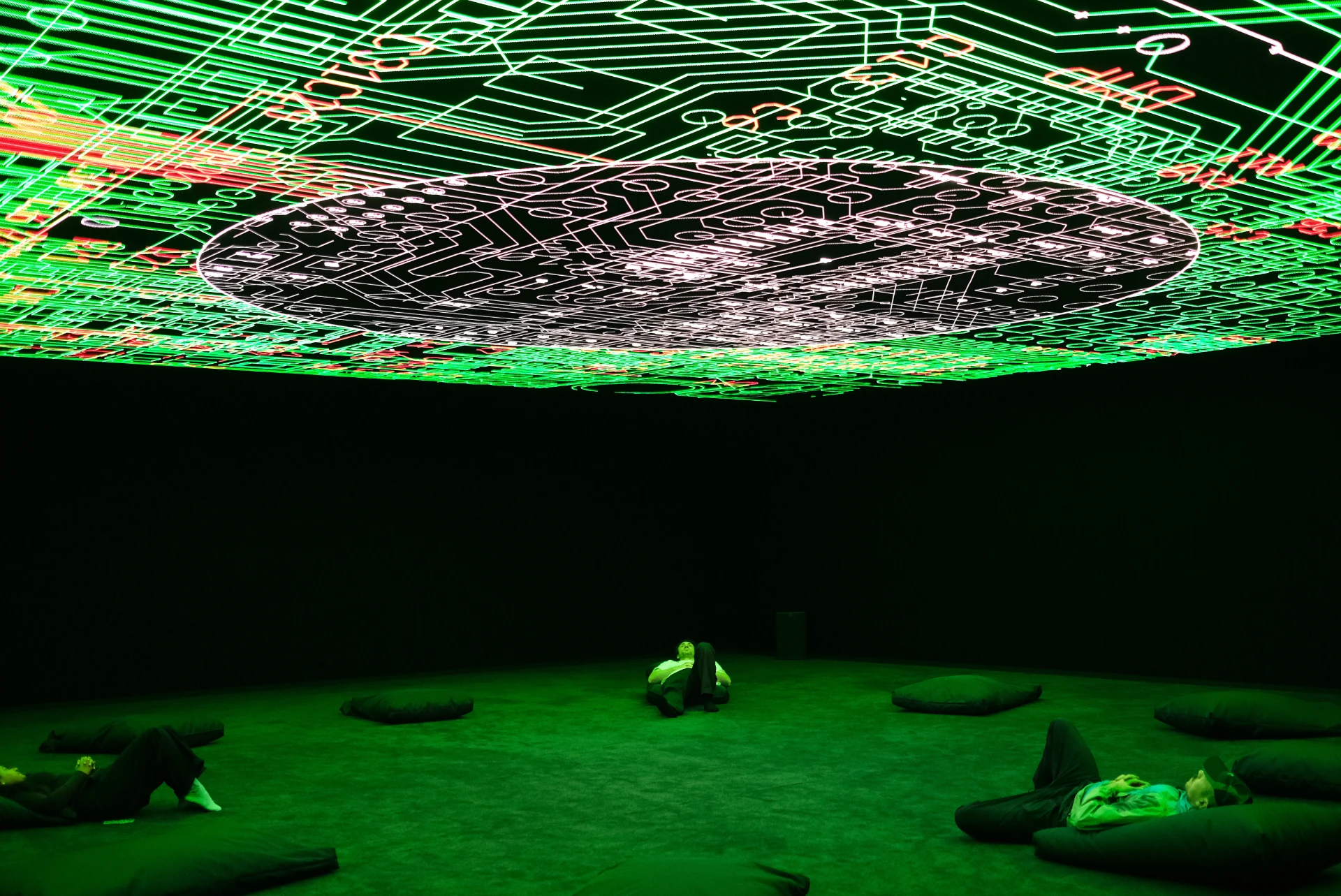
At the core of the installation is a radical departure from traditional cinematic or gallery experiences. Visitors are invited to lie down directly beneath a massive, high-definition LED ceiling, effectively surrendering their peripheral vision to the work. As the soundscapes—Ikeda’s signature blend of clinical sine waves, glitch-inflected static, and rhythmic oscillations—wash over the space, the visual data unfolds above.
The work functions as a cartography of the natural world. Ikeda utilizes open-source data provided by institutions like NASA and CERN to construct a bridge between the microscopic and the macroscopic. The result is an experience that feels simultaneously hyper-local and cosmically distant. The installation is not merely a display of data; it is an interpretation of the "data-verse," a concept Ikeda has been refining for years. While his previous data-verse trilogy explored the interconnectedness of information in human systems, data-cosm [n°1] pivots toward the fundamental laws of physics that govern the universe itself.
For those planning to visit, the installation is housed at 180 Studios, 6 Surrey Street, London, WC2R 2ND. It is open to the public Wednesday through Sunday, from 12:00 PM to 7:00 PM. Due to the high demand that prompted the extension, booking in advance via the 180 Studios website is strongly recommended.
Chronology: The Evolution of Ikeda’s Digital Aesthetic
To understand the significance of data-cosm [n°1], one must view it through the lens of Ikeda’s career-long commitment to the "aesthetics of data."
- The Early Years (1990s–2000s): Ikeda began his career in the mid-1990s as a member of the legendary art collective Dumb Type. His solo work during this period focused on the "true" nature of sound—the frequencies that define the digital age. Albums like Matrix (2000) and Dataplex (2005) established his signature style: clinical, precise, and obsessed with the binary nature of digital existence.
- The Rise of the Data-Verse (2019–2021): The precursor to the current installation, the data-verse project, was commissioned by Audemars Piguet Contemporary. It was a monumental three-part audiovisual project that attempted to map the totality of the universe’s data. It premiered at Art Basel and toured globally, cementing Ikeda’s reputation as an artist capable of making the abstract tangible.
- The 180 Studios Era (2025): The commissioning of data-cosm [n°1] by 180 Studios represents a maturation of these themes. By creating a bespoke environment designed specifically for the architecture of the 180 Studios subterranean space, Ikeda has moved from "presenting" data to "inhabiting" it.
- October 2025–February 2026: The current exhibition period. Following the initial launch in October 2025, the surge in public interest and the critical acclaim regarding the work’s "transcendental" quality led the studio to extend the run, allowing for a broader international audience to engage with the piece.
Supporting Data: The Physics of the Installation
What sets data-cosm [n°1] apart from typical digital art is the rigor of its data sourcing. Ikeda does not rely on generative AI to "hallucinate" imagery; he relies on the cold, hard truths of scientific observation.
The visual output is derived from:
- Particle Physics (CERN): Visualizations of high-energy collision data, translated into rapid-fire, strobe-like sequences of light.
- Astrophysics (NASA/ESA): Mapping the coordinates of galaxies and the distribution of dark matter, scaled to fit the ceiling of the studio.
- Quantum Mathematics: The sound design is modulated by the mathematical constants found in quantum mechanics, ensuring that every "thump" or "shimmer" in the audio has a direct correlate in the visual data.
The juxtaposition of this data is designed to induce a state of "sublime anxiety"—a term often used in philosophy to describe the feeling of being overwhelmed by something vast and uncontrollable. By placing the viewer in a supine position, Ikeda physically humbles the audience, removing the ability to "walk away" from the information and forcing an total immersion in the scale of the universe.
Official Responses and Curatorial Context
180 Studios has positioned data-cosm [n°1] as the cornerstone of their recent programming. The institution, which has become a mecca for contemporary digital art in London, views Ikeda’s work as a vital contribution to the "moving image culture."
![Ryoji Ikeda's data-cosm [n°1] extended at 180 Studios until 1 February](https://factmag-images.s3.amazonaws.com/wp-content/uploads/2025/12/data-cosm-ALubbock_180-14Oct-3554.webp)
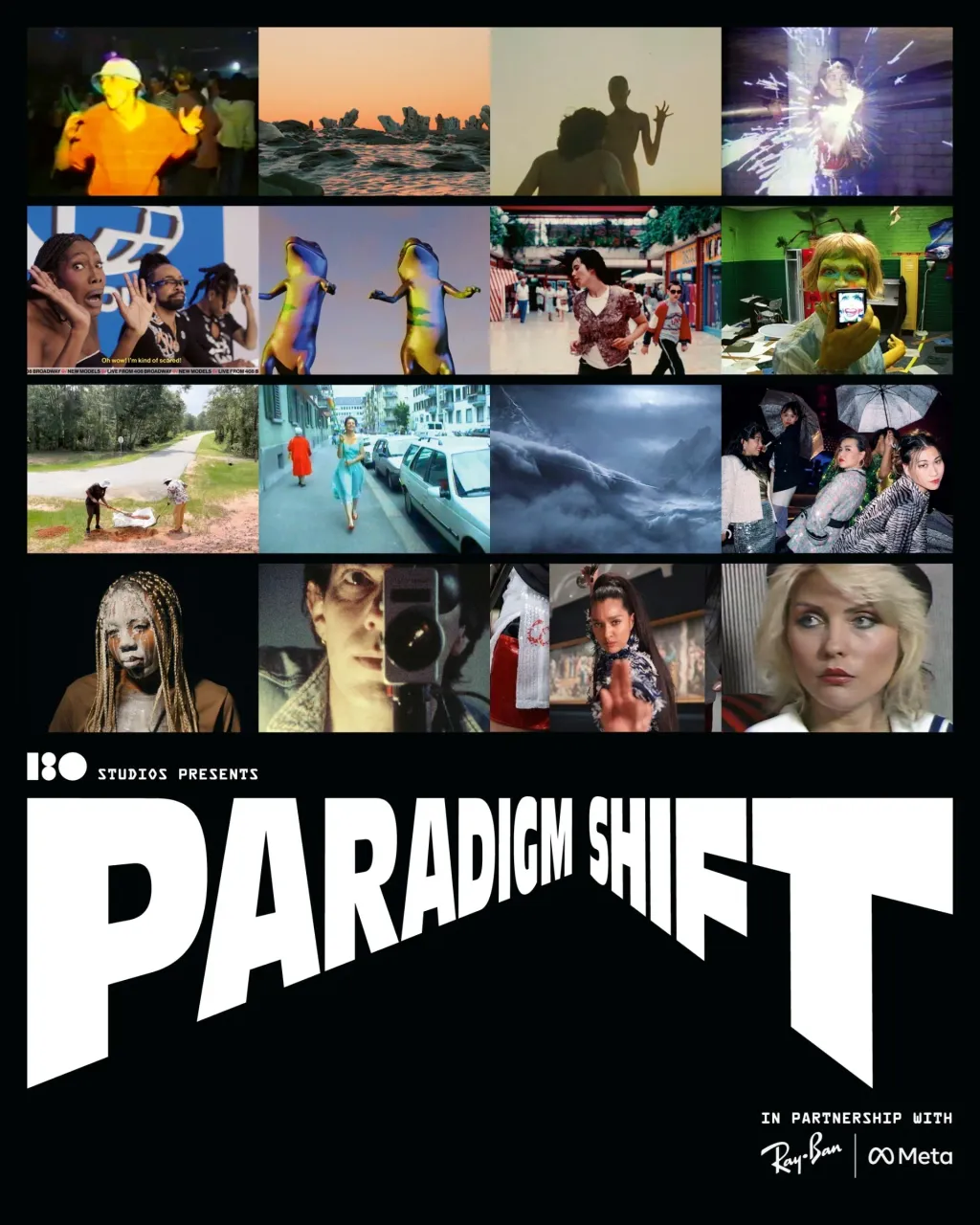
Running alongside data-cosm [n°1] is Paradigm Shift, a broad-reaching exhibition that traces the history of the moving image. By placing Ikeda’s work in conversation with luminaries like Andy Warhol, Arthur Jafa, and Derek Jarman, the curators at 180 Studios are framing Ikeda not just as a sound artist, but as a pivotal figure in the history of cinema and visual media.
"Ikeda’s work forces us to rethink what a ‘film’ or an ‘image’ can be," noted a spokesperson for 180 Studios. "When you strip away the narrative and the human figure, and you are left only with the raw data of existence, you find a new form of beauty—one that is both haunting and deeply optimistic about our ability to perceive the universe."
Implications: The Future of Immersive Art
The success of data-cosm [n°1] carries significant implications for the future of the art world. As we move deeper into the 21st century, the boundaries between the physical gallery space and the digital realm are becoming increasingly porous.
1. The Death of the "Screen"
Historically, digital art was consumed via a screen. Ikeda’s work at 180 Studios suggests a future where the environment is the medium. By turning the ceiling into a light source and the floor into a vibration chamber, the "screen" effectively disappears. The viewer is no longer a spectator of the art; they are a component within the system.
2. Scientific Literacy in Art
There is a growing trend of artists collaborating directly with research institutions. data-cosm [n°1] proves that scientific data, when treated with artistic intent, can reach audiences that traditional documentaries or textbooks cannot. This cross-pollination of disciplines is likely to become the standard for major public art installations.
3. The Demand for "Slow" Digital Art
Despite the high-speed nature of the flashing lights and complex data points, the experience of the installation is incredibly slow and meditative. This marks a pushback against the "short-form" content of modern social media. Audiences are showing a clear hunger for long-form, immersive experiences that demand time, patience, and physical presence.
Conclusion: A Must-See Experience
As the winter months set in, the warm, pulsating glow of data-cosm [n°1] offers a sanctuary from the grey reality of the London streets. Ryoji Ikeda has once again managed to distill the infinite into something that can be felt in the chest and seen with the eyes.
Whether you are a devotee of electronic music, a student of physics, or simply an observer of the digital age, the exhibition at 180 Studios is an essential experience. It serves as a reminder that even in an age of overwhelming information, there is a profound, underlying order—a cosmos waiting to be decoded.
Tickets for the extended run are available now. With the installation scheduled to conclude on February 1, 2026, visitors are encouraged to secure their time slots early to ensure they do not miss one of the most significant artistic achievements of the decade.