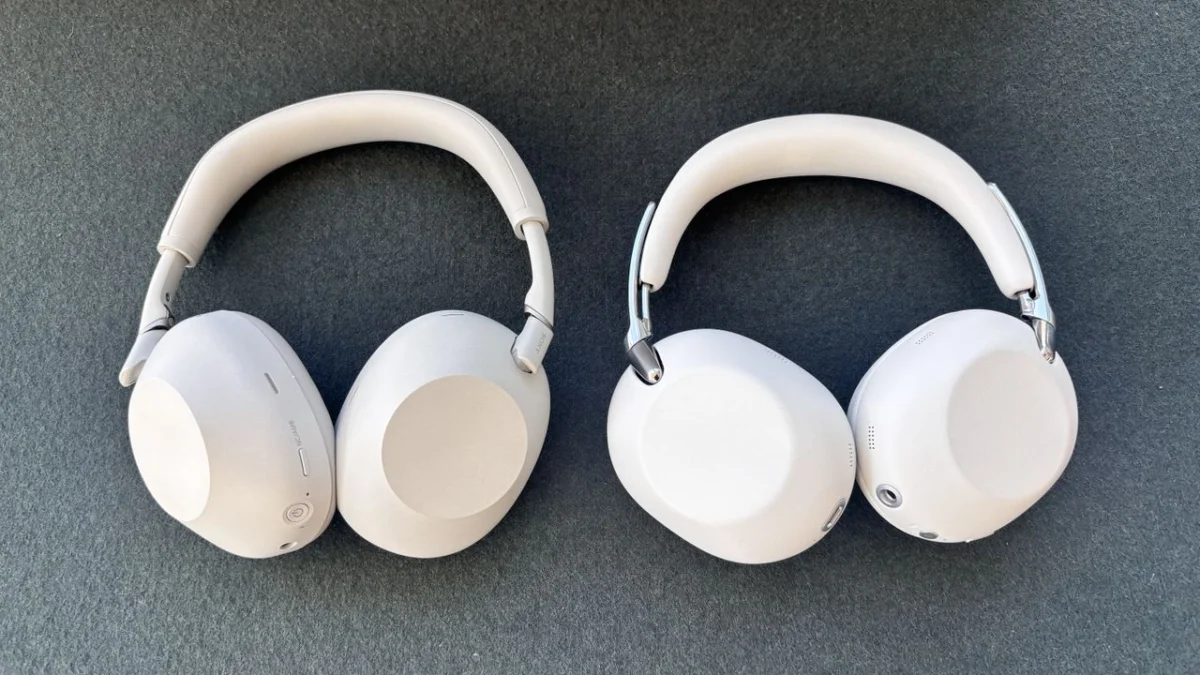
In a significant technological leap for wireless consumer audio, Sony has officially rolled out a major firmware update for its flagship WH-1000XM6 noise-canceling headphones and its premium ecosystem, the "1000X The Collexion." The update introduces native support for the Bluetooth LE Audio Gaming Audio Profile (GMAP), bringing an ultra-low-latency mode designed to slash transmission lag to under 40 milliseconds.
Historically, Bluetooth audio has struggled with latency, making standard wireless headphones less than ideal for fast-paced gaming and real-time interactive media. By implementing this new open-standard profile, Sony is bridging the gap between high-fidelity lifestyle audio and the high-performance demands of the gaming community.
Main Facts: The Low-Latency Breakthrough
The core of this firmware deployment is the integration of the Gaming Audio Profile (GMAP), a specialized subset of the next-generation Bluetooth LE (Low Energy) Audio standard defined by the Bluetooth Special Interest Group (SIG).
- Target Devices: The update is immediately available for the award-winning Sony WH-1000XM6 over-ear headphones (Firmware Version 3.1.5) and Sony’s 1000X The Collexion (Firmware Version 1.3.0).
- The Latency Milestone: The update reduces wireless audio latency to less than 40 milliseconds (ms). For context, typical Bluetooth connections utilizing legacy SBC or AAC codecs experience latency ranging from 150ms to over 250ms.
- The Core Technology: GMAP achieves this performance by utilizing the Low Complexity Communication Codec (LC3) combined with highly efficient data transmission protocols that prioritize speed and synchronization over long-distance range.
- Four Distinct Profiles (A–D): To handle different RF (radio frequency) environments, GMAP incorporates four operational modes, ranging from Profile A (maximum speed/lowest latency) to Profile D (maximum stability in congested wireless spaces).
- Source Dependency: To experience the sub-40ms latency, the transmitting host device (such as a smartphone, PC, or gaming console) must also support Bluetooth LE Audio and the GMAP standard.
- Delivery Method: Users can download and install the update via the newly rebranded Sony Sound Connect companion application (formerly known as Sony Headphones Connect) available on iOS and Android.
Chronology: The Evolution of Sony’s Wireless Ecosystem
To understand the significance of this update, it is necessary to examine Sony’s multi-year trajectory in wireless audio development and the broader industry transition toward Bluetooth LE Audio.
[2020-2022] ------------------> [2023-2024] ------------------> [Late 2024]
Dominance of Classic Bluetooth  Introduction of LE Audio       GMAP Firmware Rollout
LDAC, AAC, and SBC Codecs       Early LC3 Codec Support        Sub-40ms Latency Enabled
Latency: 150ms - 250ms          Initial integration on XM5     WH-1000XM6 & Collexion
1. The Legacy Bluetooth Era (2020–2022)
For years, Sony dominated the active noise-canceling (ANC) market with its WH-1000XM4 and subsequent WH-1000XM5 models. These devices relied on Bluetooth Classic, using codecs like SBC, AAC, and Sony’s proprietary LDAC. While LDAC offered high-resolution audio streaming at up to 990kbps, it was highly susceptible to packet loss in crowded environments and suffered from high latency, often exceeding 200ms. This made the headphones excellent for music but frustrating for mobile gaming and video editing.
2. The Dawn of Bluetooth LE Audio (2023)
The Bluetooth SIG finalized the LE Audio specifications, promising lower power consumption, better audio quality at lower bitrates via the LC3 codec, and multi-stream capabilities (Auracast). Sony was among the first to experiment with LE Audio, introducing beta-level support in select earbuds and headphones. However, these early implementations lacked a dedicated, standardized profile optimized specifically for gaming.
3. The Launch of the WH-1000XM6 and "The Collexion" (2024)
Sony launched the WH-1000XM6 to critical acclaim, sporting refined ANC, upgraded drivers, and hardware-level readiness for advanced Bluetooth LE features. Simultaneously, Sony introduced "1000X The Collexion," a curated portfolio of premium audio products designed to work cohesively across home and mobile environments.
4. The GMAP Deployment (Present)
Recognizing the growing overlap between mobile gamers, console players, and audiophiles, Sony’s engineering team developed and certified the 3.1.5 (XM6) and 1.3.0 (Collexion) firmware packages. This update officially transitions these premium consumer headphones into highly capable wireless gaming headsets without the need for proprietary 2.4GHz USB dongles.
Supporting Data: The Technical Architecture of GMAP
The Gaming Audio Profile (GMAP) is not merely a software patch; it is a fundamental shift in how wireless audio packets are structured, scheduled, and decoded.
Understanding the Latency Hierarchy
In digital audio, latency is the time delay between the moment an audio signal is generated by the source (e.g., a gunshot in a video game) and the moment it is converted into acoustic sound waves by the headphone drivers.
| Codec / Profile | Average Latency (ms) | Primary Use Case |
|---|---|---|
| SBC (Standard Bluetooth) | 170 – 250 ms | Legacy audio streaming |
| AAC (Apple Ecosystem) | 120 – 200 ms | Compressed music, video playback |
| LDAC (Sony High-Res) | 150 – 220 ms | High-resolution audiophile listening |
| aptX Adaptive (Qualcomm) | 50 – 80 ms | Mid-tier gaming, high-res audio |
| Bluetooth LE Audio (Standard LC3) | 60 – 90 ms | General low-power use |
| GMAP Profile A (Sony Update) | < 40 ms | High-performance interactive gaming |
At 40ms, latency becomes virtually imperceptible to the human brain. The threshold for noticeable audio-to-video desynchronization (lip-sync lag) is roughly 100ms, while competitive gamers generally demand sub-50ms response times to react to auditory cues like enemy footsteps.
The Four Signal Profiles of GMAP
To maintain this ultra-low latency across varying real-world conditions, GMAP specifies four operating configurations labeled A through D. These profiles allow the WH-1000XM6 and the source device to dynamically negotiate the optimal balance between speed and link robustness.
       [GMAP Dynamic Profile Selection]
                      |
        +-------------+-------------+
        |                           |
    [Profile A]                 [Profile D]
  Speed Priority            Stability Priority
(Under 40ms Latency) (High-Interference RF)- Profile A (Speed Priority): This profile utilizes the absolute shortest buffer sizes and transmission intervals. It is designed for clean RF environments, such as a private bedroom or office, delivering the sub-40ms latency required for competitive first-person shooters.
- Profile B (Balanced Speed): A step down from Profile A, this mode introduces a slightly larger jitter buffer to prevent audio dropouts in environments with moderate wireless activity (e.g., a home with multiple active Wi-Fi routers).
- Profile C (Balanced Robustness): This profile prioritizes maintaining a solid connection while keeping latency well below standard Bluetooth Classic levels. It is ideal for casual gaming in shared living spaces.
- Profile D (Stability Priority): Engineered for highly congested wireless environments—such as public transport, esports arenas, or crowded conventions—Profile D allocates more system resources to error correction and packet retransmission. While latency rises slightly, it remains highly optimized compared to legacy codecs, ensuring the audio stream does not stutter or cut out entirely.
Official Context and Industry Standards
Sony’s move to adopt GMAP is a strategic play aligned with broader consumer electronics trends. By utilizing an open standard established by the Bluetooth SIG, Sony avoids the pitfalls of proprietary wireless systems.
Sony’s Ecosystem Strategy
In an internal design philosophy note, Sony highlighted its commitment to unifying its product categories. Historically, Sony’s PlayStation division operated somewhat independently from its consumer audio division, relying on proprietary "PlayStation Link" wireless technology for its gaming headsets. By bringing GMAP to the WH-1000XM6 and the 1000X Collexion, Sony is allowing its premium lifestyle headphones to cross over into the gaming space, appealing directly to multi-platform users who play games on PCs, Steam Decks, and modern Android handhelds.
Industry and Regulatory Alignment
The Bluetooth SIG has long advocated for the industry-wide adoption of LE Audio. A spokesperson from the organization noted:
"The addition of GMAP to the Bluetooth LE Audio suite represents a critical milestone. For the first time, consumers do not have to choose between premium active noise-canceling lifestyle headphones and dedicated gaming headsets with bulky USB transmitters. Open standards drive interoperability, and Sony’s rapid implementation will accelerate adoption across source device manufacturers."
However, industry analysts point out a crucial hardware bottleneck: source compatibility. While Android 13 and 14 have native support for Bluetooth LE Audio, and Microsoft has integrated support into Windows 11, hardware-level GMAP compatibility is currently limited to newer devices utilizing modern chipsets, such as Qualcomm’s Snapdragon 8 Gen 2 and Gen 3 platforms, or specific Intel/AMD Wi-Fi 7 modules on PC. Apple’s current hardware line relies heavily on its proprietary AAC implementation, meaning iPhone and Mac users may have to wait for future iOS and macOS updates to fully exploit Sony’s new low-latency capabilities.
Implications for Gamers, Consumers, and the Wireless Market
The introduction of GMAP to Sony’s premium audio lineup has far-reaching consequences for several segments of the consumer tech market.
1. The Death of the Dedicated Dongle
For years, wireless gaming headsets required a dedicated 2.4GHz USB-A or USB-C dongle to bypass the high latency of Bluetooth. These dongles occupy valuable ports, are easily lost, and are often incompatible across different consoles. If GMAP adoption becomes widespread among source devices, the need for proprietary wireless transmitters could vanish entirely. A gamer could use their WH-1000XM6 for their morning commute, and then seamlessly transition to high-performance PC or console gaming in the evening using the exact same wireless connection.
2. The Impact on Mobile and Cloud Gaming
Mobile gaming (e.g., PUBG Mobile, Call of Duty: Warzone Mobile) and cloud streaming platforms (e.g., Xbox Cloud Gaming, GeForce NOW) are highly sensitive to latency. High audio latency completely ruins the immersion of cloud gaming, where network lag is already an issue. Reducing the local audio transmission lag to under 40ms removes a major friction point, making cloud gaming on tablets and smartphones feel significantly more responsive.
3. Pressure on Competitors
Sony’s proactive firmware support puts direct pressure on its main rivals in the premium ANC market:
- Apple (AirPods Max): Apple’s over-ear flagship still relies on legacy Bluetooth Classic and the AAC codec. Without LE Audio or GMAP support, Apple risks falling behind in gaming and cross-platform compatibility.
- Bose (QuietComfort Ultra): While Bose utilizes Qualcomm’s Snapdragon Sound platform to achieve lower latency on compatible Android devices, it remains a hardware-siloed solution. Sony’s open-standard GMAP implementation offers broader long-term compatibility.
- Sennheiser (Momentum 4): Sennheiser has historically targeted audiophiles with high-quality codecs like aptX Adaptive, but native GMAP integration would give Sony a distinct marketing advantage among younger, tech-savvy consumers who divide their time equally between music streaming and gaming.
4. How Users Can Access the Update
Sony has streamlined the update process through its newly updated Sony Sound Connect app. To install the update:
- Ensure your WH-1000XM6 or 1000X Collexion device is connected to your smartphone and has at least 50% battery life.
- Launch the Sony Sound Connect app.
- A prompt will appear indicating that Firmware Version 3.1.5 (for XM6) or Version 1.3.0 (for Collexion) is available.
- Follow the on-screen prompts to download and transfer the update. Keep the headphones close to your phone during the transfer, which may take between 15 to 30 minutes depending on your connection.
- Once installed, the headphones will automatically negotiate GMAP connections when paired with a compatible LE Audio/GMAP-enabled source device.