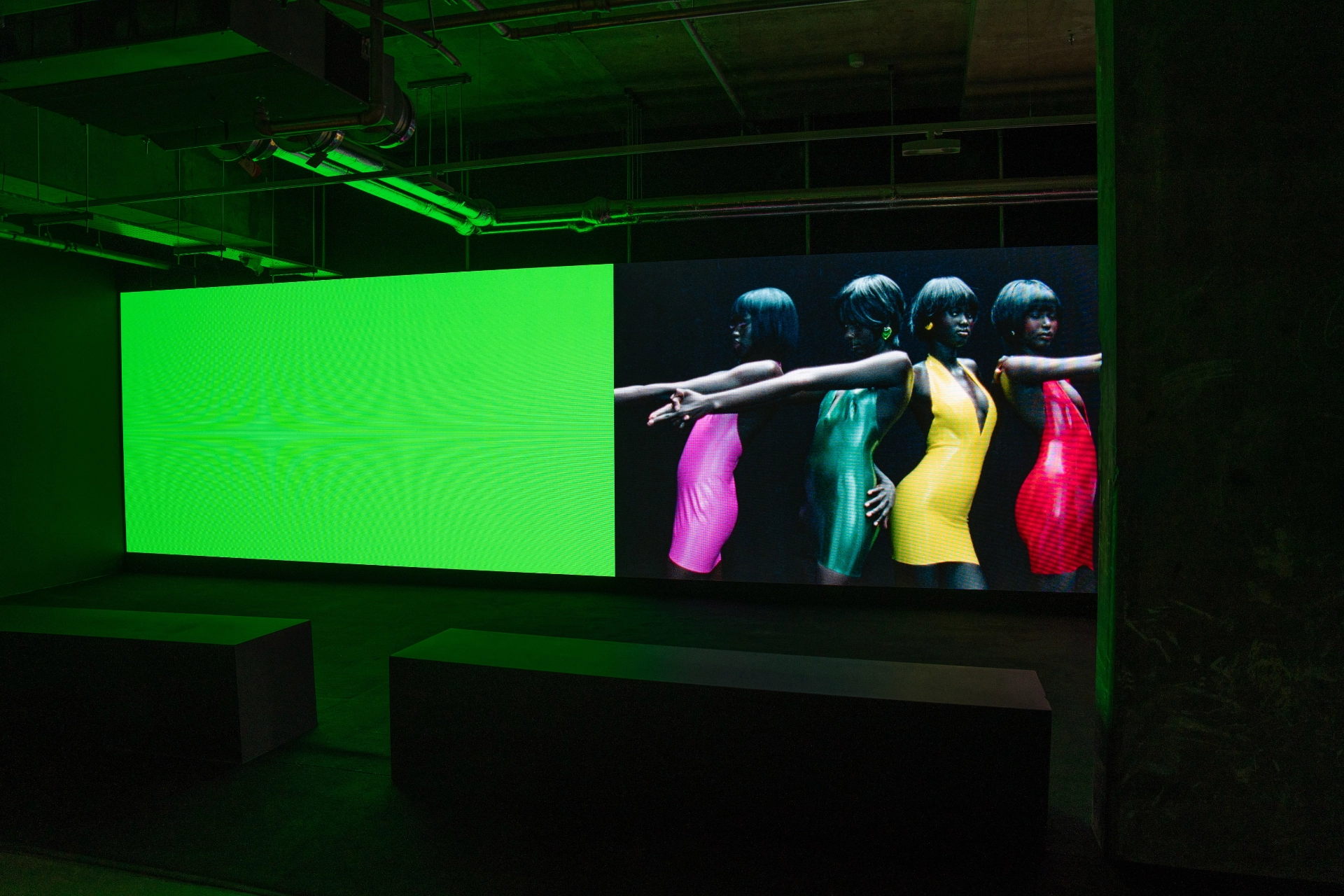
In the heart of London’s creative district, 180 Studios has announced the extension of Selah, the monumental career-spanning exhibition by the visionary photographer and filmmaker Gabriel Moses. Due to unprecedented public demand and critical acclaim, this immersive journey through the lens of one of Britain’s most compelling visual storytellers will now remain open to the public until August 31, 2025.
Selah represents more than just a gallery showing; it is a definitive statement on the intersection of fashion, music, and contemporary portraiture. Spanning two expansive floors, the exhibition serves as a retrospective of a meteoric rise that has seen the South London native become a central figure in global visual culture.
Main Facts: A Retrospective of Modern Iconography
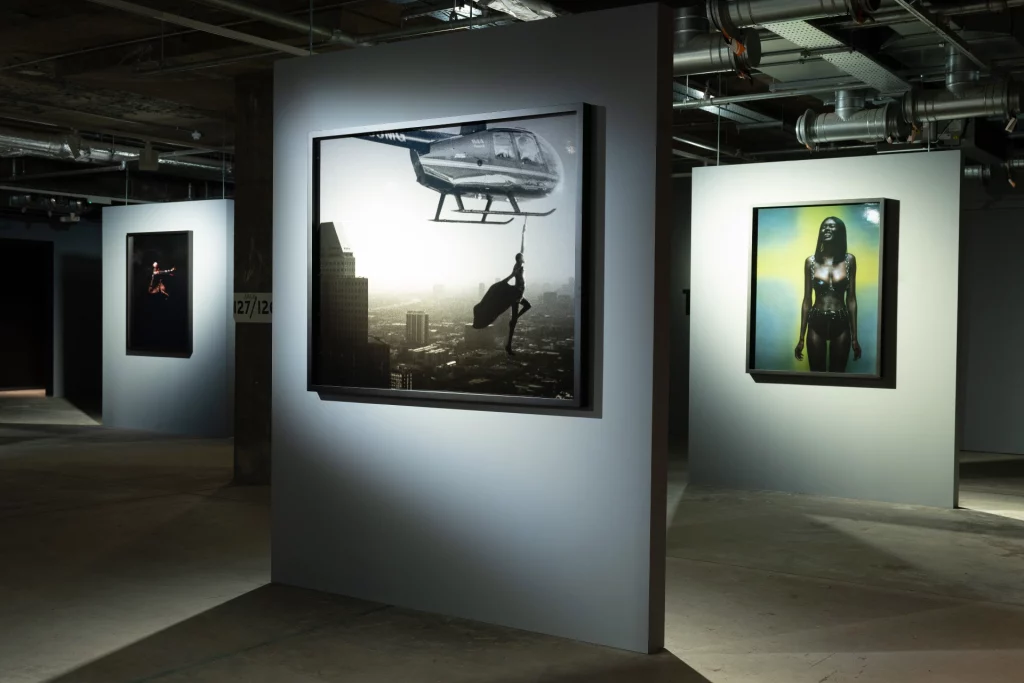
Selah is the largest exhibition to date for Gabriel Moses, gathering over 70 photographs and 10 films that articulate his distinct aesthetic. His work is characterized by a "less is more" approach—a minimalist mastery of lighting and composition that prioritizes the soul of the subject over the noise of the background.

The exhibition features an array of his most iconic collaborations, including:
- Music Visuals: The visceral energy of Travis Scott and Playboi Carti’s Fein and the atmospheric narrative of Schoolboy Q’s Lost Times.
- Portraits: Striking, intimate captures of cultural heavyweights such as Skepta, Jude Bellingham, Alek Wek, and the artist Slawn.
- The Premiere: Central to the exhibition is the debut of The Last Hour, a short film commissioned by 180 Studios. Shot in Atlanta, Georgia, the piece explores the profound, often painful search for redemption through solitude.
The exhibition, curated by Katja Horvat, benefits from a meticulous spatial design by Emilia Margulies and a sharp graphic identity by Jayda Deans, ensuring that the environment feels as carefully crafted as the imagery on the walls.
Chronology: The Evolution of a Visionary
To understand the weight of Selah, one must trace the rapid trajectory of Moses’ career. His ascent is a testament to the power of authentic, heritage-rooted storytelling.

The Early Years and Foundation
Born and raised in South London, Moses’ creative lens was forged in the fires of his British-Nigerian upbringing. His work is a continuous homage to the women in his life—his mother, grandmother, and sister—who introduced him to the worlds of fashion and art. This domestic influence is evident in the tenderness he brings to his portraiture, where even the most famous global icons appear vulnerable and human.
2023: The Breakthrough
The 180 Studios space is familiar territory for the artist. In 2023, he held his debut solo exhibition, which served as a springboard for his subsequent global tours. This initial success established the visual language he would later refine for Selah.
2024: Global Recognition and the Monograph
The year 2024 proved to be a watershed moment. Moses released his first monograph, Regina, published by Prestel—a permanent record of his aesthetic philosophy. His presence was felt globally, with exhibitions at the Anthony Gallery in Chicago, Spazio Maiocchi in Milan, and at Frieze Seoul.

2025: Institutional Status
The current year has solidified his status as an industry leader. Beyond the exhibition, he was tapped to design the trophy for the 2025 BRIT Awards, a high-profile commission that acknowledges his influence on the intersection of British music and design. His work has since been showcased at the Luma Foundation in Arles, marking his transition from a promising talent to a pillar of the international art scene.
Supporting Data: The Scope of Influence
Gabriel Moses’ influence is not limited to art galleries; it is deeply embedded in the commercial and cultural fabric of the 21st century. His portfolio acts as a "who’s who" of the modern era.
- Luxury Collaborations: Moses has redefined the visual identities of heritage brands such as Louis Vuitton, Burberry, and Dior. His ability to marry high-fashion aesthetics with raw, street-level humanity has made him a favorite for these houses.
- Editorial Prowess: His photography has graced the pages of Vogue and i-D, where he has frequently challenged traditional fashion tropes, opting instead for a style that feels cinematic and grounded in memory.
- Cultural Icons: From the legendary Zinedine Zidane to the trailblazing Pharrell Williams, Moses has consistently captured subjects who dictate the cultural conversation.
The data suggests that his appeal is cross-generational and cross-disciplinary. Whether he is directing a high-octane music video for a global rap superstar or capturing a quiet moment of reflection in a studio, the core remains the same: a rich color palette and a minimal, poignant focus.

Official Responses and Curatorial Vision
The success of Selah lies in its ability to synthesize diverse mediums into a cohesive narrative. Curator Katja Horvat notes that the exhibition was designed to allow the audience to step into the mind of the artist. By placing the viewer in direct dialogue with the subjects of his photographs, the space becomes a place of shared, silent observation—hence the title Selah, a term often associated with a pause or a moment of reflection.
180 Studios, acting as both patron and host, has played a pivotal role in this production. By commissioning The Last Hour, they have provided the infrastructure for Moses to transition from a photographer of people to a filmmaker of complex, narrative-driven human experiences. The executive production of the film by Division and Goat ensures that the production values match the intensity of the visual storytelling.
Implications: The Future of Visual Storytelling
What does the extension of Selah imply for the future of photography as an exhibition-based art form?

The Shift Toward Experiential Art
The popularity of Selah suggests that audiences are increasingly craving exhibitions that are more than just "wall art." They want an experience that includes sound, film, and spatial design. Moses’ work, which often features music and cinematic lighting, is perfectly suited for this evolution.
The Rise of the "Multi-Hyphenate"
Gabriel Moses is a key example of the contemporary "multi-hyphenate." He is a photographer, a film director, a trophy designer, and an author. His career path proves that the rigid boundaries between these fields have eroded. For the next generation of creatives, Moses serves as a blueprint for how to maintain a consistent artistic voice while diversifying one’s professional output.
Preserving Heritage in a Digital Age
Perhaps the most significant implication of his work is the preservation of cultural memory. By rooting his images in his British-Nigerian identity, Moses is ensuring that specific histories, aesthetics, and values are archived in the halls of high-art institutions. His work is a bridge between the intimate traditions of his family and the global, digital-first culture of the music and fashion industries.
Conclusion: A Must-See Event
As Selah continues its run at 180 Studios, it remains a vital stop for anyone interested in the future of image-making. It is a rare exhibition that captures the zeitgeist of 2025 while simultaneously feeling timeless.
Visitors have until August 31, 2025, to witness the evolution of Gabriel Moses. Tickets are available through the 180 Studios website, and early booking is highly recommended. As the artist himself continues to push the boundaries of his craft, Selah serves as the perfect vantage point from which to observe the trajectory of one of the most exciting artistic minds of the decade.
Exhibition Details:
- Venue: 180 Studios, London
- Dates: 28 March 2025 – 31 August 2025
- Hours: Wednesday – Sunday, 12pm – 7pm
- Website: www.180studios.com