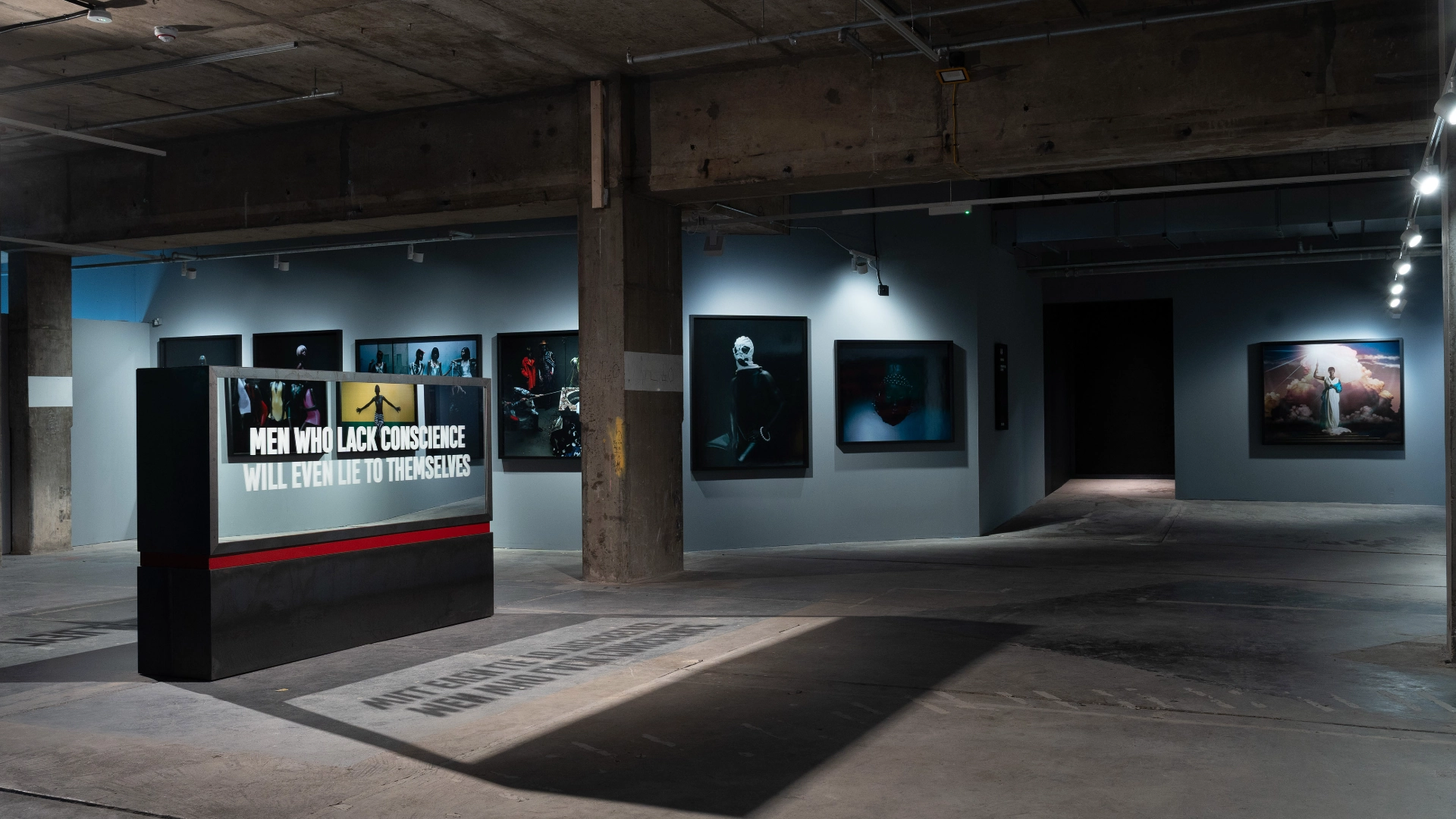
In the cavernous, industrial heartbeat of London’s 180 Studios, a quiet revolution is taking place. Gabriel Moses, the visionary photographer and filmmaker whose lens has defined the aesthetic of a generation, has returned to the space that cemented his status as a cultural force. His latest exhibition, Selah, is not merely a showcase of past work; it is an expansive, multisensory exploration of time, stillness, and the evolving identity of one of Britain’s most compelling visual storytellers.
Spanning two floors of the iconic Strand venue, Selah represents the largest exhibition Moses has ever curated. Featuring over 70 photographs, 10 films, and a series of site-specific installations and sculptures, the show serves as a definitive survey of his work across the intersecting realms of high fashion, music, and global sports.
Main Facts: A Convergence of Disciplines
At the core of Selah is a desire to disrupt the traditional boundaries of the gallery experience. While Moses first gained widespread acclaim for his ability to capture the raw, kinetic energy of his subjects—be it a Premier League footballer or a high-fashion editorial subject—this new collection pivots toward something more introspective.
The exhibition is anchored by the premiere of The Last Hour, a short film that marks a significant progression in Moses’ directorial career. The film, which is presented alongside a collection of sculptural works, challenges the viewer to engage with the passage of time. Unlike his previous exhibition, Regina (2023), which focused on intimate, focused portraiture, Selah is intentionally expansive. It draws on the Hebrew term "Selah"—often interpreted as a musical or liturgical pause—to invite the viewer to stop, reflect, and find silence amidst the noise of the contemporary world.
The show is a high-wire act of curation, balancing the glossy, fast-paced world of commercial photography with the meditative, slower-paced demands of fine art installation. For visitors, the journey through the two floors at 180 Studios is designed to be disorienting in the best possible way: the transition from light-drenched, high-fashion imagery to the brooding, shadow-heavy atmospheres of his film work creates a rhythm that feels less like a gallery tour and more like a narrative unfolding in real-time.
Chronology: From Regina to the Present
To understand the weight of Selah, one must look back at the trajectory of the last two years. In 2023, Gabriel Moses made his debut at 180 Studios with Regina, a show that was widely celebrated for its technical precision and its ability to humanize the icons of modern culture. At the time, Moses was recognized as a prodigy—a young artist who had already worked with some of the most influential brands and artists on the planet.
However, the leap from Regina to Selah is substantial. "I’ve grown a lot in those two years," Moses notes during an exclusive conversation regarding the show. "I’ve developed more as an artist. For me, it was important to create a show that felt so much more immersive and interactive. I wanted to move beyond the frame."
The two-year interval has been a period of intense artistic refinement. Since the closing of Regina, Moses has traveled extensively, expanding his portfolio to include more experimental film work and site-specific sculptural projects. This maturation is evident in the way Selah handles space. While Regina was an exercise in containment and focus, Selah is an exercise in expansion. It acknowledges that Moses is no longer just a photographer; he is a world-builder. By incorporating sculptures that physically occupy the space—some of which were constructed specifically for the geometry of the 180 Studios site—Moses has transitioned from a documentarian of culture to an architect of it.
Supporting Data: The Scale of Ambition
The sheer volume of material on display at Selah underscores the intensity of Moses’ work ethic. With 70 photographs and 10 films, the exhibition acts as a retrospective of his most significant collaborations, yet it avoids the pitfalls of a standard "greatest hits" collection.
- Diverse Media: The inclusion of 10 films, including the centerpiece The Last Hour, demonstrates a commitment to moving image as his primary storytelling vehicle.
- Physicality: The integration of sculpture and installation represents a new revenue and artistic stream for Moses, suggesting a long-term interest in physical art objects as companions to digital files.
- Audience Reach: By maintaining a presence at 180 Studios—a hub for London’s creative youth—Moses continues to bridge the gap between "gallery-goers" and the broader public who know him through social media and commercial campaigns.
The exhibition’s duration—running until August 31, 2025—indicates a significant commitment from both the artist and the venue. Such a long residency is rare in the London art scene, highlighting the expected footfall and the perceived cultural importance of the exhibition.
Official Responses: The Artist’s Perspective
When asked about the philosophy driving Selah, Moses is remarkably candid about the necessity of change. "When you’re constantly working for clients, you’re always answering to someone else’s brief," he explains. "An exhibition like this is about setting your own brief. It’s about asking: what do I want the viewer to feel when they are trapped in a room with my work for ten minutes? How can I use the architecture of the space to change their breathing, their pulse?"
The response from the curatorial team at 180 Studios has been equally enthusiastic. The venue, known for hosting experimental and large-scale digital art, views Moses as a key figure in the "new guard" of London creators—artists who refuse to be siloed into a single category. By providing him with two floors of space, the gallery is signaling that Moses is viewed not merely as a photographer, but as a multi-disciplinary auteur.
Critical reception, while still early, has pointed to the emotional resonance of the exhibition. Critics note that the shift from the vibrant, high-contrast imagery of his fashion work to the muted, cinematic quality of The Last Hour provides a necessary "narrative arc" for the exhibition, transforming it from a collection of images into a coherent story about the modern human condition.
Implications: The Future of Fashion and Fine Art
The success and ambition of Selah raise important questions about the future of creative practice in the digital age. Gabriel Moses represents a cohort of artists who are successfully dismantling the "commercial vs. fine art" divide. By utilizing the same technical skills for a Vogue cover as he does for an art installation, he challenges the traditional art establishment’s skepticism toward commercial creatives.
The implications for the industry are clear: the future of gallery-based art lies in the ability to create experiences that cannot be replicated on a smartphone screen. While Instagram played a significant role in Moses’ initial rise, Selah is an explicitly "offline" experience. The textures, the scale of the prints, the way the light interacts with the sculptures in the room—all of these elements are designed to reward physical presence.
Furthermore, by centering The Last Hour, a short film, at the heart of the show, Moses is asserting that narrative is the future of photography. We are moving away from the era of the "single iconic image" and toward the era of the "cinematic narrative."
Final Thoughts: A Moment of Pause
As Selah settles into its multi-month run at 180 Studios, it stands as a testament to the growth of a singular voice. It is an invitation to witness an artist in the midst of a metamorphosis—moving from the observer of moments to the creator of worlds.
Whether you are a devotee of his fashion photography, a follower of his cinematic ventures, or simply a fan of the intersection of technology and art, Selah demands your attention. It is a show that asks us to do exactly what its title suggests: to pause, to breathe, and to consider the beauty that exists in the stillness between the frames.
Tickets for Selah are available now through the 180 Studios website. The exhibition will run through August 31, 2025.