In a landscape dominated by glass slabs and haptic feedback, a quiet revolution is brewing—one that favors the satisfying, mechanical resistance of a physical keyboard. Clicks Technology, the startup that first captured the tech world’s attention with a plug-and-play keyboard accessory for the iPhone, has officially pulled back the curtain on its most ambitious project yet: the Clicks Communicator.
With a price point of $499 and a design philosophy rooted in the golden age of mobile productivity, the Communicator is more than a nostalgic nod to BlackBerry; it is a calculated attempt to reclaim the focus and efficiency lost to the modern smartphone.
Main Facts: A New Breed of Mobile Hardware
The Clicks Communicator, first teased to industry insiders and the public at the Consumer Electronics Show (CES) in Las Vegas earlier this year, is designed for the "prosumer"—the writer, the strategist, and the communicator who views their phone as a tool rather than a portal for endless scrolling.
At its core, the device features:
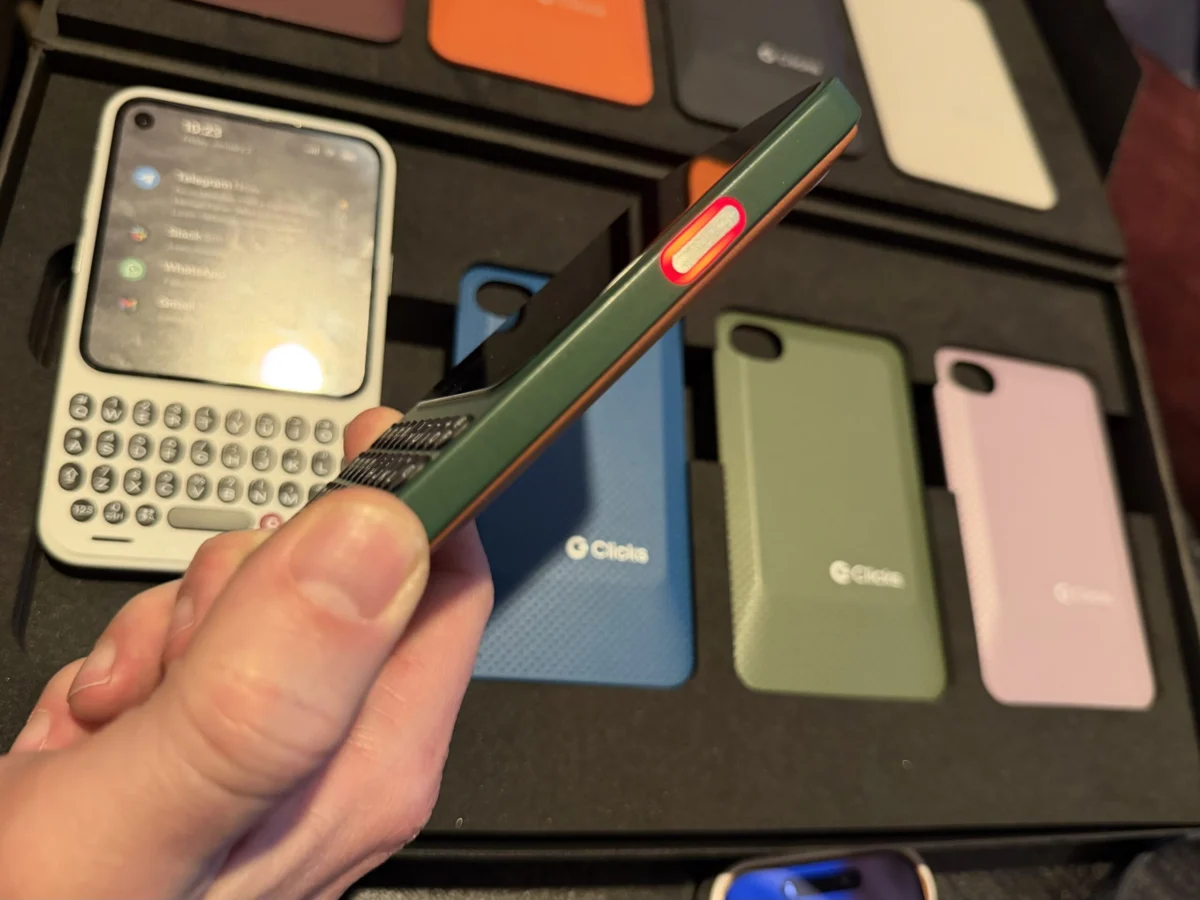
- A Tactile QWERTY Keyboard: Engineered to replicate the "click" that defined a generation of professional devices.
- The "Signal Light": A customizable LED notification system on the chassis that allows users to prioritize alerts via color-coded light patterns.
- Unrivaled Expandability: A physical SIM tray, an eSIM option, and a microSD slot supporting up to 2TB of storage.
- Analog Integrity: A dedicated 3.5mm headphone jack and a physical toggle switch for airplane mode, signaling a departure from the "everything-in-software" trend.
- Software Foundation: Powered by a customized Android environment, the device utilizes the Niagara Launcher to offer a streamlined, text-heavy interface that minimizes visual clutter.
Chronology: From Concept to Reality
The journey of the Clicks Communicator has been one of iterative design and public engagement.
January 2026: The device makes its debut at CES. Attendees are greeted by a prototype that mirrors the final weight and balance of the shipping unit. Early feedback highlights the satisfying nature of the keys, though the development team notes that they are refining the actuation force to better accommodate rapid-fire typing.
Present Day: Clicks Technology releases a comprehensive "First Look" video. This move marks the transition from prototype phase to pre-production hardware, allowing potential customers to witness the device’s internal software integration.
Q4 2026: The company confirms that the first batch of units is scheduled to ship to consumers. This window is critical for the startup, as it marks their evolution from a peripheral manufacturer to a full-stack smartphone brand.
Supporting Data: Why the Physical Keyboard Still Matters
While the market is saturated with touchscreens, data suggests a persistent hunger for physical input. Ergonomic studies have long shown that physical keys reduce "fat finger" errors and increase typing speed for users accustomed to tactile feedback.
Furthermore, the "Digital Minimalism" movement has gained significant traction. Users are increasingly seeking hardware that provides a "friction-heavy" experience—deliberate, physical actions that serve as a barrier to the mindless consumption of social media. By partnering with the Niagara Launcher, Clicks Technology is banking on the idea that users want a "distraction-free" mobile experience. The inclusion of the Signal Light is a direct data-backed solution to the "notification anxiety" that plagues modern smartphone users; by offloading alerts to a side-mounted light, the user is empowered to ignore the screen until a truly important interaction occurs.
Official Responses and Strategic Vision
In recent communications, the team behind Clicks has emphasized that the Communicator is not merely a "BlackBerry clone." Instead, it is a reimagining of the professional handheld.
"We are building a tool for people who value their time," says a company spokesperson. "The tactile switch for airplane mode isn’t just about utility; it’s about the psychological satisfaction of disconnecting. When you flip that switch, you know you are offline. It is a binary state of being that modern touchscreens fail to communicate."
Regarding the technical refinements, the engineering team has been transparent about their process. "We listened to the feedback from CES. The goal is to balance the ‘clickiness’ of the keys with the ergonomics required for long-form email composition. We are dialing in the pressure sensitivity to ensure that whether you are a hunt-and-peck typist or a 80-word-per-minute veteran, the experience feels premium."
Implications: The Shift in Mobile Philosophy
The introduction of the Clicks Communicator carries several profound implications for the mobile industry.
1. The Rise of ‘Intentional Computing’
The smartphone industry has reached a plateau of "more screen, less bezel." Clicks represents a pivot toward intentionality. By limiting the screen space and prioritizing the input method, the device forces a shift in behavior. Users of the Communicator are unlikely to be watching high-definition streaming content; they are more likely to be drafting documents, responding to Slack messages, or managing complex workflows.
2. A Challenge to the "App Store" Monoculture
By utilizing Android with the Niagara Launcher, Clicks is effectively proving that hardware-centric design can coexist with modern software ecosystems. If the Communicator succeeds, it could pave the way for a new sub-sector of "niche hardware" that focuses on specific productivity tasks rather than general-purpose consumption.
3. Sustainability and Repairability
The inclusion of a microSD slot, a 3.5mm jack, and swappable back covers is a direct rejection of the trend toward glued-together, non-repairable hardware. As regulatory bodies in the EU and elsewhere push for "Right to Repair" legislation, Clicks is positioning itself as a consumer-friendly alternative to the disposable flagship model.
Looking Ahead: The Road to Launch
As we approach the fourth quarter of 2026, the tech community remains divided but intrigued. Critics wonder if a physical keyboard is truly the future, or if it is a nostalgic niche that will struggle to maintain battery life and modern camera performance. Supporters, however, see the Communicator as a necessary corrective to the homogeneity of current smartphone design.
Clicks Technology has promised a series of deep-dive videos in the coming months. These segments will peel back the layers on:
- The Message Hub: How the software aggregates fragmented communication channels into one unified flow.
- The Prompt Key: An innovative shortcut mechanism designed to accelerate multi-app navigation.
- Long-Term Durability: Testing the physical keyboard against the rigors of daily, high-volume use.
Whether the Clicks Communicator becomes a cult classic or a mainstream disruptor remains to be seen. However, one thing is certain: the market is ready for a conversation about how we use our phones, and Clicks has provided the perfect, tactile platform to start that dialogue. For the professional who misses the tactile reliability of their early-2000s hardware, the wait for the future might finally be over—and it feels remarkably like the past.
Disclaimer: This report includes information based on early production previews. As with any hardware startup, final specifications and performance may vary upon the commercial release. When you purchase through links in our articles, we may earn a small commission. This doesn’t affect our editorial independence.