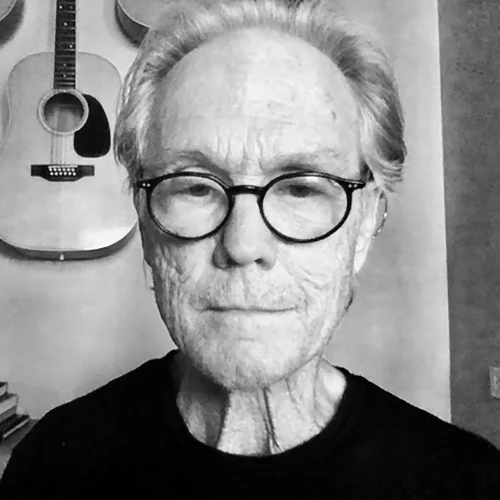
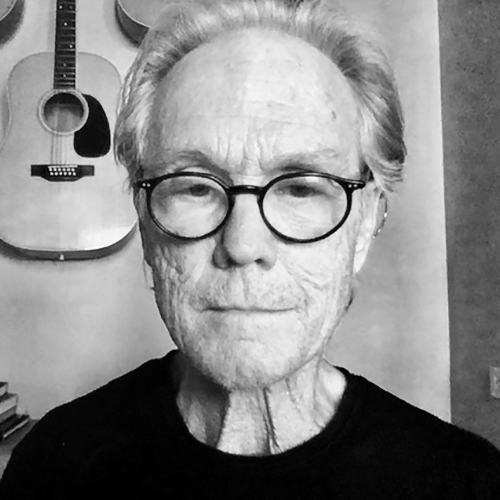
The international recording community and the San Francisco cultural landscape are mourning the loss of Jack Leahy, a visionary entrepreneur, studio designer, and cultural pioneer whose influence spanned more than half a century. Leahy, the founder of such foundational institutions as Russian Hill Recording, Funky Features, Talking House, and Crescendo, passed away last week in his home in New Orleans, surrounded by his wife, Martha, and his family.
His passing was confirmed by his longtime friend and collaborator, John Storyk, founding partner of Walters-Storyk Design Group (WSDG). In a poignant tribute, Storyk remembered Leahy not only as a client and a colleague but as a "true recording pioneer" whose commitment to excellence and generosity of spirit helped define the professional audio industry from the 1970s into the 21st century.
Main Facts: A Life Defined by Vision and Sound
Jack Leahy was a rare polymath in the entertainment industry. While many figures in the recording world focus narrowly on engineering or business, Leahy understood the intersection of visual art, acoustic science, and community development.
His career was marked by three distinct phases:
- The Visual Pioneer: Through his company, Funky Features, he helped create the iconic visual identity of the 1960s San Francisco counterculture, producing posters and graphics for legendary venues like the Fillmore and the Avalon Ballroom.
- The Studio Titan: In 1978, he co-founded Russian Hill Recording, which became a cornerstone of the Bay Area’s audio production scene. He followed this with Talking House and Crescendo, facilities that pushed the boundaries of studio design and business models.
- The Philanthropist: In his later years, Leahy moved to New Orleans, where he became a vital supporter of music education, serving as an advisor and board member for the Ellis Marsalis Center for Music.
Leahy’s death marks the end of an era for the "San Francisco Sound," a period where the city transitioned from a hub of psychedelic experimentation to a world-class center for professional audio post-production and high-fidelity recording.
Chronology: From the Summer of Love to the Big Easy
The 1960s and 70s: Creating the Visual Language of Rock
Before he was a master of sound, Jack Leahy was a master of the image. During the height of the San Francisco psychedelic movement, Leahy’s company, Funky Features, was instrumental in shaping the aesthetic of the era. The company was responsible for the vibrant, surrealist poster art that advertised the Grateful Dead, Jefferson Airplane, and Janis Joplin at the Fillmore West and the Avalon Ballroom.
This period was crucial to Leahy’s development; it taught him that the environment in which art is created and consumed is just as important as the art itself. He saw firsthand how the synergy between a venue’s atmosphere and the performer’s output created a "vibe" that could define a generation.
1978: The Birth of Russian Hill Recording
By the late 1970s, the wild energy of the 60s was professionalizing. Recognizing a need for high-end, sophisticated recording spaces in San Francisco, Leahy co-founded Russian Hill Recording in 1978. Located in one of the city’s most prestigious neighborhoods, the studio was designed to be more than just a room with microphones; it was a sanctuary for artists.
Under Leahy’s leadership, Russian Hill Recording became a premier destination for both music and film. It wasn’t just local bands who flocked there; the studio became a hub for ADR (Automated Dialogue Replacement) and Foley work for the burgeoning film industry in Northern California, serving directors and producers who wanted an alternative to the Hollywood studio system.
The 2000s: Innovation with Talking House and Crescendo
As the music industry faced the digital revolution of the early 2000s, Leahy did not retreat. Instead, he innovated. He collaborated with the world-renowned acoustic design firm WSDG to create Talking House Productions.
Talking House was a revolutionary concept: a combination of a world-class recording facility and a creative content development company. Leahy’s goal was to provide a "home" for artists where they could develop their sound without the immediate pressures of a traditional major label. This was followed by Crescendo, another state-of-the-art facility that integrated the latest in digital technology with the warm, classic acoustics that Leahy had championed his entire career.
The Final Movement: New Orleans and Education
In his later years, Jack and his wife Martha relocated to New Orleans. Rather than entering a quiet retirement, Leahy immersed himself in the rich musical heritage of the Crescent City. He became a key figure at the Ellis Marsalis Center for Music, located in the Musicians’ Village in the Ninth Ward. Here, he applied his decades of experience to help build a professional teaching studio, ensuring that the next generation of New Orleans musicians had access to the same high-quality recording environment as the legends he had worked with in San Francisco.
Supporting Data: A Legacy of Technical Excellence
Leahy’s impact can be measured by the technical standards he helped establish. His collaborations with John Storyk and WSDG resulted in some of the most acoustically perfect rooms in the United States.
- Russian Hill Recording featured a design that balanced the "live" feel of the 70s with the precision required for film post-production. It was one of the first studios in the region to successfully bridge the gap between the music industry and the film industry.
- Talking House was equipped with a custom Neve 88R console and was designed with a "stealth" acoustic approach, allowing for a creative atmosphere that felt like a luxury residence rather than a clinical laboratory.
- The Ellis Marsalis Center teaching studio, which Leahy helped advise, provides a professional-grade environment for students who otherwise would not have access to such technology. This facility has become a cornerstone of the Ninth Ward’s cultural recovery following Hurricane Katrina.
Beyond the brick and mortar, Leahy’s "Supporting Data" includes the thousands of hours of recorded music and film dialogue that passed through his faders. From Academy Award-winning film projects to seminal Bay Area rock albums, the "Leahy Standard" of audio quality is embedded in the history of American media.
Official Responses: Tributes from the Industry
The news of Leahy’s passing has prompted a wave of tributes from the professional audio community.
John Storyk, Founding Partner of WSDG, provided the most intimate reflection:
"It is with great sadness that I share news of the passing of Jack Leahy, a dear friend and longtime associate. WSDG was proud to know Jack not only as a colleague and friend, but also as a client. Jack’s passion for music, commitment to excellence, and generosity of spirit left a lasting impact on everyone fortunate enough to know and work with him. He will be deeply missed, but his legacy will continue through the many people, projects, and institutions he helped inspire."
Storyk also shared a personal anecdote reflecting Leahy’s eclectic and vibrant personality, noting a photograph of Jack and Martha with the Dalai Lama. "Having a choice between this photo and one of him driving his fully restored 1961 Corvette, I chose this one," Storyk remarked, highlighting Leahy’s unique balance of spiritual depth and a love for classic American craftsmanship.
The Ellis Marsalis Center for Music also acknowledged Leahy’s contributions, noting that his technical expertise and board leadership were instrumental in fulfilling the Center’s mission to provide a world-class space for the underserved youth of New Orleans.
Implications: The Future of the Recording Arts
Jack Leahy’s career offers a roadmap for the future of the recording industry. At a time when "home studios" and digital plugins are the norm, Leahy’s life’s work serves as a reminder of the importance of physical space and community.
1. The Importance of the "Creative Hub"
Leahy proved that a studio is not just a collection of gear; it is a hub for human interaction. His facilities—Russian Hill, Talking House, and Crescendo—were designed to foster collaboration. As the industry continues to decentralize, the "Leahy Model" of high-end, communal creative spaces remains the gold standard for high-level artistic production.
2. Bridging the Arts and Philanthropy
Leahy’s work in New Orleans demonstrates how industry veterans can give back. By applying professional business and engineering standards to non-profit music education, he helped create a sustainable model for preserving local culture. His work suggests that the legacy of a "studio mogul" is best secured by investing in the artists of tomorrow.
3. The Enduring Value of Quality
In every venture, from psychedelic posters to Dolby-certified mixing rooms, Leahy never compromised on quality. In a "disposable" digital age, his insistence on acoustic perfection and visual excellence stands as a testament to the enduring value of craftsmanship.
Conclusion
Jack Leahy was more than a businessman; he was a curator of the senses. He helped us see the music through his posters and hear the world more clearly through his studios. Whether he was navigating the hills of San Francisco in his ’61 Corvette or advising the Marsalis family in the heart of New Orleans, he moved through the world with a commitment to beauty and sound.
He is survived by his wife, Martha, whose partnership was central to his philanthropic work, and a sprawling community of engineers, musicians, and artists who are the living breathing legacy of his work. As the lights dim in the control rooms of the studios he built, the echoes of the "San Francisco Sound" he helped create will continue to resonate for decades to come.