Canadian high-fidelity pioneer PSB Speakers has officially announced the launch of two new all-in-one wireless speaker systems, the iQ1 and iQ2. Positioned as highly integrated, compact audio solutions, these new models represent the latest evolution in PSB’s iQ series.
By combining the brand’s signature acoustic engineering with the powerful BluOS multi-room streaming platform, the iQ1 and iQ2 aim to deliver audiophile-grade performance within a modern, lifestyle-friendly form factor.
The launch places PSB Speakers in direct competition with some of the most highly regarded active desktop and bookshelf systems on the market, setting up a compelling battle for dominance in the premium wireless audio space.
1. Main Facts: Pricing, Availability, and Core Specifications
The iQ series is designed to appeal to a wide range of listeners, from convenience-oriented music lovers to dedicated audiophiles seeking a secondary system for offices, bedrooms, or compact living areas. Both models are available immediately through authorized PSB dealers worldwide.
Pricing Structure and Finishes
PSB has established a tiered pricing structure that targets two distinct segments of the premium wireless speaker market:
- PSB iQ1: Priced at £899 / €999 / $999, the entry point of the series is finished in classic black or white vinyl wraps.
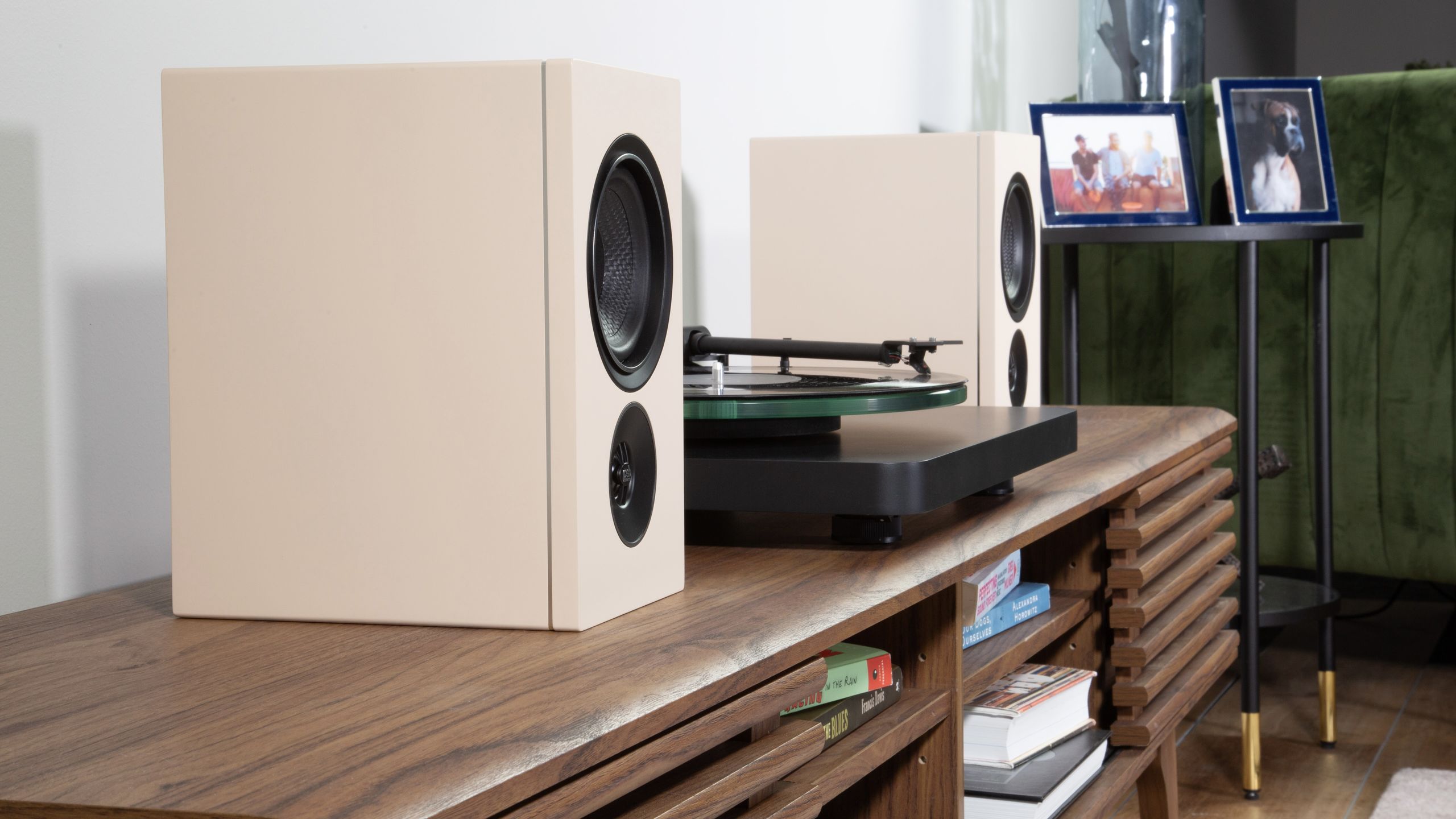
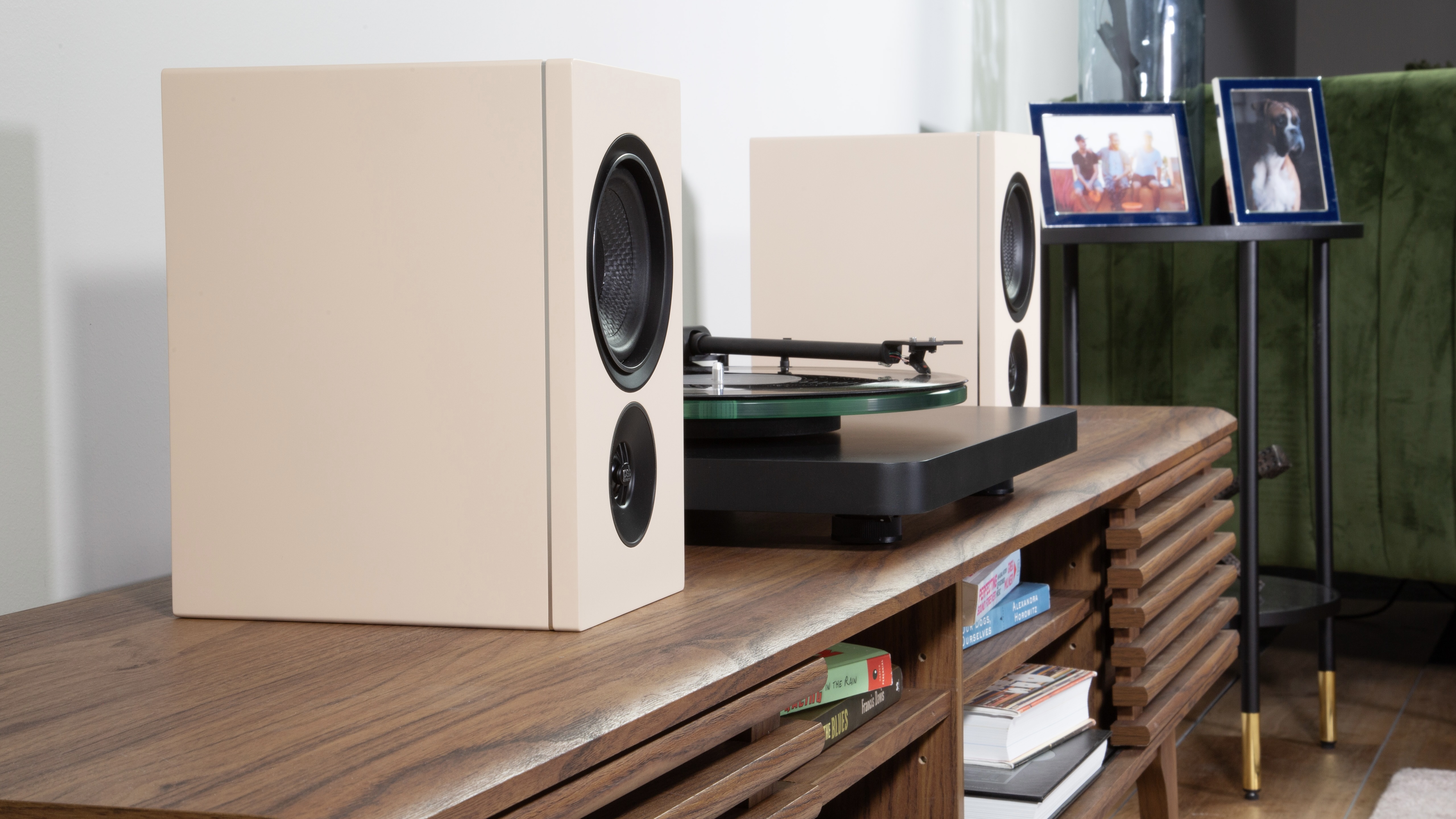
- PSB iQ2: Priced at £1299 / €1399 / $1499, the step-up model offers a wider variety of aesthetic options. It is available in premium finishes including matte black, matte white, ember red, boreal green, granite grey, and sandstone beige. For an additional £100 / €100 / $100, customers can opt for a real wood walnut veneer finish.
Shared Technical Architecture
Despite the difference in pricing, the iQ1 and iQ2 share several core hardware and software specifications:
- Physical Footprint: Both systems feature identical, highly compact dimensions of 14.5 x 24.6 x 19.2 cm per cabinet, designed to sit comfortably on desks, credenzas, or dedicated speaker stands.
- Driver Configuration: Each speaker utilizes a two-way driver array consisting of a 1.9cm (0.75-inch) aluminum-dome tweeter and a 10cm (4-inch) polypropylene mid/bass driver.
- Amplifier Class & Total Power: Both systems utilize high-efficiency Class D amplification, producing a combined total power output of 270 watts.
- High-Resolution DAC: The internal digital-to-analog converter (DAC) natively supports high-resolution audio files up to 24-bit/192kHz PCM.
- Cabinet Design: The speakers feature fully active designs utilizing digital signal processing (DSP) for crossovers, aided by rear-firing tuned bass ports to optimize low-frequency extension.
2. Chronology and Historical Background: The Evolution of PSB and Active Hi-Fi
To understand the positioning of the iQ series, it is essential to look at the historical trajectory of PSB Speakers and the broader evolution of the high-fidelity audio market.
The Legacy of Paul Barton and the NRC
Founded in 1972 by violinist and designer Paul Barton in Saint Charles, Ontario, PSB Speakers built its reputation on rigorous scientific research. Barton was one of the first loudspeaker designers to utilize the world-class psychoacoustic research facilities at the National Research Council (NRC) in Ottawa, Canada.
For decades, PSB’s design philosophy has been anchored in the findings of the NRC, which emphasize flat frequency response, low distortion, and controlled off-axis dispersion to create a natural, lifelike soundstage.
The Lenbrook Era and the Rise of BluOS
In subsequent decades, PSB became part of the Lenbrook Group, a Canadian brand management company that also owns NAD Electronics and Bluesound. This corporate relationship proved pivotal. While NAD provided expertise in amplification, Bluesound pioneered BluOS—a proprietary, high-resolution operating system designed specifically for wireless multi-room music management.
By integrating BluOS into PSB’s active speaker designs, Lenbrook succeeded in merging traditional Canadian acoustic design with cutting-edge network streaming technology. The iQ series represents the latest chapter in this integration, succeeding previous active models like the Alpha AM3 and AM5, but with a renewed focus on network connectivity and high-resolution streaming.
The Shift from Passive to Active Systems
Over the last decade, the global audio market has experienced a profound shift. Traditional hi-fi systems—composed of separate passive speakers, integrated amplifiers, standalone DACs, and external streamers—have increasingly given way to unified, active streaming systems.
Modern consumers demand systems that eliminate cable clutter and minimize physical footprint without sacrificing the acoustic depth and imaging performance of traditional separates. The iQ series is PSB’s direct response to this shifting paradigm.
3. Supporting Data: Detailed Technical Analysis and Structural Differences
While the iQ1 and iQ2 appear nearly identical on paper, a deeper look at their engineering reveals critical structural differences that justify their price gap.
+-------------------------------------------------------------------------+
|                        PSB iQ Series Comparison                         |
+------------------------------------+------------------------------------+
| Feature                            | iQ1                                | iQ2                                |
+------------------------------------+------------------------------------+
| Price                              | £899 / €999 / $999                 | £1299 / €1399 / $1499              |
| Cabinet Dimensions                 | 14.5 x 24.6 x 19.2 cm              | 14.5 x 24.6 x 19.2 cm              |
| Driver Configuration               | 1.9cm Tweeter / 10cm Woofer        | 1.9cm Tweeter / 10cm Woofer        |
| Total Power Output                 | 270W (Class D)                     | 270W (Class D)                     |
| Woofer Amplification               | 2x 90W (Dedicated)                 | 2x 90W (Dedicated)                 |
| Tweeter Amplification              | Shared 2-Channel Amp (2x 45W)      | Independent Amps (2x 45W)          |
| Inter-Speaker Connection           | Wired Cable (Tethered)             | Low-Latency Wireless Link          |
| Available Finishes                 | Black, White Vinyl                 | 6 Matte Colors + Walnut Wood       |
+------------------------------------+------------------------------------+
Amplification and Crossover Topologies
Both systems are fully active, meaning the crossovers are implemented in the digital domain (DSP) before the amplification stage. This ensures that each driver receives a signal optimized for its specific frequency range, minimizing phase anomalies and maximizing efficiency. However, the allocation of amplifier power differs between the two models:
- Woofer Drive: In both the iQ1 and iQ2, each 10cm polypropylene woofer is driven by its own dedicated 90-watt Class D amplifier module, ensuring robust control over low-frequency transients.
- Tweeter Drive (iQ1): In the iQ1, the two 1.9cm aluminum-dome tweeters share a single, two-channel amplifier module that delivers 45 watts per channel.
- Tweeter Drive (iQ2): The iQ2 utilizes a true quad-amplified design. Each tweeter is driven by its own independent 45-watt amplifier module. This complete separation of the high-frequency amplification chain reduces potential electrical crosstalk and intermodulation distortion, resulting in a cleaner, more precise high-frequency response and improved stereo imaging.
Inter-Speaker Connectivity
The method of communication between the left and right speakers represents another primary differentiator:
- The iQ1 Tethered Approach: The iQ1 requires a physical, multi-conductor umbilical cable to link the primary (active) speaker to the secondary speaker. While this ensures perfect synchronization and zero wireless interference, it limits the distance between the speakers and requires routing a cable across a desk or media console.
- The iQ2 Wireless Approach: The iQ2 utilizes a proprietary, high-bandwidth, low-latency wireless link to connect the left and right channels. This allows for clean, wire-free placement across a room, with the only requirement being a power cable for each speaker.
Input and Output Connectivity Options
Both models are equipped with an identical, comprehensive suite of physical inputs on the primary speaker’s rear panel, making them highly versatile hubs for analog and digital sources:
- HDMI eARC: Allows for direct connection to a modern television, enabling the speakers to replace a soundbar while allowing TV remote control integration via CEC.
- Optical Input: For connecting legacy digital sources such as CD players or older gaming consoles.
- USB Audio (Type-A and Type-C): Enables direct, driverless connection to computers, laptops, or external hard drives containing high-resolution audio libraries.
- Analog RCA Inputs: For line-level analog sources.
- Moving-Magnet (MM) Phono Stage: A dedicated phono preamplifier circuit, allowing users to connect a turntable directly to the speakers without needing an external phono box.
- Subwoofer Output: An RCA output with smart crossover management, allowing users to offload low frequencies to an external subwoofer via the BluOS app.
4. Official Responses and Design Philosophy: Integrating Software and Hardware
PSB Speakers has positioned the iQ series as a direct response to the modern listener’s demand for high-performance audio that integrates seamlessly into contemporary living environments.
Design Philosophy: "Comfortable in Everyday Spaces"
In official statements accompanying the launch, PSB emphasized that the physical footprint and aesthetic variety of the iQ series were designed to "fit comfortably into everyday spaces."
The company’s engineering team focused heavily on ensuring that the compact 4-inch woofers and rear-ported cabinets could still deliver a satisfyingly deep and punchy low-end response, leveraging DSP to dynamically protect the drivers from over-excursion while maximizing bass extension at lower listening volumes.
The Power of the BluOS Ecosystem
A critical element of PSB’s strategy is its reliance on the BluOS ecosystem. Rather than developing a proprietary, unproven software platform, PSB has utilized Lenbrook’s established, award-winning platform.
BluOS allows users to manage their music libraries and streaming services through a unified app available for Android, iOS, macOS, and Windows.
Through BluOS, the iQ1 and iQ2 support a vast array of high-resolution streaming services, including Tidal, Qobuz, Amazon Music, and Deezer. It also supports internet radio via TuneIn and offers direct integration with Spotify Connect and Tidal Connect.
For Apple users, Apple AirPlay 2 is fully supported, alongside Bluetooth aptX HD for high-quality wireless streaming from mobile devices without local Wi-Fi.
Additionally, BluOS enables seamless multi-room integration. The iQ speakers can be grouped with any other BluOS-enabled devices—including products from Bluesound, NAD Electronics, and Cyrus Audio—to create a synchronized, whole-home audio network.
5. Implications and Market Context: The Competitive Landscape
The launch of the PSB iQ series introduces a formidable challenger into one of the most fiercely contested segments of the modern audio market: the premium active stereo speaker category.
The Battle with KEF
The primary targets for the PSB iQ series are undoubtedly KEF’s highly successful compact active models:
- The KEF LSX II LT (£899 / $999): Directly competing with the PSB iQ1, the LSX II LT uses KEF’s signature Uni-Q coaxial driver array. While the LSX II LT is highly regarded for its coherent point-source imaging, the PSB iQ1 counters with a traditional, separate driver layout that some listeners prefer for its dynamic punch and treble air. Additionally, the iQ1 features a built-in MM phono stage, a key connectivity feature absent on the LSX II LT.
- The KEF LSX II (£1199 / $1399): Competing directly with the PSB iQ2, the standard LSX II offers wireless inter-speaker connectivity and premium finish options. The iQ2 seeks to distinguish itself through its quad-amplified Class D architecture, offering a higher total power output (270W vs. KEF’s 200W) and the superior multi-room stability of the BluOS platform, which many custom integrators prefer over KEF’s proprietary Connect app.
Broader Industry Implications
The introduction of the iQ series highlights several key trends currently shaping the consumer audio industry:
- The Democratization of High-Resolution Audio: By packing 24-bit/192kHz DACs, DSP crossovers, and high-performance amplification into cabinets under 25 cm tall, brands like PSB are proving that high-resolution audio no longer requires dedicated, room-dominating hardware.
- The Importance of Software Ecosystems: Hardware performance alone is no longer enough to succeed in the active speaker market. The success of products like the iQ series depends heavily on the stability, user experience, and streaming compatibility of their software platforms. By leveraging BluOS, PSB enters the market with a mature, highly stable ecosystem that has undergone years of refinement.
- The Vinyl Revival Meets the Digital Age: The inclusion of a high-quality moving-magnet phono stage alongside modern inputs like HDMI eARC and USB-C reflects the hybrid listening habits of today’s music enthusiasts. Modern consumers want to stream high-res playlists from Qobuz and spin physical vinyl records on the same compact system, without needing a stack of external components.
With the launch of the iQ1 and iQ2, PSB Speakers has successfully translated its 50-year acoustic heritage into a pair of highly versatile, forward-looking systems. By offering two distinct price tiers, flexible connectivity, and the robust power of BluOS, the iQ series is well-positioned to become a benchmark in the premium compact wireless audio market.