By TechCrunch Editorial Staff
June 26, 2026
In a move that signals a significant deepening of SpaceX’s ambitions in the artificial intelligence and cloud infrastructure sectors, the newly public space giant is moving to acquire Mesh Optical Technologies. The acquisition, confirmed by a Federal Trade Commission (FTC) filing released earlier today, marks a major step in Elon Musk’s broader strategy to vertically integrate the high-speed networking hardware required to sustain the next generation of global data centers.
The FTC, in a rare display of administrative speed, has already expedited its antitrust review of the transaction, clearing the path for the deal to move forward. This acquisition brings together a high-profile startup founded by SpaceX alumni and their former employer, effectively "re-acquiring" critical engineering talent to solve the bottlenecks currently plaguing the AI compute boom.
The Genesis of Mesh: From Starlink to Data Centers
Mesh Optical Technologies emerged from stealth mode in February 2026 with a $50 million Series A funding round led by Thrive Capital. The company was founded by Travis Brashears, Cameron Ramos, and Serena Grown-Haeberli—all of whom played pivotal roles in the development of the laser-interconnect systems that define the SpaceX Starlink constellation.
At SpaceX, the trio was responsible for the optical communication links that allow Starlink satellites to communicate with one another in orbit at the speed of light, bypassing the need for constant ground station handoffs. Upon leaving the company last year, they identified a critical market inefficiency: the transition of terrestrial data centers from electrical-based signaling to optical-based hardware.
Traditional data centers rely on copper-based electrical systems that generate massive amounts of heat and hit physical limits in terms of throughput. Mesh Optical’s technology utilizes light-based transceivers to move data at significantly higher speeds while consuming a fraction of the energy required by legacy systems. As data centers become the "factories" of the AI era, the efficiency gains offered by Mesh are no longer merely incremental—they are essential.
Chronology of a High-Stakes Deal
- 2025: Travis Brashears, Cameron Ramos, and Serena Grown-Haeberli depart SpaceX to form Mesh Optical Technologies, aiming to apply orbital laser tech to terrestrial data centers.
- February 17, 2026: Mesh Optical exits stealth mode, announcing a $50 million Series A led by Thrive Capital.
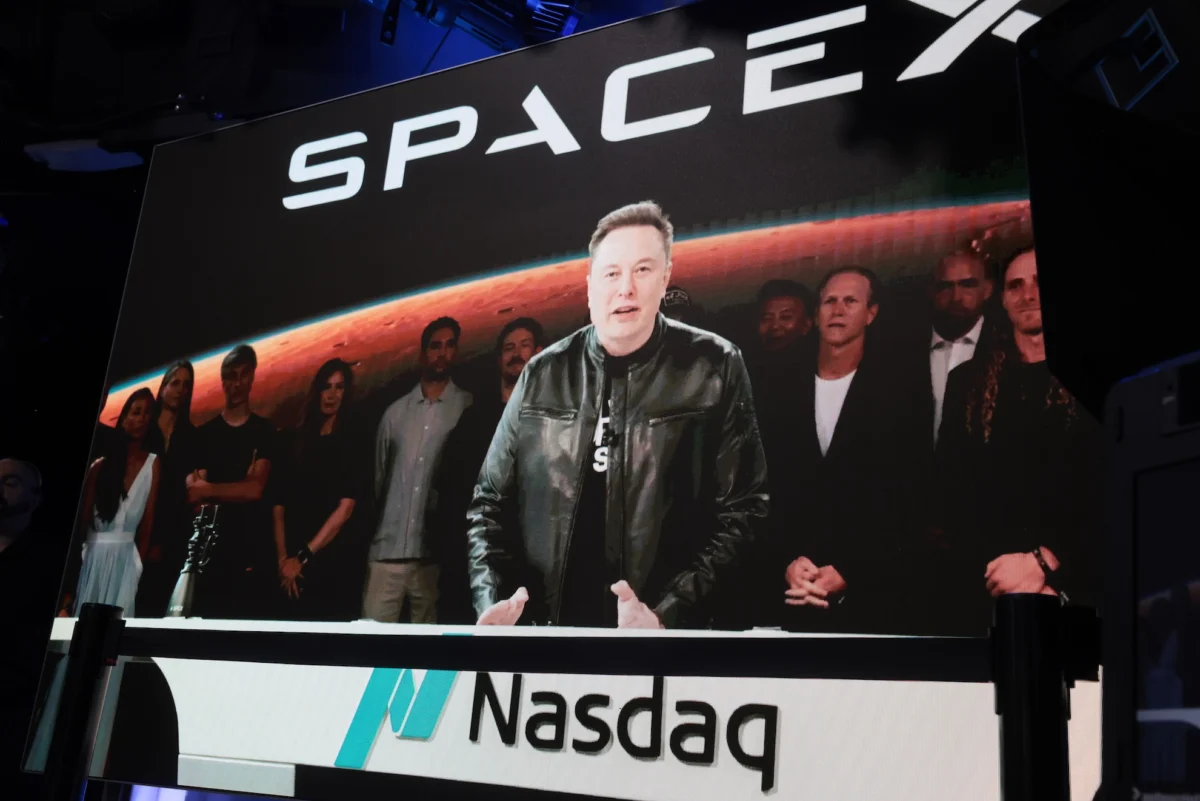
- June 12, 2026: SpaceX officially rings the opening bell at the Nasdaq, completing its transition into a publicly traded entity.
- June 24, 2026: SpaceX submits formal acquisition intent to federal regulators.
- June 26, 2026: The Federal Trade Commission issues an early termination notice regarding the antitrust review, effectively clearing the deal.
Supporting Data: Why Optical Matters
The demand for high-bandwidth, low-latency connectivity has surged alongside the global adoption of large-scale AI models. According to industry analysts, current data center infrastructure is struggling to keep pace with the power demands of GPU clusters utilized by companies like Anthropic and Reflection AI.
Mesh Optical’s hardware is designed to address three primary pillars of modern infrastructure:
- Latency Reduction: By using photons instead of electrons, signal degradation over long distances is minimized, critical for distributed AI training.
- Power Efficiency: Optical transceivers generate significantly less heat, allowing for higher density within server racks—a key metric for companies like SpaceX, which manage physical constraints in both terrestrial and potential off-world deployments.
- Scalability: As SpaceX expands its compute footprint, the ability to rapidly link thousands of H100/B200-class GPUs via high-speed optical backplanes will be a primary competitive advantage.
The Pivot to Compute: SpaceX’s New Revenue Stream
Following its successful IPO earlier this month, SpaceX has been aggressively diversifying its revenue streams. While the launch business remains the company’s foundational bedrock, the "Compute-as-a-Service" model has become a central pillar of its long-term valuation.
Recent agreements with industry titans such as Google and Anthropic, alongside the open-source developer Reflection AI, have positioned SpaceX as a major player in the compute infrastructure space. The company is leveraging its massive, energy-independent footprints to host data centers that run exclusively on its proprietary technology stacks.

By integrating Mesh Optical, SpaceX is not just providing the "pipes" for satellite internet; it is building the internal hardware backbone for its entire terrestrial data center fleet. This move echoes Musk’s previous acquisitions, where internalizing supply chain and engineering components was the primary catalyst for rapid cost reduction and performance breakthroughs.
Implications for the Tech Landscape
The acquisition has sent ripples through the hardware industry, particularly among companies focused on optical networking. Analysts suggest this could trigger a wave of consolidation.
Vertical Integration Strategy
Musk has long argued that the key to unlocking the future—whether in electric vehicles, space travel, or AI—is the removal of "middleman" costs. By bringing the creators of their own internal optical architecture back into the fold, SpaceX ensures that its hardware roadmap remains proprietary and perfectly aligned with the software requirements of its AI partners.
The Future of Space-Based Compute
While the immediate application of Mesh’s technology is terrestrial, the long-term potential for space-based compute is obvious. If SpaceX intends to place massive GPU clusters in orbit—a necessary step for low-latency space exploration and colonization—the weight and power constraints make optical interconnects a mandatory requirement rather than an optional feature. Mesh Optical provides the exact toolkit needed to shrink the size of these systems for launch.
Antitrust and Market Competition
The FTC’s decision to expedite the review process is notable. By signaling that it sees no immediate threat to competition, the agency has essentially validated the idea that SpaceX’s vertical integration is a necessity for infrastructure innovation rather than an anti-competitive maneuver. However, competitors in the data center hardware space will likely be watching closely to see if SpaceX restricts the use of Mesh technology to its own facilities or attempts to license it to others, potentially creating a new "Starlink for Data" product line.
Official Responses and Next Steps
As of the time of writing, neither SpaceX nor Mesh Optical has released a formal statement detailing the financial terms of the deal. However, investors and industry stakeholders are reacting positively, as evidenced by the steady performance of SpaceX stock in the hours following the FTC announcement.
"This is the missing piece of the puzzle," says Sarah Jenkins, a lead analyst at TechInfrastructure Insights. "SpaceX has the power, they have the real estate, and they have the AI demand. Now, with Mesh, they have the high-speed plumbing to tie it all together. It is a logical, if aggressive, consolidation of engineering talent."
As the integration process begins, the tech world will be watching to see if the co-founders—Brashears, Ramos, and Grown-Haeberli—will move into leadership roles within a dedicated SpaceX compute division. For now, the acquisition stands as a testament to the "SpaceX effect": the ability of the company to attract, nurture, and eventually consolidate the brightest minds in engineering to build the infrastructure of tomorrow.
About the Author: This report was compiled using data from Federal Trade Commission filings, public investor disclosures, and industry analysis regarding the evolving landscape of high-performance computing and optical networking.