
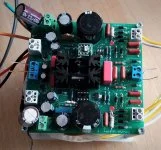
In the specialized world of high-end audio amplification, the quest for the "perfect" power supply is an ongoing journey. Vacuum tube amplifiers, cherished for their harmonic richness and sonic warmth, are notoriously sensitive to the quality of the high-voltage (HV) rails that feed their plates. Fluctuations in voltage can introduce noise, hum, and non-linearities that degrade the listening experience. Recognizing this critical bottleneck, audio engineer and author Jan Didden, a prominent figure in the DIY community and the mind behind Linear Audio, developed the T-Reg high-voltage regulator—a project that has since evolved from a community-driven group buy into a formalized component now available through the diyaudio store.
This article examines the development, technical challenges, and community impact of the T-Reg project, tracing its trajectory from a niche forum initiative to a refined, accessible solution for tube enthusiasts worldwide.
The Genesis of the T-Reg Project
The T-Reg began as an engineering response to a common frustration: the lack of high-performance, accessible, and safe high-voltage regulation for DIY tube projects. Most hobbyists rely on traditional passive filtering—chokes and capacitors—which, while effective to a degree, cannot match the ripple rejection, low output impedance, and load regulation of an active circuit.
In late 2019, Jan Didden introduced the concept to the community on the diyAudio forums. The goal was to provide a compact, robust, and versatile regulator that could be easily integrated into various tube amplifier designs. The "half-kit" offering—consisting of a printed circuit board (PCB), a pre-soldered LT3092 current source, an overload reset switch, a FDP12N60NZ pass device, a high-brightness LED, and an IXTP08N100D2 depletion-mode MOSFET—was designed to lower the barrier to entry for builders who might be intimidated by sourcing rare or specific high-voltage components.

Chronology of Development and Community Iteration
The development of the T-Reg was not a solitary effort but an iterative process fueled by the feedback of experienced builders.
The Initial Launch (October 2019)
The project opened with a group buy thread, where Didden proposed a high-voltage board designed to handle substantial loads. The initial specifications were impressive for a DIY design, promising flexibility for voltages up to 550V and current handling capable of reaching 400mA. The transparency of the process—with Didden actively soliciting interest and managing the logistical burden of ordering and distributing parts—was a hallmark of the project’s success.
Addressing Technical Challenges
Within hours of the project’s announcement, the forum discussion turned toward technical expansion. Users inquired about the viability of a negative-voltage version, as many tube designs require bipolar supplies or specific biasing arrangements. Didden, responding in real-time, confirmed that he was working on such a configuration. By October 19, 2019, he announced that the design for a complementary negative rail was complete, demonstrating the project’s adaptability.
Scaling and Commercialization (2021)
The project reached a significant milestone in February 2021. Recognizing the sustained demand and the logistical challenges of manual group buys, the T-Reg was transitioned into the official diyAudio store. This shift ensured that the design would remain available to a global audience, complete with professional support, documentation, and reliable distribution. This move marked the transition of the T-Reg from a hobbyist experiment to a standard-issue component in the modern tube-building ecosystem.

Supporting Data and Technical Specifications
The T-Reg is not merely a convenience; it is a high-performance power supply unit designed to address the specific shortcomings of unregulated tube power stages.
Performance Metrics
- Voltage Handling: The regulator is capable of operating at up to 550V, making it suitable for a wide range of power tubes, including common output pentodes like the EL34, KT88, or the 300B triode.
- Current Capacity: Under standard conditions, the regulator provides up to 400mA of current. Didden noted that while the circuit could theoretically push higher, 400mA remains the optimal limit to maintain effective short-circuit protection.
- Voltage Drop and Ripple Rejection: The T-Reg requires a minimum input-to-output voltage differential of approximately 7V to maintain regulation. Crucially, the board is designed to account for input ripple, ensuring that the output remains stable even under maximum load.
Key Components
The selection of components highlights the balance between cost and performance:
- LT3092: This programmable current source provides the reference for the regulator, ensuring that the output voltage is not just high, but exceptionally stable.
- IXTP08N100D2: The use of a depletion-mode MOSFET is a strategic choice. These devices are ideal for high-voltage applications, providing low thermal impedance and high reliability.
- Antek Transformer Integration: A unique design feature is the PCB’s form factor, which is specifically sized to mount directly on top of compatible Antek transformers. This modular approach significantly reduces wiring complexity and chassis footprint—a critical factor for builders struggling with limited space.
Professional Insights and Technical Discourse
The project’s forums served as a masterclass in collaborative engineering. Discussions between Didden and other experts (such as the user known as "EUVL") centered on the necessity of current limiting and the limits of P-device ratings.
When asked about the voltage drop required for optimal operation, Didden provided a nuanced explanation, differentiating between the steady-state performance and the behavior under ripple conditions. He emphasized that the regulator’s primary job is to isolate the sensitive amplification stages from the power supply’s inherent noise. By maintaining a 7V margin, the regulator acts as a high-speed "gatekeeper," stripping away the 100Hz/120Hz hum associated with rectified AC.
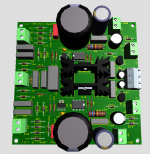
Furthermore, the discourse highlighted the safety aspects of the design. High-voltage circuitry is inherently dangerous, and the inclusion of an overload reset switch—pre-soldered to the board—demonstrates a design philosophy that prioritizes the longevity of the expensive tubes being powered, as well as the safety of the user.
Implications for the Audio Industry and Hobbyists
The legacy of the T-Reg lies in its democratization of high-fidelity power supply design. Historically, the "best" power supplies—those using series regulation or advanced electronic smoothing—were the domain of professional manufacturers with significant R&D budgets. By providing a reliable, well-documented, and modular solution, Didden has enabled amateur builders to construct amplifiers that can objectively outperform vintage designs.
Impact on DIY Audio Culture
- Standardization: The T-Reg has become a de facto standard in the diyAudio community. When a new builder asks for advice on power supply topology, the T-Reg is frequently recommended as a "plug-and-play" high-performance solution.
- Educational Value: The project, through its extensive documentation on Linear Audio, serves as an educational tool. It teaches builders not just how to build a power supply, but why specific components (like depletion-mode MOSFETs) are chosen over traditional alternatives.
- Bridge to Commercial Availability: The transition to the diyAudio store is a blueprint for other DIY designers. It shows that successful community projects can evolve into sustainable, long-term offerings, preventing the "knowledge loss" that often occurs when a designer moves on from a project.
Conclusion
The T-Reg high-voltage regulator is more than just a circuit board; it is a testament to the power of community-led engineering. By identifying a specific technical gap and addressing it with a combination of modern semiconductor technology and practical, user-friendly design, Jan Didden has left a lasting impact on the world of high-end audio.
Whether one is a veteran builder crafting a custom 300B amplifier or a newcomer looking to improve the noise floor of their first tube project, the T-Reg offers a proven path to success. As the landscape of audio technology continues to shift toward digital, the T-Reg stands as a reminder that the fundamentals of power delivery remain the bedrock of musical accuracy and, ultimately, the enjoyment of high-fidelity sound. The project stands as a benchmark for how collaboration, technical rigor, and a commitment to openness can elevate the hobby of audio construction to a truly professional standard.


