
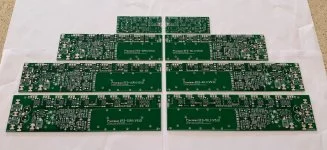
In the sprawling world of high-end audio, the line between consumer-grade equipment and professional-grade performance is often defined by the "Wolverine"—a DIY Class A/B power amplifier project that has taken the audiophile community by storm. Born out of the collaborative spirit of the diyAudio forums, the Wolverine project represents a pinnacle of open-source engineering, combining laboratory-grade performance with the hands-on satisfaction of custom construction.

The Genesis of the Wolverine
The Wolverine is not merely an amplifier kit; it is a community-driven design evolution. It emerged as a successor to earlier, successful designs like the "Son of Badger." The project’s primary objective was to push the boundaries of Class A/B efficiency while maintaining the ultra-low distortion levels typically reserved for significantly more expensive commercial boutique amplifiers.
At its core, the project is a modular system. It allows builders to choose between various input stages (IPS) and output transistor configurations (EF3-3 or EF3-4). This flexibility is what has attracted a diverse group of builders, ranging from hobbyists with basic soldering skills to electrical engineers seeking to build a "reference" grade amplifier for their personal listening rooms.
Chronology of Development and Community Growth
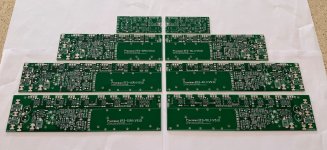
The project’s history is marked by a series of structured group buys, which have served as the mechanism for distributing the custom-designed printed circuit boards (PCBs) and sourcing rare or specific components.
- Early 2022: The official "Wolverine Build Thread" was established as a central hub for assembly documentation, troubleshooting, and component verification.
- May 2022: The thread saw a surge of activity as early adopters began posting their build logs. This period was critical for refining the Bill of Materials (BOM) and identifying minor documentation errors, such as silkscreen labeling discrepancies on the protection header.
- Late 2022 – 2023: As the community expanded, the focus shifted from basic assembly to performance optimization. This phase saw the introduction of rigorous distortion testing.
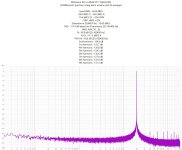
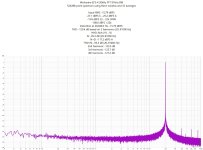
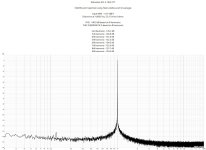
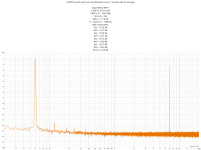
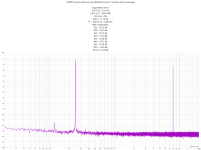
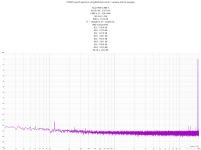
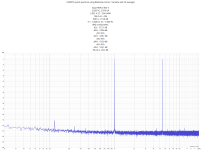
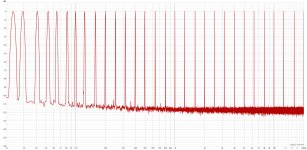
- March 2023: A milestone was reached when professional-grade distortion measurements were published, showing an astonishing 0.000095% Total Harmonic Distortion (THD) at 80 watts into an 8-ohm load. This data solidified the Wolverine’s status as a top-tier performer in the DIY world.
- Present Day: The project continues to thrive through ongoing group buys, with the 5th iteration currently serving as the latest entry point for new builders.
Supporting Data and Technical Specifications
The performance of the Wolverine is backed by extensive empirical testing. The design philosophy centers on linearity and thermal stability.
The Distortion Sweep
The most compelling evidence of the Wolverine’s design prowess is the 1kHz, 10kHz, and 20kHz distortion sweep data. The achievement of sub-0.0001% THD at 20kHz is significant, as high-frequency distortion is often the Achilles’ heel of high-power Class A/B designs. By utilizing high-quality output transistors—such as the MJL4281 and MJL4302 pairs—and implementing a precision EF3 (Emitter Follower 3) output stage, the designers have managed to maintain exceptional signal integrity even under heavy loads.
Component Selection
The project’s build guide emphasizes the importance of passive component quality. While the core circuit is robust, the community has identified specific "critical" components:
- Capacitors: The selection of capacitors for the C115 and C117 positions has been a point of focus. Builders are advised to use high-ripple current rated capacitors to ensure the amplifier remains stable during high-power output into low-impedance (4-ohm) speakers.
- Precision Resistors: The use of metal film resistors, specifically Vishay Dale series, is a common recommendation among experienced builders to minimize thermal noise.
Navigating the "Closed" vs. "Open" Debate
A notable point of contention within the thread has been the accessibility of the BOM and build guides. Early in the project’s lifespan, some members expressed frustration that full documentation was restricted to those who participated in the group buys.
This led to a robust discussion regarding the ethics of open-source design. The project leaders, including key contributors like @stuartmp and @Harry3, have maintained that limiting access to the most detailed documentation to group buy participants is a necessary measure to protect the integrity of the design during the initial rollout and to manage component shortages.
The Community Defense
Proponents of the restricted access model argue that:
- Quality Control: It ensures that those building the amp are using the validated, verified parts list, reducing the likelihood of "failed builds" that could damage the project’s reputation.
- Resource Management: In a time of global supply chain instability, coordinating group buys ensures that components are available for the people actually committed to the project.
- Signal-to-Noise Ratio: As noted by experienced forum members like @anatech, keeping the thread focused on active builders helps maintain a high signal-to-noise ratio, ensuring that technical questions are answered by those with hands-on experience rather than by external observers.
Implications for the DIY Audio Industry
The success of the Wolverine project holds significant implications for the future of the DIY audio industry. It proves that a "crowd-engineered" product can outperform mass-produced consumer audio equipment.

1. Democratization of High-Fidelity Sound
The Wolverine allows a builder to construct an amplifier that rivals commercial units costing five to ten times as much. By removing the overhead of marketing, manufacturing, and distribution, the cost is focused entirely on the quality of the components.
2. The Power of Community Support
The project functions as a massive, decentralized R&D lab. When a user in the forum identifies a minor error, such as the silkscreen label error on the EF3-3 boards, it is corrected and disseminated to all current and future builders within hours. This agility is something traditional, corporate-led audio companies struggle to emulate.

3. A Template for Future Projects
The structure established by the Wolverine community—complete with shared Google Photos albums for build documentation, YouTube playlists for tutorials, and rigorous, peer-reviewed measurement protocols—provides a blueprint for future high-end DIY audio projects. It moves the hobby from "hobbyist tinkering" to "precision engineering."

Looking Ahead: The Future of the Wolverine
As of the latest updates, the Wolverine remains a living project. While the core design is now highly mature, the community continues to explore "extreme" versions, such as the high-VA transformer builds (up to 2000VA) and the use of massive custom heatsinks.

For prospective builders, the path forward is clear: the project is not for the faint of heart. It requires patience, careful component matching, and a willingness to engage with the technical documentation provided by the core team. However, for those who complete the build, the reward is a power amplifier that stands as a testament to what is possible when a global community of engineers and audiophiles works toward a singular goal.

The "Wolverine" has effectively proven that the best audio equipment isn’t always found in a showroom; sometimes, it is found on a workbench, soldered together one component at a time, backed by the collective knowledge of thousands of enthusiasts.
Summary for Prospective Builders
- Documentation: Access is primarily facilitated through the official group buy threads on diyAudio.
- Technical Skill: This is an advanced project. Understanding schematic reading and safe high-voltage practices is mandatory.
- Community: The forum is the primary source of truth. Before starting, builders are encouraged to read the entire thread to understand the evolution of the BOM and the common pitfalls identified by early adopters.
- Final Output: With proper calibration, the Wolverine offers world-class performance, characterized by extreme low-end authority, wide soundstage, and virtually non-existent distortion, making it a "forever amp" for those dedicated enough to build it.


