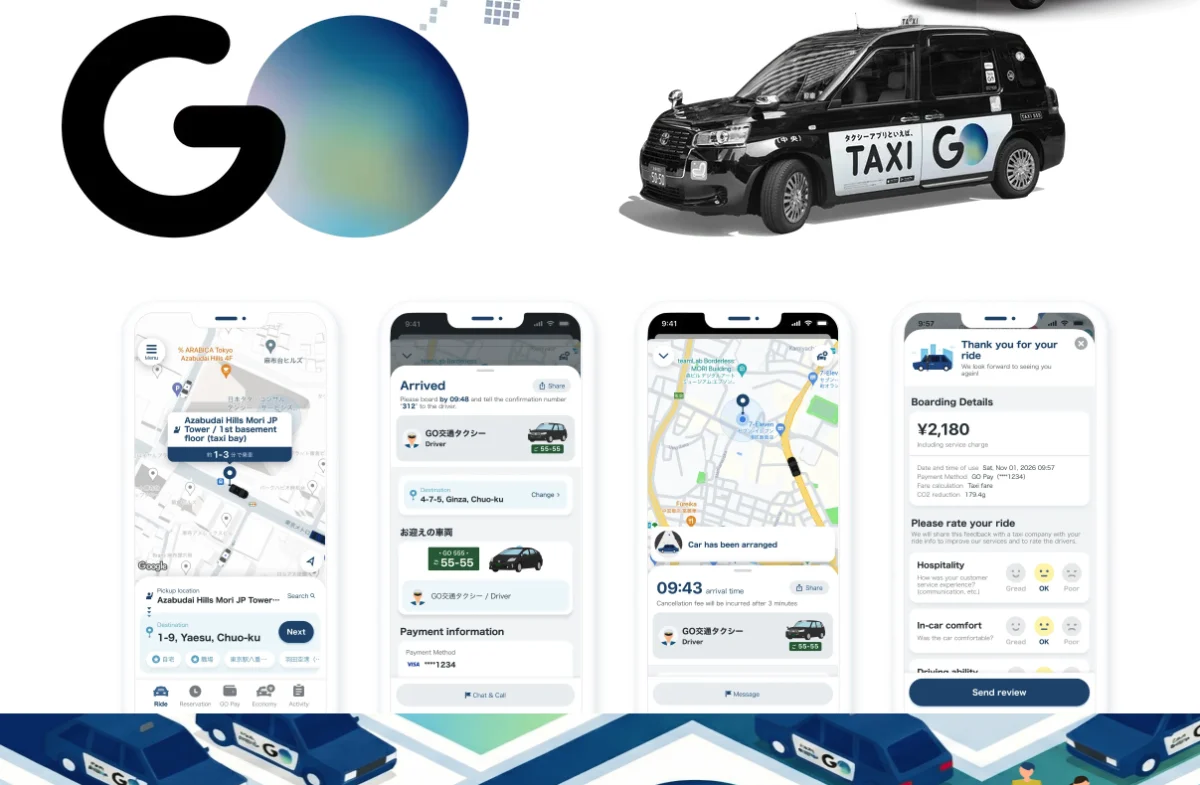
The Japanese financial landscape witnessed a significant milestone this week as Go, the nation’s dominant taxi-hailing platform, completed its Initial Public Offering (IPO). Raising ¥88.6 billion ($553 million), the listing stands as Japan’s largest of the year, providing a much-needed shot of adrenaline into a market that has been uncharacteristically quiet. However, for the leadership at Go, this capital infusion represents far more than just a public market debut; it is a strategic war chest designed to solve an existential threat: Japan’s acute and deepening shortage of human taxi drivers.
The Context: A Market in Search of Momentum
The timing of Go’s entry into the public markets is particularly notable. In recent months, Japanese regulators have actively encouraged startups to explore acquisition and merger pathways rather than public listings. Against this backdrop, Go’s successful IPO serves as a litmus test for investor appetite.
The offering attracted a prestigious roster of institutional backers, including BlackRock, Wellington Management, and M&G Investment Management. This support signals that while the broader Japanese startup ecosystem faces headwinds, global institutional capital remains eager to bet on high-growth, technology-driven solutions to Japan’s structural economic challenges. Despite the initial enthusiasm, the stock saw some volatility in its first days of trading, closing at ¥2,314 on Friday—a modest 4% decline from its offering price of ¥2,400.
The Existential Crisis: A Shrinking Workforce
Go’s aggressive pivot toward future-proof technologies is not a matter of corporate vanity; it is a response to a demographic reality. The Japanese taxi industry is currently facing an unprecedented labor crisis. According to data from the Ministry of Land, Infrastructure, Transport and Tourism, the number of active taxi drivers has plummeted by approximately 20% over the last few years.
This decline is largely irreversible. With an aging population and a shrinking national workforce, the traditional model of relying on human drivers is no longer sustainable. While the government introduced limited ride-sharing services in April 2024 to mitigate the shortfall, the results have been underwhelming. Current regulations mandate that ride-share drivers must be employed by a taxi company and services remain geographically constrained, failing to provide the scale or flexibility required to fill the gap left by retiring professionals.
From Taxi Operator to Tech Titan: A Brief Chronology
To understand Go’s current ambition, one must look at its evolution. Founded in 1977 as a traditional taxi operator, the company has successfully transitioned into a digital-first mobility giant.
- 1977: Establishment as a conventional taxi service provider.
- Modern Era: Transformation into a digital platform, leveraging data to optimize fleet management.
- Current Standing: Today, Go operates Japan’s most popular ride-hailing app, boasting 35 million downloads and a network of 85,000 partner vehicles.
- Market Dominance: The company maintains an 80% share of Japan’s taxi app market by usage time, with operations spanning 46 of the country’s 47 prefectures.
- 2024/2025: The shift toward autonomous systems, marked by strategic partnerships with global tech leaders.
Strategic Allocation of Capital
Go has been transparent regarding the utility of its newly acquired capital. In an official statement, a company spokesperson outlined a dual-track strategy for the ¥88.6 billion raised:
- Robotaxi R&D: Deep investment into the research and development of autonomous driving technology.
- Strategic Expansion: A commitment to inorganic growth through mergers and acquisitions (M&A) both within the taxi sector and in adjacent mobility industries.
"We intend to use the proceeds from the sale of newly issued shares toward investment in research and development related to robotaxis and investment in business expansions, including strategic mergers and acquisitions," the spokesperson confirmed.
While the company is heavily invested in the "robotaxi" vision, CEO Hiroshi Nakajima has taken a pragmatic approach, noting that Go will not attempt to build its own proprietary autonomous driving stack. Instead, the company is positioning itself as the critical "orchestrator" of the ecosystem. By partnering with heavyweights like Alphabet’s Waymo and Nihon Kotsu, Go intends to leverage existing, proven technologies to bring autonomous fleets to Japanese streets.
The Competitive Landscape: The Race for Tokyo
Go is not operating in a vacuum. The race to define the future of urban mobility in Japan has attracted several global players. In March, a consortium comprising Uber, Wayve, and Nissan announced a high-profile collaboration to pilot robotaxi services in Tokyo by late 2026. This project aims to deploy Nissan Leaf electric vehicles integrated with Wayve’s "AI Driver" technology, all accessible via the ubiquitous Uber app.
Furthermore, international competition is intensifying in the tourist sector. To capture the lucrative inbound travel market, Go has integrated its platform with global payment and travel apps like Kakao T, Alipay, and WeChat Pay. This allows visitors from South Korea, China, and Taiwan to seamlessly book Japanese taxis using their home-market applications. Competitors like S.Ride and Didi Mobility Japan have deployed similar strategies, illustrating that the battle for the Japanese taxi market is now as much about international connectivity as it is about domestic fleet availability.
Implications: The Path to Full Autonomy
Despite the hype surrounding autonomous vehicles, a significant gap remains between current operations and full-scale, driverless transportation. Go has yet to set a firm timeline for the deployment of fully autonomous services.
"We plan to begin driving fully autonomously, without a human specialist present, when we validate our technology and receive approval to do so," the company noted. This cautious tone underscores the complex regulatory and technical hurdles involved in navigating Japan’s dense, intricate urban environments.
For the millions of users who rely on the Go app, the immediate future will likely remain human-centric, albeit enhanced by better software and international partnerships. However, the IPO marks a definitive transition. Go is signaling to its shareholders that it recognizes the traditional labor model is expiring. By securing the capital necessary to integrate with autonomous platforms, the company is attempting to safeguard its future in a market where the shortage of drivers could otherwise lead to terminal decline.
Conclusion: A High-Stakes Bet on Efficiency
The success of Go’s IPO is a testament to the company’s ability to remain relevant in a rapidly changing environment. By effectively monopolizing the domestic taxi-app market and aggressively pivoting toward an autonomous, technology-driven future, Go is attempting to do what few legacy transport companies manage: disrupt itself before it is disrupted by outside forces.
As Japan continues to grapple with the consequences of its demographic crisis, the role of Go will be pivotal. Whether or not the company can successfully transition into a robotaxi operator remains to be seen, but with $553 million in fresh capital and an entrenched market position, it has secured the best possible chance to lead the next generation of Japanese transportation. The coming years will reveal whether this capital injection serves as the catalyst for a mobility revolution or merely a bridge to a new, uncertain era of driverless logistics.