LAS VEGAS — As the professional audio industry descends upon the Las Vegas Convention Center for InfoComm 2026, Audio-Technica has seized the spotlight with the unveiling of its highly anticipated D50 Digital UHF wireless system. Positioned as a mission-critical solution for the most challenging radio frequency (RF) environments, the D50 is designed to address the growing complexities of signal management in corporate, government, educational, and live performance venues.
The announcement, made at booth C7959, marks a significant shift in how Audio-Technica approaches high-density deployments, emphasizing spectral efficiency, Dante integration, and TAA compliance for sensitive government applications.
The Core Innovation: Engineering for the Spectrum-Constrained Future
In an era where the available UHF spectrum is increasingly crowded by consumer devices, cellular services, and localized data transmission, the D50 system enters the market with a promise of unparalleled stability. The system’s architecture is built around a wide tuning bandwidth—up to 244 MHz globally and 138 MHz specifically for the U.S. market—offering integrators the flexibility needed to navigate congested RF landscapes.
Perhaps most impressive is the system’s high-density mode, which allows for the deployment of up to 47 simultaneous frequencies within a single 6 MHz TV channel. This capability is a game-changer for large-scale theatrical productions or massive corporate conferences where channel count demands are high and available spectrum is at an absolute premium.
Key Technical Specifications
- Tuning Bandwidth: Up to 244 MHz (138 MHz in the U.S.).
- Channel Density: Up to 47 frequencies per 6 MHz TV channel.
- Audio Networking: Native support for Dante, with up to eight channels of audio in a single rack space.
- Diversity Modes: Switchable antenna combining diversity and Maximal Ratio Combining (MRC) true diversity.
- Security: Onboard AES256 encryption.
- Compliance: TAA-compliant, meeting rigorous standards for U.S. government procurement.
Chronology of Development: From Market Insight to Product Launch
The path to the D50’s launch began years ago, characterized by a series of deep-dive feedback sessions between Audio-Technica’s engineering teams and high-level systems integrators. The development cycle was predicated on the understanding that the "gold standard" for wireless audio had shifted. It was no longer sufficient to provide clear sound; integrators required a system that could survive in the "RF jungle" of modern, tech-heavy facilities.

During the lead-up to InfoComm 2026, Audio-Technica conducted extensive beta testing in some of the most challenging RF environments imaginable, including high-rise corporate headquarters with heavy Wi-Fi traffic and large urban convention centers. The iterative design process focused on the receiver’s footprint—resulting in a compact, half-rack design—and the user experience, specifically regarding the "Wireless Manager" software suite.
The final product, unveiled this week, represents the culmination of this feedback-driven philosophy. It is a system designed not just for the sound technician, but for the IT professional and the government contractor who prioritize signal reliability and security above all else.
Deep Dive: System Versatility and Architecture
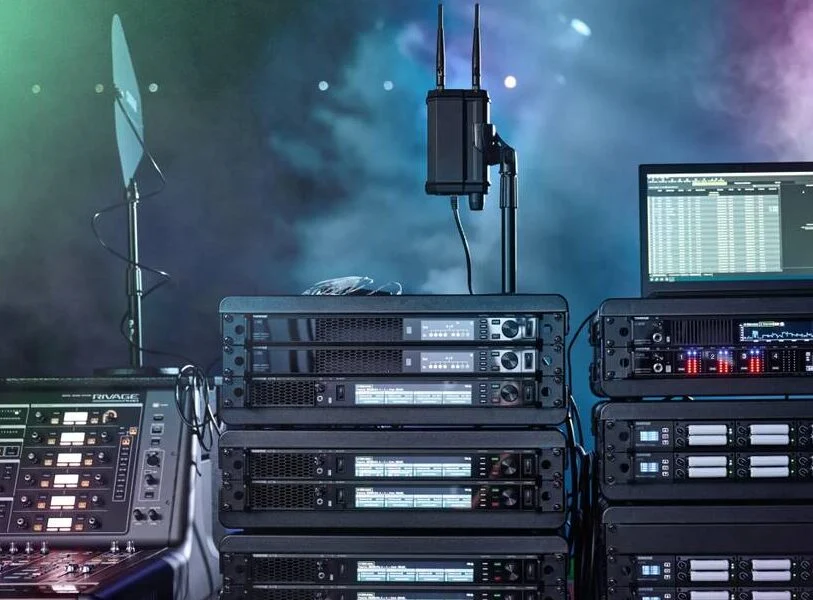
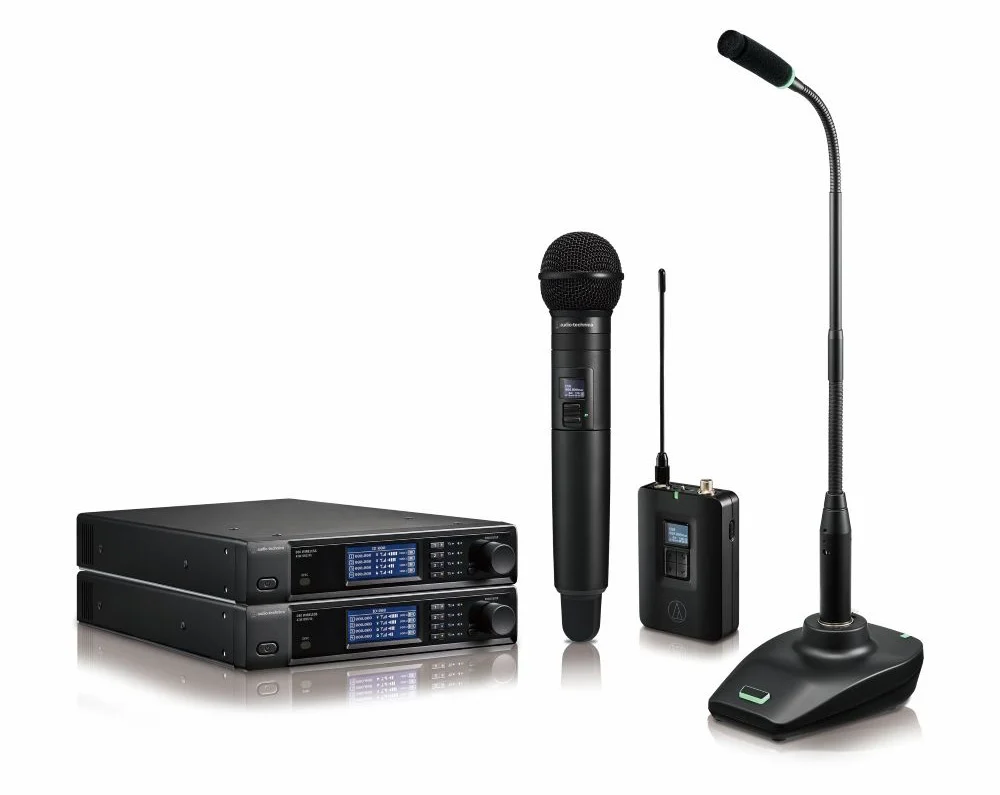
The D50 is not a monolithic product; it is a modular ecosystem. The receiver hardware is available in two primary configurations: a two-channel "Audio-Technica Link" version for specialized workflows, and a four-channel, Dante-enabled version designed for seamless integration into existing IP-based audio networks.
Receiver and Transmitter Versatility
The half-rack receiver design is intended to maximize rack-space efficiency, a common pain point in modern server rooms and AV closets. By supporting PoE+ (Power over Ethernet), the system simplifies cabling requirements, allowing for cleaner, more reliable installations.
On the transmission side, Audio-Technica has maintained its legacy of high-quality hardware. The D50 supports:

- Handheld Transmitters: Compatible with the renowned Artist Elite capsule series, allowing users to swap capsules to match the specific acoustic requirements of a vocalist or speaker.
- Bodypack Transmitters: Engineered for durability and extended battery life, critical for all-day conferences.
- Gooseneck Base Transmitters: Tailored for podium and boardroom applications where a permanent, yet wireless, solution is preferred.
Integrated DSP and Software Control
Beyond the RF stage, the D50 features internal Digital Signal Processing (DSP), allowing for rudimentary audio shaping directly at the receiver level. When paired with Audio-Technica’s Wireless Manager software, the system provides a comprehensive "bird’s-eye view" of the entire RF environment. This includes real-time spectrum analysis, enabling technicians to identify potential interference sources before they impact the audio performance.
Official Perspectives: The Vision Behind the D50
Kurt Van Scoy, Audio-Technica U.S. vice president of Products, Business Alliances, and Marketing, emphasized that the D50 is a direct response to the "pain points" identified by the integrator community.
"Our D50 was purpose-built for integrators from extensive market insight and customer feedback working in demanding RF environments," Van Scoy stated during the product unveiling. "It enables confident deployment with secure, flexible channel planning—even in the most complex and congested conditions."
Van Scoy’s comments underscore a shift in the pro-audio market: the transition from "audio-first" development to "network-first" development. By ensuring the D50 fits into the Dante ecosystem and meets TAA standards, Audio-Technica is effectively positioning itself as a leader in the infrastructure-grade wireless market.
Implications for the Industry
The launch of the D50 has several immediate and long-term implications for the professional audio landscape:

1. The Rise of High-Density Requirements
As wireless microphones become standard in more environments—from classrooms to government chambers—the "High Density" feature set is likely to become a baseline requirement. Competitors will undoubtedly face pressure to match the 47-channel-per-6-MHz performance of the D50.
2. TAA Compliance as a Market Driver
By achieving TAA compliance, Audio-Technica has effectively opened the door to a lucrative segment of government contracts that are often off-limits to manufacturers without such certifications. This move ensures that the D50 will become a staple in federal, state, and municipal AV upgrades.
3. Dante and IP Convergence
The inclusion of Dante at 96 kHz is a significant commitment to the future of audio-over-IP (AoIP). This ensures that the D50 is not an island, but a fully integrated component of a broader networked audio system. It simplifies the transition for AV integrators who are increasingly tasked with managing audio as a component of the broader enterprise IT network.
4. Sustainability and Battery Management
In corporate and educational settings, the cost of batteries and the labor involved in changing them is a significant operational expense. The D50’s focus on power efficiency and extended battery life directly addresses the total cost of ownership (TCO) for end-users, potentially making it a preferred choice for facility managers.
Conclusion: A New Benchmark at InfoComm 2026
As InfoComm 2026 continues, the D50 will likely remain one of the most discussed new products on the show floor. It represents a mature, well-researched answer to the primary challenges facing wireless audio today: the disappearing spectrum and the need for seamless networking.

For consultants and integrators, the D50 provides a reliable, scalable, and secure platform that addresses the realities of the modern RF environment. Whether for a high-stakes government briefing, a large-scale university lecture, or a complex theatrical production, the D50 offers the peace of mind that comes from knowing the signal will remain stable, clear, and secure.
Audio-Technica has once again demonstrated its ability to blend high-fidelity audio engineering with the rigorous demands of modern systems integration. As the industry moves further into the digital and networked future, the D50 stands as a testament to the importance of proactive, insight-driven product development.
For those attending InfoComm 2026, the D50 is available for hands-on demonstrations at booth C7959. It is a must-see for anyone tasked with managing wireless audio in the increasingly crowded digital age.