Main Facts
In the high-stakes, globally mobile world of stadium rock and roll, the battle against radio frequency (RF) congestion is a constant, grueling war. For legendary monitor engineer Ian Beveridge—who has spent nearly four decades shaping the sound of Dave Grohl’s projects, beginning with Nirvana’s 1987 European tour—managing the wireless environment for Foo Fighters has historically meant navigating a complex maze of narrowband systems, regulatory hurdles across different continents, and bulky equipment racks.
That paradigm shifted dramatically when Beveridge adopted Sennheiser’s Spectera bidirectional wireless system. Deployed across the Foo Fighters’ recent stadium runs, Spectera has fundamentally transformed how the band’s monitor world operates. By leveraging the platform’s advanced wideband, bidirectional digital architecture, Beveridge has streamlined wireless coordination, drastically reduced the physical footprint of his touring rig, and preserved pristine stereo separation for an intricate three-guitar stage configuration.
The core advantages of the Spectera system on the Foo Fighters tour include:
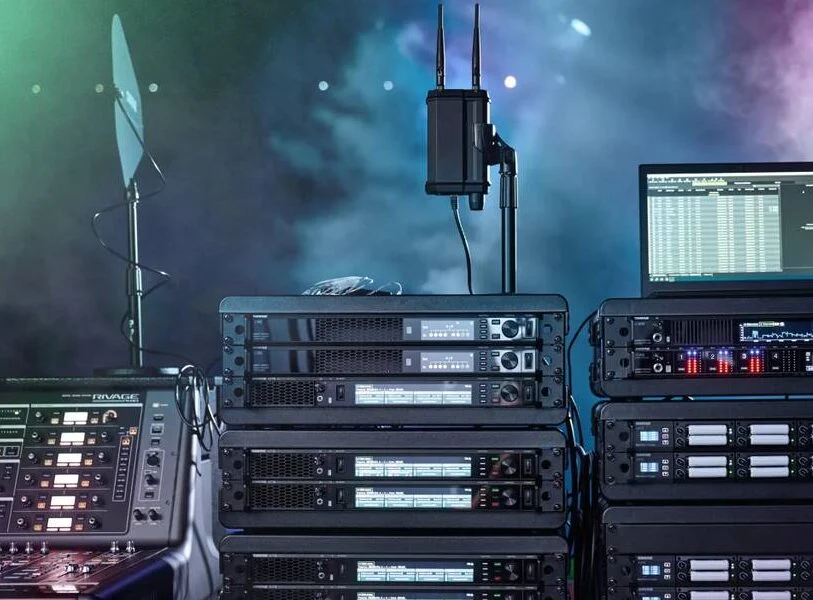
- Radical Footprint Reduction: A massive, five-foot touring rack stuffed with traditional transmitters and combiners has been condensed into a sleek, 2U space housing just two base stations and a laptop.
- True Stereo Integrity: Maintaining crystal-clear left-right separation for a dense three-guitar stage arrangement without relying exclusively on brute-force volume adjustments.
- Instantaneous Global Compliance: Eliminating the logistical nightmare of swapping out regional narrowband systems when jumping international borders.
- Dynamic, On-the-Fly RF Management: The ability to execute remote frequency changes across bodypacks in roughly 20 seconds via software—even as musicians are actively walking onto the stage.
Chronology of Adoption and Field Testing
The Leap of Faith
When Sennheiser first brought the Spectera platform to market, industry veterans like Ian Beveridge were immediately intrigued. Traveling the globe and constantly swapping out narrowband systems for different geographical areas had long been, in Beveridge’s words, "a royal pain in the neck." Facing yet another demanding international schedule with the Foo Fighters, Beveridge made a calculated gamble.
"When Spectera became available, I pulled the trigger without even hearing it," Beveridge reveals. "I’d seen enough evidence to suggest it was going to be great, and it proved to be more than great. It’s been utterly rock solid."
The Ultimate Trial by Fire: London
Before trusting the system to a full-scale stadium tour, Beveridge put Spectera through a brutal, real-world stress test in a punishing RF environment: a live television broadcast for SNL UK in London. Television studios and broadcast compounds are notoriously hostile territory for wireless audio, teeming with interference from broadcast cameras, mobile devices, and local communications.
During the initial setup, the monitoring meters at the base station immediately flashed warnings of heavy interference. Rather than panicking, Beveridge decided to push the hardware to its absolute limits.
"I just grabbed my bodypack, put my ears in, and walked through corridors, through thick brick walls, and all the way out past the production trucks parked outside," Beveridge recalls with a laugh. "The audio was completely rock solid. From that point on, I stopped worrying."
Following the successful London television trial, the system was fully integrated into the Foo Fighters’ live touring rig, where it has since handled the grueling demands of stadium audiences night after night.
Supporting Data: Technical Performance and Engineering Challenges
Conquering the Three-Guitar Wall of Sound
One of the most formidable technical challenges in mixing for the Foo Fighters is managing the dense sonic architecture of a three-guitar band. On stage, Dave Grohl, Chris Shiflett, and Pat Smear create an enormous wall of midrange frequencies. For a monitor engineer, delivering clarity in the musicians’ in-ear monitors (IEMs) requires precise spatial positioning.
If the stereo image collapses—a common issue in congested wireless environments or systems with poor channel separation—mix levels shift unpredictably, frequencies mask one another, and individual parts step all over each other.
"With the Foo Fighters being a three-guitar band, the only way to create space so you can actually hear everything is by panning them," Beveridge explains. "If that stereo width collapses, your levels shift, everything steps on each other, and all that mixing just goes to hell. Spectera actually delivers that true separation."
This discrete channel separation allows the engineering team to carve out distinct acoustic real estate for each performer. Instead of driving mix levels dangerously high just to make an instrument cut through the mix, engineers can rely on precise panning and clean stereo imaging.
Transforming the Touring Infrastructure
Beyond audio fidelity, the logistical transformation of the monitor village has been nothing short of revolutionary. In traditional large-scale touring setups, managing dozens of wireless channels required massive, heavy, power-hungry infrastructure.
Beveridge’s touring rig underwent a dramatic diet:
- Previous Setup: A towering, five-foot vertical equipment rack packed with discrete transmitters, antenna combiners, and extensive cabling.
- Current Spectera Setup: A streamlined 2U rack space containing two Spectera base stations and a single laptop running software-based control.
This reduction in gear not only lightened freight weight and reduced truck-pack footprints but also significantly slashed setup and teardown times at each venue.
Official Responses and Industry Perspectives
The adoption of Spectera by a tier-one touring act like the Foo Fighters has caught the attention of audio manufacturers and industry peers alike. Sennheiser Artist Relations Manager Tim Moore has closely monitored the deployment, emphasizing how the system directly addresses long-standing compromises in wireless monitor design.
According to Moore, Spectera’s discrete channel separation is a game-changer for live sound engineers. By providing pristine isolation between channels, the system empowers engineers to paint a more vivid sonic picture within the artist’s in-ear mixes. This technical capability directly translates to a more relaxed listening experience for performers, who no longer need their overall monitor levels pushed to punishing volumes just to distinguish individual instruments.
Furthermore, the software-driven, bidirectional nature of the platform has redefined workflow flexibility. Through intuitive software interfaces, the crew can dynamically allocate audio link modes based on specific user requirements. For instance, ultra-low latency can be prioritized and assigned specifically to the lead vocalist, while crew members, production staff, and management utilize alternative configurations optimized for range or battery efficiency. Additionally, when surprise guest performers or touring openers require temporary monitor mixes, routing additional feeds has become a streamlined, software-managed task rather than a hardware-patching headache.
Implications for the Future of Live Sound
The success of Sennheiser’s Spectera system on the Foo Fighters tour points to a broader, inevitable evolution in live production audio. As the global RF spectrum continues to shrink due to government auctions, telecommunications expansion, and local regulatory changes, touring engineers face an increasingly hostile electromagnetic landscape.
Traditional analog and early digital narrowband systems require painstaking frequency coordination, often demanding hours of pre-dawn spectrum scanning and manual bodypack synchronization. For Ian Beveridge, those grueling early mornings are now a relic of the past.
"I’m at a point now where I don’t even think about the RF," Beveridge reflects. "I don’t have to show up at eight in the morning to fight the airwaves anymore. I come in at four o’clock, I put my white gloves on, I listen to one pack, and I just mix music."
The implications of bidirectional, wideband wireless ecosystems like Spectera extend far beyond convenience. They represent a fundamental shift toward software-defined live production. When an engineer can remotely push frequency adjustments across an entire bodypack inventory in a matter of seconds—as Beveridge and his crew successfully executed while the band was actively walking out onto the stage—the margin for error shrinks dramatically.
As more high-profile productions adopt wideband digital wireless platforms, the live sound industry is moving toward an era where RF management is no longer a daily crisis to be averted, but a seamless, background utility managed effortlessly by software. For the Foo Fighters and Ian Beveridge, that technological leap means the focus remains entirely where it belongs: on delivering an unforgettable, high-energy rock performance to tens of thousands of fans night after night.