In the world of high-fidelity audio, the pursuit of perfection is often focused on the primary signal chain—the source, the amplification, and the transducers. However, seasoned audiophiles know that the most critical, yet frequently overlooked, component is the very foundation upon which these systems sit: the electrical power. Recently, the industry saw the release of the $12,000 Clarus Concerto MKII, a power conditioner that promises to elevate ultra-high-end audio systems by essentially "cleaning" the foundation of the musical signal.
Main Facts: Engineering an Audiophile Powerhouse
The Clarus Concerto MKII is not merely an updated version of its predecessor; it is a complete re-engineering of the power management philosophy. Priced at $12,000, it enters the rarefied air of the ultra-high-end market. Designed to support a 120 VAC, 20-amp load, the unit utilizes a hydraulic-magnetic circuit breaker to ensure safety without introducing the sonic limitations of traditional thermal breakers.

Key technical specifications include:
- Total Surge Protection: 80 kA maximum surge current (L-N) with a 395V clamping voltage.
- Hospital-Grade Connectivity: Eight isolated-ground, 20-amp outlets, angled at 45 degrees for ergonomic cable management.
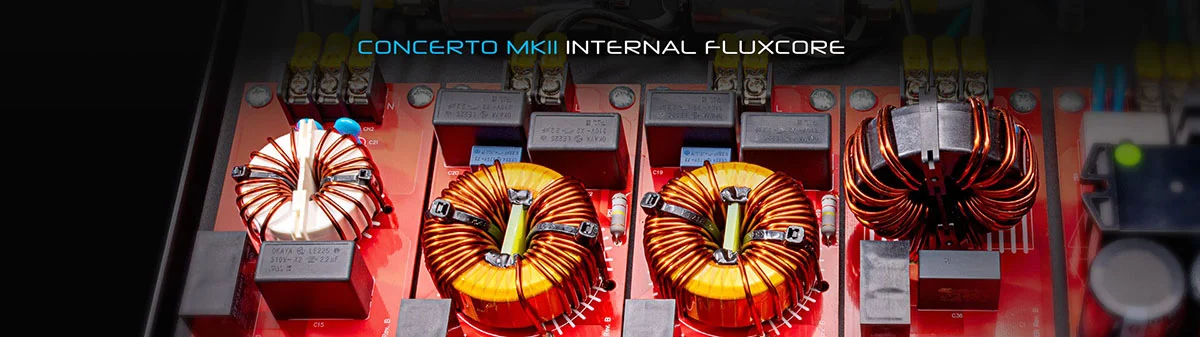
- Specialized Filtration: Multi-stage differential-mode filtering combined with proprietary "FluxCore" technology to address noise on both the line and neutral conductors.
- Vibration Control: A 26-pound chassis utilizing internal damping materials to mitigate mechanical interference.
Chronology: From the Original Concerto to the MKII
The journey of the Concerto series began with the original model, which earned a reputation for its ability to lower the noise floor and provide tangible sonic improvements. In 2020, Dr. John E. Johnson validated these findings through rigorous testing. For three years, the original Concerto served as a cornerstone of many reference systems, providing a cleaner, more rhythmic presentation compared to direct wall power.

In 2023, following a comprehensive review of the wider Clarus product ecosystem—including their Aqua interconnects and power cables—the opportunity arose to compare the original Concerto against the new MKII iteration. The goal was to determine if the substantial price increase was justified by an audible leap in performance, particularly when paired with high-transparency equipment like the MartinLogan ESL-15A electrostatic loudspeakers.
Supporting Data: The Science of Silence
The design philosophy behind the Concerto MKII centers on the reduction of electrically induced noise without the common "choking" effect found in many lesser conditioning products. Clarus engineers spent years conducting extensive listening tests alongside electrical measurements to ensure that the removal of noise did not strip the music of its dynamic vitality.

A significant design feature is the use of high-current oil-filled capacitors. These components serve as an energy reservoir, providing superior dielectric strength and heat dissipation compared to standard Class-X capacitors. In demanding bass passages, where amplifiers often experience voltage sag, these capacitors provide the necessary buffer to maintain transient speed and authority.
Measuring the Improvement
To move beyond subjective analysis, testing was conducted using an OmniMic measuring system. By placing the microphone within half an inch of a 12-inch subwoofer driver in the MartinLogan ESL-15A, we compared the response curve of the speakers powered directly from a wall outlet versus those powered through the Concerto MKII.

The results were statistically significant. The Concerto MKII demonstrated a 3 dB increase in linearity in the region below 50 Hz. In practical terms, this suggests that the power conditioner allows the amplifier to deliver nearly double the effective power to the driver during deep bass transients. This objective measurement perfectly mirrored the subjective experience of tighter, more palpable, and more authoritative low-frequency reproduction.
Official Design Philosophy: The Clarus Approach
Clarus holds a firm belief that digital and analog noise must be treated separately to avoid cross-contamination. The Concerto MKII utilizes a "star-ground" approach, where the ground returns for each category of equipment remain electrically isolated until they reach a common reference point. This prevents noisy digital return currents from bleeding into the sensitive, low-level analog signal paths.

The inclusion of a dimmer-controlled display and multiple status LEDs (Analog, Digital 1, Digital 2, and High Current) provides the user with constant monitoring of the system’s health, including polarity and grounding status. Every aspect of the chassis, from the heavy-duty bus bars to the internal vibration dampening, was selected to satisfy the most demanding audiophiles who prioritize silence, stability, and unconstrained power delivery.
In-Use: Sonic Performance and Real-World Testing
When integrated into a reference system consisting of high-end streamers, DACs, and electrostatic speakers, the impact of the Concerto MKII was immediate. On acoustic tracks, such as those found on Masters of Acoustic Guitar, the "blacker" background provided by the conditioner allowed for the nuanced decay of strings to bloom with unprecedented clarity. The percussive strike against the guitar body felt physically present in the room.

During playback of the SACD version of Pink Floyd’s The Dark Side of the Moon, the system exhibited a lack of dynamic limits. The transition from the delicate chimes in "Time" to the explosive energy of the track’s crescendo was handled with ease, suggesting that the power supply was never struggling to provide current. Even for casual listeners, the improvement was noticeable; independent testing with non-audiophiles confirmed that the "realism" of the music was perceived as being distinctly improved, with vocals sounding more natural and brass sections possessing a more authentic "bite."
Implications: Is the Upgrade Worth It?
The introduction of the Clarus Concerto MKII presents a fascinating proposition for the mature audiophile. In an industry where one often spends thousands on cables and components to eke out marginal gains, the Concerto MKII provides a systemic upgrade that improves every device connected to it simultaneously.

The Verdict
- Pros: Exceptional build quality, measurable improvement in low-frequency linearity, and a noticeably lower noise floor that enhances micro-dynamics across all music genres.
- Cons: The price point of $12,000 is significant and targets only the most dedicated high-end systems.
The Concerto MKII is not merely a tool for noise filtration; it is a vital component for those who have invested heavily in their audio chain and wish to extract the final, elusive layers of performance. By providing a stable, high-current foundation, Clarus has ensured that the upstream electronics can operate at their theoretical maximum. For the audiophile who feels their system has "plateaued," the Clarus Concerto MKII offers a clear, effective path to sonic nirvana. It is an investment that, while costly, pays dividends in every single listening session, proving that when it comes to high-end audio, the quality of the current is just as important as the quality of the signal.