Main Facts: Conquering Chaos on a Global Scale
As virtual alternative rock pioneers Gorillaz launched their ambitious world tour, "The Mountain," in March 2026, they brought along more than just their genre-defying catalog of cross-genre hits and trademark digital artistry. Behind the scenes, the massive global production—navigating everything from sprawling outdoor green-field festivals to high-density arena environments—relies on a meticulously engineered, heavy-duty audio ecosystem. At the heart of this technical triumph is Shure wireless technology, expertly managed by veteran sound engineer Colin Woodward.
Spanning multiple continents, the tour’s itinerary presents a moving target for radio frequency (RF) coordination. Compounding the complexity is a rotating, dynamic lineup of guest collaborators that shifts from night to night. Depending on the venue and city, the stage might host individual guest vocalists, massive brass sections, or full choirs, turning every soundcheck into a high-stakes puzzle of frequency allocation.
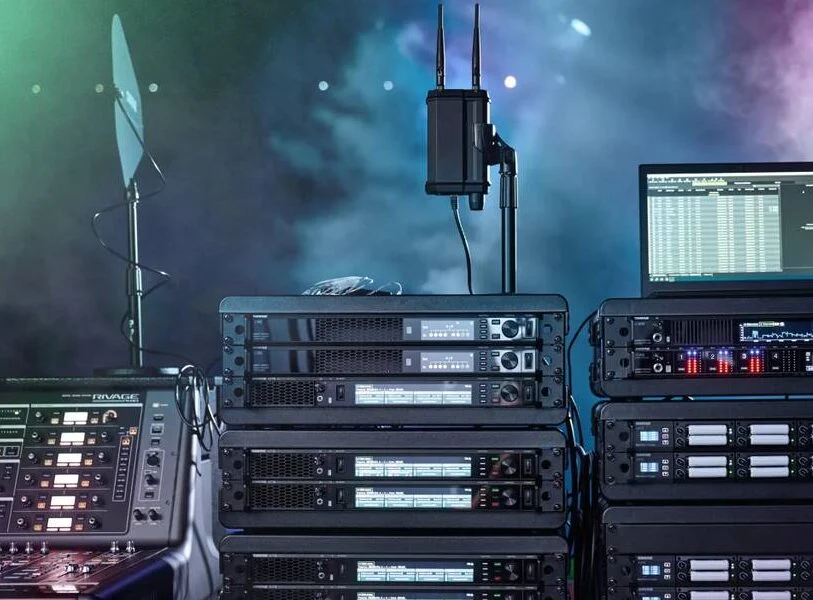
To maintain pristine audio integrity under these unpredictable conditions, Woodward has deployed Shure Axient Digital for guitar transmission alongside the newly integrated Axient Digital PSM for in-ear monitoring (IEM). The entire wireless network—including auxiliary and third-party equipment—is unified and monitored using Shure’s robust Wireless Workbench software. Meanwhile, monitor engineer Dave Guerin oversees an expansive wired and wireless microphone deployment featuring Shure staples like the KSM8 dual-diaphragm dynamic capsule for frontman Damon Albarn, alongside strategic ambient and communications setups designed to withstand the brutal acoustic pressure of modern arena stages.
Chronology: From Pre-Tour Troubleshooting to Live Production Triumph
The road to achieving flawless wireless performance on "The Mountain" tour was paved with rigorous testing, identification of legacy bottlenecks, and strategic upgrades.
The Pre-Production Phase and Legacy Bottlenecks
During early rehearsals and production design sessions, the technical crew encountered persistent hurdles regarding stage bleed and RF intermodulation. Guitarist Jeff faced intermittent dropouts and low-level noise floor interference whenever his bodypack transmitters operated in close proximity to his guitar amplifiers. Because Jeff is an energetic performer who habitually paces the stage, keeping a safe distance from his amplifier rigs was simply not an option. Furthermore, the legacy in-ear monitoring system previously utilized by the band was clashing with the AD1 bodypack transmitters, creating an unstable RF environment that threatened show stability.
The Mid-2025 Equipment Pivot
Recognizing that traditional hardware configurations would buckle under the intense RF demands of international touring—especially in hyper-congested metropolitan areas like Los Angeles—Woodward and his team made a decisive pivot. They integrated Shure Axient Digital PSM, which utilizes a receive-only architecture specifically engineered to eliminate intermodulation artifacts when paired with other transmitters. This solved the interference issues almost overnight, creating a clean spatial separation between monitoring and guitar transmission.
March 2026: Tour Kickoff and Daily Operations
As "The Mountain" officially opened its doors to audiences in March 2026, Woodward’s daily workflow settled into a precise, highly disciplined chronology.
- Pre-Show (Morning): Woodward’s day begins and ends with Shure Wireless Workbench. Arriving early to the venue, he performs an initial RF sweep using a portable scanner, importing the data into his laptop.
- Soundcheck (Midday): The laptop scan data is transferred over to the primary computer housed within his main equipment rack. There, it is cross-referenced against real-time scans generated by the on-stage AXT600 spectrum manager, with antennas optimally positioned across the stage layout.
- Showtime (Evening): Throughout the performance, Wireless Workbench acts as the central nerve center, tracking link quality, battery life, and RF health in real time, with timeline recording enabled to catch transient anomalies before they manifest as audible faults.
Supporting Data: The Technical Anatomy of the Rig
Achieving the seamless sonic world of Gorillaz requires a precise inventory of microphones, wireless transmitters, spectrum managers, and software protocols. Below is a breakdown of the core audio components driving "The Mountain" tour production:
| Component Category | Make & Model | Primary Application / Role on Tour |
|---|---|---|
| Guitar Wireless | Shure Axient Digital AD1 | Bodypack transmitters used by lead guitarist Jeff; prized for cable-like tone and resilience. |
| In-Ear Monitoring | Shure Axient Digital PSM | Receive-only (RX-only) IEM architecture resolving previous amplifier noise and intermodulation. |
| RF Management | Shure Wireless Workbench | Centralized software environment coordinating Shure and third-party wireless hardware. |
| Spectrum Hardware | Shure AXT600 (Evaluating AD600) | Manages broad-spectrum RF monitoring; future upgrades may consolidate PSM and Axient management. |
| Lead Vocals | Shure KSM8 (Dual-Dyne) | Used by Damon Albarn; chosen for its eliminated proximity effect and pristine top-end clarity. |
| Stage Ambience | Shure VP88 | Stereo microphone placed near Albarn’s piano to capture natural bleed and spatial awareness. |
| Drums & Percussion | Shure Beta 91A, Beta 57A, KSM137 | Handles high-SPL sources, transient response, and delicate overhead/instrument detailing. |
| Special FX Vocals | Shure 527B (Discontinued) | Deployed specifically to achieve Albarn’s signature distorted, vintage vocal aesthetic. |
| Crew Communications | Shure SM35 | Headset microphones enabling intelligible communication above heavy stage wedge bleed. |
Official Responses: Insights from the Audio Engineering Team
The transition to a fully optimized Shure-centric ecosystem has elicited high praise from the production crew, whose members emphasize both the reliability of the gear and the qualitative improvements in the mix.
Reflecting on the elimination of stage noise and interference, Colin Woodward highlights the acoustic transparency of the new monitoring setup:
"The other system we were using for IEMs on stage caused some interference issues, including guitar dropouts on the AD1 packs. We also noticed a small amount of noise present when these units were close to the guitar amps—and as Jeff likes to move around a lot, it’s not possible to avoid the amps. Axient Digital PSM solved that, as it’s an RX-only system. It’s been absolutely rock-solid for me, and the noise floor is really impressive, to the point where you have to double check it’s on when the mix is quiet. He’s a big fan of the sound!"
Woodward also notes the peace of mind provided by Axient Digital in harsh global touring markets:
"Shure Axient Digital has rock-solid performance in really tough conditions. I knew we’d be moving all over the world and having to work in some difficult RF situations—hello, Hollywood—and I knew I’d have no issues with it. It also sounds great for guitars, almost indistinguishable from a regular guitar cable, which is what we needed most."
Detailing his heavy reliance on Wireless Workbench, Woodward explains how the software streamlines his multi-vendor environment:
"My day begins and ends with Workbench, basically. If I’m in early, I’ll normally take a scan with my portable scanner and start work on my laptop. This then transfers over to the computer in my rack, where I’ll compare it with a scan on the AXT600, with antennas in position on stage. I coordinate everything through Workbench, including other manufacturers that I’ve added profiles for. I really enjoy that feature; it means I’m not juggling several pieces of software."
Meanwhile, monitor engineer Dave Guerin sheds light on the dramatic shift in frontman Damon Albarn’s vocal chain. After decades of relying on an industry-standard SM58, the introduction of the KSM8 dynamic capsule proved a revelation:
"For decades, Damon was on an SM58. Matt [Butcher] had tried a KSM8 somewhere with another act and pushed to try them with Damon. He wasn’t expecting it to be any different to the normal SM58, but he loved it—the lack of proximity effect was the main thing, and a better top end."
Guerin also points out the ingenuity behind integrating a Shure VP88 stereo microphone near Albarn’s piano position:
"One VP88 near Albarn’s piano captures natural stage ambience, allowing him to hear other performers and crew members without removing his in-ear monitors."
On the critical matter of backstage and crew coordination amidst the roaring stage wash of high-output stage monitors, Guerin adds:
"Communication between the crew during the gig is paramount, especially on a gig like Gorillaz that’s ever-changing. The SM35 was the only headset we’ve tried that was actually intelligible against the d&b M2 wedges and E5 side fills at gig levels."
Implications: Setting a New Standard for Arena-Scale Virtual Touring
The technical methodologies deployed on Gorillaz’s "The Mountain" world tour carry significant implications for modern large-scale live sound production. As arena tours become increasingly ambitious—incorporating complex visual elements, massive guest artist rotations, and densely packed localized RF spectra—the margin for audio failure shrinks to near zero.
By transitioning to an integrated RF strategy centered on Shure’s Axient Digital ecosystem and Wireless Workbench, the audio crew has demonstrated how modern software-defined coordination can safeguard a production against environmental unpredictability. The success of the receive-only Axient Digital PSM architecture proves that eliminating intermodulation headaches at the hardware level directly translates to artistic freedom for performers like guitarist Jeff, who can roam unencumbered across the stage without fear of dropouts or amplifier interference.
Furthermore, the tour’s clever blending of cutting-edge wireless technology with vintage analog character—such as utilizing discontinued 527B microphones for Albarn’s distinct distorted vocal styling alongside advanced KSM8 dual-diaphragm capsules—highlights a sophisticated approach to live sound design. It proves that technological advancement does not mean sacrificing sonic personality; rather, reliable engineering provides a stable canvas upon which artistic experimentation can safely thrive.
As Colin Woodward looks toward future upgrades, such as potentially adopting the AD600 spectrum manager to unify Axient Digital transmission and monitoring under a single pane of glass, "The Mountain" tour stands as a masterclass in touring audio infrastructure. For sound engineers grappling with the ever-expanding RF congestion of the modern metropolis, the Gorillaz production offers a blueprint for how to keep the signal clean, the crew connected, and the music loud.