By Jeff Dorgay | Special to High-End Audio Review
Photos courtesy of Laura Berbaum
Main Facts
The high-end audio community has long held a reverent, almost mystical appreciation for electrostatic loudspeakers. Among the pioneers of this transducer technology, the British marque Quad occupies a singular, foundational position. For decades, audiophiles have chased the elusive "Quad thing"—that incomparable, ghost-in-the-room midrange purity, transparency, and transient speed first immortalized by the legendary ESL-57 and later expanded by the ESL-63.
However, traditional electrostats have historically labored under significant operational constraints: fragile panels susceptible to arcing under high power, limited bass extension, restricted dynamic headroom, and a reputation for being overly "polite" when tasked with demanding contemporary genres.
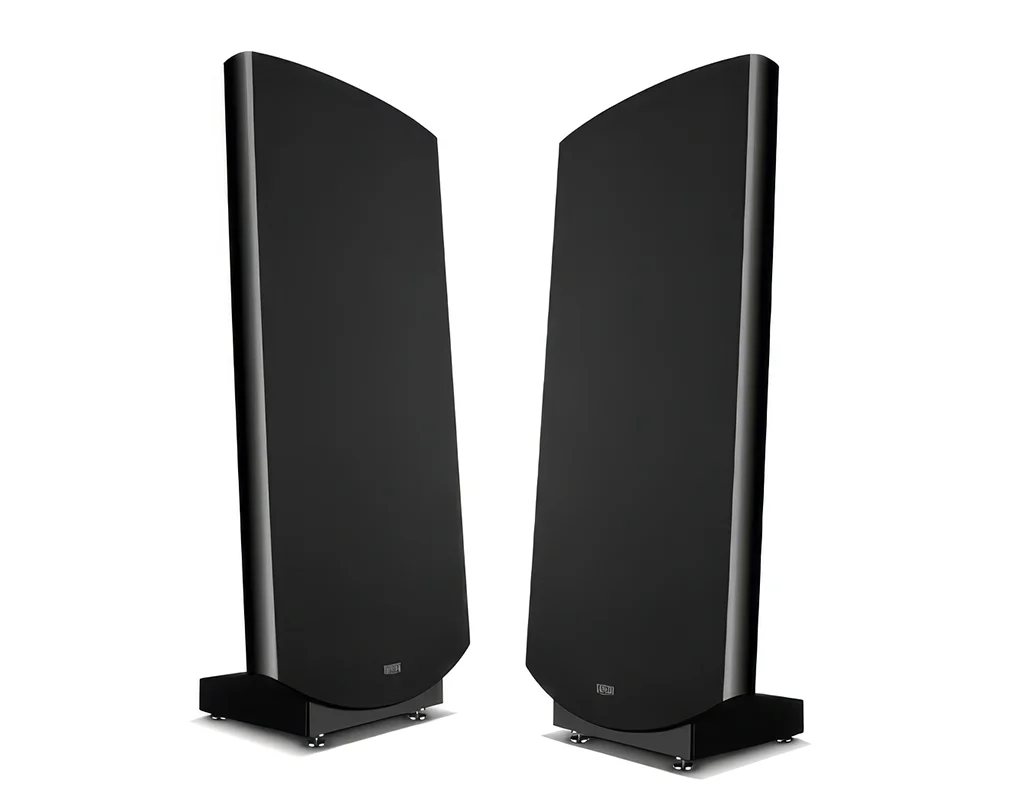
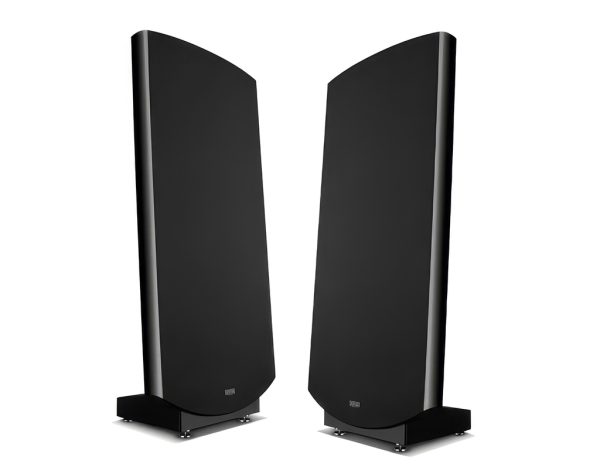
Enter the newly announced Quad 2912X electrostatic loudspeakers, carrying an approximate retail price of $18,000 per pair (distributed via MoFi Distribution).
Following a private, post-show listening session at Upscale Audio, initial reports indicate that Quad has successfully squared the circle. The 2912X manages to retain roughly 92% of the original ESL-57’s haunting magical midrange while dramatically improving frequency extremes, dynamic swing, and overall structural robustness. Driven during the demonstration by the formidable Musical Fidelity M8XI integrated amplifier—distributed by Harmonia Distribution at an MSRP of $7,999—the Quad 2912X proved capable not only of rendering delicate acoustic textures with vanishingly low coloration, but also of delivering the raw physical drive and authority required to play rock music at compelling, unconstrained listening levels.
Chronology of an Impromptu Listening Session
The discovery of the Quad 2912X unfolded quietly, away from the bustling crowds of a major regional high-end audio showcase hosted at Upscale Audio.
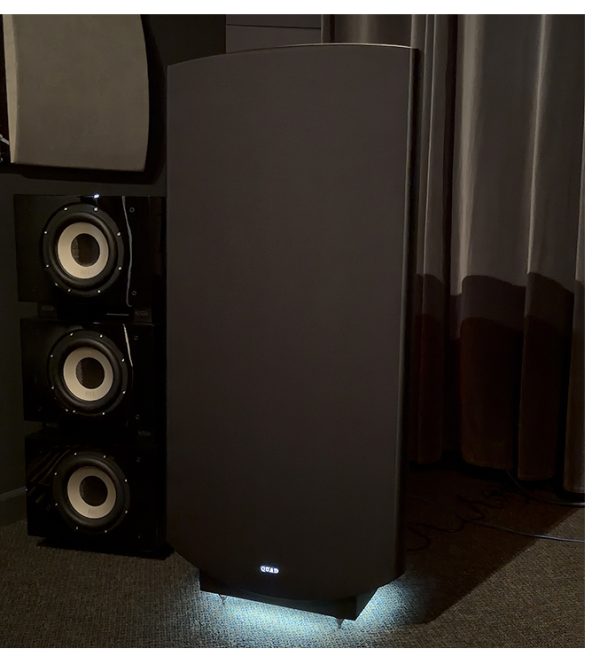
- Late Afternoon: As the exhibition doors closed to the general public and attendees trickled out into the evening, an exclusive window of opportunity opened. With the exhibition room temporarily silent, the reviewer secured an uninterrupted one-hour block of time to evaluate the flagship panels.
- The Setup: The Quad 2912X speakers were positioned deliberately within the demonstration space, flanked notably by a large portrait of The Rolling Stones hanging prominently on the wall—a serendipitous visual cue for the listening tests to come. The electronics chain featured the aforementioned Musical Fidelity M8XI integrated amplifier, providing robust high-current delivery and a high damping factor to tame the notoriously demanding impedance loads typical of large electrostatic panels.
- The Audition (Track by Track): The session commenced with Keith Richards’ solo track, "Wicked as it Seems." Rather than folding under the dynamic demands of electric guitar transients and driving percussion, the speakers filled the room with a massive, three-dimensional soundstage characterized by unexpected low-end grip and rhythmic punch.
- The Reference Marathon: Over the course of the next sixty minutes, a rapid-fire sequence of approximately a dozen well-known reference tracks from various genres was deployed. Despite the breadth of musical styles—ranging from intimate vocal jazz to heavy rock—the hour elapsed with the disorienting swiftness of a morning snooze button.
- Post-Show Conclusion: The session concluded with the firm realization that these panels represent a significant evolutionary step forward, prompting plans at TONE for a comprehensive, long-term review sample in the near future.
Supporting Data & Technical Analysis
To understand why the Quad 2912X represents a paradigm shift for the brand, one must examine the intersection of electrostatic driver physics and modern amplification.
The Amplifier Synergy Paradigm
Historically, coupling high-power amplification with vintage electrostatic loudspeakers was a recipe for disaster. Early designs utilized step-up transformers and fixed-charge diaphragms that could easily arc, burn out, or distort catastrophically when subjected to high currents or transient voltage spikes. Consequently, audiophiles often paired them with low-power tube amplifiers, sacrificing dynamic impact and deep bass control in the name of safety.
The "X" generation of Quad panels changes this calculus entirely. Modern engineering tolerances, advanced stator coatings, and refined protection circuitry allow these speakers to thrive on high current and high damping factors.
- The Musical Fidelity M8XI Benchmark: Delivering generous power reserves, the M8XI proved that feeding the 2912X massive current yields extraordinary dividends in bass grip, transient snap, and soundstage stability.
- Historical Precedents: Previous generations of large Quads (such as the 2812 series) achieved legendary status when partnered with reference-grade monoblocks like the Pass Laboratories XS300 monoblocks—though such amplification represents an extreme financial and physical footprint. The M8XI offers a far more rational, real-world solution without sacrificing sonic glory.
Cost-to-Performance Ratio
Priced at approximately $18,000 for the pair, the Quad 2912X occupies the competitive upper-middle tier of the high-end loudspeaker market. When paired with a capable integrated amplifier like the Musical Fidelity M8XI ($7,999) and a high-resolution analog or digital front-end valued between $5,000 and $10,000, an enthusiast can assemble a world-class, state-of-the-art stereo system for the total price equivalent to a Certified Pre-Owned (CPO) BMW 3-Series.
Comparative Advantage Over Competitors
In the realm of large-format, open-baffle, and planar-magnetic loudspeakers, two primary alternative technologies dominate the conversation:
- MartinLogan Hybrid Electrostatics: While MartinLogan speakers typically offer deeper bass extension via integrated dynamic woofers and wider dispersion through curved panels, they often introduce a slight discontinuity between the fast electrostatic panel and the conventional cone woofer. Quads utilize a proprietary concentric delay-line ring configuration that simulates a point source, achieving a seamless, unified tonal purity that hybrid designs struggle to replicate.
- Magnepan Planar-Magnetics: Magnepans are celebrated for their effortless transparency and expansive scale at highly accessible price points. However, compared directly against the Quad 2912X, Magnepans often exhibit a slightly drier, more diffuse presentation with less focused pin-point imaging and lower dynamic slam. The Quads deliver superior micro-detail retrieval and a more palpable, flesh-and-blood midrange density.
Official Responses and Industry Reception
While formal marketing press releases from Quad and MoFi Distribution outline the technical specifications of the 2912X series, industry insiders and early critical reception provide the most compelling narrative regarding the speaker’s market position.
"If you’ve never heard the originals, you might just think these are one of the most incredible speakers ever made. Oddly enough, after experiencing the originals, chances are high you will still think the same thing, as here’s the Quad sound you know and love, but oh so much more of it…"
— Jeff Dorgay, TONE Publications
Distributors and retail partners, such as Upscale Audio, have noted a profound resurgence of interest in panel loudspeakers among audiophiles who previously migrated exclusively toward traditional box speakers due to dynamic limitations. By bridging the gap between delicate micro-dynamics and visceral, high-volume playback capability, the 2912X addresses the primary objection that has kept casual listeners away from electrostatic technology for decades.
Implications for the Audiophile Market
The introduction of the Quad 2912X carries several broad implications for high-end audio manufacturers and consumers alike:
- The Renaissance of Planar/Electrostatic Design: For years, the high-end loudspeaker market has been dominated by massive, heavily braced wooden boxes utilizing exotic multi-driver arrays to force air into submission. The 2912X serves as a timely reminder that massless (or near-massless) electrostatic diaphragms offer a level of harmonic purity and coloration-free transient response that heavy cone drivers simply cannot match.
- Shifting Paradigms in Amplifier Matching: As manufacturers refine electrostatic protection systems, the old dogma that "Quads are fragile and must be handled with kid gloves" is officially obsolete. Modern buyers can confidently explore high-power, high-current solid-state integrated amplifiers without fear, unlocking lower-octave authority that past generations could only dream of.
- Redefining "Rockability" on Planars: Perhaps the most significant implication is cultural. Electrostats have long been pigeonholed as "chamber music" or "female vocal" speakers—exquisite for Bach and brittle for Black Sabbath. The ability of the 2912X to comfortably reproduce the driving rhythm of The Rolling Stones at authoritative sound pressure levels broadens the appeal of electrostatic design to a much wider demographic of music lovers.
Final Verdict
Are the Quad 2912X dream speakers come true? For purists seeking absolute transparency, zero box coloration, and lifelike midrange projection—now paired with the dynamic muscle to handle modern production values—they may very well be.
For more information on availability and regional demonstrations, visit mofidistribution.com or experience them firsthand through authorized dealers like Upscale Audio.