Welcome back to TechCrunch Mobility, your definitive guide to the rapidly evolving landscape of autonomous transportation and the increasingly critical role artificial intelligence plays in moving people and goods.
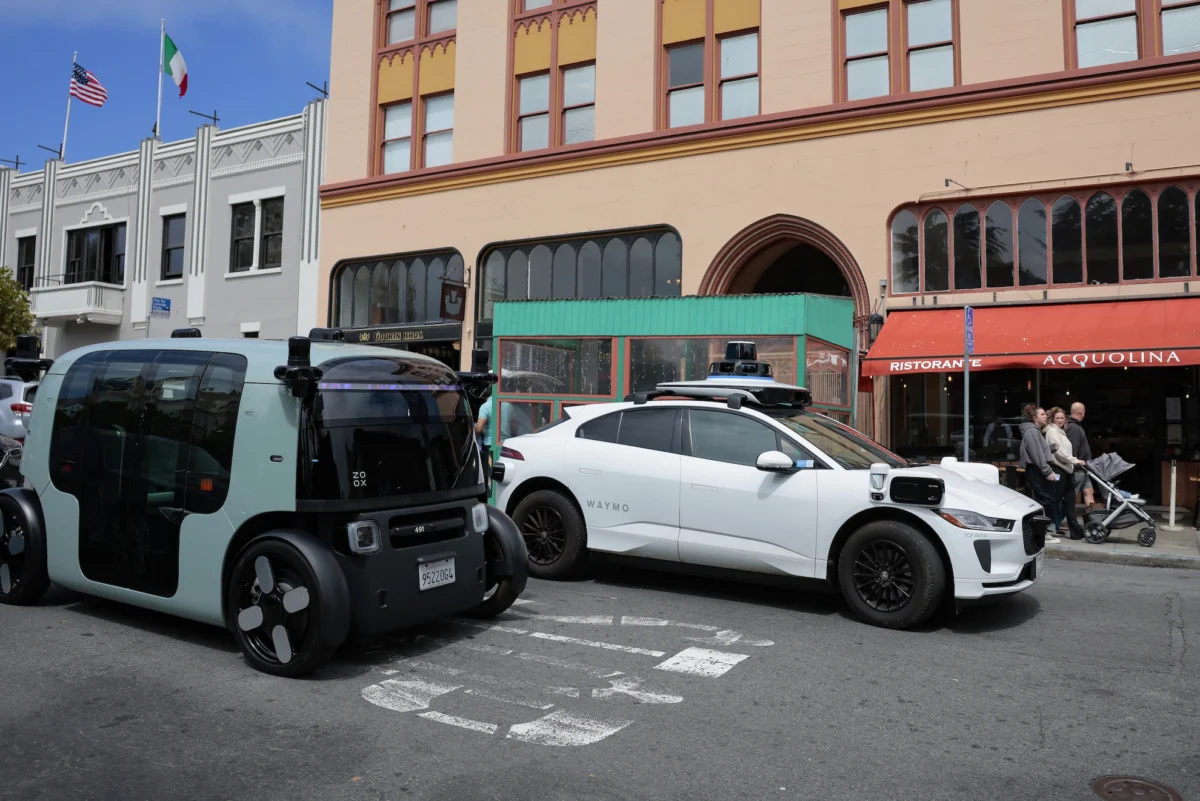
As autonomous vehicles (AVs) become a common sight in urban centers like San Francisco, the narrative surrounding the technology is shifting from "proof of concept" to "operational accountability." While robotaxis from industry leaders like Waymo, Zoox, and Tesla have become a standard feature of the urban fabric, their presence has not been without significant friction. From blocking critical traffic arteries to inadvertently interfering with active crime scenes and emergency response operations, the "robotaxi era" is currently hitting its first major regulatory speed bump.
Main Facts: The Legislative Pivot
In a decisive move to address these operational failures, California has enacted Senate Bill 1246, signed into law this week by Governor Gavin Newsom. This landmark legislation serves as a preemptive strike against the growing pains of the AV industry, establishing a strict regulatory framework for companies that deploy driverless fleets.
The core of the legislation mandates that autonomous vehicle developers must provide on-the-ground, local support for emergency responders. Under the new rules, if a robotaxi causes a traffic obstruction or interferes with police or fire operations, the operating company is required to have a human technician on-site. Perhaps most significantly, the law introduces punitive measures for non-compliance, including potential fines if a vehicle blocks first responders for more than 30 minutes.
Furthermore, the bill introduces labor and operational requirements: all remote tele-operators must be based within the United States and possess valid U.S. driver’s licenses. Companies are also now obligated to maintain real-time communication with local jurisdictions, reporting the status and location of vehicles during system-wide failures.
A Chronology of Conflict
The necessity for SB 1246 was born from a series of high-profile incidents that have plagued the industry over the past two years.

- 2025–2026: Throughout this period, TechCrunch reported numerous instances of Waymo and other AVs stalling in busy intersections, driving through yellow tape at active crime scenes, and in several documented cases, requiring first responders to physically intervene or wait for remote company assistance to clear the path.
- March 2026: A critical tipping point occurred when reports surfaced detailing how robotaxi companies were heavily reliant on local fire and police departments to troubleshoot and move disabled vehicles, effectively turning first responders into de facto roadside assistance.
- October 1, 2026: Governor Gavin Newsom officially signed SB 1246, signaling an end to the era of "self-regulation" for autonomous fleets in the state.
- July 2028: The date set for the full implementation of the law, giving developers a window to adjust their infrastructure and operational protocols to meet the new state standards.
Supporting Data and Industry Landscape
The autonomous sector is currently experiencing a period of intense capital injection and rapid scaling, despite the regulatory headwinds.
- Tesla’s $30 Billion Bet: In a massive show of confidence regarding its future in AI and robotics, Tesla recently secured $30 billion in new credit lines. These funds are earmarked for scaling its "Cybercab" robotaxi program and the further development of its Optimus humanoid robot. This comes as the company continues to maintain strong EV sales, moving over 480,000 units in the third quarter of 2026.
- Harbinger’s FedEx Deal: In the logistics space, EV startup Harbinger has secured a $300 million deal to supply FedEx with 2,000 electric trucks, highlighting the shift toward electrification in commercial shipping.
- Quartermaster’s Defense Raise: Maritime intelligence startup Quartermaster raised $140 million in a Series B round, underscoring the high demand for AI-driven intelligence tools in the defense and logistics sectors.
- Data Privacy Concerns: A concerning report from Northeastern University revealed that 21 late-model vehicles from 17 automakers are collecting vast amounts of personal data, which is subsequently shared with tech giants like Google, Meta, and Adobe. This raises significant questions regarding the "connected car" ecosystem.
Official Responses and Regulatory Implications
The California Department of Motor Vehicles (DMV) is now tasked with the complex role of codifying the specific enforcement mechanisms for SB 1246. Industry leaders are watching closely to see how these regulations will affect their operating costs and deployment timelines.
Critics of the industry argue that the 30-minute grace period for blocking emergency services is too generous, while some developers worry that the requirement for "local incident technicians" will significantly increase operational overhead in every city they serve.
The broader implication is whether California’s move will trigger a "domino effect" across other states, or if the federal government will eventually intervene to create a unified national standard. As it stands, the law represents a compromise: it does not ban autonomous vehicles, but it firmly asserts that the safety of the public and the efficiency of first responders take precedence over technological innovation.
The Future of Mobility: Beyond the Robotaxi
While the focus is often on the passenger experience, the industry is seeing significant movement elsewhere:
- Trucking and Logistics: Kodiak is launching driverless deliveries for IKEA on a 219-mile stretch of Interstate 45 in Texas. Meanwhile, Aurora is targeting a fleet of 30,000 autonomous trucks by 2030, a goal that CFO David Maday claims is highly achievable despite current skepticism.
- Aerial Delivery: DoorDash is doubling down on its "DoorDash Air" initiative, integrating autonomous aircraft with ground-based robotic systems.
- The "AI-First" Pivot: Tesla continues to grapple with its identity. While a successful automaker, Elon Musk’s focus remains squarely on transforming the company into an AI and robotics powerhouse. However, as noted in recent analysis, the company’s vision for an "age of abundance" via AI remains abstract and difficult to quantify for investors and the public alike.
Disrupt 2026: The Intersection of Industry and Policy
As we look toward the future, the Disrupt 2026 conference—taking place in San Francisco in just a few days—will serve as the primary forum for these discussions.

This year’s event is more than a gathering; it is a critical dialogue between the innovators building the future and the regulators tasked with managing it. Key sessions will feature:
- Rivian CEO RJ Scaringe: Discussing the high-stakes bet on EVs, robotics, and autonomy.
- Building AI Systems When Failure Is Not an Option: A panel featuring executives from GM, Shield AI, and Waabi, focusing on the safety-critical nature of autonomous software.
- The Non-AI Path: Sean O’Kane will lead a discussion on how companies can thrive in the current climate without being pure-play AI developers.
For those interested in the front lines of this transformation, we are offering a 30% discount on tickets to Disrupt 2026 with code mobility30. This is an unparalleled opportunity to hear from the leaders at Cerebras, Nvidia, OpenAI, and beyond.
Conclusion: A New Standard for Accountability
California’s new legislative framework is a clear signal: the grace period for autonomous vehicles is over. While the technology promises to revolutionize transit and logistics, the industry must now prove it can operate as a responsible citizen of the urban landscape.
Will SB 1246 keep robotaxis out of the way of emergency responders? Likely not entirely, but it introduces the necessary accountability to ensure that when "the future" inevitably breaks down, there is a clear, human-led plan to fix it. As we move into 2027 and 2028, the measure of success for these companies will no longer just be their software’s performance, but their ability to integrate seamlessly and safely into the existing infrastructure of our cities.
Disclaimer: When you purchase through links in our articles, we may earn a small commission. This doesn’t affect our editorial independence.