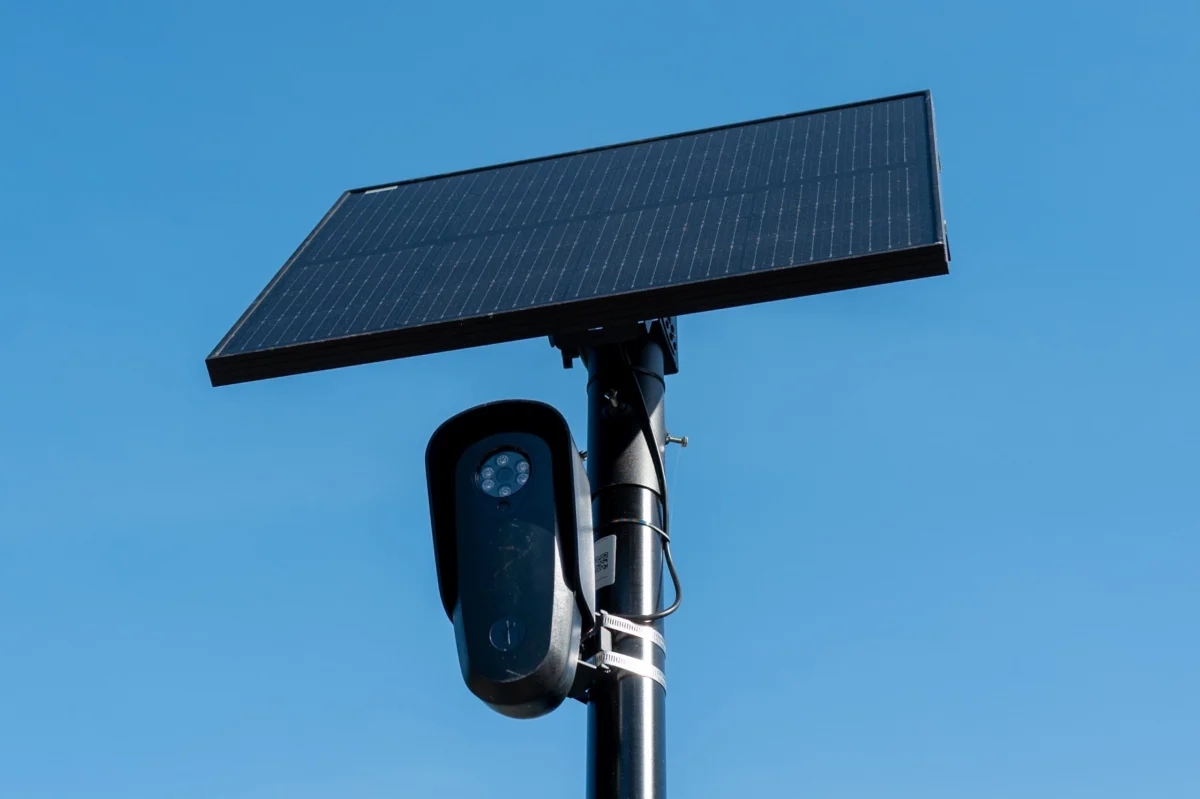
In a landmark decision that could redefine the boundaries of digital privacy in the United States, a federal judge in Oklahoma has ruled that the warrantless use of Flock Safety’s automated license plate reader (ALPR) technology by law enforcement constitutes an unconstitutional violation of the Fourth Amendment.
The ruling, issued by Judge Sara Hill, represents a significant escalation in the ongoing legal and ethical battle over the rise of "indiscriminate mass surveillance" technologies. While the decision does not immediately establish a nationwide binding precedent, it marks the first time a federal jurist has explicitly labeled the use of the Flock database as an unconstitutional overreach, setting the stage for what many legal scholars believe will be a protracted battle at the Supreme Court level.
The Case: A Search Without Cause
The legal challenge stemmed from an encounter involving a Tulsa County Sheriff’s deputy and a motorist. The deputy, operating without a warrant, utilized the Flock Safety database to track the woman’s vehicle. According to court documents, the officer’s only justification for initiating the digital dragnet was that the vehicle displayed a California license plate.
The deputy subsequently leveraged the woman’s historical travel data, compiled by the network of cameras, to justify a traffic stop and a subsequent search of her vehicle. During the search, officers discovered 91 pounds of methamphetamine. However, Judge Hill’s ruling effectively neutralized the discovery. By declaring the initial digital surveillance unconstitutional, she invoked the "fruit of the poisonous tree" doctrine, ordering that all evidence derived from the illegal search be suppressed.
"The deputy had no apparent reason for the search other than the fact that the vehicle had a California license plate," Judge Hill wrote in her opinion. By failing to secure a warrant, the officer bypassed the constitutional safeguards meant to protect citizens from unreasonable government intrusions.
Chronology of a Digital Dragnet
The tension between modern surveillance capabilities and the Fourth Amendment has been building for years, as companies like Flock Safety expanded their footprint across American municipalities.
- Pre-2024: Flock Safety installs thousands of cameras across the U.S., marketing them as a tool for "public safety" and "crime prevention," capable of identifying vehicles by make, model, color, and license plate.
- The Incident: A Tulsa deputy uses the system to track a motorist based on her out-of-state plates, leading to a drug bust.
- The Legal Challenge: The defense moves to suppress the evidence, arguing the search of the database required a warrant.
- The Ruling (Current Week): Judge Sara Hill rules that the indiscriminate collection and searching of location history without judicial oversight violates constitutional protections.
- The Legislative Response: Following a wave of public concern, Senator Bernie Sanders introduces the "Block Flock Act" in October 2026, aiming to prohibit federal agencies from utilizing these technologies.
The Constitutional Problem: "Indiscriminate Mass Surveillance"
Judge Hill’s opinion did not merely focus on the specific actions of the deputy; it leveled a broader, existential critique of how technologies like Flock are utilized by modern law enforcement.
"This is a type of indiscriminate mass surveillance," Hill wrote. She distinguished this from the Supreme Court’s landmark ruling in Carpenter v. United States, which addressed cell phone location data. While Carpenter dealt with targeted tracking, Judge Hill noted that Flock represents a shift to a "passive" and "all-encompassing" model of surveillance.
The concern, according to the ruling, is that these systems collect data on every vehicle that passes by a camera, regardless of criminal suspicion. This database, which can be queried at any time for any reason, allows police to reconstruct a person’s movements over an extended period. Judge Hill concluded that such capability is "constitutionally problematic" because it turns the concept of probable cause on its head, allowing law enforcement to fish for evidence rather than investigate a known crime.
Industry and Political Pushback
The ruling comes at a precarious time for Flock Safety. The company, once the darling of law enforcement technology procurement, is facing a growing "privacy revolt" from across the political spectrum.
The Legislative Front
Florida and Texas have already begun the process of curbing or banning the use of these systems in certain capacities, citing mounting privacy concerns. The introduction of the "Block Flock Act" by Senator Bernie Sanders (I-VT) marks the most significant federal attempt to rein in the technology. If passed, the bill would effectively ban federal agencies from using automated license plate readers, arguing that the trade-off between convenience and civil liberties has shifted too far toward the latter.
The Corporate Stance
Flock CEO Garretty Langley has attempted to navigate these turbulent waters by calling for a "compromise" between safety and privacy. In recent public statements, Langley has offered apologies for instances where law enforcement officers misused the system to stalk individuals—a phenomenon that has been documented in multiple jurisdictions.
However, the market reality is beginning to reflect the political climate. Following the widespread cancellations and the judicial scrutiny, reports indicate that Flock has begun offering voluntary employee buyouts as part of a strategy to reduce its workforce and restructure in the face of dwindling municipal contracts.
Implications: A Shifting Legal Landscape
The implications of Judge Hill’s ruling are profound. If other federal judges adopt her reasoning, the "standard operating procedure" for thousands of police departments could become illegal overnight.
1. The Death of the "Digital Alibi"
For decades, license plate readers were viewed as merely "documenting what happens in public." However, legal scholars argue that when these data points are aggregated into a searchable database that spans cities and states, the "mosaic theory" of privacy applies. Under this theory, while a single observation in public may not be private, the accumulation of those observations reveals intimate details about a person’s life, religious affiliations, and medical habits, requiring a higher level of protection.
2. The Warrant Requirement
If courts begin to demand warrants for ALPR queries, the operational efficiency that Flock promises—the ability for an officer to "ping" a plate in seconds—will effectively vanish. This creates a significant hurdle for law enforcement, who have grown reliant on the real-time access to these databases to solve crimes.
3. The Future of Surveillance Tech
The ruling forces a conversation about whether private companies should be allowed to build "digital panopticons" that facilitate state-sponsored surveillance. The criticism leveled by Judge Hill suggests that the judiciary is becoming increasingly skeptical of the "convenience" argument used by tech firms to justify the erosion of privacy.
Conclusion: A Precedent in the Making
While Judge Hill’s decision is not yet a Supreme Court ruling, it provides a blueprint for defense attorneys nationwide. The argument that indiscriminate data collection constitutes an unconstitutional search is gaining traction. As the legal system catches up to the rapid deployment of surveillance technology, the case in Oklahoma may be remembered as the moment the courts began to draw a hard line in the sand.
For privacy advocates, the ruling is a long-overdue victory. For law enforcement, it is a warning that the era of unfettered access to location data is drawing to a close. As the Block Flock Act moves through the legislative process and more courts weigh in, the industry will have to decide whether it can adapt its business model to respect constitutional boundaries or if it will be legislated out of existence by a public and a judiciary that is no longer willing to trade liberty for a false sense of security.
Note: This article is intended for informational purposes and does not constitute legal advice. As the legal landscape surrounding ALPR technology is currently in flux, readers are encouraged to consult current state and federal statutes for the latest updates.