Main Facts
In the high-end audiophile landscape, components that cross boundaries are rare. Enter the Moon Audio Europa (also referenced in evaluations as the Saros), a flagship hybrid-design tube preamplifier and headphone amplifier priced at $8,995. Designed and distributed via Moon Audio, this component challenges the traditional segregation between personal Head-Fi systems and reference-grade two-channel speaker setups.
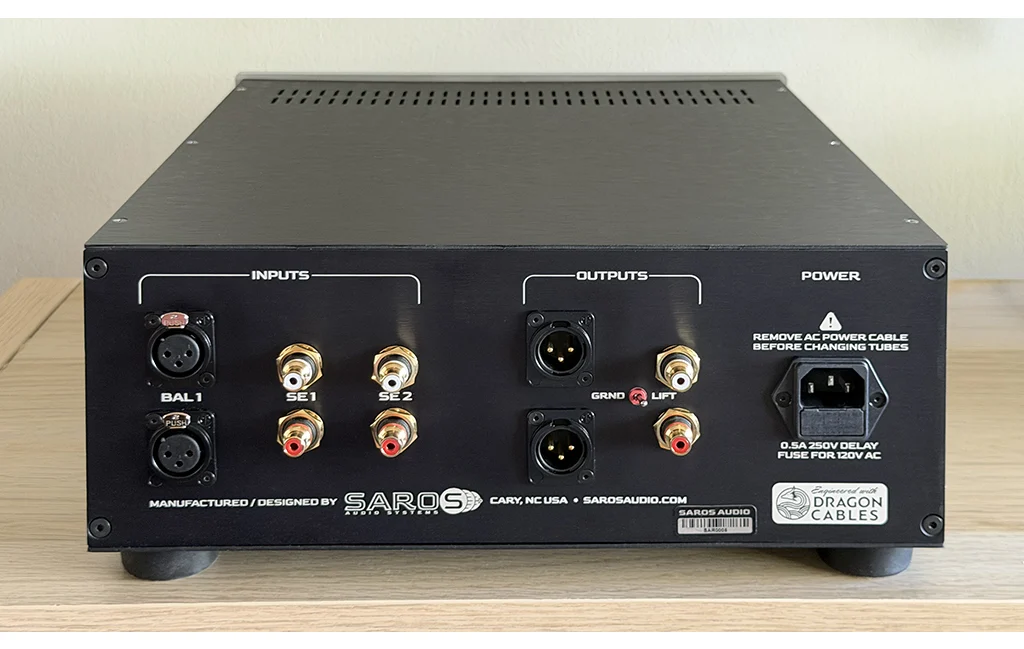
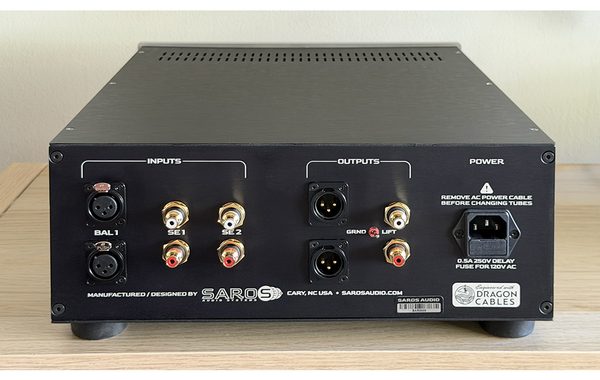
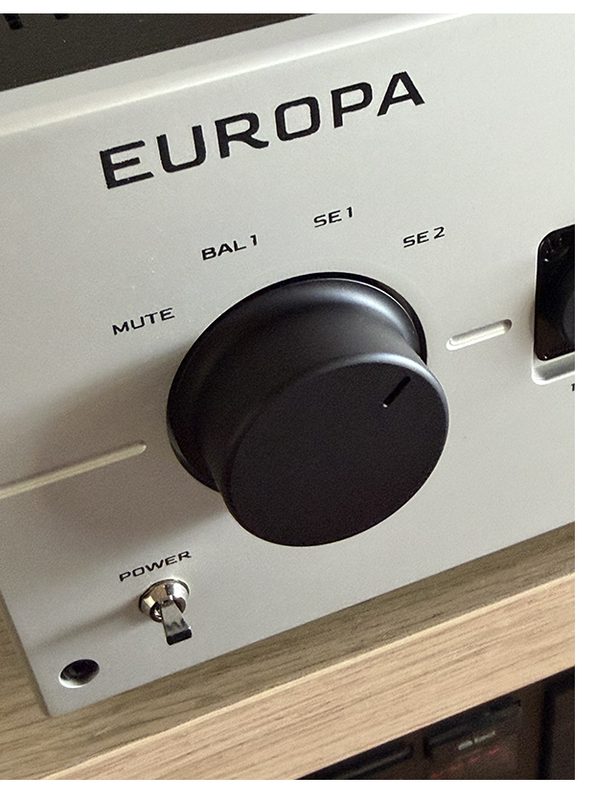
Rather than merely serving as an upscale headphone driver, the Europa functions as a fully balanced linestage featuring three analog inputs (one balanced XLR, two unbalanced RCA) and two outputs (one balanced XLR, one unbalanced RCA). Under the hood, it boasts a formidable component list: a massive choke-based power supply, premium Lundahl transformers, VPG Z-foil resistors, Mundorf capacitors, and tube rectification. The tube complement consists of a pair of 6922 tubes in the first stage—uniquely managed via individual, manual fine-tuning bias adjustments using an included circuit board adapter and multimeter—and 6H30 tubes in the second stage.
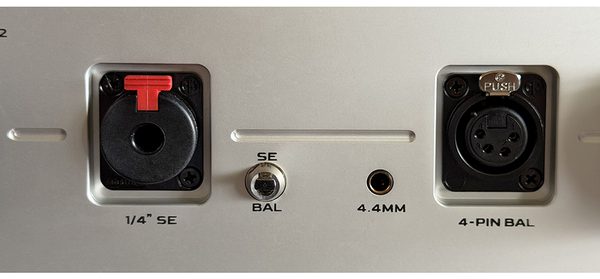
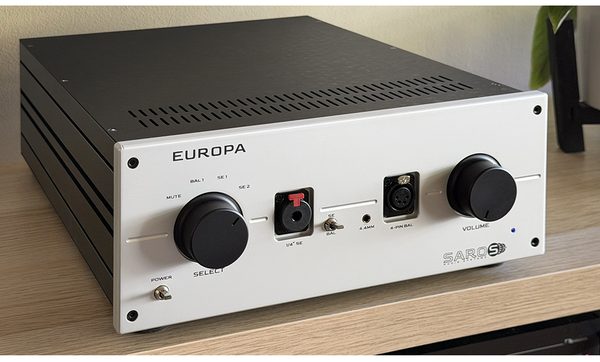
Measuring in a compact chassis that avoids dominating an equipment rack, the Europa delivers a rare sonic alchemy: the ethereal airiness and organic warmth characteristic of top-tier tube topologies, paired with the low-end grip, dynamic punch, and transient speed usually exclusive to high-end solid-state gear.
Chronology
The path to evaluating the Europa reflects a methodical, multi-phase listening journey designed to test the limits of its dual-threat engineering:
- Initial Benchmarking & System Two Insertion: Testing began by integrating the unit into a secondary system as a pure line-level preamplifier. Driving a pair of Klipschorn loudspeakers via a set of ampsandsound Bryce monoblocks, the Europa immediately established its prowess as a standalone linestage, proving that its utility extends far beyond personal audio.
- Reference System Stress-Testing: The unit was subsequently migrated to a reference two-channel system anchored by Clarisys Auditorium Plus speakers and Pass XS300 monoblocks. This phase allowed for meticulous comparative analysis between the unit’s balanced and unbalanced outputs, revealing minute textural nuances in staging and warmth.
- Head-Fi and Transducer Matching: Transitioning to personal listening, the reviewer paired the amplifier with Focal Clear Mg headphones. Testing traversed diverse genres—from the challenging percussion of early hip-hop and electronica to the spatial demands of RUN-DMC, the vocal textures of Debbie Harry’s 1988 remixes, and the gravelly delivery of Chrissie Hynde.
- Upgrades and Tube-Rolling Exploration: Final evaluations factored in optional upgrades, including an available 50-step attenuator ($500) and Moon Audio’s proprietary Dragon headphone cables. Limited trials with premium New Old Stock (NOS) 6H30 tubes further probed the limits of the unit’s resolution, charting the point of diminishing returns on an already elite circuit.
Supporting Data
- Retail Price: $8,995 USD (Available through Moon-audio.com).
- Optional Upgrades: 50-step attenuator available for an additional $500; proprietary Dragon cable ecosystem recommended for optimal synergy.
- Inputs & Outputs: Fully balanced architecture featuring 3 total inputs (1x XLR, 2x RCA) and 2 total outputs (1x XLR, 1x RCA).
- Tube Complement & Topology: Tube rectification paired with 6922 dual-triodes in the input stage (equipped with manual individual bias adjustment tools) and 6H30 tubes in the secondary stage.
- Internal Parts Inventory: Big choke power supply, Lundahl transformers, VPG Z-foil resistors, and Mundorf capacitors.
- System Testing Configurations:
- System A: Klipschorn speakers powered by ampsandsound Bryce monoblocks.
- System B: Clarisys Auditorium Plus speakers powered by Pass XS300 monoblocks.
- Personal Audio: Focal Clear Mg headphones driven with stock and Moon Audio Dragon cabling.
Official Perspectives and Expert Analysis
Critics and industry observers analyzing hybrid tube components often note the persistent engineering compromise: designers frequently sacrifice the dynamic immediacy of solid-state topologies to achieve lush tube warmth, or conversely, lean too clinical in pursuit of transient speed. The design ethos behind the Moon Audio Europa rejects this binary.
According to foundational evaluation notes, the unit succeeds by maintaining strict musical scale relationships. Where lesser headphone amplifiers artificially expand soundstages to mimic giant planar speakers—rendering an intimate piccolo the same acoustic width as a grand piano—the Europa preserves spatial integrity. It constructs an imaging presentation that mirrors listening to reference speakers within an acoustically treated room.
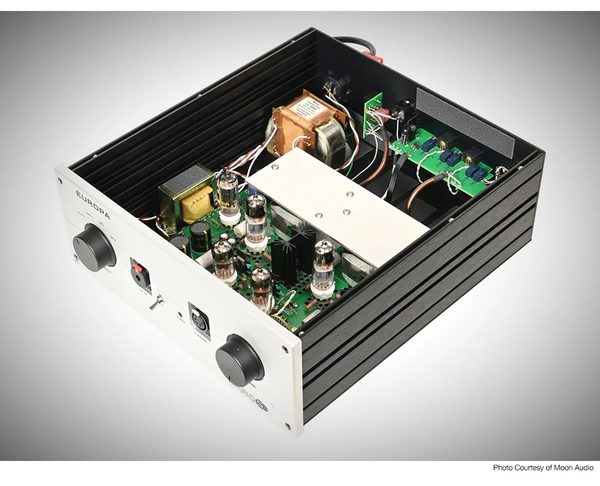
Furthermore, the manual biasing implementation of the 6922 input stage highlights a builder-centric philosophy. By providing the exact instructions and hardware adapters required to interface a multimeter with the circuit board, Moon Audio caters to enthusiasts who appreciate hands-on maintenance and optimization. While stock current-production 6H30 tubes perform at an elite level, testing indicates that investing in high-end NOS 6H30 alternatives ($600-ish per pair) pushes an already world-class component into hyper-resolution territory—though reviewers emphasize that such measures are entirely optional given how refined the stock execution sounds out of the box.
Implications
The introduction of a component like the Moon Audio Europa carries several implications for the high-end audio market:
1. The Convergence of Head-Fi and Two-Channel Hi-Fi
For decades, personal audio and traditional speaker-based high-end audio existed in relatively siloed ecosystems, requiring entirely distinct signal chains. The Europa demonstrates that a single, masterfully engineered chassis can anchor a multi-thousand-dollar loudspeaker rig while simultaneously driving reference-grade headphones without performance compromise. For audiophiles looking to downsize equipment footprints without sacrificing sonic purity, this dual-role capability represents a major paradigm shift.
2. Redefining Value at the $9,000 Price Point
At nearly $9,000, the Europa demands scrutiny. However, when evaluated as a high-end line preamplifier that also happens to include a world-class headphone amplifier section, the financial equation shifts. Buyers who might otherwise purchase separate reference components for their desktop and listening rooms find a consolidated solution that yields no audible performance penalties.
3. The "Un-hearable" Threshold of Audiophile Performance
Perhaps the most significant implication of the Europa’s design is its subtlety. Excellence at this tier is rarely characterized by loud, obnoxious colorations; rather, it manifests as an absence of fatigue, effortless dynamic headroom, and complete spatial coherence. As noted in critical evaluations, the ultimate testament to the Europa’s quality is the impossibility of going backward: once an listener experiences music through a signal chain of this caliber, returning to entry-level or mid-tier head-fi amplification strips away the spatial cues and harmonic richness, proving the old audiophile adage true—some things simply cannot be un-heard.