LOS ANGELES — In the world of professional audio, broadcast, and commercial AV integrations, the conversation almost invariably revolves around high-end mixing consoles, pristine line arrays, sophisticated DSPs, and razor-sharp video displays. Yet, beneath the surface of every reliable, high-performing system lies an unsung hero: power management. Recognizing that clean, stable, and intelligently controlled electricity is the literal lifeblood of modern installations, TASCAM has announced the launch of two new rack-mount power management products designed to safeguard and streamline complex setups.
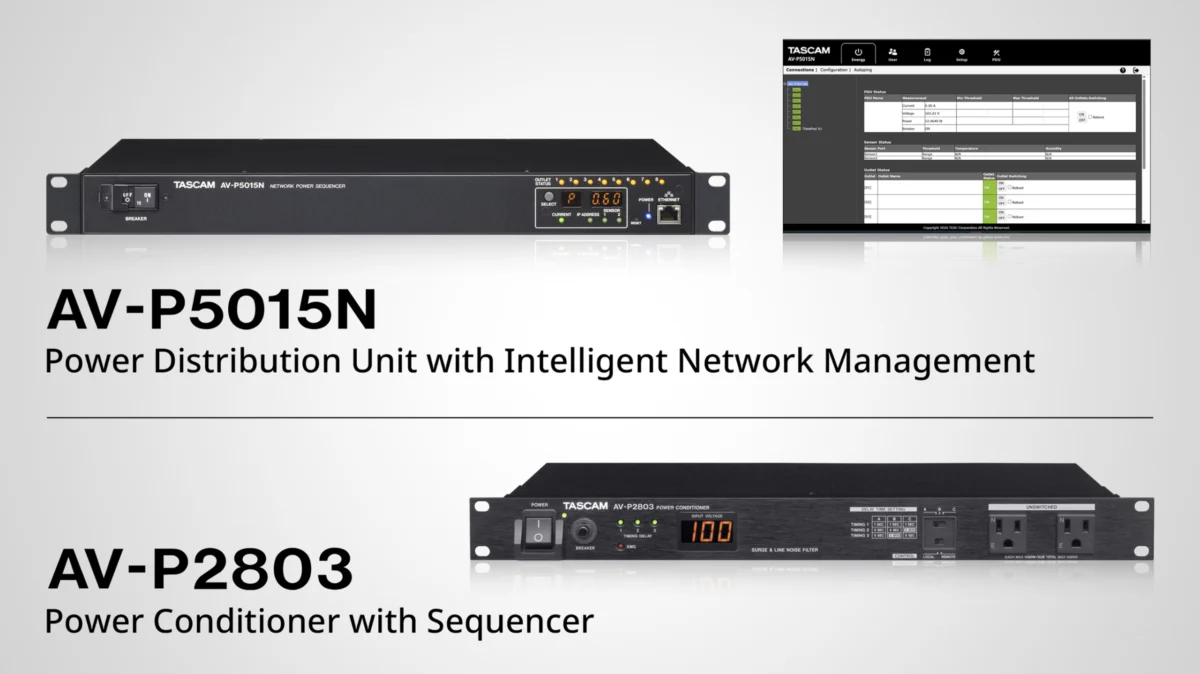
The newly unveiled lineup includes the AV-P2803 power conditioner with sequencer and the AV-P5015N power distribution unit featuring intelligent network management. Both 1U rack-mountable units are engineered to address the rigorous demands of contemporary permanent installations, ranging from corporate conference rooms and digital signage arrays to broadcast studios, houses of worship, and commercial sound reinforcement venues.
While both units deliver robust power distribution, monitoring, and controlled startup and shutdown sequences to protect sensitive gear, they cater to distinct tiers of system complexity. The AV-P2803 focuses on sequential timing and daisy-chained scalability, whereas the AV-P5015N introduces advanced IP-based monitoring, remote management, and automated network recovery. Together, they represent a significant step forward in TASCAM’s expanding ecosystem of professional AV infrastructure solutions.
Main Facts: Inside the TASCAM AV-P2803 and AV-P5015N
To understand how these units fit into modern system designs, it is necessary to examine their core specifications, physical layouts, and operational feature sets. Both products are housed in rugged, standard 1-RU (rack unit) metal chassis, ensuring seamless integration into existing equipment racks without demanding excessive vertical space.
The AV-P2803: Sequenced Power and Scalability
The AV-P2803 is a 15A power distribution unit (UL de-rated to 12A) built to handle the sequential power-up and power-down routines required by complex audio and video chains. Sending a sudden, simultaneous surge of electricity to every component in a massive sound system can cause catastrophic loudspeaker "pops," trip circuit breakers, or introduce unnecessary wear on sensitive internal power supplies. The AV-P2803 solves this by introducing controlled delays.
- Outlet Configuration: The unit features six switched rear-panel outlets divided into three distinct timing stages, allowing installers to stagger the power flow. Additionally, it includes two unswitched outlets (one on the front panel and one on the rear) for devices that require constant power, such as memory-backup components or network switches.
- Power Conditioning: To protect connected gear from environmental hazards, the unit incorporates built-in surge protection and EMI/RFI (Electromagnetic Interference/Radio Frequency Interference) filtering, ensuring that the incoming AC mains power is clean and free of noise artifacts.
- Monitoring & Diagnostics: A front-panel voltage display provides real-time visual feedback of line conditions.
- Daisy-Chain Capability: For large-scale installations spanning multiple racks, the AV-P2803 is equipped with dedicated control terminals. Installers can link up to 10 units together, allowing a single master control command to sequence an entire multi-rack system synchronously.
The AV-P5015N: Intelligent Network Management
Stepping up in technological sophistication, the AV-P5015N is designed for environments that demand remote oversight, granular data monitoring, and automated maintenance protocols.
- Outlet Configuration: The unit provides eight NEMA 5-15R rear-panel outlets, all fully integrated into its IP-based control architecture.
- Web-Based Interface: System integrators and IT administrators can access the AV-P5015N via an intuitive web browser interface. This dashboard provides real-time metrics on individual outlet status, line voltage, current draw, overall power consumption, and environmental conditions.
- Environmental Sensing: By connecting the optional EA1240 temperature and humidity sensor, technicians can monitor rack climate conditions remotely, preventing equipment overheating in closed or unattended utility closets.
- Scheduling and Delays: Individual outlets can be custom-configured with specific power-on and power-off delays. Furthermore, built-in scheduling functions enable automated daily power operations, allowing entire systems to boot up automatically in the morning and shut down or enter standby mode at close of business.
Chronology: The Evolution of Power Management in Pro AV
The introduction of the AV-P2803 and AV-P5015N does not happen in a vacuum; it reflects a decades-long evolution in how the AV industry approaches system protection and infrastructure control.

The Analog Era: Basic Surge Suppression
In the early days of professional sound reinforcement and studio recording, power management was largely an afterthought. Racks were populated with basic multi-outlet strips, or at best, rudimentary analog power conditioners designed primarily to absorb lightning spikes or minor voltage sags. Equipment was turned on manually, one switch at a time, starting with signal sources and preamplifiers, and ending with massive power amplifiers. If an engineer forgot the proper sequence, the resulting transient thump could easily blow expensive high-frequency drivers in studio monitors or PA speakers.
The Rise of Sequencers and Install Integration
As commercial AV systems grew larger—expanding into multi-zone corporate boardrooms, themed entertainment venues, and massive stadium networks—manual startup became impractical. The industry shifted toward hardware sequencers. These devices introduced relay-based timing circuits that triggered different outlets sequentially, eliminating operator error. However, these systems were largely "blind"; they executed commands blindly without offering insight into actual power draw, line fluctuations, or remote diagnostic capabilities.
The Modern IP-Connected Era
Over the past ten years, the convergence of AV and IT (AV/IT network integration) fundamentally transformed expectations. AV equipment is no longer isolated in local control rooms; it is frequently networked, monitored from remote locations, and managed by IT personnel who may not have specialized audio backgrounds.
TASCAM’s introduction of the AV-P5015N directly addresses this modern reality. By embedding IP control, web servers, environmental sensor inputs, and automated self-healing mechanisms into a standard rack-mount chassis, TASCAM bridges the gap between traditional electrical conditioning and modern enterprise network management. The timeline moves from passive spike protection to active, intelligent, and remote-managed ecosystem stewardship.
Supporting Data: Technical Specifications and System Performance
To fully appreciate the utility of TASCAM’s new hardware, it is helpful to examine the technical parameters and operational metrics that govern their deployment in professional environments.
| Feature / Metric | TASCAM AV-P2803 | TASCAM AV-P5015N |
|---|---|---|
| Form Factor | 1U Rack-Mount Chassis | 1U Rack-Mount Chassis |
| Current Rating | 15A (UL de-rated to 12A) | 15A Standard |
| Total Outlets | 8 Outlets Total | 8 Outlets Total |
| Switched Outlets | 6 Rear Outlets (3 Timing Stages) | 8 Rear Outlets (Individually Configurable) |
| Unswitched Outlets | 2 Outlets (1 Front, 1 Rear) | Managed via Network Architecture |
| Power Conditioning | Surge Protection & EMI/RFI Filtering | Advanced Surge & Noise Mitigation |
| Network & Remote | Hardware Control Terminals (Daisy-chain up to 10 units) | Full IP-Based Web Interface, Syslog Support |
| Monitoring Features | Front-Panel Voltage Display | Outlet Status, Voltage, Current, Power Consumption |
| Environmental Monitoring | N/A | Optional EA1240 Temp/Humidity Sensor Support |
| Automation & Recovery | Sequenced Timing Delays | Custom Schedules, Auto Ping Network Recovery |
The Value of the "Auto Ping" Function
One of the most compelling technical features of the AV-P5015N is its Auto Ping function. In many contemporary installations—such as remote digital signage hubs, unattended broadcast transmitters, or ceiling-mounted AV switchers in remote classrooms—equipment lockups are an inevitable operational headache. When a networked processor or media player freezes, a human technician must often be dispatched to physically power cycle the device.
The Auto Ping feature eliminates this costly downtime. The AV-P5015N continuously monitors network connectivity by pinging designated IP addresses (such as a local router or gateway). If the device detects that network communication has dropped or that a specific connected piece of hardware has stopped responding, it can automatically initiate a power cycle on that specific outlet, effectively rebooting the frozen gear without human intervention. Combined with event logs and Syslog support, this ensures high availability and drastically reduces maintenance overhead for facility managers.

Official Responses and Industry Perspectives
The philosophy driving TASCAM’s latest product rollout is rooted in foundational reliability. Speaking on the release of the AV-P2803 and AV-P5015N, TASCAM product specialist Sean Daily emphasized the critical nature of power infrastructure in professional deployments.
"Power management is the basis for everything in an installation," states Sean Daily, TASCAM product specialist. "Nothing in our setup will work without power, so having comprehensive, protective and reliable solutions should be forefront in all our minds and, indeed our racks."
Industry analysts and system integrators have echoed this sentiment, noting that as commercial AV systems incorporate increasingly delicate digital processors, Dante/AES67 audio-over-IP networks, and fragile touch-panel control systems, the tolerance for dirty power or improper sequencing has evaporated. A single voltage spike can destroy tens of thousands of dollars worth of networked digital gear in milliseconds, making an investment in professional power conditioning an essential insurance policy rather than a line-item afterthought.
Implications for Integrators, Broadcasters, and End Users
The commercial release of the AV-P2803 and AV-P5015N carries several practical implications for different sectors of the professional audio and AV marketplace:
1. Streamlining Corporate and Educational Integrations
In corporate boardrooms and higher-education lecture halls, ease of use is paramount. Non-technical users—such as professors, corporate executives, or administrative staff—frequently operate complex AV systems using touch panels. If powering up a room requires a precise, manual sequence of turning on displays, DSPs, switchers, and amplifiers, user error is guaranteed.
By integrating the AV-P2803 or AV-P5015N, system integrators can program seamless, single-button startup routines. Pressing "On" initiates the proper sequencing delays automatically, ensuring that speakers remain silent until all upstream digital components have booted, stabilized, and initialized.
2. Reducing Truck Rolls and Maintenance Costs for AV Service Providers
For commercial integrators who offer ongoing service level agreements (SLAs), managing remote or distributed systems can eat heavily into profit margins. Dispatching a technician to drive across town simply to unplug and re-plug a locked-down media player is an inefficient use of skilled labor.

The IP-enabled monitoring, scheduling, and Auto Ping capabilities of the AV-P5015N give support teams the ability to diagnose power consumption anomalies, track operational health, and execute remote reboots from a centralized help desk. This shift from reactive maintenance to proactive, software-driven oversight transforms the economics of remote AV support.
3. Broadened Application Scope for TASCAM
While TASCAM has historically been recognized globally for its field recorders, mixing interfaces, and media playback devices, the introduction of dedicated, high-end power management infrastructure signals the brand’s deepening commitment to the total AV signal chain. By providing hardware that anchors the equipment rack from the bottom up, TASCAM solidifies its position as a holistic solutions provider for permanent installations of every scale.
Conclusion
As professional AV systems grow denser, more interconnected, and increasingly reliant on continuous network uptime, the infrastructure supporting them must evolve in parallel. TASCAM’s introduction of the AV-P2803 and AV-P5015N provides the market with versatile, robust tools designed to meet these modern challenges head-on.
Whether an installation calls for the straightforward, scalable timing sequences of the AV-P2803 or the sophisticated, IP-managed telemetry and automated self-healing capabilities of the AV-P5015N, these 1U rack-mount units offer a formidable line of defense against the unpredictable nature of electrical power. In an industry where reliability is the ultimate metric of success, TASCAM’s latest power management solutions ensure that the show—and the system—stays safely on.