The rapid expansion of automated surveillance technology in American suburbs and cities has hit a significant legislative roadblock. Senator Bernie Sanders (D-Vermont), joined by co-sponsors Representative Alexandria Ocasio-Cortez (D-N.Y.) and Senator Jeff Merkley (D-Ore.), has introduced the "Ban Flock Act," a sweeping legislative maneuver aimed at stripping federal agencies of their ability to utilize automatic license plate readers (ALPRs) or integrate with the massive, private data troves harvested by firms like Flock Safety.
While the bill is colloquially named after the industry leader, its scope is broad, targeting any entity utilizing ALPR technology. The proposed law represents the most significant federal attempt yet to check the growth of a private surveillance apparatus that has quietly woven itself into the fabric of American law enforcement.
The Scope of the "Ban Flock Act"
The legislation, formally titled to reflect its intent, does not exclusively name the nine-year-old startup Flock Safety. Instead, it creates a federal prohibition on the use of ALPR technology by any federal agency. This includes both the direct operation of such systems and the tapping into data streams managed by local law enforcement or private contractors.
The bill carves out narrow exceptions for toll collection systems and specific, future-approved uses by Congress. However, any such approved use would be strictly governed by a mandatory 48-hour data retention cap—a radical departure from current industry standards where data is often kept for weeks or months.
Perhaps most potent is the bill’s "financial stick." To ensure compliance, the act threatens to strip federal grants from state and local governments that refuse to abandon the technology. Starting the first fiscal year after enactment, municipalities would lose access to critical funding from five major federal departments, including the Department of Justice and the Department of Homeland Security, unless they terminate their reliance on ALPR systems. Additionally, the bill provides a private right of action, allowing American citizens to sue the federal government for violations, while empowering state attorneys general to enforce these restrictions at the local level.
A Chronology of Rapid Expansion and Growing Backlash
The rise of Flock Safety is a case study in the rapid integration of venture-backed technology into public infrastructure.
- Early Growth (2015–2020): Founded on the promise of reducing crime through "neighborhood watch" technology, Flock rapidly scaled, convincing homeowners associations and local police departments that high-resolution, AI-powered cameras were the ultimate deterrent to package theft and vehicle-related crime.
- The Scaling Phase (2021–2024): With significant backing from venture capital firms like Andreessen Horowitz, Flock’s valuation soared. The company established a network that now boasts over 120,000 cameras. In February 2026, the company reported that its network processes more than 20 billion vehicle reads each month—a staggering volume of data that effectively tracks the movement of millions of citizens across the country.
- The Turning Point (2025–2026): As the network grew, so did the concerns regarding civil liberties. Reports of mission creep—where cameras intended for stolen vehicle recovery were used for general surveillance or political monitoring—began to emerge.
- The Current Crisis (August 2026): The narrative shifted from technological wonder to privacy nightmare. Following reports of officer misconduct, major cities began terminating contracts at a record pace. The Los Angeles Police Department (LAPD) notably suspended its use of the platform, citing systemic privacy issues.
Supporting Data: The Magnitude of the Network
To understand the urgency behind Senator Sanders’ proposal, one must look at the sheer scale of the operation. Flock Safety is not merely a hardware company; it is a data broker for public safety. Valued at over $8 billion, the company has become the de facto backbone of local law enforcement’s digital surveillance efforts.
The "20 billion reads per month" figure is not just a marketing statistic—it is an indication of how pervasive the tracking has become. When a vehicle passes a Flock camera, the system records more than just the license plate; it identifies vehicle make, model, color, and unique identifying features. This data is then cross-referenced against local and national crime databases.
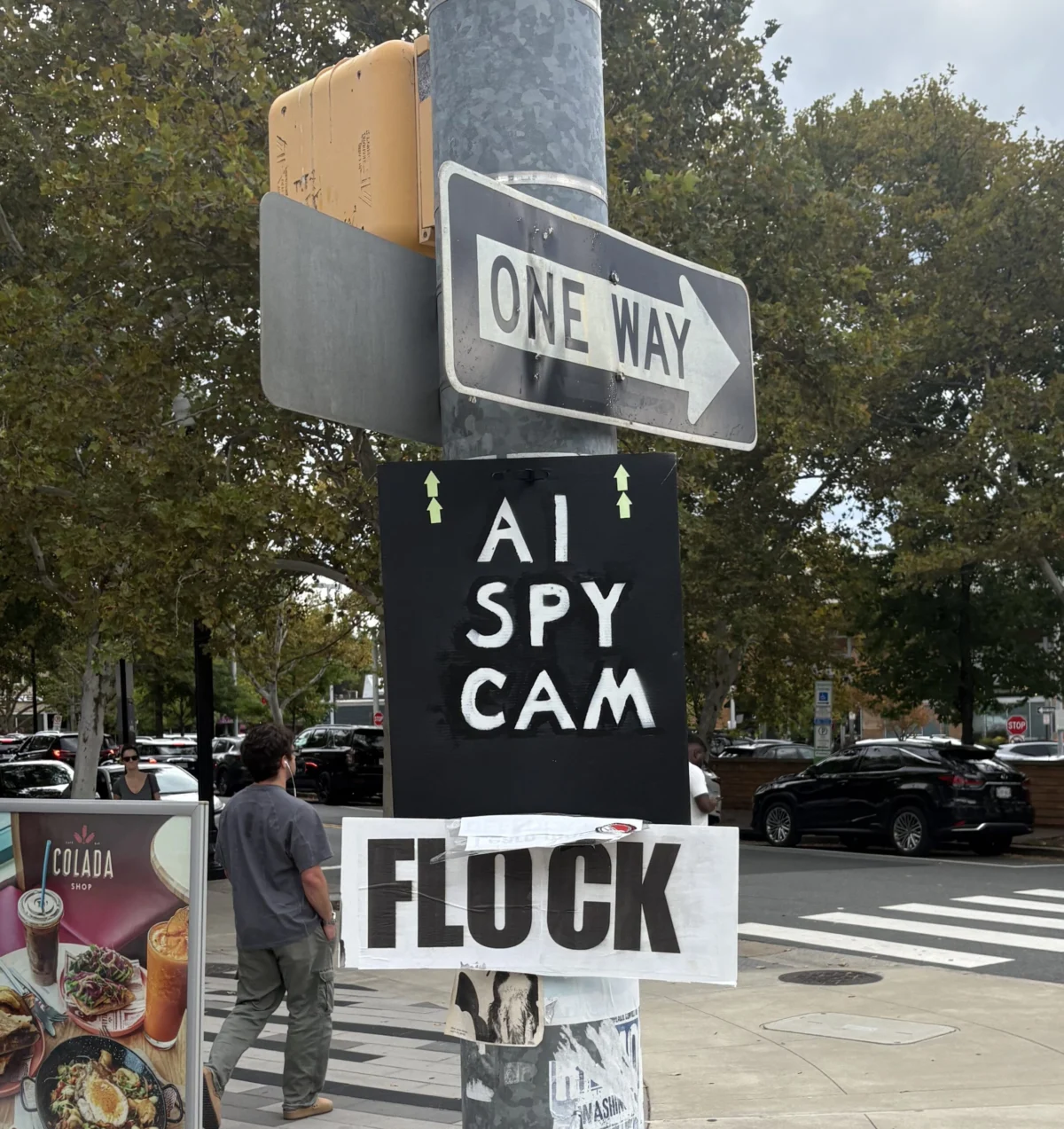
Critics argue that this creates a "persistent tracking" environment. Unlike a traditional security camera that captures a scene, Flock creates a searchable, historical map of a person’s movements. When this data is shared across jurisdictions—or, as the bill fears, accessed by federal agencies—the result is a near-total erosion of vehicular anonymity in public spaces.
Official Responses and Corporate Mitigation
Flock Safety has found itself on the defensive. CEO Garrett Langley, who previously maintained a "hands-off" policy regarding how local agencies utilized his tools, has been forced to pivot toward stricter internal controls to stem the tide of contract cancellations.
In August 2026, Langley announced a reduction in the default data retention period from 30 days to seven days. This change is an attempt to address concerns about "data hoarding." Furthermore, the company has implemented an mandatory audit tool. This system is designed to lock out officers if the AI flags "unusual searches"—a response to the documented abuse of the system by law enforcement personnel.
The most high-profile instance of such abuse occurred in Milwaukee, where a former officer pleaded guilty to misconduct. The officer had used the Flock platform to conduct 179 unauthorized searches on a former partner and her ex-boyfriend, justifying the searches under the generic tag of "investigation."
In a recent podcast appearance, investor Jason Calacanis proposed a "double-key" authentication system, requiring two separate authorizations before an officer can access search results. Langley acknowledged that this concept is currently "on the whiteboard" at Flock headquarters, signaling a potential shift toward more rigid, human-in-the-loop surveillance protocols.
Implications for Public Safety and Civil Liberties
The "Ban Flock Act" represents a fundamental debate in modern governance: at what point does the pursuit of public safety infringe upon the constitutional right to privacy?
The Pro-Security Argument
Proponents of ALPR technology argue that it is an essential tool for modern policing. They point to the high volume of stolen vehicles recovered and the assistance provided in cold cases where license plate data served as the only lead. For these supporters, the legislation is an overreach that would leave communities vulnerable and hinder the ability of law enforcement to act efficiently in an era of limited resources.
The Civil Liberties Perspective
Conversely, privacy advocates—and now a growing contingent of federal lawmakers—argue that the "security vs. privacy" trade-off has been skewed by private corporations. The primary concern is that the technology is being deployed without democratic oversight. When a city council signs a contract with a private vendor, the public is often left out of the conversation regarding how their data is stored, who has access to it, and how long it remains in a searchable database.
The move by Sanders, Ocasio-Cortez, and Merkley suggests that the political wind is changing. By framing the issue as a federal-versus-local rights conflict, they are attempting to force a national conversation on the necessity of surveillance technology. Even if the bill faces long odds in a polarized Congress, its introduction serves as a warning to both the surveillance industry and the law enforcement agencies that rely on it: the era of "move fast and break things" in the realm of public safety is drawing to a close.
Looking Ahead
As the debate intensifies, the technology industry is watching closely. The upcoming TechCrunch Disrupt event, scheduled for October 13–15 in San Francisco, will feature an interview with Langley. The discussion is expected to be a pivotal moment for the company as it attempts to balance its high-valuation growth trajectory with an increasingly hostile regulatory and social environment.
For now, the future of Flock Safety—and the broader ALPR industry—hangs in a delicate balance. Whether they can satisfy the demands of privacy advocates through self-regulation or whether they will be forced to reshape their entire business model by federal law remains the central question of this unfolding technological drama. The "Ban Flock Act" may not be law yet, but it has successfully moved the goalposts for what is considered acceptable in the digital age of American policing.