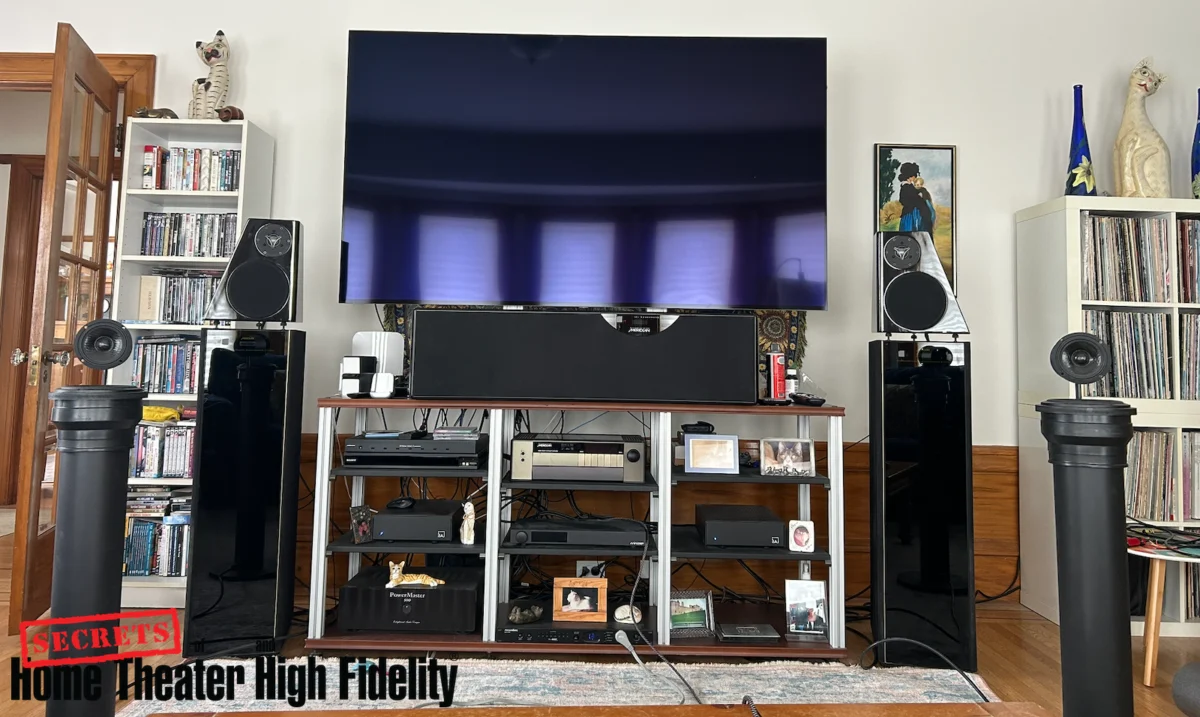
After a meticulous multi-part journey through the acquisition, construction, and configuration of the Linkwitz LXmini loudspeaker kit, we finally arrive at the most rewarding stage: the listening experience. Designed by the late acoustic visionary Siegfried Linkwitz, the LXmini represents a fascinating departure from traditional box-speaker design, aiming to bring high-end, point-source audio performance into the compact environments of modern living spaces. In this final installment, we evaluate whether these diminutive, active, floor-standing monitors live up to their lofty reputation.
Main Facts: The Philosophy of the LXmini
The Linkwitz LXmini is not merely a set of speakers; it is a masterclass in acoustic engineering and deliberate compromise. The design philosophy centers on the goal of achieving a precise, point-source radiation pattern. By mounting a four-inch full-range driver atop a cylindrical enclosure—which doubles as the stand for an upward-firing woofer—the LXmini manages a complex dispersion pattern.

Below the 700Hz crossover point, the woofer operates omnidirectionally, filling the room with low-frequency energy. Above 700Hz, the system shifts to a cardioid radiation pattern, effectively creating a null directly behind the driver. This is a deliberate design choice meant to minimize room reflections and allow for closer proximity to rear walls than would be possible with traditional dipole speakers like the Linkwitz Orion or LX521. For the listener, this means the speakers can be placed in smaller rooms—apartments, home offices, or lofts—without sacrificing the expansive soundstage that defines the Linkwitz aesthetic.
Chronology: From Assembly to Critical Listening
The path to sonic nirvana began with the physical build process, which prioritized structural integrity and precise alignment. Once the cabinets were finished and the drivers mounted according to the manufacturer’s rigorous specifications, the configuration phase began.

Initial setup required careful adherence to the “equilateral triangle” configuration, where the distance between the speakers matches the distance from the listener. Following a period of mechanical break-in, I utilized a MiniDSP UMIK-1 measurement microphone and Room EQ Wizard (REW) software to verify performance. This measurement phase served as the “tuning” step, ensuring that the integration between the drivers was seamless and that the DSP (digital signal processing) crossover settings provided by the manufacturer were properly applied to the hardware. Only after this calibration were we ready to subject the speakers to a wide array of musical genres.
Supporting Data: Measurement and Calibration
To understand the LXmini, one must look at the data. Measurements taken at the listening position reveal a reasonably flat response—centered around 83 dB—from 45 Hz up to 13 kHz. While room-induced peaks and dips are present in the 100–600 Hz range, near-field measurements confirm that the drivers themselves are exceptionally well-behaved.

A notable characteristic of the LXmini is a gentle 3dB downward tilt toward the higher frequencies. This "warm" signature is highly agreeable for long-term listening sessions and provides a sense of low-frequency authority that is often missing in speakers of this physical stature. Regarding distortion, the LXmini is remarkably clean. Even-order harmonic distortion dominates, which is typically perceived by the human ear as non-fatiguing or "musical." A minor 2nd-order harmonic peak near 1,350 Hz was noted, likely a byproduct of the full-range driver’s surround, but it proved to be a negligible issue that did not impact the overall transparency of the sound.
Tuning and Personalization
One of the most profound advantages of the LXmini’s active design is the ability to use DSP to tailor the sound to the room. During my testing with The Dave Brubeck Quartet’s Time Out, I noticed a slight lack of "air" in the upper registers compared to my reference system, which utilizes high-frequency beryllium tweeters.

By utilizing the flexibility of the DSP crossover, I was able to implement a subtle 3dB boost at 50 Hz to add weight to the low end, and a broader 8dB peak at 17 kHz to compensate for the natural roll-off of the four-inch driver. These minor adjustments transformed the listening experience, adding the necessary sparkle to cymbals and reeds without introducing harshness. This level of granular control—the ability to sculpt the frequency response to one’s specific environment—is a feature that passive, analog speakers simply cannot replicate.
Listening Impressions: A Diverse Sonic Journey
To fully understand the capabilities of the LXmini, I put them through a rigorous testing program spanning several distinct musical styles.

Jazz and Atmosphere
On Time Out, the LXminis demonstrated an incredible ability to create a "phantom" image between the speakers. Because the drivers are physically separated from the wall and utilize a point-source configuration, the listener is left with the impression that sound is emanating from thin air, rather than from a box. Paul Desmond’s alto saxophone sounded intimate, communicative, and chillingly realistic.
Folk and Texture
Turning to the intricate, guitar-driven music of Pentangle, the LXminis showcased their transient response. On "The Earle of Salisbury," the juxtaposition between the mellow, resonant guitar and the crystalline, sharp glockenspiel was handled with ease. The speakers maintained high clarity without blurring the distinct textures of the instruments, proving that they are highly capable of reproducing complex acoustic arrangements with natural decay and depth.

The Gritty Reality of Rock
Perhaps the most surprising test was The Stooges’ Fun House. Raw, unpolished, and high-energy, this album demands a speaker that can handle dynamics without falling apart. While the LXminis lack the massive, room-shaking output of larger professional systems like the Meridian DSP6000s, they provided a sense of "groove" that was entirely unexpected. The midrange was punchy, and the vocal grit of Iggy Pop remained clear even amidst the chaotic instrumentation.
Pop and Synthesized Precision
Finally, with Tegan and Sara’s Love You to Death, the speakers proved they could handle modern, synthesized production. The electronic bass lines were punchy and distinct, while the sibling harmonies were rendered with a level of openness that felt effortless. The LXminis handled the abrupt silences and reverberant, panned notes at the end of "Dying to Know" with remarkable composure.

Implications: The Value of the DIY Active Path
The Linkwitz LXmini represents a paradigm shift for the DIY enthusiast. For those who already possess amplification, the investment in a DSP crossover—often costing as little as $225—unlocks a level of fidelity that would typically command a five-figure price tag in the retail market.
The implications for the hobbyist are significant. By choosing this kit, you are not just buying a speaker; you are buying into a design ecosystem that respects the laws of physics while maximizing the utility of the space you have. The cardioid radiation pattern effectively solves the age-old problem of "room gain" and problematic reflections in smaller, non-treated living spaces.

In conclusion, the Linkwitz LXmini is a triumph of thoughtful engineering. While there are inherent limits to what a small, four-inch driver can achieve regarding extreme high-frequency extension or massive subterranean bass, the trade-offs are calculated, intelligent, and ultimately worth it. The LXmini provides a "you are there" sense of presence and imaging that is rare at any price point. For the listener who values transparency, spatial accuracy, and the ability to tune their system to their specific room, the LXmini is not just a recommended build—it is an essential one. It proves that in the world of high-fidelity audio, wisdom and clever design will always outperform brute force and massive cabinets.