HILLS, CALIFORNIA — In the high-end audio world, few names command the immediate reverence associated with REL Acoustics. For decades, the company has operated with a singular, unyielding philosophy: subwoofers should not merely be felt as a physical sensation in the room, but should instead act as a seamless, musical extension of the main loudspeakers.
It has been four years since REL upended the ultra-high-end marketplace with the introduction of the acclaimed No.31 and No.32 Reference subwoofers. At the time, those models were heralded as technological triumphs, setting new benchmarks for speed, harmonic accuracy, and spatial integration. Yet, in the relentless pursuit of sonic perfection, resting on past laurels is not an option.
Quoting REL principal John Hunter, who has long been the creative and engineering heartbeat of the brand: "We don’t stop when the measurements are perfect, we stop when the music is."
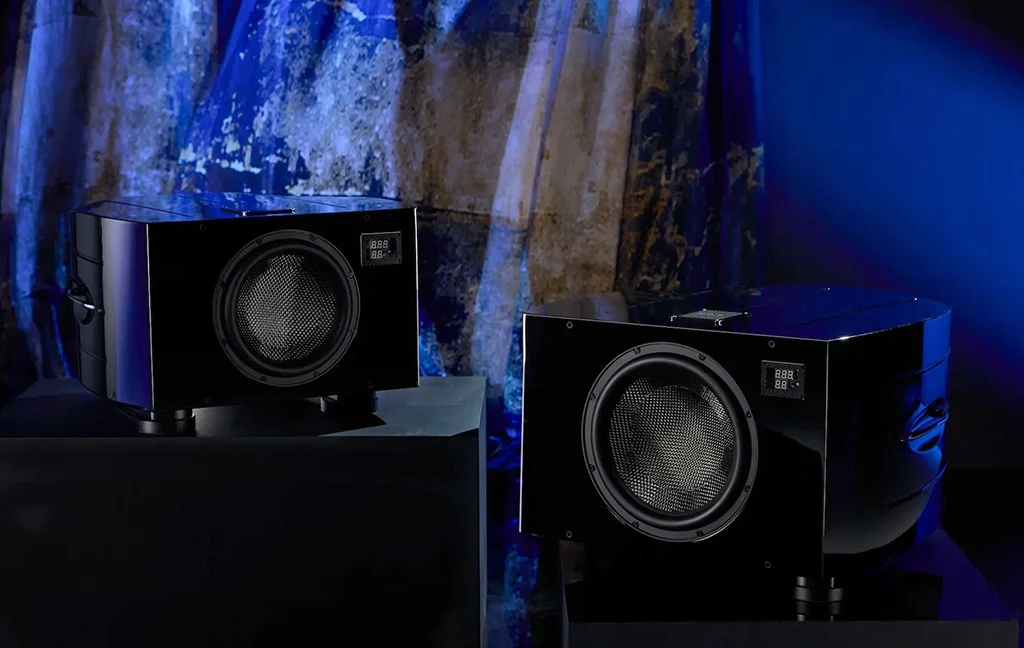
Embodying that ethos, REL Acoustics has officially pulled back the curtain on its next-generation flagship low-frequency engines: the No. 35 and No. 36 Reference Subwoofers. Representing a comprehensive ground-up redesign of their predecessors, these new flagships promise to elevate the state of the art in bass reproduction. To witness the magnitude of these improvements firsthand, audio journalists and industry insiders—including representatives from this publication—have been invited to REL’s headquarters next week for exclusive, side-by-side listening demonstrations pitting the outgoing generation directly against the new titans.
Main Facts
The introduction of the No. 35 and No. 36 establishes a new pinnacle for REL’s elite Reference tier, marrying brute force with surgical delicacy.
- The Flagship Duo: The lineup comprises two distinct models—the compact yet monstrously capable No. 35, priced at $10,000 USD, and the ultimate statement piece, the No. 36, retailing for $12,000 USD. Both models are available immediately through authorized REL Reference dealers worldwide.
- Next-Generation Driver Technology: Both subwoofers are anchored by newly engineered Pure Carbon Fibre drivers specifically developed to handle the immense output demands of REL’s upgraded, high-current hybrid Class AB and Class D amplification platforms.
- Refined Mechanics: The No. 36 features a legendary 15-inch driver architecture that has been substantially advanced through the implementation of a finer 12k carbon fiber weave, a heavily reinforced cone structure, and a completely revised mechanical suspension system designed to yield greater linear travel and tighter magnetic control.
- Enhanced Excursion: The No. 35 benefits from parallel engineering breakthroughs, boasting an astonishing additional 12mm of linear travel in each direction compared to its predecessor. This expanded excursion allows the cabinet to deliver breath-taking scale and physical impact without sacrificing the lightning-fast transient response and micro-dynamic nuance characteristic of the REL Reference lineup.
Chronology: The Evolution of REL’s Reference Tier
To understand the profound significance of the No. 35 and No. 36, it is instructive to look back at the developmental timeline that brought REL Acoustics to this juncture.
The Foundation of Speed (Early Development)
For years, REL’s reputation was built on the premise that traditional subwoofers were too slow, sluggishly lagging behind fast planar-magnetic or electrostatic panels and quick monitor speakers. The company pioneered the "High-Level Connection," drawing signal directly from the amplifier terminals to preserve the exact sonic signature of the electronics driving the main speakers.
The Reign of the No.31 and No.32
Four years ago, REL reached a major milestone with the release of the No.31 and No.32 Reference subwoofers. These units integrated massive carbon fiber cones, sophisticated DSP routing, and wireless capabilities (via REL’s AirShip system) that allowed reference-grade performance to be achieved without unsightly cable runs. These models quickly became the baseline reference standard for high-end stereo and multi-channel mastering studios alike.
The Three-Year R&D Cycle
Immediately following the launch of the No.31 and No.32, REL’s engineering team—led by John Hunter—began a rigorous three-year research and development cycle. Rather than focusing on simple cosmetic changes or superficial power boosts, the team targeted the fundamental physics of transducer behavior under extreme stress. By analyzing thermal compression, cone break-up modes at high velocities, and amplifier-to-driver damping factors, REL laid the groundwork for the drivers used in the No. 35 and No. 36.
The 2026 Global Launch
Today, the culmination of this extensive R&D phase is realized with the commercial release of the No. 35 and No. 36. Shipping immediately to global retail partners, these subwoofers represent the current zenith of REL’s engineering capability.
Supporting Data & Technical Deep Dive
High-end audio consumers shopping in the five-figure price bracket demand absolute transparency regarding engineering choices and performance metrics. REL Acoustics has spared no expense in outfitting the No. 35 and No. 36 with materials and topologies usually reserved for aerospace or laboratory applications.
1. The 12k Pure Carbon Fibre Cone Matrix
In previous generations, carbon fiber was utilized primarily for its exceptional stiffness-to-weight ratio, preventing the cone from flexing or "tinfoiling" under high acoustic pressure. For the No. 36’s massive 15-inch driver, REL engineers specified a much finer 12k carbon fiber weave.
- Stiffness vs. Mass: The finer weave allows for a more uniform distribution of resin across the matrix, optimizing the balance between extreme rigidity and low moving mass.
- Cone Reinforcement: Behind the primary carbon membrane, structural ribs have been redesigned to eliminate standing waves across the cone surface, ensuring pistonic motion deep into the operating frequency range.
2. Suspension and Linear Travel (Excursion)
Driver speed is meaningless if the driver cannot recover instantly or if it distorts at high volumes.
- The No. 35 introduces an enhanced motor structure that grants an additional 12mm of physical travel (excursion) in each direction. This dramatic increase in linear throw allows the smaller cabinet footprint of the No. 35 to displace a volume of air typically reserved for much larger enclosures.
- The No. 36 utilizes a completely revised surround and spider assembly. This new suspension architecture maintains absolute magnetic control over the heavy 15-inch assembly, preventing "bottoming out" during thunderous movie soundtracks or demanding orchestral crescendos, while retaining the micro-dynamics required to render the subtle decay of a bowed acoustic bass.
3. Amplification and Power Delivery
To drive these re-engineered mechanical systems, REL employs ultra-stable, high-current amplification topologies combining the musicality of Class AB stages with the raw efficiency and control of Class D. These amplifiers are direct-coupled to handle the instantaneous transient demands of complex audio signals, ensuring that power is delivered precisely when—and where—it is needed most.
| Feature / Metric | REL No. 35 Reference | REL No. 36 Reference |
|---|---|---|
| Retail Price (USD) | $10,000 | $12,000 |
| Primary Application | Ultra-high-performance stereo & theater | Ultimate reference stereo & multi-channel |
| Driver Material | Next-gen Pure Carbon Fibre | Next-gen 12k weave Pure Carbon Fibre |
| Excursion Metrics | +12mm added directional travel | Advanced high-velocity suspension architecture |
| Amplifier Topology | High-current Class AB/D hybrid | High-current Class AB/D hybrid |
| Availability | Shipping Now | Shipping Now |
Official Responses and Philosophy
To truly grasp the philosophy driving products of this caliber, one must examine the mindset of the design team. John Hunter, whose tenure at REL has defined the modern era of the brand, elaborated on the psychological and artistic barriers the team sought to break down during the creation of the No. 35 and No. 36.
"When people look at specifications sheets, they often get caught up in numbers—frequency response curves, wattage ratings, distortion percentages at nominal levels," Hunter noted in a recent technical briefing. "While those metrics are vital guardrails, they do not tell you how a product makes you feel when the first notes of a cello concerto fill the room, or when the air pressure shifts during a cinematic thunderstorm. Our goal with the No. 35 and No. 36 was to eliminate the last vestiges of mechanical artifice. We wanted the subwoofers to completely disappear, leaving behind nothing except pure, unadulterated musical truth."
REL’s engineering division emphasizes that the improvements found in the new flagships are not evolutionary tweaks designed merely to refresh a product cycle. Rather, they represent a fundamental rethinking of how low-frequency transducers interact with domestic listening environments. By lowering distortion floors and increasing linear control, the No. 35 and No. 36 allow listeners to hear deeper into the acoustic space of the recording venue, lifting a veil off the lowest octaves that many audiophiles did not realize was there.
Implications for the High-End Audio Market
The introduction of the REL No. 35 and No. 36 sends ripples across the upper echelons of the high-end audio landscape, carrying several significant implications for consumers, competitors, and system integrators.
1. Raising the Bar for Reference-Level Two-Channel Audio
For decades, traditional audiophile culture held a skeptical view of subwoofers, frequently blaming them for muddying midrange clarity and bloating upper-bass response. REL has spent years dismantling this prejudice by demonstrating that a properly integrated, lightning-fast subwoofer actually improves the midrange and treble performance of main speakers by unburdening them from low-frequency duty. The No. 35 ($10,000) and No. 36 ($12,000) solidify this philosophy, proving that low-frequency reproduction can match—and in some cases exceed—the speed and transparency of cost-no-object planar or cone loudspeakers.
2. Market Positioning and Pricing Strategy
At $10,000 and $12,000 respectively, the No. 35 and No. 36 occupy the absolute apex of the consumer audio market. They are designed for discerning enthusiasts pairing them with world-class electronics and speakers costing upwards of tens, or even hundreds, of thousands of dollars. By maintaining competitive pricing relative to their predecessors while delivering a quantum leap in engineering execution, REL reinforces its dominant market share in the high-end low-frequency sector.
3. The Future of Multi-Subwoofer Integration
As high-end systems increasingly move toward multi-subwoofer arrays (such as REL’s own Line Arrays), the introduction of drivers with vastly improved linear excursion and control opens up new frontiers for spatial imaging. The ability of the No. 35 and No. 36 to pressurize large rooms effortlessly while retaining pin-point spatial cues means that high-end integrators can create more coherent, immersive soundstages than ever before.
Conclusion
As we prepare to visit REL Acoustics’ headquarters next week for the highly anticipated side-by-side shootout between the outgoing generation and the new flagships, one thing is abundantly clear: the pursuit of musical perfection is a never-ending journey.
The REL No. 35 and No. 36 Reference Subwoofers are not merely electronic appliances designed to rattle walls; they are precision instruments crafted for the uncompromising reproduction of art. For those fortunate enough to own systems capable of revealing their full potential, the No. 35 ($10,000 USD) and No. 36 ($12,000 USD)—available now through authorized REL Reference dealers—promise to unlock dimensions of your music collection you have never experienced before.