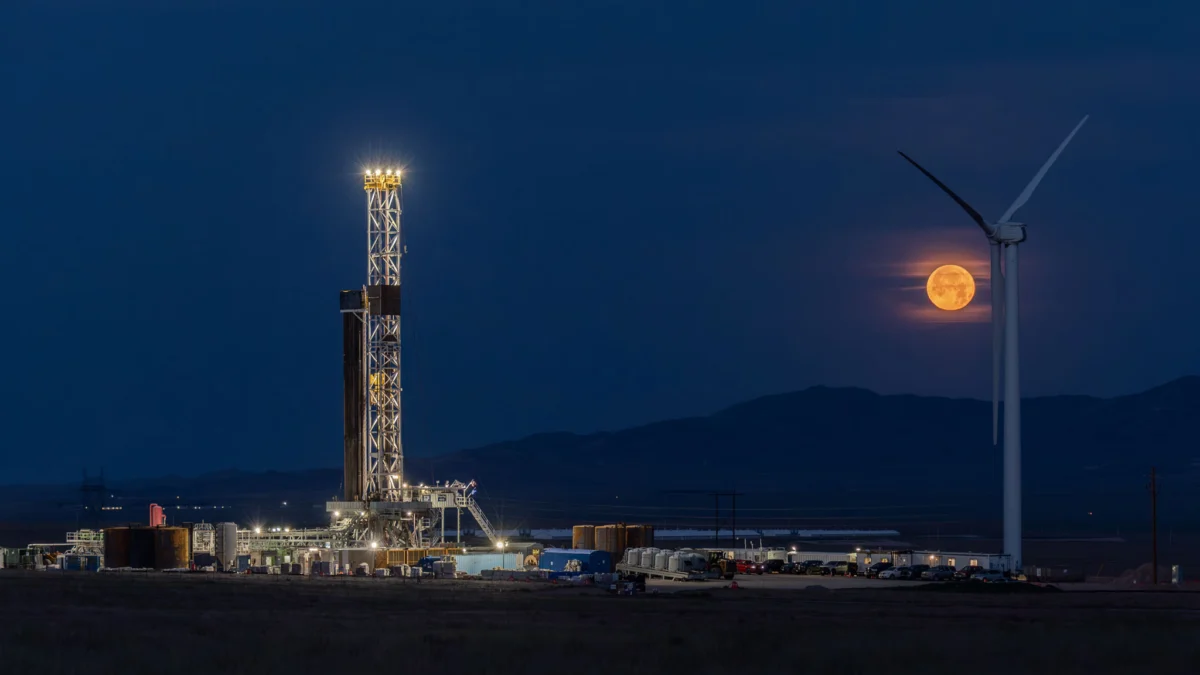
In a landmark development for the global energy transition, Fervo Energy has officially commenced commercial electricity sales from its Cape Station power plant. The milestone, achieved on September 30—one full day ahead of the company’s internal schedule—marks the first time an enhanced geothermal system (EGS) has successfully transitioned to large-scale commercial operations. This achievement signals a potential paradigm shift in how the world approaches 24/7 carbon-free energy, moving beyond the intermittent nature of wind and solar.
The Cape Station project, located in the western United States, successfully synchronized with the regional power grid in late September. This initial deployment represents the first of three planned blocks, bringing roughly 33 megawatts of capacity online. Ultimately, Cape Station is designed to scale to 100 megawatts, with a theoretical long-term potential of up to 4 gigawatts.
The Chronology of Innovation: From Concept to Current
The journey to Cape Station has been marked by rapid iteration and the aggressive application of oil and gas drilling technologies to the renewable energy sector. Founded in 2017, Fervo Energy entered the market with a vision to unlock geothermal heat in areas previously considered geologically unsuitable for traditional, volcanic-adjacent geothermal energy.
- 2017: Fervo Energy is founded, aiming to commercialize EGS by leveraging horizontal drilling and hydraulic stimulation techniques perfected in the fossil fuel industry.
- Early 2024: Construction and drilling operations at the Cape Station site accelerate.
- May 2026: Fervo goes public in a high-profile IPO, raising $1.9 billion, a move fueled by massive investor interest in the nexus of AI demand and clean energy.
- September 2026: Cape Station synchronizes with the grid.
- September 30, 2026: Commercial operations begin, one day ahead of the projected timeline.
The speed of this delivery is notable. From the initial groundbreaking to the delivery of the first electrons to the grid, the first block of Cape Station took only 23 months. Fervo’s leadership has already stated that they are refining their operational processes with the goal of shortening future block development to just 18 months. This "industrialization" of geothermal development is critical if the technology is to achieve the scale required to displace coal and natural gas baseload power.
Supporting Data: Why Enhanced Geothermal Matters
Traditional geothermal power has long been limited by geography. It relies on finding naturally occurring steam or hot water near the Earth’s surface—a rare phenomenon typically restricted to tectonic boundaries. Enhanced Geothermal Systems (EGS) fundamentally change this equation by drilling deeper into "hot dry rock" (HDR).
By utilizing horizontal drilling, Fervo can create a subsurface reservoir by injecting water into hot, impermeable rock, circulating it through a network of fractures, and bringing it back to the surface as heated fluid to drive turbines.
Key Performance Metrics:
- Scalability: While current output is measured in tens of megawatts, the site’s 4-gigawatt potential rivals the capacity of large-scale nuclear or hydroelectric facilities.
- Efficiency: By drilling deeper, Fervo accesses higher temperature gradients, which significantly increases the thermal-to-electric conversion efficiency compared to shallow-tapped sources.
- Financial Backing: The company has secured over $1.3 billion from a consortium of elite climate investors, including Breakthrough Energy Ventures, Congruent Ventures, and Capricorn Investment Group, validating the technical feasibility of their drilling methods.
Official Responses and Strategic Vision
The completion of Cape Station has been met with both professional pride and industry-wide relief. For many energy analysts, geothermal has long been the "holy grail" of renewables: a source that is always on, weather-independent, and carbon-free.
"No team has ever built a project like this anywhere in the world, and we did it ahead of schedule," said Tim Latimer, Fervo’s co-founder and CEO, in a statement. "This proves that the technology is ready for prime time and that the modular nature of our design allows us to scale rapidly to meet the unprecedented demand for 24/7 power."
The market appetite for Fervo’s product is immense. Major corporations, including Google, have entered into power purchase agreements (PPAs) with Fervo. Southern California Edison has also signaled its intent to integrate this geothermal capacity into its portfolio to help meet stringent state-mandated carbon reduction goals. These partnerships provide the long-term revenue certainty required to fund the massive upfront capital expenditures involved in deep-well geothermal drilling.
Implications for the AI and Data Center Economy
Perhaps the most significant implication of Fervo’s success is the impact on the data center industry. As the artificial intelligence boom accelerates, the energy footprint of hyperscale data centers has become a primary constraint on growth.
The Power-Starved Data Center Crisis
Current data centers require a constant, steady stream of power. While solar and wind are cheap, they suffer from intermittency, requiring expensive and still-developing battery storage solutions to maintain operations at night or during low-wind periods. Geothermal provides a "baseload" profile—it is available 24 hours a day, 365 days a year.
The "phased" deployment model of Cape Station is perfectly suited for the needs of data center operators. As these companies build out their server capacity in stages, they can secure additional blocks of geothermal power in tandem with their server rack expansion. This alignment of energy procurement with physical infrastructure expansion offers a degree of synchronization that traditional power plant development—which often involves massive, singular, decade-long projects—cannot provide.
The Road Ahead: Challenges and Prospects
While Cape Station is a triumph, it is merely the first step. The broader geothermal industry faces several hurdles that will define the next decade of development.
- Drilling Costs: Despite the success of oil and gas techniques, drilling in hard, hot crystalline rock is significantly more expensive and technically challenging than drilling for hydrocarbons. Reducing the cost per megawatt-hour is the primary hurdle for long-term competitiveness.
- Seismic Concerns: As with any technology involving subsurface fluid injection, managing induced seismicity remains a critical environmental and regulatory focus. Fervo and its peers must maintain rigorous monitoring and safety standards to ensure public and regulatory support.
- Policy and Permitting: Scaling EGS to the level of gigawatts will require significant federal and state support regarding land use, environmental impact assessments, and grid interconnection. The bureaucratic timeline for permitting often exceeds the engineering timeline for construction—a disconnect that will need to be addressed at the policy level.
Conclusion
Fervo Energy’s successful launch of Cape Station proves that the engineering barriers to deep-crust geothermal power are falling. By treating geothermal energy as a manufacturing challenge—something to be built in repeatable, modular blocks rather than bespoke, one-off projects—Fervo has set a new standard for the renewable sector.
As the world scrambles to meet the dual challenges of an AI-driven energy surge and an urgent climate crisis, the ability to tap the Earth’s own heat represents one of the most promising avenues for long-term, sustainable prosperity. If Fervo can maintain this momentum and continue to shorten its deployment cycles, the 2020s may well be remembered as the decade when geothermal power finally moved from the margins of the energy mix to the very center of the global power grid.