Main Facts
The portable audio market continues to expand with innovative releases, and the introduction of the ARIA Ear Azuri marks a notable entry from a burgeoning region in the audiophile landscape. Priced competitively at $135.00, the Azuri is a single dynamic driver In-Ear Monitor (IEM) developed in Vietnam.
At its core, the Azuri utilizes a bespoke 10mm metal-composite lithium-magnesium diaphragm driver, engineered to marry the structural rigidity of magnesium with the acoustic damping properties of lithium. This combination is designed to deliver a remarkably natural, non-metallic timber.

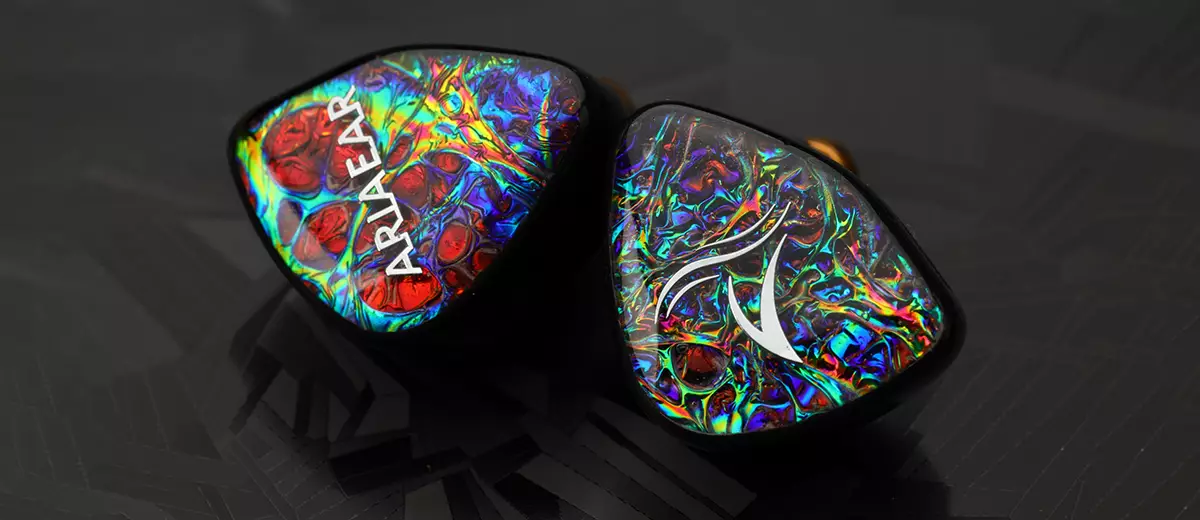
Structurally, the IEM features a 3D-printed resin shell accented by a vibrant, universe-inspired faceplate design. Acoustic innovations include dual Helmholtz resonance chambers built to minimize unwanted peaks around the 5 kHz and 6.2 kHz ranges, a proprietary "Ribbon Waveguide System" to absorb back waves for reduced distortion, and a metal damping system designed to maintain high-frequency stability over time—avoiding the degradation associated with traditional paper or cloth dampeners.
Key technical specifications include an impedance of 16Ω and a sensitivity rating of 106 dB/mW at 1 kHz, ensuring easy drivability across a wide array of source gear.

Chronology and Review Methodology
The evaluation of the ARIA Ear Azuri followed a rigorous, multi-stage audiophile testing process conducted by reviewer Marcelo:
- Unboxing and Inspection: The review sample arrived via a structured, sleeved packaging experience. Inspection confirmed the inclusion of a 6N OCC copper stock cable (terminated with a 3.5mm plug and 0.78mm 2-pin connectors), six pairs of interchangeable ear tips, a leather hard-shell carrying case, and a microfiber cleaning cloth.
- Burn-in Phase: Prior to critical listening, the Azuri underwent a standard 24-hour burn-in period, which yielded a subtle smoothing of overall transient responses, as is common with single dynamic driver configurations.
- Source Matching and Playback: Critical listening sessions utilized a diverse suite of high-resolution source devices, including the iBasso DC-Elite, MUSE HiFi M6 Double DAC amplifiers, and the FiiO M15S Digital Audio Player (DAP). Playback sources spanned local files and streaming services via YouTube Music, USB Audio Player PRO (UAPP), and PowerAmp, entirely unassisted by software equalization.
- Acoustic Measurement: Frequency response and channel-matching analyses were conducted to verify acoustic performance, production quality, and the real-world impact of the driver’s physical architecture.
Supporting Data and Acoustic Analysis
Laboratory measurements and extended listening tests paint a clear picture of the Azuri’s sonic profile.

Frequency Response and Channel Matching
Frequency response measurements revealed exceptional channel matching, pointing to strict quality control standards during the manufacturing process. The acoustic profile exhibits a mild-to-moderate V-shaped signature, anchored by a 10 dB sub-bass boost and a carefully calculated pinna compensation peak at 2.5 kHz.
While measurements indicated an 8 kHz peak, further analysis confirmed this to be a measurement artifact resulting from driver-to-microphone resonance within a confined testing chamber, proving entirely inaudible during actual playback.

Sound Profile Breakdown
- Bass: The low end is defined by a balanced relationship between the sub-bass and mid-bass regions. Listeners will experience a tight, punchy, and deep low-frequency foundation characterized by an assertive initial attack followed by a heavy sub-bass wave, entirely devoid of muddy or bloated overhang.
- Midrange: Despite the mild V-shape, the midrange remains remarkably clear. Thanks to a measured elevation in the upper-midrange, vocals and lead instruments push forward with impressive articulation without tipping into aggressive shoutiness or listener fatigue—a testament to the effectiveness of the dual Helmholtz chambers and back waveguide system.
- Treble: The upper registers extend smoothly with natural air and transparency. Without resorting to harsh spikes to manufacture artificial detail, the Azuri delivers clean, high-resolution treble that avoids the typical high-frequency roll-off common in budget-to-midrange single dynamic driver IEMs.
Soundstage and Technicalities
The Azuri avoids artificial soundstage widening via DSP or phase manipulation, instead relying on its low-distortion driver array to project a holographic, well-rounded soundstage featuring balanced width, height, and depth. Imaging precision is high, allowing complex instrument separation and spatial layering to remain intact even in dense musical passages. Furthermore, the driver exhibits immense dynamic headroom, maintaining distortion-free playback even at elevated listening volumes.
Official Responses and Manufacturer Intentions
ARIA Ear designed the Azuri with a clear mandate: to push the performance envelope of single dynamic driver configurations by addressing historical acoustic pain points.

According to company design notes, the primary engineering hurdle for single dynamic drivers involves managing high-frequency breakups and internal reflections without relying on traditional porous dampening materials (such as paper or felt) that degrade when exposed to ear moisture and humidity over time. By implementing a solid metal damping system alongside custom internal acoustic labyrinth pathways—specifically the Ribbon Waveguide System and dual Helmholtz resonance chambers—ARIA Ear sought to secure long-term acoustic consistency while lowering total harmonic distortion.
The choice of a lithium-magnesium alloy diaphragm further highlights the brand’s commitment to premium material science, balancing lightweight agility with internal material damping to eliminate the tinny, metallic artifacts often plaguing metal-domed drivers.

Implications for the Personal Audio Market
The release of the ARIA Ear Azuri at the $135.00 price point carries several important implications for the global portable audio community:
1. Diversification of the IEM Origin Landscape
While Chi-Fi (Chinese-manufactured audio gear) has historically dominated the entry-to-mid-tier IEM market, the emergence of competitive, technically proficient options from countries like Vietnam proves that quality acoustic engineering is becoming increasingly decentralized. This fosters healthier global competition and broadens design philosophies.

2. The Resurgence of the Single Dynamic Driver
Multi-driver hybrid and planar-magnetic IEMs have saturated the market in recent years, but models like the Azuri remind consumers of the coherent timbre, phase consistency, and natural decay unique to a well-optimized single dynamic driver. By solving traditional single-DD limitations through advanced acoustic chamber design, manufacturers are breathing new life into classic transducer architectures.
3. Value Realization in the Mid-Tier Segment
At $135, the Azuri steps into a fiercely contested bracket traditionally occupied by established heavyweights from brands like FiiO, Hidizs, and TinHiFi. Its combination of an energetic yet balanced tuning, premium 6N OCC copper stock cable, comprehensive accessory package, and meticulous build quality raises the bar for what consumers can expect from mid-tier audio products.

Ultimately, the ARIA Ear Azuri stands out not merely as an alternative choice, but as a compelling daily driver for listeners seeking engaging musicality, technical precision, and sophisticated craftsmanship.