By Jeff Dorgay
Photos courtesy of Laura Berbaum
Main Facts
The high-end audio community has long held a complicated, reverent relationship with electrostatic loudspeakers. While celebrated for their peerless midrange transparency, lightning-fast transient response, and startling lack of cabinet coloration, traditional electrostatics have historically demanded severe compromises. They were often fragile, power-sensitive, dynamically constrained at the frequency extremes, and notoriously polite—incapable of convincingly reproducing large-scale rock or heavy orchestral music at life-like volumes.
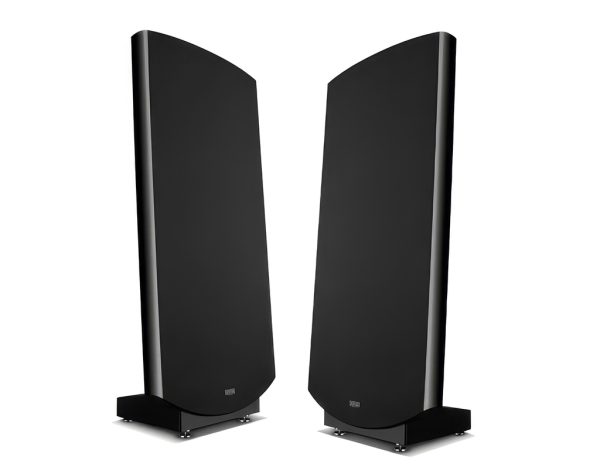
Enter the new Quad ESL-2912X, a loudspeaker poised to fundamentally rewrite the rules of electrostatic design.
Priced at approximately $18,000 per pair and distributed stateside via MoFi Distribution, the 2912X was recently showcased at a high-profile industry event hosted by Upscale Audio. During a private, post-show listening session, the new flagship electrostats demonstrated a startling capability: they retain the legendary, goosebump-inducing tonal purity and transparency of historic Quad models, while dramatically expanding frequency extension, dynamic headroom, and overall robustness.
Driven by the muscular Musical Fidelity M8XI integrated amplifier (retailing for roughly $7,999 and supplied by Harmonia Distribution), the Quad 2912X proved that modern electrostatic panels can finally deliver the best of both worlds: ethereal, microscopic detail retrieval paired with the visceral, driving energy required to rock out to the Rolling Stones.
Chronology of an Extended Listening Session
The opportunity to experience the Quad ESL-2912X came at the tail end of a bustling industry showcase at Upscale Audio. With the exhibition doors closed and attendees filtering out, an invaluable hour of uninterrupted, private listening time materialized.
Having spent decades evaluating high-end gear—with both original Quad ESL-57s and ESL-63s serving as long-term reference points in the TONE audio labs—the "Quad sound" is deeply etched into long-term memory. Approaching the 2912X therefore carried both high expectations and a healthy dose of historical context.
Setting the Stage
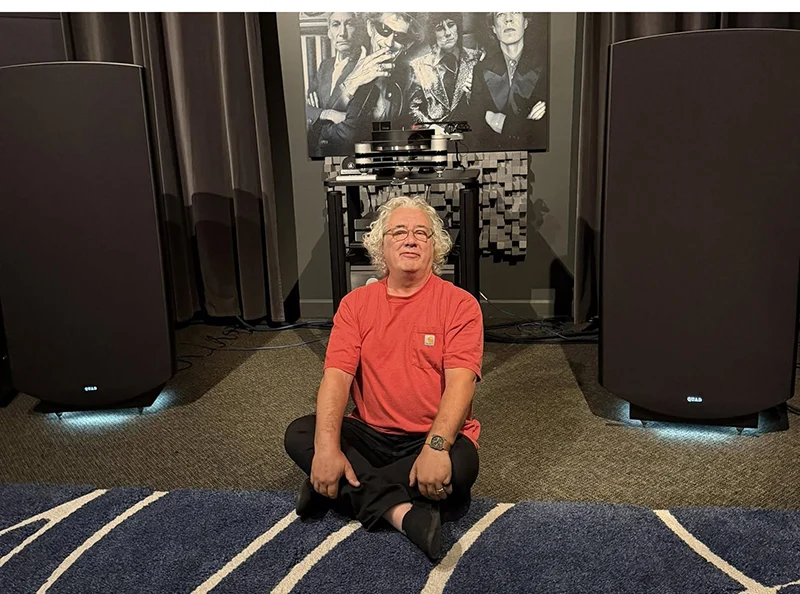
Positioned gracefully between a large, striking portrait of the Rolling Stones on the showroom wall, the towering electrostatic panels immediately commanded visual and acoustic presence. The system architecture was refreshingly straightforward yet intensely capable:
- Speakers: Quad ESL-2912X ($18,000/pair)
- Amplification: Musical Fidelity M8XI Integrated Amplifier ($7,999, courtesy of Harmonia Distribution)
- Music Selection: A carefully curated, rapid-fire playlist of well-known reference tracks spanning acoustic jazz, complex electronica, and classic rock.
The Audition Begins
The listening session commenced with Keith Richards’ solo track, “Wicked as It Seems.” Historically, playing dynamic, electric-guitar-driven rock through electrostatic panels was a nerve-wracking gamble—one often ending in arcing stators, fried protection circuits, or a severely compressed, anemic presentation.
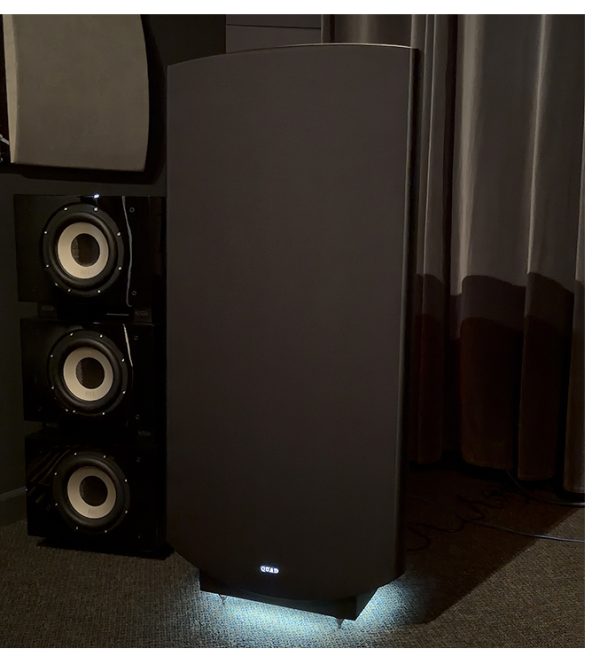
Not so with the 2912X. From the opening notes, the speakers constructed a massive, three-dimensional soundstage that defied physical boundaries. There was an unexpected, authoritative bass grip anchoring the track, filling the room with weight and momentum.
The Hour That Vanished
As the playlist zipped through roughly a dozen rigorous reference cuts, time warped in the peculiar way it often does during transcendent musical experiences. The hour evaporated with the velocity of a morning alarm clock’s snooze button.
Track after track revealed a level of micro-detail and tonal naturalness that completely eclipsed similarly priced traditional box speakers. More importantly, the session highlighted a distinct paradigm shift: these speakers did not merely track delicate acoustic passages with finesse; they rocked with genuine authority, urging the listener to push the volume potentiometer further than conventional wisdom ever allowed with older electrostatic designs.
Supporting Data and Technical Context
To truly understand the achievement of the Quad ESL-2912X, one must examine its technological lineage and the supporting hardware that unlocked its performance.
The Evolution of the "Quad Thing"
- The Original Quad ESL-57 (1957): Universally praised for its midrange purity, it set an enduring benchmark for vocal reproduction. However, its frequency extremes rolled off sharply, its maximum output levels were strictly limited, and its low-impedance dips made early tube and solid-state amplifiers prone to instability or destruction.
- The Intermediate Generations (ESL-63 and beyond): Peter Walker’s introduction of concentric delay lines solved major dispersion and phase issues, but subsequent non-X iterations occasionally earned a reputation among critics for being overly restrained or "polite."
- The New ESL-2912X: The latest iteration captures an estimated 92% of the pure, unfiltered magic of the original 57, while rectifying its historical limitations. It delivers significantly greater extension at both frequency extremes and a vastly widened dynamic swing.
Amplification Matching: Current is King
A common misconception among audiophiles is that electrostatic speakers require delicate, low-wattage tube amplification to survive. While early Quads were notoriously fragile, modern iterations—particularly the X series—thrive when paired with high-current, high-damping-factor solid-state powerhouses.
While reference testing has previously shown that legendary powerhouses like the Pass Labs XS300 monoblocks can coax absolute glory out of Quad panels (such as the author’s personal 2812s), the Musical Fidelity M8XI proves to be a far more practical, real-world solution. Providing robust power delivery and exceptional grip, the M8XI extracts the ultimate performance from the panels without requiring a six-figure supporting cast.
Value Proposition in the Modern Market
Consider the arithmetic of assembling a world-class front-end system around the Quad ESL-2912X:
- Speakers: Quad ESL-2912X — ~$18,000/pair
- Amplification: Musical Fidelity M8XI — $7,999
- Analog/Digital Front-End: Choice sources — $5,000 to $10,000
- Total System Investment: Roughly $31,000 to $36,000.
In the rarefied air of ultra-high-end audio—where flagship box loudspeakers routinely cross the $50,000 to $100,000 threshold—a complete, reference-grade system anchored by the 2912X offers staggering sonic return on investment, rivaling the financial footprint of a Certified Pre-Owned (CPO) BMW 3-Series.
Comparative Analysis: Electrostatic Competitors
When evaluating full-range or hybrid electrostatic and planar-magnetic alternatives, the Quad ESL-2912X carves out a distinct sonic identity that outclasses prominent rivals in specific, critical metrics.
Quad vs. MartinLogan (Hybrid Electrostatics)
While MartinLogan loudspeakers are celebrated for their seamless integration of dynamic woofers with electrostatic panels—often yielding deep, thunderous bass extension—they frequently exhibit a distinct tonal discontinuity. The transition point between the fast, weightless electrostatic panel and the heavier, magnetic cone woofer can sometimes be perceived.
By contrast, the Quad ESL-2912X utilizes a full-range electrostatic panel array philosophy. The result is a level of homogenous tonal purity across the entire frequency spectrum that hybrid designs simply cannot replicate.
Quad vs. Magnepan (Planar-Magnetic Dipoles)
Magnepan planar-magnetic speakers offer incredible soundstage width, dipolar immersion, and exceptional value. However, they operate on a different mechanical principle—using voice coils attached to a mylar film suspended in a magnetic field, rather than high-voltage electrostatic charges.
While Magnepans excel at scale and physical presence, they do not approach the microscopic transparency, lightning-fast transient snap, and absolute vanishing act achieved by a well-designed electrostatic panel like the Quad.
Implications for the Audiophile Community
The arrival of the Quad ESL-2912X carries profound implications for enthusiasts who have long admired the electrostatic sound but hesitated due to practical limitations.
- The Death of the "Polite" Stereotype: For decades, electrostatic owners had to accept a trade-off: breathtaking midrange beauty in exchange for dynamic compression and an inability to play contemporary genres at engaging volumes. The 2912X proves that modern materials science and rigorous electrical engineering can eliminate this compromise, allowing listeners to enjoy everything from delicate chamber music to high-decibel rock without fear of failure or dynamic starvation.
- Redefining Value in Reference Systems: At $18,000, the 2912X is undeniably a luxury investment, yet it undercuts many flagship dynamic loudspeakers while offering a level of clarity, detail, and lack of cabinet coloration that boxes physically cannot achieve.
- A Call to Reconsider Dipolar Panels: Listeners who abandoned electrostatics years ago—or those who assumed box speakers were the only viable path to full-scale musical engagement—now have compelling empirical reason to revisit the technology.
Conclusion and Verdict
Are the Quad ESL-2912X your dream speakers come true? For anyone who values absolute transparency, uncolored vocal reproduction, and true-to-life soundstaging, the answer leans heavily toward a resounding affirmative.
While a formal, long-term review pair is slated for the TONE audio labs soon, initial impressions from the Upscale Audio showcase leave little room for doubt. Maintaining the ethereal magic of the past while finally embracing modern rock-and-roll dynamics, the Quad ESL-2912X earns an unreserved, highest-level recommendation.
As acoustic benchmarks go, these legendary panels have not merely been updated—they have been triumphantly reborn.
Product Specifications:
- Model: Quad ESL-2912X Electrostatic Loudspeakers
- Estimated Retail Price: $18,000 / pair
- US Distribution: MoFi Distribution (mofidistribution.com)
- Featured Partner Equipment: Upscale Audio (upscaleaudio.com); Musical Fidelity M8XI via Harmonia Distribution (harmoniadistribution.com)