Main Facts
In the rarefied world of ultra-high-end analog audio, a $19,000 price tag usually signals the beginning of an arduous relationship. Audiophiles who invest heavily in flagship turntables are typically greeted by massive crates filled with separate motor housings, complex suspension systems, heavy platter assemblies, and intricate tonearm alignments that require laser-guided precision, protractors, microscopes, and hours of painstaking calibration.
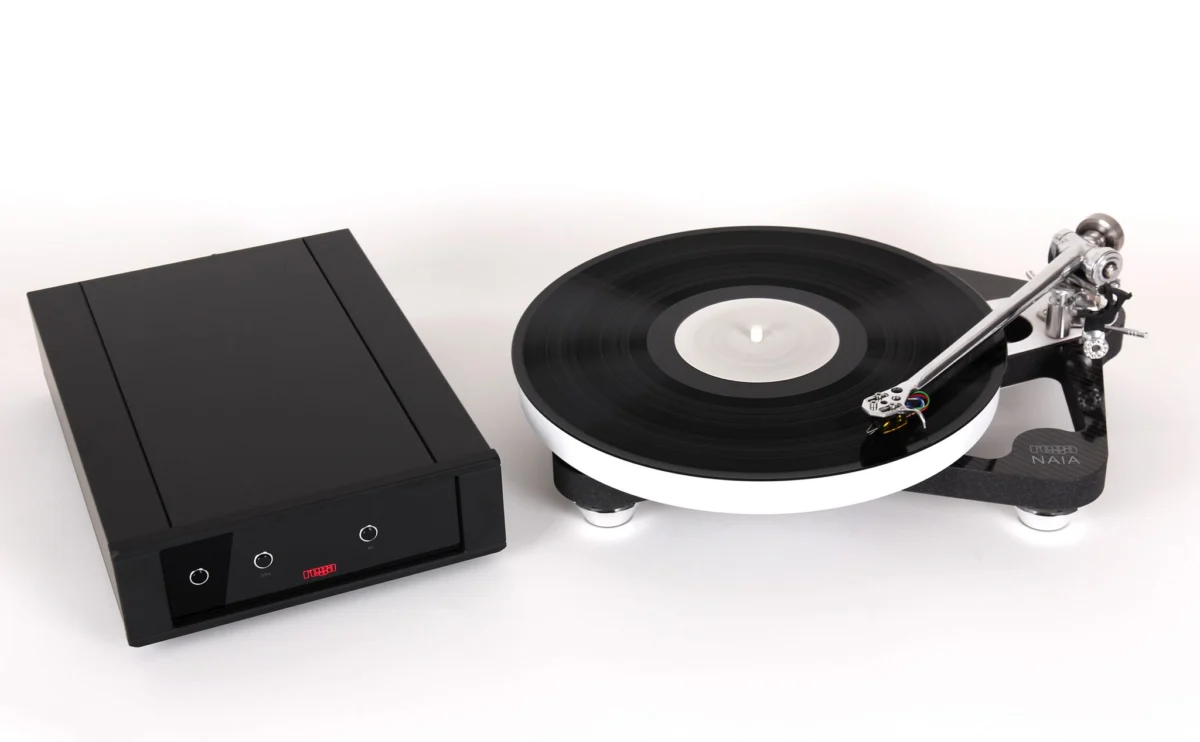
Enter the Rega Naia flagship turntable, paired with the Aphelion 2 moving coil (MC) cartridge, retailing at approximately $19,000. Far from being just another ultra-expensive spinner chasing the diminishing returns of analog reproduction, the Naia upends the traditional paradigm of the ultra-high-end turntable market. Its core proposition is disruptive: it delivers the performance of a $50,000 reference-grade turntable system, yet boasts a "fiddliness factor" of absolute zero.
Out of the box, the Naia requires virtually no complex assembly or agonizing alignment rituals. The user simply unboxes the unit, sets the tracking force, and begins playing records. For experienced audiophiles accustomed to the meticulous, nerve-wracking setup processes required by similarly priced competitors, this level of plug-and-play convenience is nothing short of revolutionary.
Crucially, while the Naia can be purchased as a standalone deck—saving buyers roughly $4,000—industry experts strongly advise opting for the pre-mounted Aphelion 2 MC cartridge bundle. Tailor-made for the Naia’s arm and bearing assembly, the cartridge eliminates the hazardous guesswork of mounting and aligning a delicate stylus, allowing listeners to immediately tap into the system’s full sonic potential. Beneath its deceptive visual resemblance to Rega’s more humble Planar 8 and Planar 10 models lies an entirely re-engineered, no-compromise masterpiece of materials science and precision engineering.
Chronology
The journey toward the Rega Naia is a story of decades-long patience, relentless engineering refinement, and a stubborn refusal to accept the conventional wisdom that high performance requires high complexity.
The Genesis: The Naiad Prototype (Two Decades Ago)
The conceptual roots of the Naia stretch back twenty years. During a visit to the home of Rega founder Roy Gandy, industry insiders first laid eyes on the original Naiad prototype. At the time, it was little more than an ambitious concept hanging on the wall of Gandy’s listening room—a visionary design that pushed the boundaries of lightweight, rigid engineering well beyond what commercial manufacturing could support at the time.
The Ultra-Exclusive Naiad Limited Run
Years later, Rega translated the radical concepts of the Naiad prototype into a strictly limited-edition ultra-turntable. Priced astronomically and produced in vanishingly small numbers, the original Naiad proved that Rega’s design philosophy—rejecting the heavy-mass philosophy adopted by much of the high-end audio industry in favor of extreme structural rigidity combined with low mass—could yield world-class results. However, its rarity meant that very few audiophiles ever got to experience it outside of dedicated trade shows or elite listening rooms.
The Commercial Realization: The Birth of the Naia
Recognizing the technological breakthroughs achieved during the development of the Naiad, Rega’s engineering team set out to distill those lessons into a production-ready flagship that could be manufactured reliably without compromising its core performance tenets. The result is the Rega Naia, a turntable that bridges the gap between the ultra-exclusive Naiad and Rega’s commercially available high-end lineup.
Arrival at the Testing Lab (Present Day)
The review sample of the Rega Naia, equipped with the Aphelion 2 MC cartridge and supplied by American distributor The Sound Organisation, arrived at the test bench. Following two weeks of intensive listening, comparative testing, and technical evaluation, the early consensus among reviewers is unanimous: the Naia represents a monumental leap forward for Rega, outperforming every previous production model in the company’s illustrious history.
Supporting Data and Technical Architecture
To understand why a $19,000 Rega turntable can compete sonically with systems costing upwards of $50,000, one must examine the staggering depth of engineering and materials science poured into every square millimeter of the deck.
The Low-Mass, High-Rigidity Philosophy
While many high-end audio brands subscribe to the "massive plinth and heavy platter" school of thought—arguing that weight dampens resonance—Rega has long championed the opposite approach: “Mass absorbs energy—lost energy equals lost music.”
The Naia takes this philosophy to its absolute zenith. Its skeletal plinth is constructed from an advanced graphene-impregnated carbon fiber core, framed in a high-tech structural skin. This material combination yields an astonishing strength-to-weight ratio. The plinth is exceptionally stiff, preventing micro-flexing that can smear transient details, while remaining remarkably light to prevent energy storage within the chassis.
Ceramic Bracing and Precision Bearings
To further enhance structural integrity, the Naia utilizes custom ceramic top and bottom braces, forming a stressed beam structure precisely where the bearing housing and tonearm mounting platform meet. This creates a closed-loop mechanical path, ensuring that any microscopic relative movement between the stylus and the record groove is kept to an absolute minimum.
The central bearing assembly is another marvel of micro-mechanics, utilizing a zirconium-toughened alumina (ZTA) spindle and matching bearing sleeve, offering extreme hardness, wear resistance, and low friction.
The Aphelion 2 Moving Coil Cartridge
At the business end of the system sits the Aphelion 2, Rega’s flagship moving coil cartridge. Representing a significant evolutionary step over its predecessor, the Apheta 3, the Aphelion 2 brings enhanced refinement, richer tonal body, and a wider dynamic envelope to the analog chain.
Key technical attributes of the Aphelion 2 include:
- Hand-wound micro-coil: Mounted on a unique, iron cross-pivot that is significantly smaller than standard designs, drastically reducing moving mass and improving trackability.
- Boron cantilever: Offering supreme rigidity-to-weight performance, translating groove modulations into electrical signals with virtually zero flex-induced distortion.
- Fine-line diamond stylus profile: Designed to track the most intricate high-frequency modulations nestled deep within the vinyl groove with microscopic accuracy.
Value Proposition Matrix
When evaluated against the broader ultra-high-end audio landscape, the Naia’s economic and operational footprint presents a compelling case:
| Feature / Metric | Traditional $50k Reference Turntable | Rega Naia ($19,000 with Aphelion 2) |
|---|---|---|
| Setup Complexity | High (Hours of calibration, alignment tools required) | Zero (Plug-and-play, factory-aligned cartridge) |
| Component Matching | Requires separate arm and cartridge selection | Harmonized system engineered as a single unit |
| Floor Space / Weight | Massive, often requires specialized heavy-duty racks | Compact footprint, lightweight skeletal design |
| Maintenance | Frequent adjustments of suspension, belt tension, and alignment | "Set and forget" reliability |
Official Responses and Industry Reception
The introduction of the Naia has sent ripples of excitement throughout the high-end audio community, earning praise from critics, distributors, and reviewers alike.
The release has been heavily supported by The Sound Organisation, Rega’s North American distributor, which facilitated the arrival of the review unit. In statements regarding the reception of the Naia, industry veterans have highlighted how the turntable successfully bridges the gap between ultra-performance and consumer accessibility.
Early reviewers have noted that the Naia’s sonic signature delivers a rare combination of breathtaking dynamic range, pinpoint imaging, and an effortless musical flow that avoids the clinical, fatiguing presentation sometimes associated with ultra-detailed reference systems.
Furthermore, industry commentators have remarked on the emotional resonance of seeing Roy Gandy’s two-decade-old vision—once just a prototype hanging on a wall—finally manifested in a form that audiophiles worldwide can actually purchase and enjoy without needing an engineering degree to operate.
Implications
The arrival of the Rega Naia carries profound implications for both the high-end audio market and the broader community of vinyl enthusiasts.
1. Challenging the Myth of Complexity
For too long, the ultra-high-end audio sector has relied on a culture of esoteric complexity to justify exorbitant price tags. By proving that reference-grade analog playback can be engineered into a turnkey, hassle-free package, Rega challenges competitors to rethink their product designs. The Naia suggests that the future of luxury audio lies not in how many adjustments a user must make, but in how effectively the manufacturer has engineered those adjustments out of the equation.
2. The "Stealth Upgrade" Phenomenon
As noted by early reviewers, the Naia shares a striking visual language with Rega’s more affordable Planar 8 and Planar 10 turntables. For married audiophiles or those sharing living spaces with partners skeptical of ever-expanding audio budgets, this understated aesthetic provides a unique tactical advantage. Upgrading from a P8 or P10 to a Naia allows an owner to slip a $19,000 reference machine past household scrutiny under the comforting guise of "ignorance."
3. Redefining Value at the Summit
While $19,000 is undeniably a vast sum of money, in the context of modern flagship audio—where digital transports, amplifiers, and turntables frequently cross the six-figure threshold—the Naia occupies a disruptive space. By delivering performance that rivals systems costing upwards of $50,000 while eliminating the hidden costs of separate tonearm selection, cartridge matching, and professional setup, the Naia emerges as one of the most compelling value propositions at the absolute summit of analog reproduction.
As full-length reviews roll out in the coming weeks, the Rega Naia is widely anticipated to sweep major industry awards, cementing its status as a landmark achievement in the history of vinyl playback.