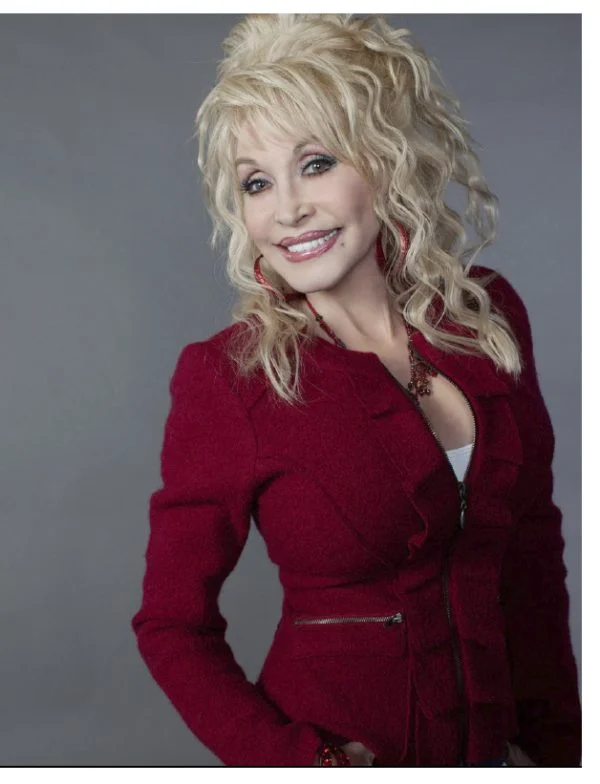
Main Facts: The Legend of a Working-Class Icon
Few figures in the modern cultural landscape command the universal affection and respect bestowed upon Dolly Parton. With a career spanning over six decades, Parton has transcended the boundaries of country music to become a global pop-culture phenomenon, an astute business mogul, a celebrated film star, and a dedicated philanthropist. Having sold more than 100 million records worldwide, she remains remarkably grounded in her self-perception.
In a timeless 2014 cover feature for TONEAudio, conducted in Nashville by former Music Editor Jaan Uhelszki, Parton discussed the release of her 42nd studio album, Blue Smoke. Far from resting on the laurels of her eight Grammy Awards, multiple Country Music Association honors, and legendary status, Parton famously described herself not as a superstar, but simply as a "working girl." This humility has shielded her from the ego traps that frequently ensnare artists of her magnitude, allowing her to forge a deeply intimate connection with fans across generations.
Chronology: From the Smokey Mountains to a Global Dynasty
To understand Parton’s singular path, one must look at the progression of her life and career, marked by a tireless work ethic and a series of calculated, bold artistic pivots:
- 1946: Dolly Rebecca Parton is born in Locust Ridge, Tennessee, raised in a deeply spiritual, impoverished family in the Great Smoky Mountains alongside her 11 siblings.
- 1967: Releases her debut studio album, Hello, I’m Dolly, establishing her presence in Nashville. A photograph of her elusive future husband, Carl Dean, reportedly appears on the cover of her 1969 release, My Blue Ridge Mountain Boy.
- 1974–1982: Achieves massive solo success with chart-topping country and crossover pop hits, including "I Will Always Love You" (written as a farewell to mentor Porter Wagoner) and "Jolene."
- 1986: Co-founds the Dollywood theme park in Pigeon Forge, Tennessee, transforming regional tourism and cementing her status as a savvy entrepreneur.
- 1992: Whitney Houston covers "I Will Always Love You" for the blockbuster film The Bodyguard, propelled by actor Kevin Costner’s insistence, turning Parton’s composition into one of the best-selling singles of all time.
- 1996: Ian Wilmut and his team at the Roslin Institute clone the world’s first mammal, a Finn Dorset sheep, and name her "Dolly" after Parton due to her famous genetic association with mammary cells.
- 2014: Releases her 42nd studio album, Blue Smoke, featuring bluegrass influences, duets with Willie Nelson, and unique covers of secular rock standards transformed into gospel-tinged anthems.
- Present Day: Continues to record, write, and expand her massive philanthropic footprint through her Imagination Library, maintaining her status as an active, globally beloved cultural treasure.
Supporting Data and Artistic Process: Inside the "Wee Wisdom Hours"
Parton’s creative output is fueled by rigorous personal rituals and a deeply internalized work ethic. During her 2014 conversation with TONEAudio, she offered a rare glimpse into her writing process, which begins long before pen touches paper.
The Spiritual Foundation
Parton identifies as deeply spiritual rather than traditionally religious. She routinely undergoes periods of fasting—often in multiples of seven days—to clear her mind and humble herself before major artistic or business decisions. Her days frequently begin in the "wee wisdom hours" between midnight and 6:00 a.m.
"That’s my time. Nobody else around, everybody asleep, all the energies have died down and I really feel that God’s just waiting to come there," Parton explained to TONEAudio. "I think about God as like a farmer, and he’s always throwing stuff out. I want to be one of those early-rising people so I get some of that stuff before it gets picked through."
Culinary and Musical Synergy
Uniquely, Parton’s creative process merges the kitchen and the recording studio. She maintains that if her cooking is spectacular, her writing will follow suit. This domestic grounding contrasts sharply with her hyper-stylized public persona, which she describes with characteristic self-deprecation: "Because I’m overdone, I’m more like a cartoon character, so I don’t think they feel threatened in that way either—like I’m going to steal their man."
Reimagining Rock and Roll
Blue Smoke showcased Parton’s ability to bridge disparate musical genres. Her cover of Bon Jovi’s "Lay Your Hands on Me" exemplifies her instinct for finding sacred subtexts in secular music. Raised in a Pentecostal church where the "laying on of hands" was an act of healing and invoking the Spirit, Parton reached out directly to Jon Bon Jovi and guitarist Richie Sambora to transform the rock anthem into a gospel-inflected piece with their blessing. Similarly, her collaborations with Willie Nelson ("From Here to the Moon and Back") highlighted a mutual respect between two seasoned stylists navigating each other’s idiosyncratic phrasing.
Official Responses and Public Perception
Reactions to Parton across the entertainment industry consistently highlight her authenticity. While late-night hosts and interviewers like Graham Norton have sometimes expressed a desire to penetrate her inner circle, commentators note that Parton’s life is entirely spoken for by her staggering workload, her decades-long marriage to Carl Dean, and her rigorous schedule.
Rather than isolating herself, however, Parton projects an all-embracing empathy outward. When asked by TONEAudio about how she maintains her energy through endless interviews and live performances, she replied:
"Every one of those little faces is not a face I’d seen before, so that’s the first time they heard it from me. First time I’ve said it to them. And I know that it’s real coming from me."
Her approach to business has been similarly steadfast. Facing industry gatekeepers in earlier, less-enlightened decades, Parton relied on an unshakeable belief in her own intellect and talent. "I would always go into any place of business with any man… and say: ‘I’ve got something to offer here. I think I can make us both a lot of money if you’re interested in this,’" she recalled. If negotiations went awry, her rule was simple: always be willing to walk away.
Implications: The Legacy of a Living Legend
The insights preserved in archival interviews like her 2014 TONEAudio feature underscore why Dolly Parton remains an unmatched figure in American culture. By successfully fusing unyielding business acumen with deep-seated spiritual humility, she has created a blueprint for longevity in the entertainment industry.
Her ability to laugh at herself—whether recalling the time she lost her own look-alike contest, admitting her terror of theme park rides despite co-owning Dollywood, or confessing that her mind occasionally wanders to household chores like unplugging an iron while onstage—humanizes an otherwise mythic figure. Ultimately, Parton’s enduring impact lies not just in her catalog of timeless songs or her expansive philanthropy, but in her constant endeavor to act as a mirror for the goodness in others, seeking out what she calls the "God spark" in every person she meets.