By Investigative Reporting Desk
Published: October 2023
Main Facts
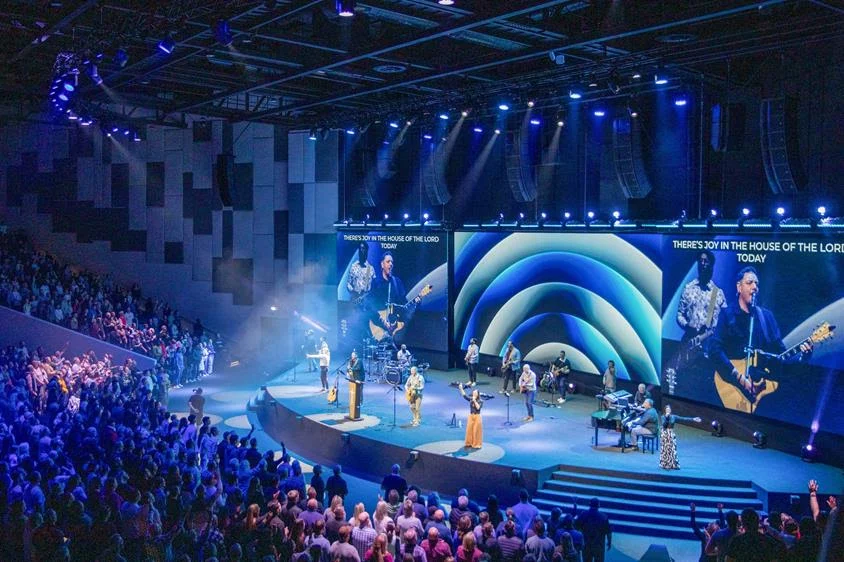
In the modern landscape of church media and production, a quiet compromise has become standard operating procedure. Across North America, houses of worship facing staff shortages, burnouts, or rapid expansions increasingly rely on itinerant production contractors—often referred to as "weekend warriors" or guest audio engineers—to fill the gaps. These professionals fly in on Saturdays, run rehearsals and Sunday morning services, and fly out immediately after the final postlude.
While this model successfully keeps Sunday services operational, industry insiders and veteran engineers are sounding the alarm about a hidden toll. The primary issue is not financial—though contractor invoices can strain a church budget—but cultural.
According to frontline practitioners, outsourcing Sunday production creates a vacuum in long-term mentorship, volunteer retention, and team development. While a hired gun can deliver a technically flawless mix, they cannot steward a ministry’s culture. The core tension lies in a fundamental mismatch of purpose: contractors are brought in to serve a single weekend, whereas healthy church communities require leaders invested in multi-year discipleship.
Chronology
To understand how the modern church arrived at this crossroads, it helps to examine the evolution of church production over the last three decades:
- The Late 1990s to Early 2000s: The "seeker-sensitive" movement and the contemporary worship revolution exploded. Churches rapidly transitioned from basic sound reinforcement to complex audio, lighting, and video systems. Production relied heavily on passionate, homegrown volunteers with varying levels of technical skill.
- The 2010s (The Professionalization Era): As megachurches scaled and multi-site campuses multiplied, the demand for broadcast-quality audio skyrocketed. Churches began creating paid, full-time technical director positions and simultaneously building a robust network of professional freelance audio engineers who could travel or float between locations.
- The Post-Pandemic Labor Crunch (2020–Present): Following COVID-19 lockdowns, many volunteer teams saw significant attrition. Burnout rates among remaining staff spiked. To survive weekly services without missing a beat, churches leaned harder than ever on external contractors, transforming what was once an emergency backup plan into a permanent structural strategy.
Supporting Data and Realities on the Ground
While comprehensive academic studies on church audio contractor economics are rare, qualitative data from audio directors, volunteer coordinators, and itinerant engineers paints a telling picture of the modern production environment:
- The Fly-In Routine: A typical weekend contractor’s schedule involves landing on Saturday afternoon, conducting multi-hour soundchecks and run-throughs on Sunday morning, managing live production for two to four services, and heading straight to the airport.
- The Volunteer Attrition Equation: Internal surveys across various mid-to-large ministries indicate that volunteer engagement drops significantly when local teams realize that high-profile or complex duties (like mixing the main venue) are consistently handed to paid outsiders rather than developed internally. Volunteers frequently report feeling invisible when their primary interaction with leadership is functional rather than relational.
- The Mentorship Gap: A standard contractor’s weekend schedule leaves zero margin for structured training, one-on-one coaching, or diagnosing chronic, recurring technical issues that only manifest over months of observation.
Perspectives from the Field
To unpack the complexities of this dynamic, industry voices have increasingly spoken out about the divergence between technical execution and cultural health.
The Itinerant Engineer’s Perspective
Seasoned guest engineers acknowledge the limitations of their own roles. "I show up prepared, deliver a great mix, and go home," explains one veteran production contractor who travels regularly for churches. "When I visit a team often enough, I try to contribute beyond the console—learning names, investing in relationships, sharing perspective. But even the most committed contractor can’t fully build culture. Not because we don’t care, but because culture requires continuity. It’s a simple equation of time."
Veterans note that while they can adapt quickly and solve immediate production crises, they cannot develop volunteers over time, maintain complex systems across changing ministry seasons, or carry the long-term emotional health of a team. "We’re brought in to serve a moment, not to steward a season," the engineer adds.
The Leadership Dilemma
Church leadership teams often operate under extreme pressure, viewing Sunday morning as a non-negotiable deadline. Consequently, their primary hiring and deployment metric is inherently short-sighted: “Who can mix well this Sunday?”
Leadership experts argue that this question, while urgent, eclipses a far more vital inquiry: “Who will still be here in three years, developing others and serving our team?”
When churches focus exclusively on the former, they inadvertently starve the latter of resources, time, and attention.
Implications for the Future of Church Production
The over-reliance on transactional production models carries profound implications for the spiritual and structural vitality of local churches.
1. The Slow Erosion of Volunteer Morale
When external contractors are perpetually brought in to handle the "glamour" roles (such as front-of-house mixing for main services), local volunteers are often relegated to setup, teardown, or lower-tier support roles. Over time, this creates a psychological ceiling. Volunteers begin to check out mentally or stop showing up altogether because they feel like unvalued cogs in a machine rather than developing artists and technicians.
2. The Trap of "Coverage Over Culture"
Churches that invest heavily in weekly contractor invoices often find their budgets squeezed, leaving little to no room for internal staff development, educational workshops, or purchasing gear that empowers local teams. The energy of the ministry shifts entirely toward covering weekends rather than building people.
3. Redefining the Role of the Contractor
Industry analysts suggest that the solution is not to banish contractors, but to reframe their utility. Contractors should be viewed as catalysts for local empowerment rather than permanent replacements for local labor.
For a contractor model to truly serve a church’s long-term health, leaders must intentionally integrate them into the community development process:
- Explain Decisions: Ask visiting engineers to walk local volunteers through their workflow, EQ choices, and routing decisions.
- Create Teaching Space: Turn soundchecks into masterclasses rather than closed-door rehearsals.
- Provide Rest, Not Replacement: Use contractors strategically to give burnt-out staff and volunteer teams a necessary sabbath, ensuring those teams return refreshed to invest in their peers.
4. The Irreplaceable Value of Consistency
Ultimately, the data and testimonies converge on a single, sobering truth: technical excellence without relational continuity is a hollow victory. A church does not merely need the best audio engineer money can buy; it needs to be served by people who know its heart, understand its community, and are committed to growing alongside it week after week.
As churches navigate the ongoing post-pandemic labor landscape, the challenge will be resisting the temptation of the quick fix. Building a thriving, resilient production culture takes years of intentional, patient investment—and that is one thing that can never be contracted out.