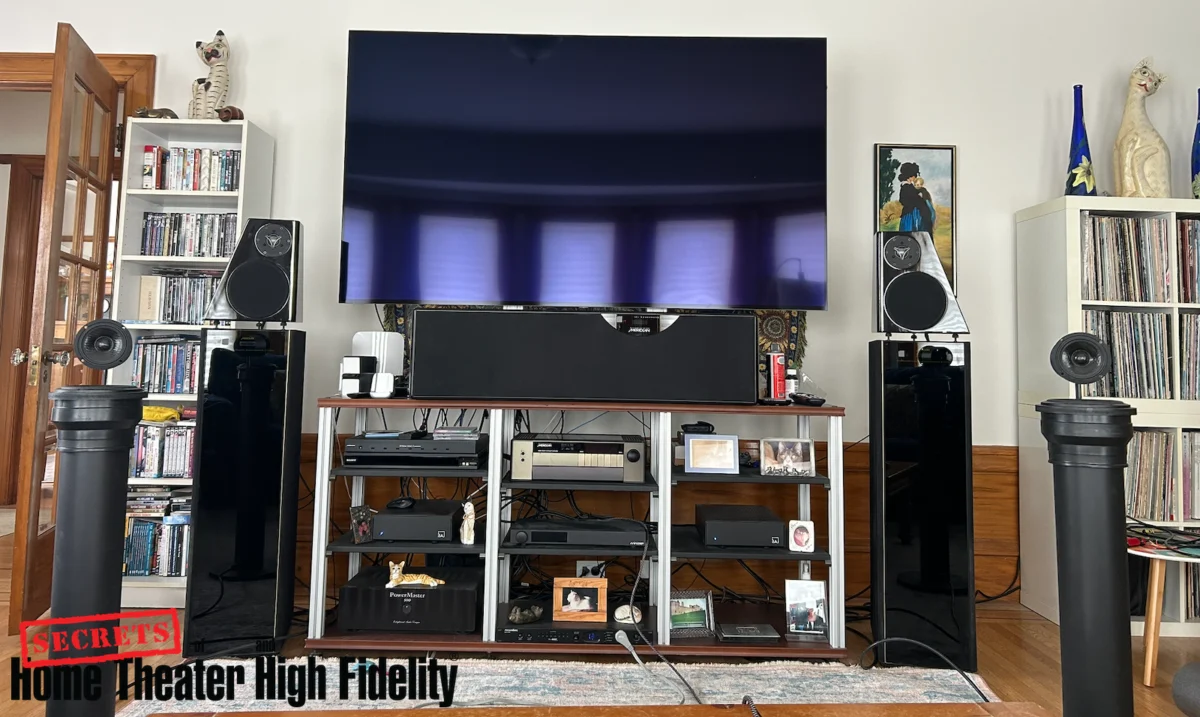
After three installments detailing the acquisition, assembly, finishing, and baseline configuration of the Linkwitz LXmini loudspeaker kit, we finally arrive at the ultimate objective: performance. In this concluding analysis, we step away from the workbench to evaluate whether these compact, active floor-standing monitors can truly deliver high-end audio fidelity, or if they remain merely a curiosity of DIY engineering.
Main Facts: The Philosophy of the LXmini
The Linkwitz LXmini is not your average bookshelf speaker. Designed by the late Siegfried Linkwitz—a titan of acoustic engineering—the LXmini is the culmination of a lifelong quest to bring the expansive, natural soundstage of his flagship dipole systems (like the Orion and LX521) into the constraints of smaller living environments, such as apartments and urban lofts.

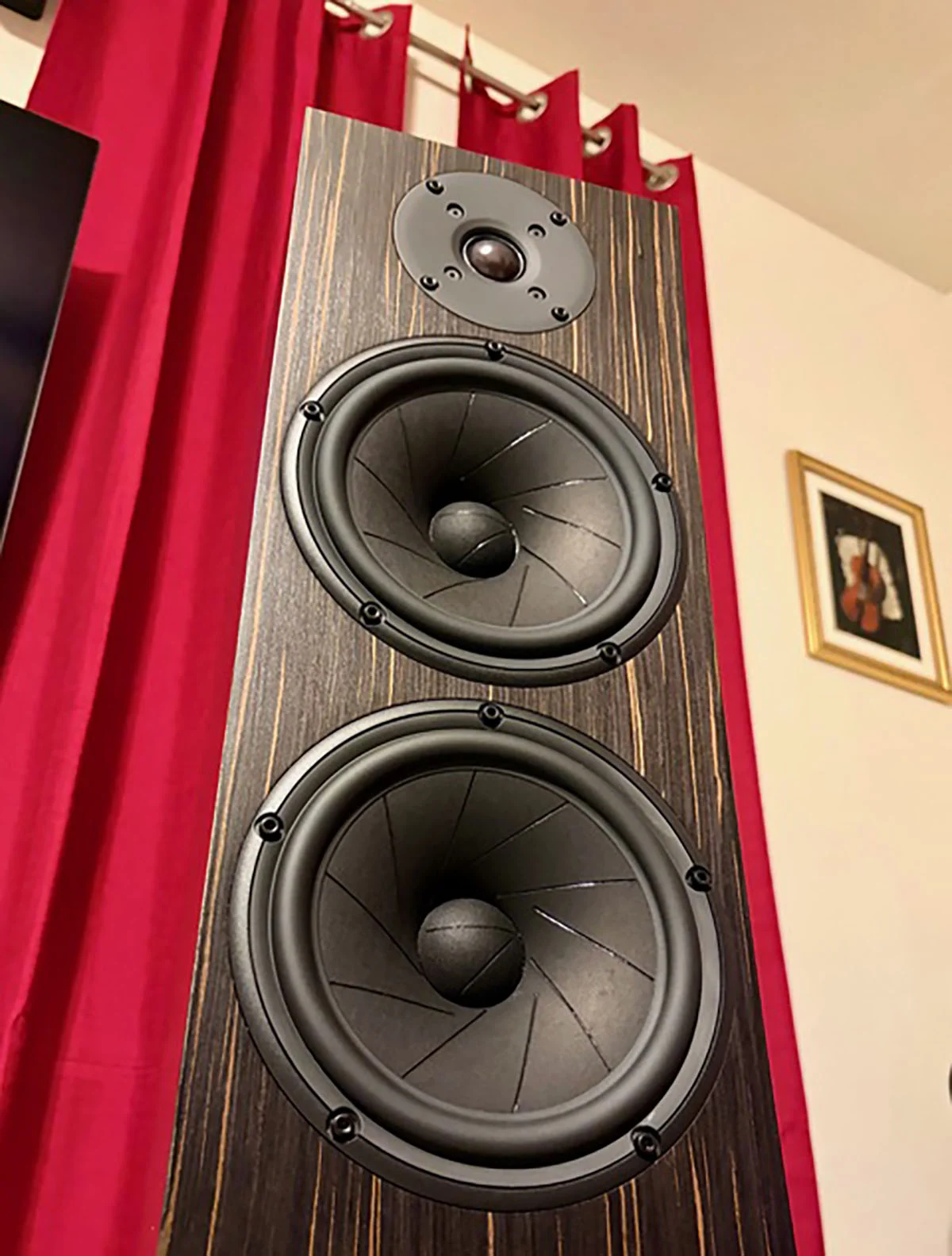
At its core, the LXmini utilizes an unorthodox driver arrangement. The system features a 4-inch full-range driver mounted in a cylinder, paired with a 6-inch aluminum mid-bass driver mounted in an up-firing configuration within the stand itself. This design is highly intentional: the up-firing woofer creates an omnidirectional radiation pattern below the 700Hz crossover point, while the 4-inch driver uses a cardioid pattern above it. This hybrid approach effectively minimizes unwanted room reflections, allowing for superior imaging in rooms that would otherwise be overwhelmed by larger, more traditional open-baffle designs.
Chronology of Evaluation
The evaluation process was conducted in distinct, methodical stages to ensure that the subjective listening experience was backed by objective data.

- Placement and Baseline Calibration: Prior to critical listening, all manual equalization was stripped to return the system to its manufacturer-provided factory settings. Following the Linkwitz setup guide, the speakers were positioned in an equilateral triangle configuration, spaced 7 feet apart. This spacing, while wider than typical near-field setups, was critical for evaluating the system’s ability to create a phantom center image.
- Room Measurement: Utilizing the MiniDSP UMIK-1 measurement microphone and Room EQ Wizard (REW) software, we mapped the in-room frequency response. This allowed us to visualize the interaction between the speakers and the listening environment, identifying peaks and nulls that required surgical intervention via the system’s DSP.
- Tuning: Based on the data, minor parametric EQ adjustments were made. These included a 3dB boost at 50Hz for additional low-end weight and a subtle 8dB adjustment at 17kHz to smooth out the high-frequency roll-off of the 4-inch driver.
- Critical Listening: The final stage involved a diverse playlist of high-resolution digital files, ranging from classic jazz and folk to raw, high-energy rock and modern synth-pop, streamed via Roon.
Supporting Data: Measurements and Technical Performance
The objective data provided by the REW analysis paints a picture of a well-behaved, linear system. In its raw state, the LXmini maintains an impressively flat response centered at 83 dB from approximately 45 Hz to 13 kHz.
While minor dips were observed in the 1 kHz–6 kHz range, these were largely attributed to room interactions rather than deficiencies in the speaker hardware. Near-field measurements confirmed that the drivers themselves were operating within specifications, free from the coloration imposed by the room’s acoustics.

Perhaps the most revealing metric is the harmonic distortion profile. The LXminis exhibit a clean, low-distortion signature where even-order harmonics dominate. A slight 2nd-order hump at 1,350 Hz was noted, likely a result of minor non-linearity in the full-range driver’s surround. However, this is largely inconsequential, as even-order distortion is often perceived by the human ear as "warmth" or "musicality" rather than the harshness associated with odd-order distortion.
The Listening Experience: A Genre-Defying Performance
To test the limits of the LXmini, we subjected the system to a variety of sonic challenges.

Jazz and Spatial Imaging
On The Dave Brubeck Quartet’s Time Out, the LXminis demonstrated an uncanny ability to place instruments in space. While the initial setup felt slightly "headphone-like" due to the width of the triangle, the "magic" of the point-source design became clear as phantom images materialized in the empty air between the two cabinets. The interplay between Paul Desmond’s alto saxophone and the rhythmic percussion was articulate and intimate, with the DSP-tuned high end providing the necessary shimmer on the cymbals.
Folk and Texture
Playing Pentangle’s The Earle of Salisbury, the speakers revealed their true strength: micro-detail. The juxtaposition of John Renbourn’s mellow, woody guitar tone against the sharp, icy clarity of the glockenspiel provided a masterclass in dynamic contrast. The LXminis proved that they could handle complex, acoustic arrangements without smearing the transients—a common failing in budget-tier speakers.

Rock and Raw Power
The true test for any "audiophile" speaker is how it handles the unpolished grit of rock. Fun House by The Stooges, particularly the track "Down on the Street," pushed the LXminis into a different gear. While they lack the massive, room-pressurizing bass of larger, multi-driver cabinets like the Meridian DSP6000s, the LXminis managed to capture the raw, visceral energy of the performance. They delivered a "big" soundstage that belied their small stature, proving that for rock enthusiasts, the lack of ultimate low-end extension is more than compensated for by the system’s speed and imaging authority.
Modern Pop and Synthesis
Finally, Tegan and Sara’s Love You to Death showcased the system’s handling of synthetic bass and complex vocal harmonies. The LXminis provided a punchy, well-rounded bass response that avoided the "one-note" boominess common in small-ported speakers. The transmission-line loading of the 6-inch driver—where the backwave is effectively absorbed and phased—clearly pays dividends in bass clarity.

Implications: The Value of the DIY Active Paradigm
The implications of the LXmini project are significant for the broader audio community. This kit represents a compelling argument against the "more is better" philosophy that dominates high-end retail audio. By leveraging the power of digital signal processing (DSP), the LXmini allows users to correct for room deficiencies that would normally require tens of thousands of dollars in acoustic treatment or massive, immovable speaker systems.
A Professional Perspective
The primary takeaway is that the Linkwitz LXmini is not merely a "budget" project; it is a high-performance audio solution that happens to be DIY-friendly. The inclusion of active crossover and DSP capabilities transforms the user from a passive consumer into an active participant in their own soundstage.

While the system does face physical limitations—specifically in the extreme frequency extension and the absolute scale of sound—these are acknowledged design choices rather than failures. The LXmini is a triumph of "calculated compromise." It delivers the essential elements of an immersive, holographic sound field that is typically reserved for much larger, more expensive setups.
For those considering the kit, the financial barrier to entry is remarkably low. With a DSP crossover costing roughly $225 and the requirement for four channels of amplification, the total investment remains a fraction of the cost of commercial speakers with comparable performance metrics.

In conclusion, the Linkwitz LXmini stands as a testament to Siegfried Linkwitz’s legacy. It is a loudspeaker that respects the laws of physics while utilizing modern digital tools to maximize every ounce of performance. For the DIY-curious who crave top-tier imaging, natural tonal balance, and the ability to tune their system to their specific room, the LXmini is not just recommended—it is a mandatory audition. Whether you are living in a compact urban apartment or a dedicated listening room, these speakers prove that greatness does not always require a massive footprint; it only requires intelligent design.