Introduction and Main Facts
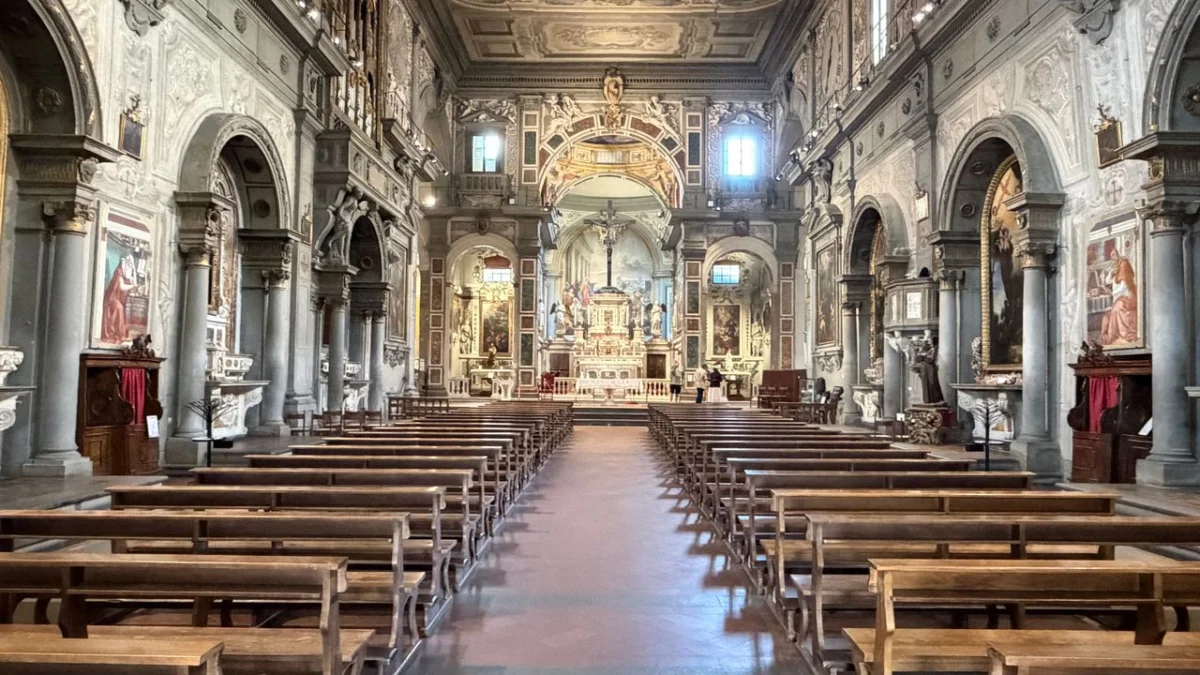
In the heart of Florence, Italy, where centuries of artistic mastery and spiritual heritage converge, the historic Church of Ognissanti has completed a state-of-the-art acoustic modernization. Founded in the 13th century, Ognissanti is far more than a neighborhood parish; it is a reliquary of Renaissance culture, housing masterpieces such as Sandro Botticelli’s St. Augustine in His Study (commissioned by the prominent Vespucci family in 1480) and serving as the final resting place for Botticelli himself. Yet, like many architectural treasures of its era, the church faced a profound modern challenge: how to deliver pristine, highly intelligible spoken word audio to a contemporary congregation without altering, cluttering, or compromising the breathtaking aesthetic of its historic interior.
The solution came in the form of advanced audio engineering. Delivered by Italian audio distributor and integration partner Exhibo in close collaboration with project architects, system designers, and preservation authorities, the new audio system relies heavily on JBL Professional Intellivox loudspeakers and their sophisticated beam-steering technology.
By leveraging Digital Directivity Synthesis (DDS), the installation successfully overcomes the severe acoustic hurdles posed by long naves, vaulted ceilings, and highly reflective masonry surfaces. Two strategically positioned Intellivox columns now cover approximately 35 meters of the central nave, working in tandem with discreet COL800 column loudspeakers behind the altar. The result is a masterclass in modern audio deployment: a system that is virtually invisible to the naked eye yet delivers crystal-clear speech intelligibility for liturgical services, concerts, and cultural events alike.
Chronology of the Modernization Project
The path from acoustic frustration to sonic clarity at Ognissanti was deliberate, highly calculated, and bound by strict heritage conservation guidelines.
Phase 1: Assessment and Acoustic Diagnosis
Long before any hardware was selected, project engineers faced the inherent acoustic realities of a medieval-to-Renaissance house of worship. The Church of Ognissanti features an expansive central nave flanked by hard, highly reflective stone masonry, marble details, and high vaulted ceilings. In such architectural environments, acoustic energy lingers, bouncing relentlessly off hard surfaces and creating an extended reverberation time.
For music, this resonance can sometimes add warmth and grandeur; however, for the spoken word—whether scripture readings, homilies, or announcements—it is a formidable enemy. Speech intelligibility plummets as syllables smear together, leaving congregants straining to understand the message. Compounding the problem were strict preservation mandates. Cultural heritage laws in Italy prohibit any modification, drilling, or visual intrusion that would permanently mar the historic fabric of the church. Traditional multi-speaker distributed audio systems, which require numerous speaker cabinets clustered throughout the space, were entirely out of the question.
Phase 2: Simulation, Modeling, and Engineering Design
To tackle these dual constraints, Exhibo stepped in to spearhead the technical design. The team initiated a rigorous diagnostic phase utilizing advanced acoustic measurements, detailed three-dimensional architectural modeling, and sophisticated beam-steering simulations.

Using predictive software, engineers could virtually map the propagation of sound waves within Ognissanti’s exact geometric dimensions. This modeling was critical in determining the absolute minimum number of loudspeaker placement points needed to achieve uniform coverage. Rather than relying on trial and error, the simulation predicted precisely how sound waves would react to the stone walls, wooden pews, and vaulted arches before a single cable was laid.
Phase 3: Installation and On-Site Tuning
With the blueprint finalized, the physical implementation took place with surgical precision. Two primary Intellivox columns were mounted on either side of the central nave. Rather than blasting sound blindly into the room, these columns were engineered to focus acoustic energy precisely where the congregation sits.
To ensure complete coverage of the liturgical space, additional COL800 column loudspeakers were integrated behind the altar to service the presbytery, maintaining a slim, unobtrusive profile that blends effortlessly into the background architecture.
Following the physical mounting, the project entered its final tuning phase. Engineers calibrated the system directly on-site, fine-tuning the digital beam-steering parameters to account for real-world humidity, temperature, and congregation capacity, ensuring seamless performance tailored specifically to Ognissanti’s unique acoustic fingerprint.
Technical Deep Dive: The Science of Beam-Steering
To truly appreciate the transformation at Ognissanti, one must understand the technology driving it. Traditional loudspeakers radiate sound outward in a relatively broad, unconstrained pattern, much like the light from an uncovered bulb. In a reverberant stone church, this omnidirectional or wide-dispersion approach causes sound to strike the ceiling and side walls indiscriminately, creating delayed reflections that muddy speech clarity.
Digital Directivity Synthesis (DDS)
JBL Professional’s Intellivox series changes this paradigm entirely through the use of tightly controlled vertical acoustic beam-steering, powered by advanced Digital Directivity Synthesis.
An Intellivox column is not a single speaker driver, but rather a vertical array containing numerous individual, tightly spaced transducer elements, each driven by its own dedicated amplifier channel and digital signal processor (DSP). By applying precise delays and gain adjustments to each individual driver, the loudspeaker array can electronically "steer" and shape the vertical dispersion of the sound beam.

At Ognissanti, this meant engineers could program the sound output to tilt downward precisely toward the pews, keeping acoustic energy away from the upper vaulted ceilings and reflective side walls.
Key Technical Advantages in Historic Spaces:
- Controlled Vertical Dispersion: The sound wave is shaped like a flat, horizontal wedge, directing acoustic energy downward at a calculated angle to blanket the listening plane while starving the reverberant zones of unwanted excitation.
- Consistent Sound Pressure Level (SPL): Across the 35-meter stretch of the central nave, congregants in the front pews experience the exact same volume and clarity as those in the rear pews, eliminating the traditional drop-off in level or the need for delayed fill speakers.
- Minimal Visual Footprint: Because a single, slender Intellivox column can project clear audio over vast distances, the church avoided the visual clutter of multiple speaker cabinets hanging from pillars or walls.
- Architectural Harmony: Finished in neutral tones and designed with sleek, understated lines, the columns visually recede against the stone pillars, preserving the sightlines of Renaissance frescoes and architectural stonework.
Official Responses and Industry Perspectives
The successful completion of the Ognissanti audio upgrade has drawn praise from technical specialists, preservationists, and church administrators alike. The project underscores a growing trend in European cultural heritage management: the demand for high-performance audio that respects historical sanctity.
Andrea Ficara, Product Specialist at Exhibo S.p.A., highlighted the meticulous methodology behind the installation:
"The goal was to improve speech intelligibility throughout the central nave without introducing invasive elements or multiplying sound diffusion points. Acoustic simulations helped identify the optimal positions for the Intellivox loudspeakers and predict how sound would behave within the space. The final configuration uses two loudspeakers to cover approximately 35 meters of the central nave while maintaining consistent sound pressure across the listening areas."
Ficara’s remarks speak to a core philosophy shared by modern systems integrators working within historical structures: the best technology is often the one you neither see nor consciously notice, experiencing its benefits purely through sensory comfort—in this case, effortless listening comprehension.
Industry analysts have similarly pointed out that the Ognissanti project serves as a blueprint for historic houses of worship globally. As congregations increasingly expect modern standards of media inclusion, live-streaming clarity, and accessibility, historic sites face mounting pressure to modernize. Solutions like JBL’s Intellivox prove that historic preservation and cutting-edge acoustic engineering are not mutually exclusive adversaries, but rather complementary disciplines.
Broader Implications for Historic Architecture and Pro Audio
The modernization of the Church of Ognissanti carries significant implications that extend far beyond the borders of Florence, offering valuable lessons for the broader professional audio and architectural conservation communities.

1. Reconciling Modern Demands with Heritage Conservation
Historic buildings—whether medieval cathedrals, ancient basilicas, museums, or civic halls—were built centuries before the invention of electronic amplification. Their architects designed them to project unamplified human voices or choral music in natural acoustic environments. However, modern expectations for multi-use programming (lectures, concerts, community gatherings) and accessibility for hearing-impaired congregants mandate the introduction of sound reinforcement.
The success at Ognissanti demonstrates that integrators no longer need to compromise structural integrity or aesthetic beauty to achieve pristine audio. Beam-steering technology bridges the gap, allowing modern audio tech to respect centuries-old masonry.
2. The Shift Toward Predictive Acoustic Design
The reliance on advanced 3D modeling, acoustic simulation, and DDS software in this project highlights a broader industry shift. Trial-and-error installations in acoustically hostile environments are rapidly becoming obsolete. By investing heavily in the diagnostic and simulation phase, integrators can guarantee performance outcomes before drilling a single mounting hole—a crucial factor when working with irreplaceable historic surfaces.
3. Future-Proofing Sacred Spaces
Active parishes like Ognissanti must remain vibrant, functional community hubs while honoring their museum-grade artistic legacies. Botticelli’s masterpieces draw art historians and tourists daily, while local parishioners gather for weekly worship. Upgrading the acoustic infrastructure ensures that the church can host high-profile cultural events, recitals, and liturgical services without scheduling conflicts or acoustic compromises.
Ultimately, the transformation of the Church of Ognissanti stands as a triumph of modern engineering in service of timeless art. By marrying JBL Professional’s advanced Intellivox beam-steering technology with Exhibo’s precision integration, Florence’s sacred landmark has secured its acoustic future while fiercely protecting its illustrious past.