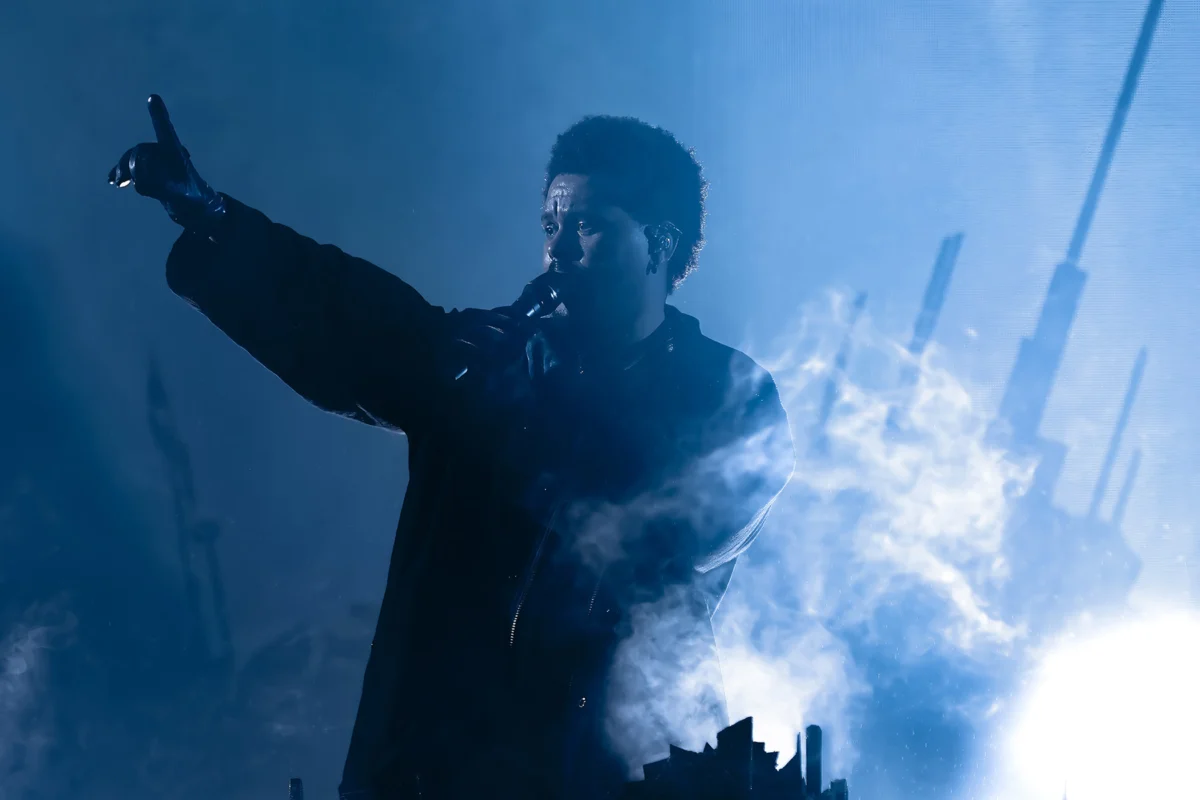
In a breathtaking collision of global pop culture and Japanese animation, The Weeknd—the artistic alter ego of Abel Tesfaye—has unveiled a mysterious, unreleased track during the opening night of the Asian leg of his After Hours Til Dawn tour. Performing at the Belluna Dome in Saitama, Japan, on Friday, September 19, the global superstar pivoted from his traditional concert setlist to debut a collaborative performance that bridged the gap between R&B superstardom and the legendary legacy of Neon Genesis Evangelion.
The performance, which has since sent shockwaves through both the music and anime communities, saw Tesfaye joined by none other than Yoko Takahashi, the iconic voice behind one of the most recognizable theme songs in history: "A Cruel Angel’s Thesis."
The Chronology of a Cultural Collision
The evening began with the typical high-octane energy expected of an After Hours Til Dawn stadium show. However, as the performance reached a pivotal turning point, the atmosphere shifted. The stage, usually home to The Weeknd’s atmospheric, synth-heavy soundscapes, was transformed into a cinematic stage for a grand multimedia collaboration.
The song, currently referred to by fans and the media as "Tokyo," incorporates the melodic DNA of the 1995 J-pop classic "A Cruel Angel’s Thesis." The track serves as a bridge between the dark, introspective sonic palette of Tesfaye’s recent discography and the triumphant, high-tempo energy of 90s anime anthems.
As the track reached its crescendo, Tesfaye stepped back, relinquishing the spotlight to Yoko Takahashi. In a moment that transfixed the Japanese audience, Takahashi performed the original version of "A Cruel Angel’s Thesis" in its entirety, backed by a sprawling, avant-garde visual presentation. The visuals were curated and directed by Yoko Taro, the mastermind behind the cult-classic NieR video game series. The imagery blended the mechanical, existential motifs of NieR: Automata with the religious and psychological iconography of Neon Genesis Evangelion, creating a cohesive, immersive narrative that felt less like a concert and more like an art installation.
Supporting Data: The Magnitude of the Collaboration
To understand the weight of this performance, one must look at the entities involved. Abel Tesfaye is arguably the most commercially successful artist of the streaming era. With five No. 1 albums on the Billboard 200 and a catalog of record-breaking singles including "Blinding Lights"—the all-time leader on the Billboard Hot 100—his reach is global.
Conversely, "A Cruel Angel’s Thesis" is more than just a song; it is a cultural cornerstone. Since its 1995 release as the opening theme for Neon Genesis Evangelion, it has become a staple of karaoke bars across Japan and a worldwide anthem for anime fandom. By integrating this specific track, Tesfaye has tapped into a deep, emotional well of nostalgia.
The involvement of Yoko Taro adds a third layer of prestige. As the creative director of NieR: Automata, Taro is celebrated for his unconventional, philosophical approach to storytelling. By enlisting Taro to direct the visuals, Tesfaye signaled that this was not merely a guest spot, but a high-concept artistic endeavor designed to challenge the traditional boundaries of stadium pop performances.
Official Responses and Social Media Echoes
Tesfaye, known for his deliberate and cryptic social media presence, offered little explanation, allowing the art to speak for itself. On his official social media platforms, he credited the piece with a minimalist description: "Presented by YOKO TARO ft. YOKO TAKAHASHI."

This choice of phrasing—"Presented by"—is telling. It implies that Tesfaye views the project as a curated artistic presentation rather than a standard commercial single. The move has sparked intense speculation regarding the nature of his upcoming creative output. Following his 2025 album Hurry Up Tomorrow, which was billed as his final release under the moniker "The Weeknd," fans have been watching closely to see if this collaboration signals a shift in his artistic identity—or perhaps the beginning of a new, project-based era where the artist acts as a curator of diverse creative worlds.
The Implications: A New Direction for Post-Retirement Performance
This performance is not an isolated incident; it follows a pattern of localized, high-profile collaborations that suggest a new strategic direction for Tesfaye’s touring model. In April, during his visit to Rio de Janeiro, Brazil, he premiered an unreleased track alongside the Brazilian pop powerhouse Anitta. Dubbed "Rio" by fans, the performance was a celebration of local musical culture, proving that Tesfaye is interested in creating "moments" that are tethered to the geography of his tour stops.
1. The Death of the Traditional Setlist
By incorporating localized collaborations, The Weeknd is effectively dismantling the idea of a "static" global tour. Instead of delivering the same performance in London, Tokyo, and New York, he is evolving his show into a living, breathing entity that changes based on the culture it enters.
2. The Transmedia Pivot
The integration of Yoko Taro and the Evangelion aesthetic points toward a future where music is inextricably linked to other forms of media, such as gaming and anime. For an artist who has already flirted with cinema and television, this transition into the world of Japanese high-concept storytelling suggests that his next chapter may be less focused on the traditional album-and-tour cycle and more on cross-disciplinary artistic projects.
3. The "Weeknd" Moniker Question
The biggest question looming over this tour remains the retirement of the name. If Hurry Up Tomorrow is indeed the swan song for the persona of "The Weeknd," then these collaborative, avant-garde performances may be the bridge to "Abel Tesfaye," the creator. By shifting the focus from his own persona to these collaborative "presentations," he is subtly preparing his audience for a world where he is a facilitator of art rather than just a pop idol.
Commercial Dominance and Future Outlook
While the artistic implications are profound, the commercial reality remains that The Weeknd is a titan of the music industry. The After Hours Til Dawn tour, which has been in motion since 2022, continues to draw massive crowds. His ability to maintain such high levels of engagement while simultaneously pivoting toward experimental collaborations is a testament to his versatility.
As the tour continues through Asia, industry analysts are watching to see if more local "presentations" will emerge. Will there be collaborations with K-pop icons in Seoul or legendary producers in other major hubs? If the Saitama performance is any indication, the answer is a resounding yes.
In a music industry often criticized for being overly formulaic, Abel Tesfaye’s latest move is a breath of fresh air. By leaning into the unexpected, embracing the surreal, and paying homage to the pillars of global pop culture, he has successfully redefined what a stadium concert can be. Whether this leads to a new album, a multimedia project, or simply a series of fleeting, unforgettable nights, one thing is certain: the artist formerly known as The Weeknd is far from finished. He is merely beginning to play with a much larger, more diverse, and more ambitious canvas.
As fans continue to analyze the footage from the Belluna Dome, the collaboration stands as a reminder of the power of music to transcend borders—not just through melody, but through the shared language of the stories we tell and the worlds we create together.