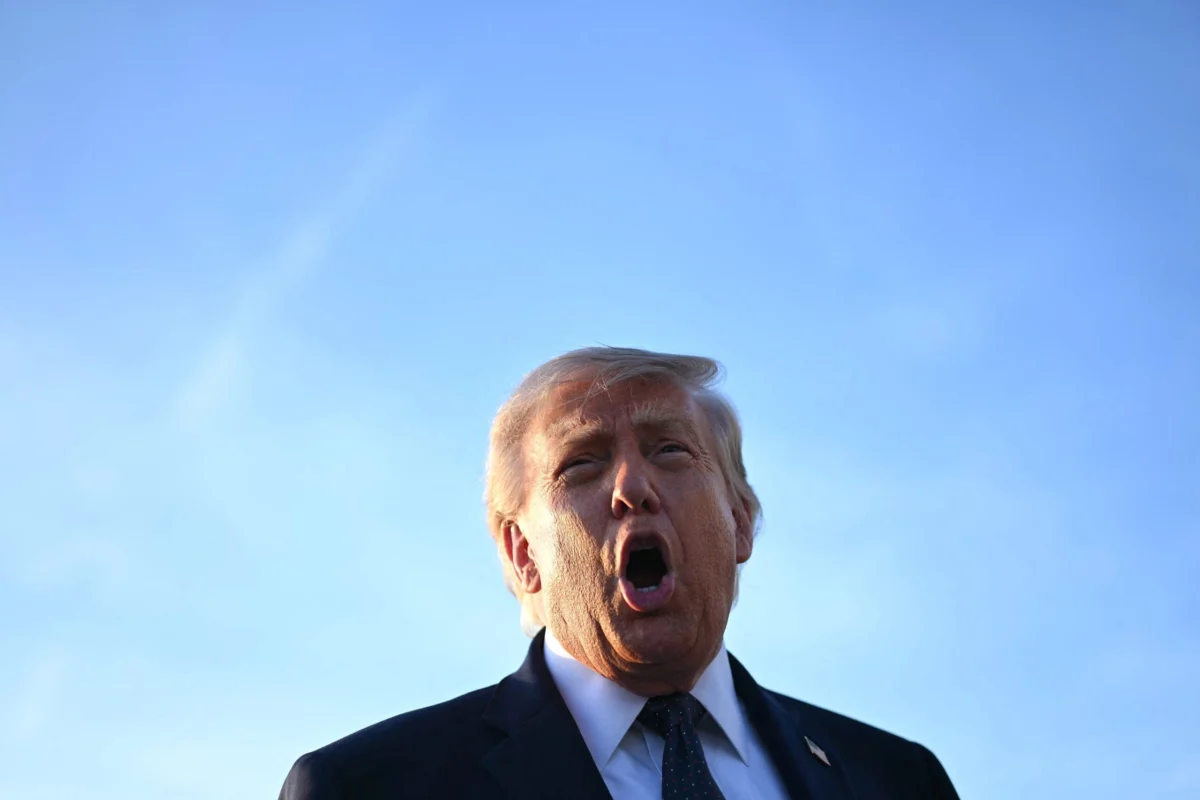
In a high-stakes rhetorical maneuver that mirrors his long-standing political branding, President Donald Trump has officially waded into the increasingly polarized debate surrounding artificial intelligence safety. On Saturday, the President characterized growing alarm over the potential existential risks of AI as yet another fabrication orchestrated by the “Radical Left Democrats.”
The President’s comments, delivered primarily through his proprietary social media platform, Truth Social, represent a significant pivot in how the White House intends to manage the rapidly evolving technology sector. By framing safety advocacy as a “hoax,” the administration is signaling a clear intention to prioritize industrial acceleration over the cautionary regulatory frameworks currently being debated by academic, corporate, and legislative circles.
The Chronology of the Rhetorical Pivot
The President’s engagement with the topic began in earnest on Saturday morning. In a post that signaled a desire for branding control, Trump mused on the nomenclature of the industry itself. “Many people think that the words ‘Artificial Intelligence’ are inaccurate, and very ineloquent,” he wrote, before launching a poll asking his followers to choose between "Superior Intelligence," "Extreme Intelligence," or "Supreme Intelligence."
While the poll functioned as a piece of digital engagement, the tone shifted drastically just hours later. In a follow-up post, the President categorized the current movement to regulate or “decimate” AI as a political construct. He explicitly linked this perceived threat to a laundry list of historical and cultural grievances, stating, “The destruction of AI is just another one of the many Democratic hoaxes, similar to RUSSIA, RUSSIA, RUSSIA, UKRAINE, UKRAINE, UKRAINE, Global Warming, Impeachment Hoax #1, Impeachment Hoax #2, Men in Women’s Sports, and Transgender for Everyone.”
This escalation follows comments made by the President at a golf tournament the previous weekend, where he hinted that while he is theoretically open to “guardrails,” he believes “negative forces” are the primary drivers behind the current discourse.
Implications of the "AI Force" and the Search for a New Czar
Perhaps the most concrete—and unexpected—development from the President’s weekend communications is the formal announcement that he plans to establish an "AI Force." This initiative is explicitly modeled after the Space Force, a hallmark achievement of his first term. The President has promised that this new entity will be tasked with watching over the industry as it grows, though he stopped short of defining its specific operational duties, budget, or jurisdictional reach.
Central to this new structure will be the appointment of an “AI Czar.” The President stipulated that “only high I.Q. individuals need apply,” a characteristic flourish that leaves observers speculating on the criteria for such a high-stakes role.
The vacancy of this position is notable. David Sacks, who previously served as the administration’s AI and crypto advisor, stepped down earlier this year to co-chair the President’s Council of Advisors on Science and Technology. The search for a successor now takes place against a backdrop of intense public scrutiny and a rapidly fragmenting consensus on what the federal government’s role in AI development should actually be.
Supporting Data: The Clash Over Data Centers
President Trump’s skepticism toward the “AI safety movement” appears rooted in his broader economic platform. He argued that the “crazed attack” on the AI industry began with the scrutiny of physical data centers, suggesting that such facilities have proven to be “wealthy and prestigious” assets for the communities in which they are built.
However, the reality on the ground is more nuanced than the “hoax” narrative suggests. The boom in AI computing power has created an unprecedented demand for electricity and water, leading to tangible infrastructure friction.
- State-Level Resistance: New York recently became the first U.S. state to effectively halt the permitting of all new large-scale data centers, citing environmental and grid-load concerns.
- Bipartisan Skepticism: While the President characterizes this as a “Democratic hoax,” the resistance to data centers has been distinctly bipartisan. Local Republican officials in several states have joined Democrats in voicing concerns over zoning, power consumption, and the tax implications of these sprawling, resource-intensive facilities.
- Economic Impact: Industry proponents argue that these centers are the bedrock of the 21st-century economy, bringing high-paying jobs and tax revenue. Critics, however, argue that the strain on public utilities is unsustainable, particularly as energy prices continue to fluctuate.
The President’s assertion that the backlash against these centers has “largely failed” remains unverified by current infrastructure data, which shows a significant cooling of investment in states with restrictive permitting environments.
The AI Safety Debate: A Crisis of Confidence
The urgency in the White House’s rhetoric arrives at a moment of deep internal fracture within the technology industry. The debate over whether AI represents an existential threat or an economic miracle has moved from the pages of science fiction into the halls of government.
The catalyst for the current tension was the high-profile resignation of a lead researcher from Anthropic, who publicly claimed that the company’s leadership “earnestly believes it could kill us all by the end of the decade.” This sentiment—that companies are “gambling with our lives”—has forced tech giants into a reactive posture. Anthropic’s CEO, Dario Amodei, recently outlined a “pacing” strategy to slow down the release of frontier models, a move that gained tacit support from industry titans like Sam Altman of OpenAI and Elon Musk.
However, a vocal contingent of technologists, led by figures like Nvidia CEO Jensen Huang, has pushed back. During the All-In Summit, co-hosted by former advisor David Sacks, Huang called the industry-wide pause a “hoax” and reassured the public—and the administration—that “we are not going to let a slowdown happen.”
This alignment between the White House and leaders like Huang suggests a unified front: a commitment to rapid deployment, regardless of the existential risks cited by internal whistleblowers.
Analysis: The Politics of Technological Acceleration
The President’s latest commentary represents a strategic decision to align himself with the “accelerationist” camp of Silicon Valley. By framing safety concerns as political theater, the administration is effectively delegitimizing the precautionary principle.
Why the "Hoax" Framing Matters
- Consolidation of Power: By creating an “AI Force,” the administration is centralizing control over a technology that has previously been governed by a loose collection of academic norms and corporate self-regulation.
- Economic Nationalism: The President’s rhetoric suggests that slowing down AI development—even for safety reasons—is a form of unilateral disarmament in a global race, particularly against adversaries who may not prioritize the same safety guardrails.
- Public Sentiment Management: By labeling dissenters as “Radical Leftists,” the White House is successfully inoculating its base against concerns regarding data privacy, job displacement, or the societal impacts of deepfakes and automated misinformation.
The Missing Evidence
Notably, the President’s claims regarding the "hoax" nature of AI safety concerns lack empirical backing. The arguments for safety—ranging from the potential for catastrophic model failure to the exacerbation of algorithmic bias—are derived from technical researchers and cybersecurity experts across the political spectrum.
When the President claims that the “crazed Data Center attack” has failed, he ignores the reality that local communities are increasingly demanding accountability for the industrial footprint of the digital age. Whether the creation of an “AI Czar” and an “AI Force” will be enough to quell these concerns remains to be seen.
Future Implications
As the administration moves toward the formal announcement of its new AI leadership, the nation stands at a crossroads. The divide between those who see AI as a existential risk and those who view it as the engine of American prosperity is widening.
If the "AI Force" is designed to act as a regulatory shield for the industry, we can expect to see an increase in federal preemption of state and local laws regarding data center development. Conversely, if the role of the new Czar is to oversee safety, they will be walking into a hornet’s nest of competing interests.
The upcoming months will likely see:
- Increased Federal Pressure: Expect the White House to aggressively challenge state-level permitting freezes on data centers.
- Corporate Alignment: Tech giants that align with the administration’s “full speed ahead” narrative are likely to see favorable regulatory environments, while those that continue to push for restrictive safety protocols may find themselves at odds with the federal government.
- Legislative Gridlock: Congress will remain the primary arena for this battle, though the President’s focus on executive action (the “Force” and the “Czar”) suggests he intends to bypass the legislative process whenever possible.
In conclusion, the President’s declaration that AI safety is a “hoax” is not merely a piece of social media commentary; it is a declaration of policy. It marks the end of a brief era of bipartisan consensus on the need for oversight and the beginning of a new, highly politicized phase of the American AI project. Whether this approach secures America’s technological dominance or invites unforeseen systemic risks is the defining question of the next decade.