Main Facts
In the rarefied air of ultra-high-end analog audio, a price tag approaching $20,000 typically signals the arrival of an industrial behemoth. Audiophiles have long been conditioned to expect massive multi-chassis power supplies, pneumatic isolation platforms, intricate suspended sub-chassis, and tonearms requiring an engineering degree to calibrate. Enter the Rega Naia, paired with the Aphelion 2 moving-coil (MC) cartridge, retailing at approximately $19,000.
Rather than redefining the turntable through sheer physical weight and byzantine setup procedures, Rega has chosen a different path. The Naia is designed to deliver the acoustic performance of a $50,000 reference system while eliminating the "fiddliness factor" entirely. Straight out of the box, the user needs only to set the tracking force, plug it in, and begin spinning records.
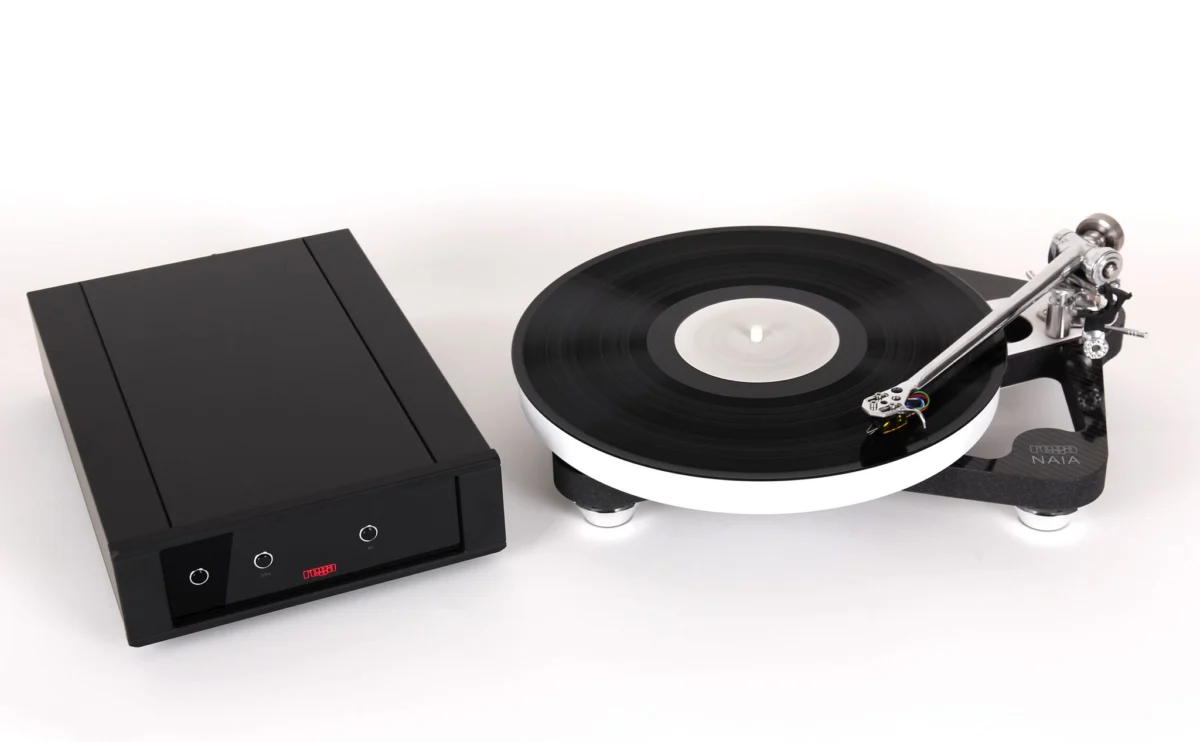
While its skeletal plinth styling bears a superficial resemblance to Rega’s lower-tier P8 and P10 models—a design choice that offers the distinct domestic advantage of blending in with existing equipment for unsuspecting partners—every molecule of the Naia has been re-engineered. Serving as the production evolution of Roy Gandy’s legendary, ultra-exclusive Naiad prototype, the Naia represents two decades of material science research and acoustic refinement. Distributed in North America by The Sound Organisation, the review sample currently residing in the listening room has spent the last two weeks demonstrating that simplicity and absolute sonic transparency are not mutually exclusive.
Chronology: From Prototype Wall-Hanger to Production Reality
To understand the magnitude of the Rega Naia, one must look back nearly twenty years. The genesis of this flagship design dates to a visit by the publication’s publisher to the home of Rega founder Roy Gandy. At the time, the initial prototype of what would become the Naiad was quite literally hanging on Gandy’s listening room wall—an ambitious concept piece that pushed the absolute boundaries of low-mass, high-rigidity engineering, long before manufacturing techniques could support a commercial run.
For years, the Naiad remained a mythical, ultra-limited-edition unicorn, built in numbers so small that few mortals ever got to hear one, let alone own one. During this period, Rega steadily trickled the technological trickle-down effect into more accessible models. The revolutionary ceramic braces, advanced bearing assemblies, and radical skeletal plinths of the Planar 8 and Planar 10 were all spiritual descendants of Gandy’s original wall-mounted vision.
However, bridging the gap between a hand-built, cost-no-object prototype and a reliable, repeatable production flagship required a generational leap in manufacturing capability. Over the past several years, Rega’s R&D team solved the intricate puzzle of scaling up the exotic materials and tight tolerances required for the design.
The arrival of the Naia review sample in late 2026 marks the culmination of this twenty-year journey. Following a two-week intensive break-in and listening window provided by distributor The Sound Organisation, the industry now stands on the precipice of a full, formal evaluation. Yet, even at this early juncture, the trajectory of the Naia is clear: it is poised to disrupt the ultra-high-end turntable market by proving that a reference-grade analog source does not need to be an installation project.
Supporting Data and Technical Architecture
At first glance, critics might question how a turntable weighing a fraction of its heavy-metal competitors can command a $19,000 price point. The answer lies in advanced material science, proprietary engineering, and the inclusion of Rega’s crowning analog transducer: the Aphelion 2 moving-coil cartridge.
The Plinth and Structural Integrity
At the heart of the Naia is an advanced skeletal plinth molded from graphene-impregnated carbon fiber. Rega’s research into structural rigidity dictates that mass absorbs energy, effectively blurring musical transients and smearing micro-details. By utilizing a high-modulus carbon fiber core infused with graphene—one of the strongest materials known to science—the Naia achieves unprecedented stiffness while maintaining an impossibly low mass. Ceramic top and bottom braces further lock the main bearing hub and tonearm mounting platform into a rigid, non-resonant structural loop.
The Tonearm and Bearing Assembly
The titanium vertical bearing housing and vertical spindle assembly represent a masterclass in mechanical engineering. Every tolerance has been honed to eliminate play without introducing friction. The RB titanium tonearm is a marvel of metallurgical precision, offering exceptional rigidity and resonance control, ensuring that the cartridge traces the record groove with microscopic accuracy.
The Aphelion 2 Moving-Coil Cartridge
While buyers can technically purchase the Naia without a cartridge to save approximately $4,000, doing so would miss the point of the ecosystem. The Aphelion 2 is a massive evolutionary step over Rega’s previous flagship, the Apheta 3. It features a hand-wound micro-coil utilizing an iron cross design that is fifty percent smaller than the original design, mounted on a boron cantilever.
- Dynamic Range: Significantly expanded macro- and micro-dynamics compared to its predecessor.
- Tonal Body: A richer, more fleshed-out midband that banishes any accusations of clinical coldness.
- Refinement: Unprecedented high-frequency extension without the slightest trace of etching or fatigue.
Because the Aphelion 2 is factory-matched and calibrated for the Naia platform, it eliminates the agonizing hours of alignment, overhang adjustments, and azimuth tuning that typically accompany high-end MC cartridge installation.
Official Responses and Industry Perspectives
The audio community has reacted to the wider availability of the Naia technology with a mixture of awe and pragmatic appreciation. High-end audio manufacturing has long suffered from an "esoteric tax," where gear becomes difficult to use simply to project an aura of exclusivity. Rega has fundamentally rejected this philosophy.
"When you engineer a product correctly from the molecular level up, you don’t need to mask acoustic shortcomings with massive weight or complicated suspension tuning," notes industry commentary surrounding Rega’s design ethos. "The Naia is a triumph of pure physics over audiophile folklore."
Representatives from The Sound Organisation have emphasized that the Naia is not merely a collector’s item for display, but a working instrument designed to be played daily.
Furthermore, early feedback from reviewers and beta testers highlights the strategic brilliance of the turntable’s form factor. For audiophiles sharing living spaces with partners who cast a wary eye at massive, rack-dominating audio altars, the understated, sleek silhouette of the Naia offers a stealth upgrade path. Owners transitioning from a Planar 8 or Planar 10 can swap the core unit onto their existing isolation platforms and cabling setups, enjoying a quantum leap in fidelity under the radar of domestic scrutiny.
Implications for the High-End Audio Market
The introduction of the Rega Naia carries profound implications for the ultra-luxury audio sector, challenging established paradigms regarding labor, value, and user experience.
1. The Redefinition of High-End Value
At $19,000, the Naia occupies a precarious middle ground: it is exceptionally expensive by mainstream standards, yet it undercuts many $40,000 to $60,000 flagship turntables on the market. By explicitly positioning the Naia as a "$50,000 table that you don’t need to fuss with," Rega is shifting the value proposition. In high-end audio, time and frustration are hidden costs. A turntable that requires professional setup, regular calibration, and delicate maintenance exacts a toll beyond its initial invoice. By delivering reference-level performance with zero-fuss execution, the Naia redefines what consumers should demand at this price tier.
2. The Death of the "Fiddly" Flagship
For decades, the cultural acceptance of high-end audio has been hindered by its steep learning curve and operational hostility. Turntables, in particular, have maintained a reputation as temperamental museum pieces. The Naia proves that elite engineering can yield plug-and-play simplicity. This may force competing manufacturers to re-evaluate their design philosophies, prioritizing user-accessible precision over theatrical complexity.
3. Material Science as the New Frontier
The heavy-plinth, suspended-chassis paradigm championed by vintage manufacturers and modern boutique brands is facing a stiff challenge from advanced composite engineering. Graphene-infused carbon fiber and high-precision ceramic bracing demonstrate that controlling resonance through intelligent material selection yields superior musical pacing, timing, and pitch stability.
As full, in-depth reviews begin to roll out over the coming weeks, the Rega Naia is widely anticipated to sweep industry awards. For vinyl enthusiasts seeking the absolute pinnacle of analog reproduction without turning their listening room into a mechanical laboratory, the Naia stands alone at the summit.