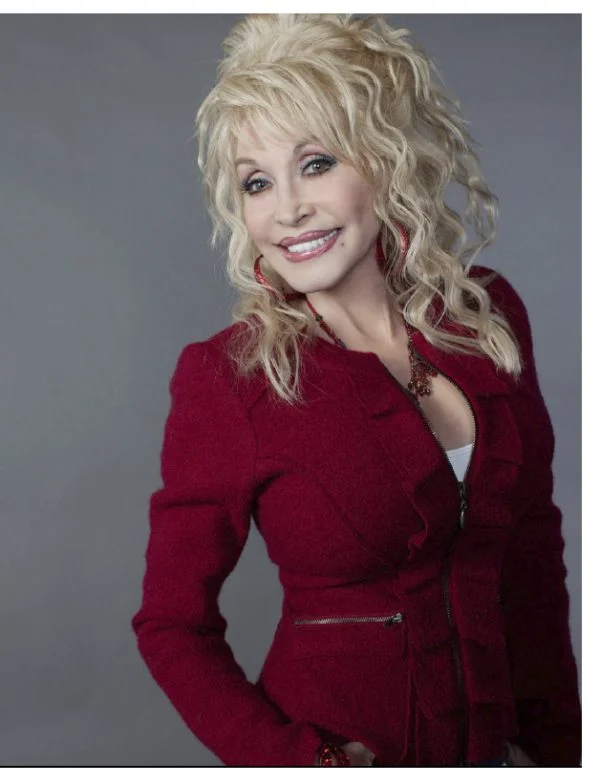
Of all the rock and country legends to have ever graced a stage, few command the universal reverence and genuine affection reserved for Dolly Parton. Mention her name to anyone who has ever crossed her path—from road managers and interviewers to Hollywood royalty and fellow musicians—and the response is invariably the same: she is quite simply one of the most sincere, grounded, and generous human beings in the entertainment industry.
Back in 2014, when former TONEAudio Music Editor Jaan Uhelszki sat down with the iconic singer-songwriter in Nashville for a landmark cover story, Parton was celebrating the release of her 42nd studio album, Blue Smoke. Even then, with decades of monumental success already cemented in cultural history, Parton possessed a rare, disarming gift of intimacy. She had the uncanny ability to make every single person she encountered feel as though they were the only soul in the room.
Revisiting that definitive interview offers a profound look inside the mind of an eight-time Grammy winner, theme park mogul, movie star, and legendary philanthropist. It reveals a woman who views her staggering achievements not through the lens of celebrity, but through the honest, calloused hands of a "working girl."
Main Facts: The Anatomy of a Working Legend
At the core of Dolly Parton’s enduring legacy is a paradox: she is a global megabrand who has sold over 100 million records, yet she remains entirely devoid of traditional Hollywood ego.
"I never think of myself as a star. I think of myself as a working girl, always have. That’s why I never had any ego problems. I’m thankful and grateful," Parton explained during her 2014 sit-down.
Her album Blue Smoke served as a masterclass in how Parton blends her Appalachian roots with contemporary relevance. The project was anchored by the title track—a song she had penned years prior and frequently performed live by popular demand. Rather than chasing fleeting musical trends, Parton leaned into her heritage, exploring bluegrass motifs inspired by the Cherokee word shaconage, which translates to the "land of blue smoke."
Yet, her creative process extends far beyond the recording studio. Parton’s life is governed by a strict, almost monastic daily discipline. Rising long before dawn during what she calls her "Wee-Hour Wisdom" hours—often waking up like clockwork around 3:00 a.m.—she dedicates the quietest moments of the morning to spiritual reflection, scripture reading, affirmation, and songwriting.
"Nobody else around, everybody asleep, all the energies have died down, and I really feel that God’s just waiting to come there," Parton shared. "I think about God as like a farmer, and he’s always throwing stuff out. I want to be one of those early-rising people so I get some of that stuff before it gets picked through."
Chronology: Milestones of a Phenomenal Life and Career
To understand Dolly Parton’s monumental career is to traverse a timeline of relentless reinvention, high-stakes business savvy, and pop-culture ubiquity:
- The Early Years: Growing up in Sevier County, Tennessee, Parton was raised in a deeply spiritual, musical family alongside five sisters. Despite facing early setbacks—such as being rejected from her high school cheerleading squad—her fierce confidence in her own intelligence and musical talent propelled her forward.
- The Nashville Breakthrough: Moving to Nashville immediately after high school, Parton quickly established herself as a formidable songwriter and performer, eventually partnering with Porter Wagoner before launching a historic solo career.
- 1986: Parton co-founded the Dollywood theme park in Pigeon Forge, Tennessee, transforming the local economy while famously admitting a personal fear of riding the park’s roller coasters.
- 1992: Whitney Houston released her definitive, blockbuster cover of Parton’s "I Will Always Love You" for the film The Bodyguard, a track originally insisted upon by co-star Kevin Costner.
- 1996: The world’s first cloned mammal—a Scottish sheep—was named "Dolly" in honor of the singer, cementing her status as a global pop culture icon.
- 2014: Parton released her 42nd studio album, Blue Smoke, featuring ambitious gospel-infused covers of Bon Jovi’s "Lay Your Hands on Me" and Bob Dylan’s "Don’t Think Twice, It’s All Right," alongside a celebrated duet with Willie Nelson, "From Here to the Moon and Back."
Supporting Data: Behind the Myth and the Music
Parton’s career is rich with fascinating trivia that blurs the line between Appalachian folklore and modern media history. Here are twenty notable facts that illuminate the breadth of her life and career:
- The Look-Alike Contest: Parton once secretly entered and lost a drag-queen Dolly Parton look-alike contest in a California bar.
- The Miley Cyrus Connection: While widely reported as Miley Cyrus’s godmother, Parton is actually her honorary godmother; no formal ceremony ever took place.
- Insurance Myths: Rumors that her famous 40DD breasts are insured for $600,000 are completely false.
- Jack White Dinner: Though she turned down an offer from Jack White to produce her music, she happily let him buy her and her friends dinner at an upscale Nashville hotspot.
- Midnight Walmart: Parton and her notoriously private husband, Carl Dean, are known to occasionally go grocery shopping at a 24-hour Walmart near their home outside Nashville in the dead of night.
- Disguise Failures: Parton abandoned efforts at public disguises after kids easily recognized her, shouting, "You’re Dolly Parton in a black wig!"
- Dollywood Phobia: Despite co-owning Dollywood for decades, she remains "too terrified" to ride any of the park’s attractions.
- The Cloned Sheep: The scientific breakthrough of cloning Dolly the sheep in 1996 was directly named after her.
- The Wig Line: At the height of her mainstream crossover, Parton even launched her own line of wigs distributed through Revlon.
- Fasting Rituals: Parton never makes a major career decision without undertaking a spiritual fast, typically lasting in multiples of seven days (7, 14, or 21 days).
- High School Rejection: Long before commanding stages worldwide, she was cut from her high school cheerleading squad at Sevier County High School.
- The KKK Picket: Dollywood was once picketed by the Ku Klux Klan following the launch of the park’s annual "Gay Day" celebrations.
- Chipmunk Cameo: Parton once played an animated version of herself in an episode of Alvin & the Chipmunks.
- The Bodyguard Triumph: Kevin Costner personally insisted that Whitney Houston record "I Will Always Love You," transforming the country ballad into a global pop anthem.
- A Dictator’s Anthem: Bizarrely, "I Will Always Love You" was used as Saddam Hussein’s reelection campaign theme song in Iraq.
- Carl Dean’s Debut: A rare, youthful photograph of her reclusive husband, Carl Dean, appears on the cover of her 1969 album My Blue Ridge Mountain Boy.
- Transamerica Backlash: Parton faced severe backlash and death threats after writing "Travelin’ Thru" for the transgender-themed film Transamerica.
- Tattooed Canvas: Parton has three discreet tattoos: an angel on her upper left arm, a butterfly on her chest, and a red flower nestled between her cleavage.
- Buffy the Vampire Slayer: Through her production company Sandollar, Parton quietly executive-produced the hit television series Buffy the Vampire Slayer.
- Fear of Flying: Despite traveling the world, Parton suffers from motion sickness and intensely dislikes flying.
Official Responses: On Collaboration and Boundaries
Parton’s collaborative spirit is matched only by her fierce protection of her personal boundaries. Discussing her cover of Bon Jovi’s "Lay Your Hands on Me," Parton revealed how she transformed a stadium-rock anthem into a spiritual gospel number.
"I grew up in the Pentecostal church where laying on hands meant invoking the Spirit… When I first heard that, I thought it was a gospel song till I started listening to what it was really saying," she explained. Rather than taking unauthorized liberties, Parton reached out directly to Jon Bon Jovi and guitarist Richie Sambora, exchanging lyric ideas back and forth until all parties reached a harmonious agreement.
Similarly, working with Willie Nelson on "From Here to the Moon and Back" proved to be an exercise in mutual respect among master stylists. "He’s very hard to sing with because of his phrasing," Parton noted with a laugh. "It was like an exercise of some sort, trying to catch him with all his little phrases and all. But I love that old funky sound he gets on that guitar."
When conversations turned toward the boundaries of her celebrity, Parton addressed observations made by UK talk show host Graham Norton regarding the difficulty of entering her inner circle. Parton clarified that her guarded nature is not born of coldness, but of sheer time management and devotion to her marriage.
"My life is good. I’ve managed to manage that really well. When I’m home, I’m really home. When I’m with my husband, I’m totally with him," she stated. "I’ve dreamed myself into a corner, so I have to be responsible for all of the things that I’ve dreamed and I’ve seen come true."
Implications: The Legacy of a Living Icon
The true implication of Dolly Parton’s monumental career goes far beyond record sales, theme parks, or chart-topping covers. She represents a masterclass in emotional intelligence, self-definition, and cultural endurance.
In an era where celebrity is often synonymous with ego and alienation, Parton operates as an equalizer. Whether she is meditating during the pre-dawn hours, fielding interview questions with disarming wit, or reminding herself mid-song to check if she left the coffee pot on, she remains profoundly human.
Her life’s mission, articulated best in her own words, is simple: "I just want God to use me to uplift mankind, to let me do something to point people in his direction, not mine." By finding the "God spark" in every person she meets, Dolly Parton has ensured that her light will continue to burn brightly across generations, cementing her status not just as a country music icon, but as an eternal beacon of grace.